By Heloa | 22 April 2025

Primitive reflexes: foundations of early development and parental guidance

6 minutes
de lecture
bébé-serrant-doigt-réflexes-archaiques

By Heloa | 22 April 2025

Primitive reflexes: foundations of early development and parental guidance

6 minutes
bébé-serrant-doigt-réflexes-archaiques

Par Heloa, le 22 April 2025

Primitive reflexes: foundations of early development and parental guidance

6 minutes
de lecture
bébé-serrant-doigt-réflexes-archaiques

Discovering your baby’s movements—those sudden jerks, the automatic sucking at your finger, the tiny fists so ready to grip—can be as fascinating as it is bewildering. Amidst sleepless nights and the quiet hope that every response is as it should be, one question surfaces: Are these reflexes a sign of healthy growth, or should certain signs prompt concern? Observing primitive reflexes offers a window into your child’s neurological health and early development, blending biology with everyday parenting. From instinctive survival reactions to the first shy grasp at a rattle, these seemingly random impulses follow rules written deep within the central nervous system. Curious to know what they mean, how they should evolve, and when it’s time to consult a doctor? Here’s a full exploration—because every small movement has a story behind it.

What Are Primitive Reflexes? A Scientific Lens for New Parents

Primitive reflexes—sometimes called neonatal reflexes—refer to those automatic, involuntary movements that signal the early workings of a newborn’s nervous system. Imagine this: a baby, hardly just a few days old, turns its head toward the stroke of a cheek, or starts sucking vigorously at the slightest touch near the lips. These are not coincidences; they are highly orchestrated responses, hardwired to support everything from feeding to avoiding danger.

Triggered by sensory stimulation, primitive reflexes like the rooting reflex or Moro reflex act as fundamental safety mechanisms. Why do they matter? Because their timely emergence, progression, and slow fading away are direct reflections of brain and nerve maturation. As the nervous system develops, these infant reflexes should integrate or disappear: a dance of checks and balances that gradually gives way to coordinated, purposeful movements. Without such foundations, even simple milestones like crawling, grasping, or walking could become an uphill task.

Main Types of Primitive Reflexes: Decoding the Key Movements

Understanding the range of primitive reflexes provides a map for normal—and sometimes abnormal—neurological growth. Let’s break down their essential forms, each serving a purpose far beyond what meets the eye.

Moro Reflex

Picture a sudden noise or abrupt movement. Instantly, a newborn throws open their arms and then quickly pulls them back in, as if startled. This “startle” response, the Moro reflex, signals the baby’s readiness to react to unexpected environments. Fascinatingly, this typically vanishes by 4 to 6 months, neatly clearing the path for more stable control of posture.

Rooting Reflex

Ever noticed how a newborn orients towards anything that gently brushes their cheek? This is the rooting reflex in action—an evolutionary tool making breastfeeding or bottle-feeding possible from the earliest moments. It usually integrates by 3 to 4 months, replaced soon after by voluntary feeding skills.

Sucking Reflex

The urge to suck upon palate stimulation? Instant, rhythmic, and essential for survival. The sucking reflex guarantees that babies can feed even before conscious control over muscles has developed. By 6 months, more deliberate sucking replaces this built-in motor.

Palmar Grasp Reflex

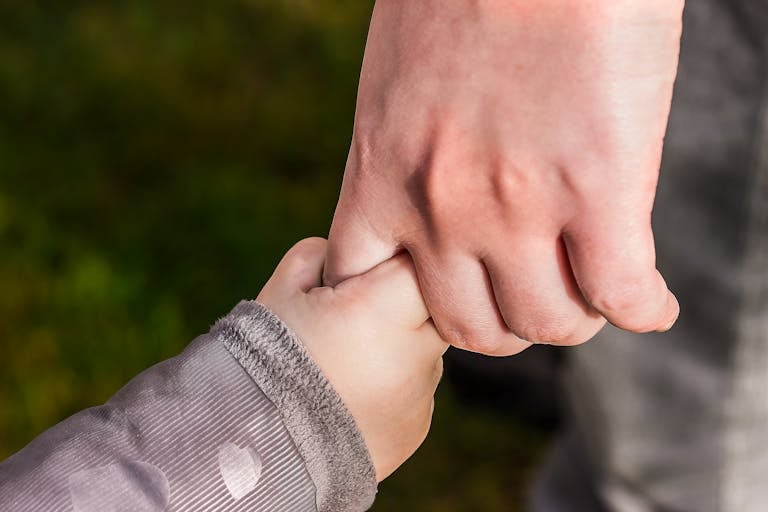
Slip a finger into your baby’s palm, and feel a surprisingly tight grip wrap around it. The palmar grasp reflex—so simple, yet so meaningful—serves to develop muscle tone in hands and fingers, the early groundwork for object manipulation. Like many, it disappears gradually as intentional grasping improves near 5 to 6 months.

Asymmetrical Tonic Neck Reflex (ATNR)

Turn your baby’s head and see the limbs extend on one side while curling on the other, forming almost a “fencer’s” pose? This odd but important ATNR encourages early hand-eye coordination, a basis for future skills like reaching and crawling. Typically diminishing by 6 months, it must fade for bilateral movement to flourish.

Spinal Galant Reflex

A gentle run of your finger down the side of the back, and your baby curves like a tiny crescent moon toward the touch. This is the spinal galant—a primitive motion pattern underlying crawling and eventual walking movements, fading away by six months.

Plantar/Babinski Reflex

Stroke your baby’s sole from heel to toe, and watch toes fan out in response—this is the Babinski reflex. Far from random, it signals an immature nervous system gearing up for maturation, usually gone by 11 months as the classic adult flexion replaces extension.

Crawling Reflex

Lay your child on their tummy, and leg movements appear, almost like the first echoes of crawling. This crawling reflex builds strength and coordination, vanishing generally by 3 months to pave the way for independent crawling, a major milestone for mobility.

Stepping Reflex

Support your baby upright with feet touching a surface—magically, they “walk” with alternating steps. Not real walking yet, but the stepping reflex prepares leg muscles for future use, typically fading by about 2 months.

Swimming Reflex

In water, under careful supervision, infants may instinctively paddle and hold their breath. This remarkable swimming reflex shows adaptability, and gently wanes by 6 months.

Perez Reflex

Stroke the spine from neck down, and you’ll see the pelvis tilt, legs extend, and head lift. The Perez reflex appears right from birth and vanishes between 2 to 3 months. Though not often mentioned outside medical circles, its presence or absence sheds light on neurological status during early infancy.

The Science Behind Primitive Reflexes: Why Do They Matter?

The existence of primitive reflexes is no quirk; each one supports your child’s entry into the world by:

  • Ensuring immediate responses to the environment—think feeding or escaping discomfort.
  • Preparing muscles and joints for advanced movement—creating a stepping stone to crawling, walking, and even scribbling.
  • Connecting the nervous system with senses and limbs—forging brain pathways essential for all learning.

Neurologists often monitor these reflexes for clues—persistence, asymmetry (where one side behaves differently than the other), or complete absence could be an early signal that extra support or assessment is needed.

Reflex Timeline: When Should Primitive Reflexes Appear and Fade?

Every reflex has its schedule—a choreography with important cues:

  • Rooting and sucking: Early starters, integrating by 2 to 4 months.
  • Moro and palmar grasp: Prominent in the first trimester of life, disappearing around 4 to 6 months.
  • Babinski/plantar: Last to mature, present until 11 months.
  • Perez: A window of 2 to 3 months only.

When the timing goes off—reflexes lingering too long, appearing late, or vanishing abruptly—a quick word with a paediatrician or neurologist is always wise. Sometimes these differences reflect natural variability; occasionally, they hint at developmental needs that benefit from early intervention.

What If Primitive Reflexes Don’t Integrate?

Parents often find themselves watching for every twitch and jerk, sometimes with anxiety. Should a reflex stick around longer than expected, or emerge unevenly from side to side, it can affect everything from a child’s balance and hand-eye coordination to attention and handwriting later in childhood. This is not uncommon, and with early support from medical professionals, many children readily overcome these blips. Most often, lingering primitive reflexes signal adjustment needs, not a definitive disorder. Therapies—like exercises designed by occupational or physical therapists—can help guide healthy motor patterns, translating reflexes into refined voluntary skills.

Nurturing Healthy Reflex Integration: Practical Guidance for Parents

How can you gently foster the right integration of your baby’s primitive reflexes?

  • Gentle sensory play: Soft touches to hands, feet, and cheeks promote coordination and response.
  • Safe, calm spaces: Overstimulation can trigger excessive reflexes—quiet, soothing environments help responses regulate.
  • Movement encouragement: Tummy time, free play on mats, safe exploration, and age-appropriate objects for grasping all stimulate muscle and brain growth.
  • Regular observation: Celebrate your child’s unique timeline while remaining attentive to any unusual patterns. Trust your observations and intuition.

Especially if questions arise, or if you notice marked delays or differences, connecting with a paediatric occupational therapist or physiotherapist offers tailored answers—and, if necessary, individualised support strategies.

Key Takeaways

  • Primitive reflexes are the earliest markers of nervous system development, each with its own timing and function.
  • They serve as open windows into motor development, neurological maturation, and early survival instincts.
  • Watching their progression, noticing any unusual persistence or asymmetry, provides valuable insights for monitoring a child’s health.
  • Support is always available through medical professionals—no question is too small. Remember, attentive observation at home, paired with expert advice if needed, paves the smoothest path forward.
  • For personalised guidance, reliable checklists, and child health questionnaires, the Heloa app is a handy resource to keep in your parenting toolkit.

Questions Parents Ask

Can primitive reflexes return later in life?

It can happen—though rarely. Sometimes primitive reflexes reappear after infancy, especially in older children or adults with neurological changes following head injuries, strokes, or certain medical conditions. Noticing these movements should prompt a discussion with a healthcare professional for deeper assessment.

What if primitive reflexes don’t integrate as expected?

When primitive reflexes linger beyond their typical timeline, challenges may arise: from difficulties in movement or balance to focus issues in school. Early input from paediatricians or occupational therapists can make a real difference—many children develop voluntary, mature control with guided support and practice.

Are primitive reflexes consistent in all babies?

Most infants show a similar set of primitive reflexes, but there’s a range of intensity and timing. Some actions might be subtle, others more pronounced—individual variability is common. Noticing differences such as pronounced weakness, very strong responses, or missing reflexes? Bring any concern to your doctor—it’s better to discuss than worry in silence.

Primitive reflexes are the secret language of early childhood development. Each response—every twist, grasp, or startle—tells you something about the amazing growth happening just beneath the surface. Celebrate each milestone, ask questions when uncertain, and remember, expert guidance is within reach.

Further reading:

Similar Posts

For many parents, the first time witnessing their baby’s sudden arm-flail or instinctive grasp can be both enchanting and peppered with uncertainty—Is this normal? Should I encourage these movements, or simply watch? These questions cut straight to the heart of a phenomenon called primitive reflexes. Intimately tied to both protection and progression, these reflexes are far more than fleeting gestures. They echo deep neurological processes at play, sculpting the building blocks of motor control, sensory processing, and emotional security. Exploring their timeline, clinical significance, and how a parent can thoughtfully observe or support integration, we embark on a scientific yet empathetic tour of your child’s earliest neurological milestones. Let’s delve into what they really signify, signs to watch for, and how these automatic responses pave the way for complex future-learnings. You might find the answers you’ve been searching for—or perhaps, new avenues for wonder.

What Are Primitive Reflexes? Startling Movements with Deep Science

Are primitive reflexes just random baby quirks? Hardly. These involuntary responses are deeply ingrained in every newborn’s nervous system, representing a sophisticated—if archaic—set of mechanisms that emerge even before birth. A brief noise and—snap!—the Moro reflex is activated, arms splayed wide. Touch a cheek, and suddenly the rooting reflex guides a searching mouth toward sustenance. Each one is, in fact, an evolutionary marvel.

Medically, primitive reflexes are orchestrated by the brainstem and spinal cord—bypassing conscious control entirely. Their purpose? Immediate protection, secure feeding, and stimulation of neural pathways critical for later motor learning. Yet, what’s just as fascinating is that each reflex is programmed to fade away, making room for deliberate actions (imagine grasping, crawling, standing—each a true neurological milestone).

Why do they matter? The persistence, asymmetry, or absence of these reflexes can help reveal the integrity of your child’s nervous system, offering early clues when something isn’t quite on track. Think of them as early safety checks—signals that pediatricians, neurologists, and occupational therapists observe keenly.

A Closer Look: Primary Primitive Reflexes and Their Functions

Let’s unravel the specifics, one by one, to demystify the technical jargon and spotlight the extraordinary in the everyday.

Moro Reflex

The Moro reflex, often called the startle reflex, is among the most visually dramatic. A sudden loss of support, a loud sound—these trigger the baby to fling arms outward and then quickly embrace inward. This sequence isn’t random; it’s evolution’s way of helping infants “catch” themselves or cling to a caregiver in the wild. Typically, the Moro reflex resolves between 4 and 6 months. If it lingers or isn’t seen at all, it might warrant medical thought—have you noticed which side your baby leans towards when startled?

Sucking Reflex

Essential to survival, the sucking reflex is triggered as soon as an object or nipple brushes the palate. This automatic response allows infants to feed efficiently, right from birth. As voluntary sucking becomes more coordinated (usually around 6 months), this reflex naturally fades. Do you ever wonder why babies instinctively suck even in sleep? That’s their nervous system, hard at work.

Palmar Grasp Reflex

Have you felt your baby’s tiny hand curl tightly around your finger? This is the palmar grasp reflex—an ancient grip offering shelter and attachment. Expect it to decrease after 5 or 6 months, replaced by intentional reaching and grasping as finer motor skills mature.

Asymmetrical Tonic Neck Reflex (ATNR)

Known casually as the “fencing reflex,” the ATNR appears when an infant’s head turns: the arm and leg on that side extend, while the other side flexes. Though initially awkward, this reflex lays the groundwork for hand-eye coordination. It typically disappears around 6 months, coinciding with more symmetrical limb movements.

Spinal Galant Reflex

A gentle stroke along your baby’s back and—whoosh—a subtle curve toward the stimulus. The spinal Galant reflex echoes the side-to-side undulations essential for crawling and later, coordinated walking. Generally, it fades by 6 months, but in rare instances, reflects underlying sensory processing quirks if it persists.

Rooting Reflex

Touch the corner of your newborn’s mouth and watch them turn toward your hand, mouth open and searching. The rooting reflex is vital for the very first breast or bottle feeds and typically integrates by 3 to 4 months as purposeful feeding steps in.

Plantar/Babinski Reflex

Trace from heel to toes along your baby’s sole: An outward fanning of toes defines the Babinski reflex. While alarming to the uninitiated, it’s a classic mark of nervous system immaturity in infants, fading around 11 months. When persistent beyond the first year, however, it may hint at deeper neurological concerns.

Crawling Reflex

Lay your newborn belly-down, and you’ll notice semi-crawling leg motions: the crawling reflex. This preps the muscles for true crawling—like a rehearsal before the real performance. It melts away by 3 months as voluntary control takes over.

Stepping Reflex

Hold your baby upright and their feet on a table: a gentle marching motion emerges—the stepping reflex. This early “walking” is all about muscle-building, disappearing by 2 months, only to be reawakened with true walking later on.

Swimming Reflex

A rare spectacle: place a newborn briefly in water and observe coordinated arm and leg movements. The swimming reflex demonstrates remarkable, if fleeting, aquatic adaptability before fading at 6 months.

Perez Reflex

Stroke the baby’s spine from neck to sacrum: the pelvis lifts, legs extend, head tilts back—that’s the Perez reflex. While present from birth, it integrates by 2 to 3 months. An absent or persistent Perez reflex may be a flag for a thorough neurological evaluation.

Why Do Primitive Reflexes Matter for Your Baby’s Development?

Let’s pause. Are primitive reflexes just a backdrop, or do they shape your child’s future abilities? Scientific insight is clear: these reflexes are anchors in your baby’s journey, enabling everything from immediate feeding to complex emotional regulation. Here’s why they demand your attention:

  • Immediate Safety and Nourishment: Sucking and rooting reflexes lead infants straight to sustenance, a seamless start to life.
  • Somatic Growth: Motor responses—Moro, Galant, stepping—aren’t just reflexes but repeated rehearsals that strengthen the neurological-muscular connection.
  • Cognitive Expansion: By stimulating sensory pathways and neural plasticity, primitive reflexes help forge connections vital for later volitional movement and learning.

It’s no coincidence that persistent primitive reflexes often correlate with later motor coordination or learning challenges. Conversely, premature fading (or complete absence) can suggest vulnerabilities in the central nervous system demanding a closer look.

The Timeline: Birth to Integration

When do these primitive reflexes appear and—just as importantly—when should they integrate? The answer varies, but here’s a general schedule every parent can reference:

  • At birth: Most primitive reflexes are already active, ready to serve protection and adaptation.
  • 2-4 months: Rooting and sucking reflexes begin to fade as intentional feeding emerges.
  • 4-6 months: The palmar grasp, Moro, and ATNR make their exit, clearing space for purposeful reaching, rolling, and object manipulation.
  • 6 months and beyond: The spinal Galant and swimming reflex usually integrate, while Babinski may linger until about 11 months.
  • 2-3 months: Perez reflex disappears early—absence or persistence outside this window merits attention.

Has your baby missed a reflex, or are the movements only on one side (asymmetry)? Jot that down for your healthcare provider—timing can carry important neurological implications.

When Persistence or Absence Warrants Professional Advice

What if you feel something is off—a reflex persists well past its expected timeline, or perhaps you never noticed it in your child? Here’s what healthcare providers focus on:

  • Persistence: When a primitive reflex remains active beyond the expected age (e.g., grasp reflex still strong at 8 months), this could impede voluntary movement or signal delayed neurological maturation.
  • Asymmetry: If one side of your baby’s body exhibits the reflex distinctly more (or less) than the other, this can reflect underlying muscle, nerve, or brain involvement.
  • Total absence: Especially with signature reflexes like Moro in the first weeks, absence may prompt evaluation for birth injury or central nervous system conditions.

Don’t let anxiety take the reins—most variations are minor. Still, early consultation with a pediatrician or pediatric occupational therapist can be the best way to clarify doubts.

Supporting the Healthy Integration of Primitive Reflexes: Practical Parental Steps

Curious about what you can do each day? Here’s how to gently foster integration, directly in your living room—no lab equipment needed.

  • Gentle Stimulation: Tenderly touch your child’s palms, feet, or cheeks; encourage hand grasps, and explore textures. These simple acts provide proprioceptive and tactile input.
  • Promote Free Movement: Let your baby freely kick, roll, or reach during supervised tummy time. Unsurprisingly, movement is the driving force in embedding primitive reflexes into more intricate neurological patterns.
  • Create a Soothing Environment: Loud, chaotic environments trigger excessive startle responses. Instead, cultivate calm through soft lighting, consistent routines, and gentle transitions from sleep to wakefulness.
  • Facilitate Exploration: Provide baby-safe objects to hold, squeeze, and mouth—think textured toys, teething rings, or fabric shapes. Each new sensory experience expands neural connectivity.
  • Monitor with Curiosity, Not Judgment: All babies develop at different tempos, a wide range lies within “normal.” Be observant, yet flexible.

Should questions persist—or nuances arise, such as muscle tone differences, imbalanced movement, or delayed milestones—initiate a conversation with a knowledgeable professional. Practical interventions, like therapist-guided exercises, can yield positive change.

Key Takeaways for Parents

  • Primitive reflexes serve as the original architect of your child’s first movements, communication, and ability to adapt to the outside world.
  • Knowing what to expect and when to expect integration provides reassurance, and observing irregularities can open doors to early intervention if warranted.
  • Remember, as fascinating as these primitive reflexes are, every child’s timeline is unique—celebrate progress, pause for curiosity, but always seek expertise when signals seem ambiguous.
  • There are dedicated resources—qualified pediatric therapists, developmental pediatricians, and evidence-based digital platforms—to support your journey.
  • For more individualized guidance and expert-reviewed health questionnaires customized to your child, download the Heloa app—a helpful ally for evidence-based parenting.

Parenthood, like the developing brain, is both dynamic and resilient. Every automatic movement, every purposeful grasp, carries a message: growth is underway, and you have every tool you need to nurture it, right at your fingertips.

Questions Parents Ask

Can primitive reflexes reappear later in life?

Yes, primitive reflexes can sometimes reappear beyond infancy, particularly in older children or adults experiencing certain neurological conditions or after an injury. When these reflexes return, it may suggest changes or disruptions within the central nervous system, such as after a head injury, stroke, or in some degenerative diseases. If you notice sudden involuntary movements that resemble primitive reflexes in an older child or adult, it’s important to discuss these observations with a healthcare professional for further evaluation.

What happens if primitive reflexes do not integrate properly?

When primitive reflexes persist past the expected age of integration, this can occasionally influence your child’s coordination, learning, and development. For example, lingering reflexes may make certain tasks, such as handwriting, sitting still, or concentrating in class, more challenging. Rassurez-vous, this is not uncommon, and early support from a pediatrician or occupational therapist often helps children strengthen more voluntary, refined movements. Recognizing and addressing these difficulties early can make a positive difference in your child’s overall development and comfort.

Are primitive reflexes the same for all babies?

While most babies demonstrate the same set of primitive reflexes, their strength, timing, and visibility may vary from one child to another. Some reflexes may be subtler, or appear earlier or later within the typical developmental window. These differences are often entirely normal. However, if you’re concerned about unusual patterns—such as very weak, exaggerated, or absent reflexes—sharing your observations with a healthcare provider is always a helpful next step. Every baby develops in their own unique rhythm, and part of supporting your child is honoring and observing those differences with care and empathy.

main bebe aggripe doigt reflexes archaiques 208189

Further reading:

Similar Posts