
That moment when your 4 month old baby fixes you with a bright-eyed smile, gurgling in delight, can transform a sleepy, harried household into a place suffused with wonder. Yet, as days blur into each other and fragmented sleep remains the norm, questions frequently echo in caregivers’ minds: Is my 4 month old baby thriving, developing as expected, and receiving everything needed for healthy growth? Moments of doubt, interruptions in routine, or an unexpected bout of fussiness prompt caregivers across the world to seek clarity, reassurance, and concrete answers.
Over the next sections, let’s demystify the remarkable changes your 4 month old baby experiences. Expect an exploration of physical and neurological leaps, practical feeding advice solidly grounded in medical recommendations, breakdowns of sleep patterns (including the infamous “sleep regression”), and actionable insights for supporting emotional, sensory, and cognitive maturation. Safety, vaccine information, and tips for handling daily challenges will also be covered—offering a mosaic of evidence-based knowledge that can bring confidence, not anxiety, to moments of uncertainty.
Physical development in a 4 month old baby
Growth patterns
During the fourth month, a baby is not just growing in size but is laying down the first stones of future development. By now, it’s typical for a 4 month old baby to have doubled their birth weight—think about the metabolic orchestration behind this feat! Most will be around 14 to 15.5 pounds, and length may reach 24.5 to 25.5 inches. The head circumference, a real-time marker for underlying brain growth, also increases steadily. For those tracking numbers, consistent weight, length, and head checks during pediatric visits are invaluable for detecting deviations that might indicate nutritional or metabolic hiccups.
Scenarios arise—perhaps concern about spit-ups, or the appearance of fewer wet nappies. Rather than speculation, counting wet and dirty diapers gives meaningful clues about hydration and sufficiency of milk intake. A 4 month old baby typically wets at least 4-6 diapers daily.



Gross motor skills
Something enchanting unfolds in these weeks—a baby’s movements shift from the jerky and erratic to the suddenly purposeful. Neck and head control strengthen dramatically; many can hold their head steady when you hold them upright or when they’re on their tummy. Tummy time, far from being mere “play,” drives the muscles of the neck, shoulder, and back to prepare for crucial motor skills—rolling, sitting, and eventually crawling. Some 4 month old babies surprise their parents by rolling from tummy to back, even if, just days before, this seemed out of reach. A minority try the reverse, arching upward in a near-magic act of mobility.
Leg strength becomes more evident; holding a baby upright allows them to bear weight for fleeting moments. Hand support remains necessary—for now. Even so, the incremental “push-ups” during play foster healthy postural control.
Fine motor skills
Clasping, reaching, and grabbing—these are not random motions, but symbolic gestures of neural refinement. The 4 month old baby’s fascination with their own hands signals a growing awareness of self and their world. Grasping objects, bringing them eagerly to the mouth, and exploring with both hands and tongue lay the groundwork for skills as subtle as pincer grip in the coming months.
Medical explanations? The “palmar grasp reflex” transitions toward more voluntary grasping, underpinned by maturation of the central nervous system and the integration of sensory-motor pathways. Safe, age appropriate toys (soft rattles, brightly coloured mobiles, cloth books) stimulate both tactile and oral development—an effective way to stimulate neural synapses responsible for coordination and sensory learning.
Sensory and vision coordination
Staring at high-contrast toys or bold patterns, tracking a rolling ball, or gazing at their own reflection—these activities sharpen vision at 4 months. Ocular tracking becomes smoother and more accurate; the baby actively follows objects moving across their visual field, honing the link between eyes, brain, and emerging body coordination.
A simple rattle, when shaken within their view, provides a multisensory experience as the baby learns to marry the sound with movement, sound with direction, and sight with tactile sensation. This is the time to ensure toys are non-breakable and safe for mouthing.
Hearing and response to sound
The auditory dimension blossoms at this age. A 4 month old baby will look towards familiar voices, freeze or startle at sudden noises, and distinguish tone—soothing lullabies often bring calm, while energetic rhymes spark animation. Babbling (“ah-goo,” “ba-ba”) is not mere noise but the rehearsal stage for future speech.
For caregivers, recurring exposure to a range of gentle sounds—rattles, bells, calm conversations, soft classical or devotional music—encourages development of both auditory discrimination and emotional regulation.
Cognitive and language development
A baby’s brain this month is a pulsating hub of synaptic growth. Memory circuits begin to function: the 4 month old baby recognises familiar faces, bursts into spontaneous smiles, and responds with animated gestures. Countless neural connections are formed simply through face-to-face conversation, singing, or clowning around with facial expressions.
“Cooing” and “babbling” are not just charming—they’re neurodevelopmental milestones. When your baby imitates the pitch or rhythm of your voice, their left temporal lobe (a brain area specialised for language) activates. Regular “conversations” prime the neural circuits needed for vocabulary long before words are spoken.
Babies, at this age, also show elementary forms of problem-solving: reaching deliberately for a desired toy, turning to seek the source of a jingle, or reacting to cause-and-effect play. The more parents vary their voice pitch, use expressive faces, and encourage “turn-taking” in vocal interactions, the richer the stimulation for language networks.
Social and emotional milestones
Those magical, genuine social smiles? They matter. A 4 month old baby will seek and hold eye contact, giggle at a funny face, and sometimes extend hands toward a parent’s face—a prelude to affectionate attachment. This social responsiveness signals growing emotional intelligence.
Cry, giggle, grumble—these emotional expressions are not random. They represent early forms of communication, encouraging caregivers to “mirror” and validate a wide repertoire of feelings.
Regular eye contact, gentle touch, and soothing, predictable routines are more than “bonding”; they are fuel for brain maturation and the healthy development of trust and security.
Play, activities, and daily life
The rhythms of day and night begin to show more coherence now. Awake windows of 1.5–2 hours between naps are usual for the 4 month old baby. In between, sensory-rich play is a treasure trove: skin-to-skin cuddles, sensory walks outdoors, gentle singing, tactile games with safe fabrics.
Tummy time, already mentioned for gross motor gains, also enhances spatial awareness and core strength. Play gyms with hanging toys and activity mats—opt for different textures and colours—motivate reaching, swatting, and grasping. Toys placed just beyond reach invite efforts, small frustrations, and bursts of delight at every new achievement.
The secret to supporting development? Variation. Rotate between tummy, back, and supported sitting. Engage with simple, repetitive routines, using comfort and predictability to build confidence and encourage self-regulation.
Growth and nutrition for a 4 month old baby
Feeding guidelines
A 4 month old baby feeds about 5–6 times per day, whether breastfed or formula-fed. Breast milk or iron-fortified formula remains the sole source of nutrition; approximately 24–32 ounces daily fits most but pay close attention to hunger and fullness clues. These include rooting, sucking on hands, or, conversely, turning away from the breast or bottle when satisfied.
It’s common for some babies to feed less frequently but take in larger volumes each time. While numbers are useful, what matters most is listening to the baby’s internal cues.
Starting solid foods
Many wonder: Can a 4 month old baby start solids? The paediatric consensus leans toward waiting until around 6 months, unless baby shows clear readiness—good head control, sitting with support, and curiosity about what adults eat.
Readiness? Signs include reaching for food, mimicking chewing, and attempting to bring objects to their mouth. If, under medical supervision, solids are introduced before the 6-month mark, start with iron-fortified single-grain cereals or pureed vegetables. Introduce foods one at a time with several days in between to watch for any allergy or intolerance reactions.
Breastfed babies: Don’t forget the need for daily vitamin D supplementation (about 400 IU, as recommended by medical guidelines) to prevent deficiency-related issues. Iron remains a must—by formula or, eventually, with iron-rich purees when solids begin.
Sleep patterns and routines for a 4 month old baby
Sleep routines
Sleep becomes more structured: a 4 month old baby typically garners 12–16 hours in 24 hours—mostly at night, interspersed with 2–3 daytime naps. Sleep cycles alternate between light and deep, so brief awakenings are expected; this is rarely a sign of “trouble,” just neurological evolution.
Short naps (some as brief as 30 minutes) remain standard, and night waking for feeds or comfort is developmentally normal.
Supporting healthy sleep
Creating gentle rituals can signal sleep is coming. Try a warm water bath, a quiet lullaby, or swaddling (if baby is not yet rolling). Keep lights dim and the room cool—between 19°C and 21°C is usually most comfortable.
Consistency (the “predictability principle”) reassures babies, making it easier for their young minds to settle and transition into sleep.
4 month sleep regression
Sometimes, just as parents think the routine is set, a “sleep regression” strikes—frequent night waking, fussing, short naps. Why? The 4 month old baby’s brain is undergoing a torrent of neurological changes; new skills disrupt sleep architecture. While exhausting, this is typically temporary, fading in two to six weeks. The antidote? Gentle patience, regular routines, and a willingness to recalibrate expectations.
Safe sleep recommendations
Always lay babies on their back on a firm, flat mattress. Keep the crib free of soft bedding, pillows, and toys. Room sharing, not bed sharing, is strongly encouraged for at least the first 6–12 months to minimise risk of sudden infant death syndrome (SIDS).
Pacifier use is thought to decrease SIDS risk, but never force it. If sleep deteriorates drastically or baby shows concerning signs (difficulty breathing, bluish lips), seek immediate medical attention.
Health and wellness: pediatric checkups
Well-baby visits and vaccines
The 4-month well-baby visit is a linchpin for tracking both physical and psychological development. Expect assessments of weight, length, head control, social smiles, reflexes, hearing, and vision. Vaccines at this stage—second doses of DTaP, Hib, IPV (polio), PCV, and rotavirus—are key in preventing potentially severe infectious diseases.
Tough decisions? Bring a list of worries and questions, from feeding quirks to night waking, to discuss. This is a time for in-depth dialogue.
Diaper rash prevention and care
At 4 months, a baby’s skin remains sensitive, so diaper rash can rear its head quickly. The culprits: moisture, friction, or sometimes a new formula. Combat this by:
- Changing diapers every 2-3 hours or immediately when soiled
- Choosing absorbent, well-fitted diapers
- Cleaning gently with warm water or mild, fragrance-free wipes
- Patting dry (never rubbing)
- Using zinc oxide-based barrier creams after changes
Letting your baby enjoy a few minutes of diaper-free time daily supports skin health. If rashes persist, worsen, or show signs of infection (oozing, spreading, fever), medical intervention may be necessary.
Safety for your 4 month old baby
With every new skill, a baby introduces new possibilities for mishaps. The active, inquisitive 4 month old baby requires a mindful environment:
- Remove choking hazards and secure heavy furniture and cords.
- Install outlet covers and use gates to block hazardous areas.
- Ensure feeding tools and toys are impeccably clean.
- Practice handwashing for all caregivers.
For sleep, adhere to safe sleep practices without exceptions.
Parenting tips and support
Parenthood at four months is an exquisite balance between awe and exhaustion. Recognising personal limits, seeking supportive help, and cultivating simple, reliable routines for feeding, sleep, and play encourage emotional stability in both baby and caregiver.
Take comfort in medical consensus—an individual baby will unfold at their unique pace. The goal: respond, observe, and celebrate, without comparison or guilt.
Consult professionals as needed—your instincts and lived experience matter in decision-making.
Signs of concern for a 4 month old baby
Some warning signs should never be ignored:
- Poor eye movement or inability to follow objects
- No social smile
- Failure to bring hands to mouth or hold/grasp objects
- Unable to bear some weight on legs in supported standing
- Absence of cooing, babbling, or vocal play
- Persistent inability to hold head steady
- Problems with feeding or poor weight gain
- Excessive lethargy, irritability, limited engagement
- Regression or loss of previously acquired skills
Prompt consultation with your paediatrician is recommended for these scenarios.
Preparing for next milestones
In the near future, expect your 4 month old baby to build rolling and sitting skills, demonstrate complex cooing and babbling, and display ever-more precise hand–eye coordination. Readiness for solids? Watch for improvements in head-trunk stability and growing interest in table foods. Allow time and space—each advance is built on countless repetitions.
Key takeaways
- The 4 month old baby grows swiftly—physically, emotionally, and cognitively.
- Encourage play, routine, and interactive conversation to build neural networks and secure attachment.
- Fluctuating feeding and sleep are part of this stage; patience pays.
- Well-baby checkups provide a safety net for tracking development and addressing concerns early.
- Your well-being remains entwined with your baby’s—ask for help, lean on resources.
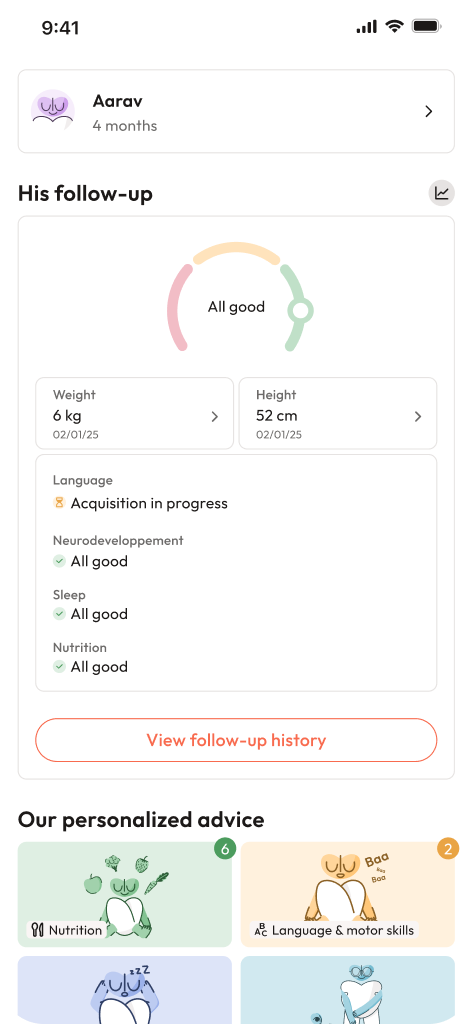
- For personalised advice and free health questionnaires for children, consider downloading the application Heloa.
Questions Parents Ask
How can I tell if my 4 month old baby is teething?
Some babies at four months soak their shirts with drool, munch hands with gusto, or become suddenly cranky. These are the usual suspects of early teething—though the first tooth may still be weeks away. Swollen gums, increased chewing, and fussy evenings often accompany these changes. Offering a cool, clean teething ring or simply gentle cuddles can provide comfort. If fever arrives or the baby seems unwell in a way that feels out of the ordinary, it’s sensible to consult your healthcare professional.
What are signs of developmental delays in a 4 month old baby?
Each baby’s journey is unique, but if your 4 month old baby does not respond to loud sounds, seems to move only some limbs or not at all, shows no interest in objects, or isn’t flashing social smiles, it is advisable to discuss these concerns with a paediatrician. Trust your observations—even small doubts matter, and early guidance is essential for the best long-term outcomes.
Is it normal for my 4 month old baby to wake frequently at night?
For many families, night waking at four months is a fact of life. As your 4 month old baby’s body and mind surge through a cascade of changes, disruptions to sleep are almost expected. The phase is usually self-limited. Sticking to calming routines and maintaining a consistent sleep environment can help. Should night waking begin to impact the entire family’s wellness, reach out to your medical team for practical solutions—they’re used to hearing such questions and can help tailor strategies to your needs.
Further reading: