Parents often love baby food pouches for one simple reason: they make feeding possible when life is moving fast. But speed can raise questions. Are baby food pouches nutritious enough for everyday use? Do they encourage “sipping” instead of learning to chew? What about sugar, iron, and food safety once a pouch is opened?
A calmer picture emerges when you know three things: how pouches are processed, what their nutrition profile tends to look like, and how to serve baby food pouches in ways that still protect texture progression, appetite cues, and oral-motor development.
Baby food pouches: what they are and what’s inside
What they are (vs jars and homemade)
Baby food pouches are single-portion packs of puréed or blended foods with a spout and screw cap. Unopened, most are shelf-stable, once opened, they must be treated like any perishable purée.
Compared with jars, pouches are lighter and easier to pack. Compared with homemade purées, they save time but reduce your control over:


- exact ingredients,
- salt and sweetness,
- freshness,
- and, very importantly, texture.
How they’re made and why they’re shelf-stable
Commercial baby food pouches are produced with food-safety steps designed to reduce microorganisms and prevent recontamination:
- Ingredients are washed, trimmed, cooked (often steamed/blanched), then finely puréed.
- The purée is heat-treated (pasteurization or sterilization depending on acidity and recipe).
- Many products use aseptic filling: the food and the packaging are sterilized separately, then filled and sealed in a sterile environment.
This explains the long cupboard life before opening. It also explains a nutritional nuance: heat and storage can reduce some vitamins, particularly vitamin C. Not a reason to avoid pouches—just a reason to keep variety.
What’s usually inside: the nutrition pattern
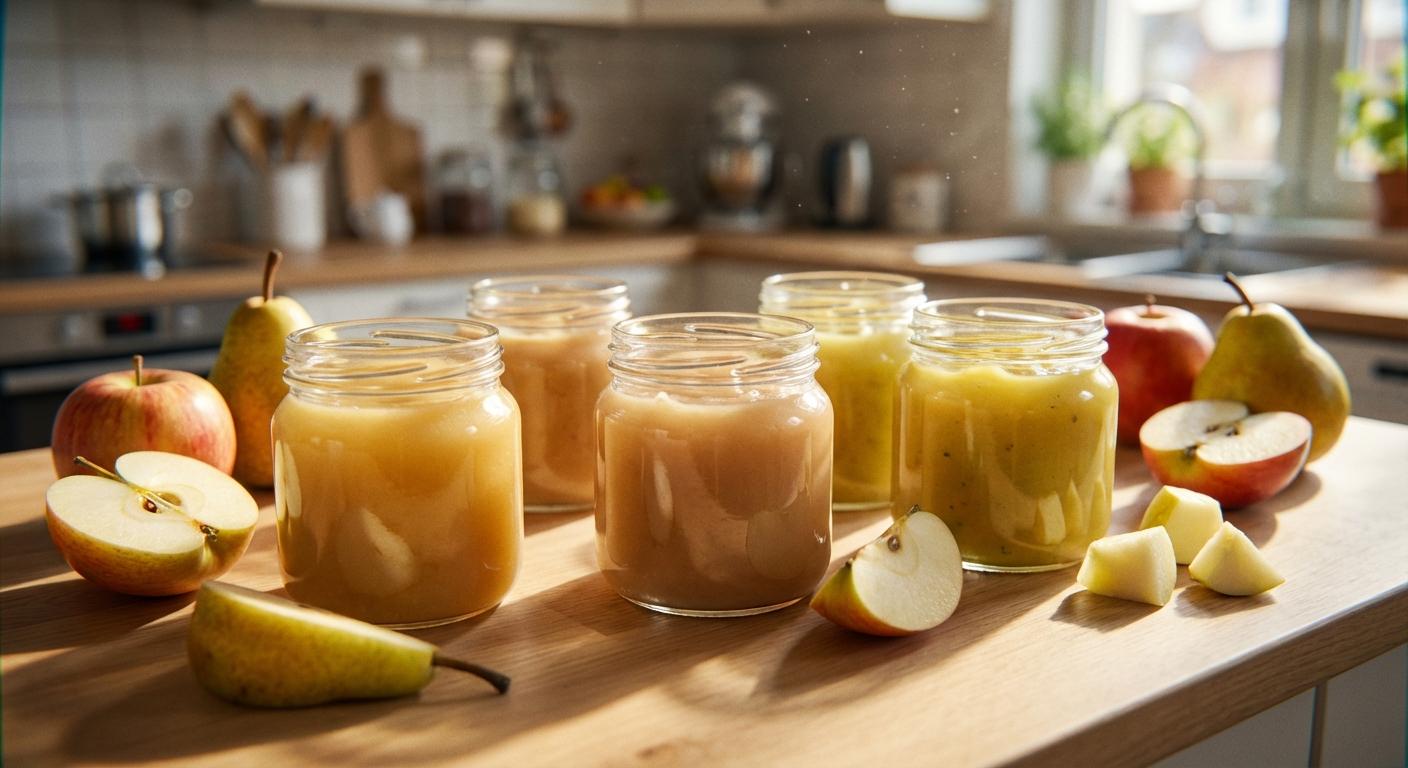
Many baby food pouches are fruit-forward (apple, pear, banana). Fruit makes a smooth purée and a sweet taste that most babies accept quickly.
Typical pattern to watch:
- Higher carbohydrate content (including naturally occurring sugars).
- Variable fiber (berries and prunes differ from banana).
- Lower protein and lower iron in fruit-only blends.
Savory “meal” pouches that include legumes, yogurt, meat/fish, and sometimes added oils are often more filling and more helpful nutritionally.
Common blends (carrot, sweet potato, parsnip) and taste learning
Carrot/sweet potato/parsnip blends are popular because they’re mild and naturally sweet. Great for early acceptance. The trade-off is subtle: if these become the main taste “category,” babies may get fewer opportunities to learn bitter and savory notes.
So, what helps?
- Rotate toward greener vegetables (peas, broccoli, spinach blends).
- Include savory profiles (lentils, beans, yogurt, mild herbs).
- Keep exposure relaxed. A baby’s face does not predict long-term preference.
Proteins and fats: what helps a pouch feel like a meal
For meal use, scan the ingredient list. A meaningful protein source should appear early:
- lentils, chickpeas, beans,
- yogurt,
- chicken, turkey, beef,
- fish.
Added fats (olive oil, coconut cream, avocado, full-fat yogurt) raise energy density and help absorb fat-soluble vitamins (A, D, E, K). If your baby fills up quickly, this can make the difference between “still hungry” and “satisfied.”
“Balanced macronutrients” on labels: a realistic interpretation
When a brand says “balanced macronutrients,” it usually means there is a mix of carbohydrates (fruit/veg/starches), some fat, and sometimes protein.
A useful parent shortcut:
- If fruit is the first ingredient and there’s no clear protein, think “snack/dessert.”
- If vegetables and a protein show up early, think “closer to a meal.”
When to start baby food pouches and how to introduce them
When solids begin: readiness first
Many babies start complementary foods around 6 months. Some start earlier (4–6 months) if readiness is clear and your clinician agrees.
Readiness often looks like:
- steady head control,
- sits with support,
- interest in food (watching, reaching),
- reduced tongue-thrust reflex.
Early on, very smooth textures are common. Then, thicker purées and soft lumps should gradually appear as oral skills mature (tongue side-to-side movement and chewing with gums).
A simple rhythm: one new food at a time
If you prefer a structured approach:
- introduce one new ingredient,
- keep it for 3–5 days,
- begin with 1–2 teaspoons,
- increase based on appetite, not persuasion.
Repeated exposure matters. Some babies need many calm tries before a new taste is accepted.
Why baby food pouches can fit early on
Used thoughtfully, baby food pouches can contribute:
- flavor variety,
- practical portions,
- some fiber,
- and a bridge from milk feeds to thicker foods.
The key is not letting “smooth and sweet” become the only experience.
Why parents choose baby food pouches
Convenience and portability
Daycare bags, trains, long appointments, evenings when cooking feels out of reach: baby food pouches are easy to store and serve.
Less mess
Feeding outside the kitchen can be simpler. Still, less mess should not replace skill practice.
Supporting autonomy (with a smart tweak)
Spout-sucking is efficient, but it’s different from eating. A compromise that builds skills: squeeze the pouch into a bowl and let your baby self-feed with a spoon.
Baby food pouches vs homemade: choosing without guilt
Some store-bought options can be nutritionally solid—especially savory baby food pouches with vegetables, protein, and fat. Homemade often shines for texture progression and steady iron-rich meals (meat, lentils, iron-fortified cereals).
A realistic middle path works well for many families:
- pouches for outings and backup,
- homemade or family foods for most meals,
- pouches mixed into yogurt or oats as a fast “flavor boost.”
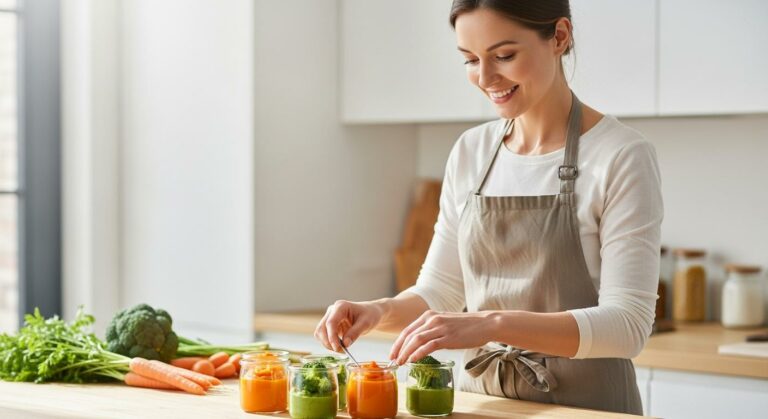
Batch cooking is another lever: cook vegetables/grains/proteins in larger amounts, blend to the right texture, portion, freeze. A freezer of small portions can feel almost as quick as tearing open a pouch.
Downsides to know (and how to balance them)
Texture exposure and oral-motor development
Feeding builds skills: tongue movements, jaw strength, lip closure, chewing patterns, and sensory tolerance.
If baby food pouches dominate, texture exposure can quietly shrink—especially if most intake happens through the spout.
Small ways to prevent the “only smooth purée” habit:
- Serve pouch contents by spoon (or in a bowl).
- Choose thicker, stage-appropriate options as skills grow.
- Put texture next to the purée: soft vegetable sticks, ripe fruit pieces, mashed foods with gentle lumps.
You may notice gagging when textures change. Gagging is common during learning and is not the same as choking. Persistent coughing, distress, or repeated refusal can mean the texture is moving too quickly.
Appetite cues and grazing
Because a pouch can be sipped slowly, it can turn into grazing. Defined eating moments help babies notice hunger and fullness.
A simple pattern:
- sit down,
- offer a portion,
- finish the eating moment when your baby shows fullness (turning away, closing mouth, slowing down).
Snacks vs meals: avoiding iron and protein gaps
Fruit-only pouches can be occasional snacks. As a frequent default, they may crowd out iron and protein.
Easy pairings:
- pouch + plain yogurt,
- pouch + cheese (age-appropriate),
- pouch + thin layer of nut/seed butter (only if already introduced safely),
- pouch + savory finger food.
During 6–12 months, iron deserves special attention. Even savory pouches may not cover needs, so plan iron-rich foods elsewhere that day.
Baby-led weaning, spoon-feeding and using pouches without losing skills
Some families lean toward spoon-feeding, others toward baby-led weaning (BLW), many mix both. Baby food pouches can fit into any approach if the “delivery method” supports development.
- Spout-sucking: fast, little chewing practice.
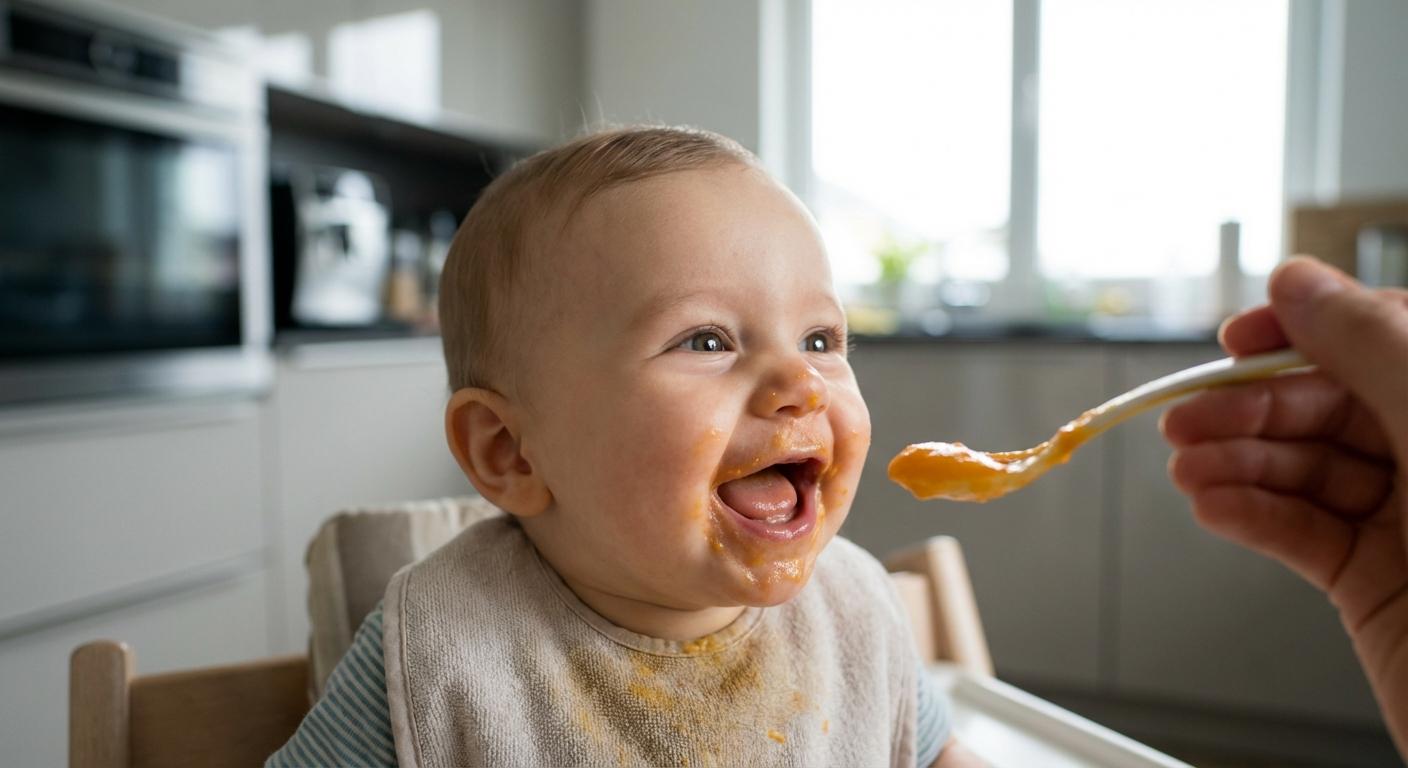
- Spoon-feeding: encourages lip closure, pacing, and thicker textures.
- Finger foods: support biting, chewing patterns, and sensory exploration.
Skill-friendly ways to use pouches:
- squeeze onto a spoon and let the baby bring it to the mouth,
- offer a pre-loaded spoon for dipping,
- use the pouch as a sauce stirred into grains or pasta.
Pairing examples (flavor + skill):
- veggie pouch + steamed broccoli florets (soft),
- fruit pouch + plain yogurt + soft oat fingers,
- savory lentil/meat pouch + soft pasta spirals.
Safety first: spouts, caps, hygiene, temperature
Caps are choking hazards
Remove the cap immediately, keep it out of reach, and never let a baby play with it. Check the spout and seal before feeding.
Discard pouches that are swollen, leaking, punctured, or damaged.
Hygiene on the go
Spouts collect germs, especially outdoors.
- Wipe the spout before and after feeding.
- Avoid sharing a pouch between children.
- If your baby drank from the spout and didn’t finish, refrigerate promptly and use within 24 hours.
Heating: skip the microwave
Microwaving a pouch can create hot spots. Warm the unopened pouch in warm water or squeeze into a bowl and warm gently. Test temperature before feeding.
How to read labels and choose better baby food pouches
Ingredient order: the fastest clue
Ingredients are listed by weight. If fruit is first, the pouch is typically sweeter.
For everyday use, many babies benefit from more vegetable-forward or savory blends.
“No added sugar” isn’t always low sugar
Fruit purée and juice concentrates can still drive sugar content.
What to check:
- total sugars per 100 g,
- whether concentrates appear in the ingredient list.
Sodium: keep it low
Prefer “no added salt” options. Compare sodium per 100 g when choosing savory blends.
Protein, iron, allergens: rounding out the day
For meals, pick baby food pouches with a clear protein (lentils, chickpeas, yogurt, chicken, fish). Then think bigger than one pouch:
- include an iron-rich food elsewhere that day,
- pair plant-iron with vitamin C-rich foods to support absorption,
- read allergen statements carefully (milk, egg, soy, wheat/gluten, nuts, sesame).
Organic labels: helpful, but not a nutrition shortcut
Organic certification reflects farming rules, not automatic nutrition superiority. A pouch can be organic and still be mostly fruit.
Types of baby food pouches and when they fit best
Brands use “Stage 1–3” as a texture roadmap (not a rigid rule):
- Stage 1: very smooth purées.
- Stage 2: thicker blends.
- Stage 3: more textured purées.
If your baby handles thicker textures comfortably, leaning into them supports oral development.
Toddler snack pouches and smoothies are handy for travel and daycare. The limit is that they can become a daily sweet habit, so protect chewy foods at meals.
Storage and food safety
- Unopened baby food pouches: store in a cool, dry place, check the date, seal, and no swelling/leaks.
- Opened: refrigerate promptly, use within 24 hours.
- Room temperature: avoid leaving opened purée out more than 1–2 hours (less in hot weather).
- Freezing leftovers: transfer to a clean container, texture may change after thawing, don’t refreeze.
Common digestion issues: gentle adjustments
Fruit-heavy baby food pouches can affect stools.
- Constipation: pear or small amounts of prune may help, increase fiber gradually.
- Diarrhea: prioritize fluids and milk feeds, seek advice if fever, blood in stool, or dehydration signs (dry mouth, fewer wet diapers).
- Reflux: smaller portions can help, some babies tolerate slightly thicker, age-appropriate textures better.
- Skin irritation: acidic fruits may worsen redness around the mouth or diaper area, reduce frequency and try again later.
Urgent allergy signs: widespread hives, swelling of lips/face, repeated vomiting, breathing difficulty, collapse.
Cost, value, and the environment
Baby food pouches often cost more per 100 g than jars, and far more than bulk-cooked homemade. You’re paying for portability and time.
Value habits:
- compare price per 100 g,
- buy multipacks once ingredients are tolerated,
- stretch a pouch by mixing into oats, yogurt, or mashed foods.
Many pouches aren’t accepted in curbside recycling because multi-layer films are difficult to separate. Refillable pouches can reduce waste, but hygiene matters: wash thoroughly with hot soapy water and a brush, rinse well, dry completely, and replace if seams crack or odors persist.
Key takeaways
- Baby food pouches are convenient and generally safe when packaging is intact and handling is clean.
- Start solids based on readiness (often around 6 months), move from smooth to thicker textures as skills grow.
- For meals, choose baby food pouches with vegetables plus a real protein and some fat, keep fruit-only options as occasional snacks.
- Protect chewing and oral skills by using bowls/spoons and offering finger foods regularly.
- Keep caps away, supervise feeding, and avoid microwaving pouches due to hot spots.
- Refrigerate opened pouches quickly and use within 24 hours.
- Support exists if feeding feels stuck (pediatrician, pediatric dietitian, feeding therapist). For personalized tips and free child health questionnaires, you can also download the Heloa app.
Questions Parents Ask
Are baby food pouches safe to use every day?
Yes—when they’re one option in a varied diet. It can feel reassuring to rely on pouches during busy days, and that’s understandable. For everyday use, many parents find it helpful to rotate: pouches sometimes, plus foods with more texture and iron at other meals. If your baby seems to “graze” on a pouch over a long period, you can also offer it at a sit-down snack so hunger and fullness cues stay clear.
Do baby food pouches cause tooth decay?
They can contribute if sweet purées are sipped frequently or used as a “walking snack.” No panic: it’s the repeated exposure to sugars (even natural fruit sugars) that matters most. A simple protective habit is to treat pouches like a meal/snack, then offer water afterward and aim for regular tooth brushing once teeth appear. If you’re using pouches often, choosing more veggie- and yogurt/legume-based options can also reduce how sweet the day feels overall.
How many baby food pouches can a baby have in a day?
There isn’t one perfect number, because appetite and milk intake vary. As a practical reference, many families keep pouches as a backup or one snack, and prioritize iron-rich foods (meat, lentils, eggs, iron-fortified cereals) elsewhere. If pouches are becoming the main source of solids, it may be a sign to add more spoon or finger-food meals—gently, at your baby’s pace.