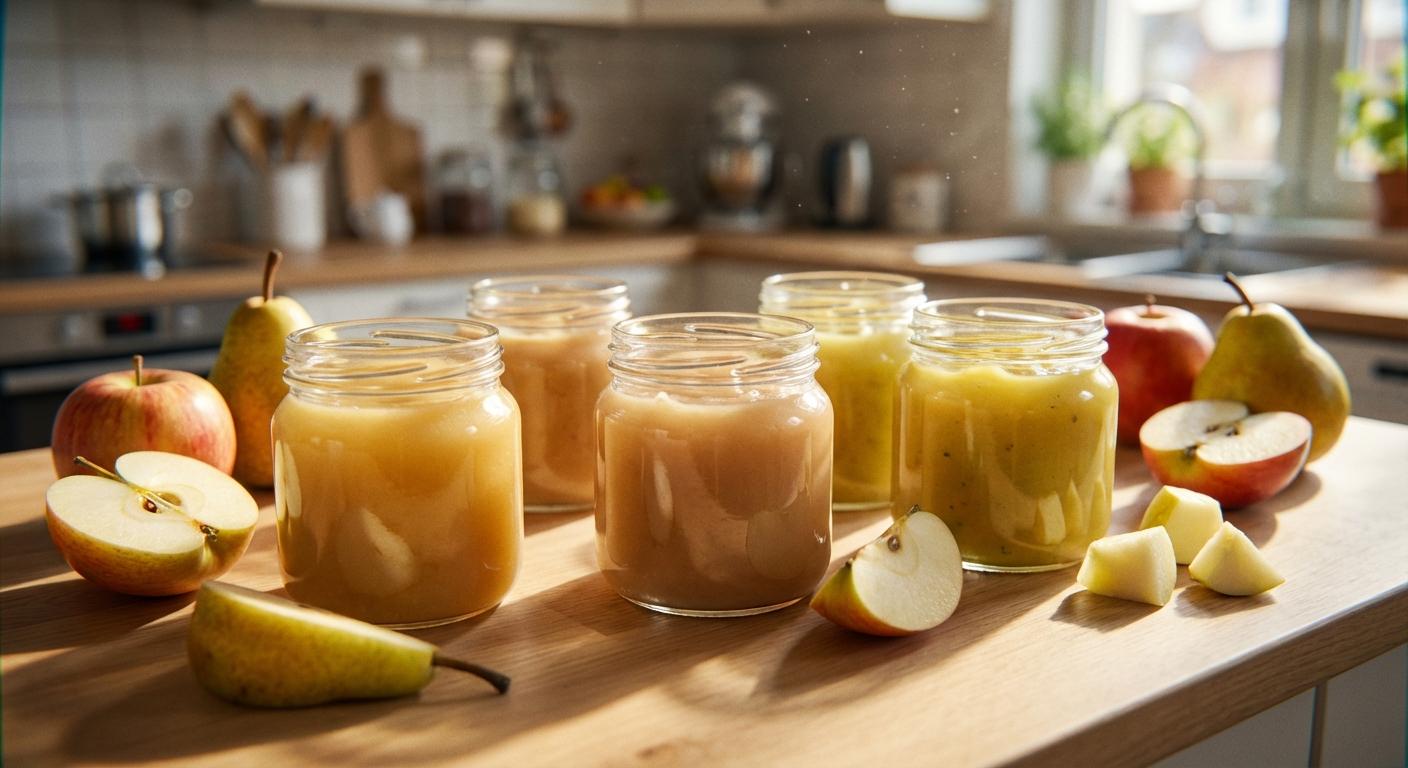
Busy mornings, traffic, daycare drop-offs, long family visits: feeding a baby in India can feel like a relay race. Baby food pouches often look like the easy baton pass: quick, clean, portable. And yes, when used wisely, baby food pouches can fit into a healthy routine.
Parents also ask the sharper questions (and they’re valid): Are baby food pouches too sweet? Will spout-feeding affect chewing? What about iron, protein, allergies, hygiene in Indian weather, and safe storage during power cuts? A clear plan helps: understand what’s inside, choose better options, and serve pouches in a way that still builds feeding skills.
Baby food pouches: what they are and what’s inside
What baby food pouches are (and how they differ from jars and homemade)
Baby food pouches are single-serve, squeezable packs of puréed or blended foods for babies and toddlers. They usually come with a spout plus a tamper-evident cap, and most are designed to stay at room temperature until opened.
Compared with jars, pouches are lighter and travel-friendly. Compared with homemade purées, baby food pouches trade daily control (exact ingredients, salt, texture, freshness) for speed.

One detail matters for development: many pouches are very smooth. Smooth is useful early in weaning. If smooth becomes the default, chewing practice can lag behind.
How pouches are made and why they’re shelf-stable (pasteurisation, aseptic filling)
Commercial baby food pouches are processed to reduce microbes and avoid recontamination:
- Ingredients are washed, trimmed, cooked (often steamed/blanched), then finely puréed.
- The purée is heat-treated (pasteurisation or sterilisation, depending on acidity and recipe).
- Many shelf-stable pouches use aseptic filling (food and packaging sterilised separately, then filled and sealed in a sterile environment).
That’s why unopened pouches can sit in a kitchen cabinet for months. Once opened, they behave like any perishable purée. Refrigeration rules apply.
Typical ingredients and nutrition in baby food pouches
Most baby food pouches contain fruits, vegetables, starchy bases (potato, sweet potato), and sometimes grains, curd/yogurt, or oils.
A common nutrition pattern:
- Fruit-heavy pouches: higher carbohydrates (including natural fruit sugars), often lower protein and iron.
- Savoury “meal” pouches: can be more balanced if they contain lentils/beans, yogurt/curd, meat/fish, and added oils.
Processing keeps pouches microbiologically safe, but some nutrients (especially vitamin C) can drop with heat and storage time. So it’s smart not to rely on baby food pouches as the only source of key nutrients.
Common blends and taste learning
Carrot and sweet potato blends are popular because they taste mild-sweet—many babies accept them easily.
The trade-off? Sweet profiles can become the “default flavour”. Rotating to more savoury notes helps: peas, spinach blends, pumpkin with lentils, or mixed vegetables.
Proteins and healthy fats: when a pouch feels like a meal
Protein in baby food pouches may come from lentils/chickpeas, yogurt/curd, chicken, or fish. During 6–12 months, iron and protein matter a lot. If a pouch is marketed as a “meal”, check that a real protein appears early in the ingredient list.
Some pouches include added fats (olive oil, coconut cream, avocado, full-fat yogurt). Fat increases energy density and helps absorption of fat-soluble vitamins (A, D, E, K).
“Balanced macronutrients” on labels: what it usually means
“Balanced macronutrients” generally means a mix of carbs + some fat + sometimes protein. It doesn’t guarantee the pouch balances your baby’s entire day.
A practical check:
- Is there a clear protein ingredient?
- Is there a fat source?
- Or is it mostly fruit?
Then pair it with something chewable when possible.
When to start baby food pouches and how to introduce them
Starting solids: age milestones (4, 6, 8, 12 months)
Many babies begin complementary feeding around 6 months. Some start between 4–6 months if readiness is clear and your clinician agrees. Breastmilk or formula remains the nutritional foundation through the first year.
Milestones (not rigid rules):
- Around 4–6 months: very smooth texture, tiny amounts.
- Around 6–8 months: thicker purées, larger portions.
- Around 8–12 months: mashed textures and very soft pieces if oral skills are progressing.
- After 12 months: pouches can be an occasional snack, family foods take centre stage.
Signs your baby is ready + a gentle rhythm
Useful readiness signs:
- steady head control, sits with support
- interest in your food
- opens mouth as spoon approaches
- tongue-thrust reflex is reducing
A calm rhythm: one new ingredient, keep it for 3–5 days, start with 1–2 teaspoons, increase slowly.
Why pouches can fit early on
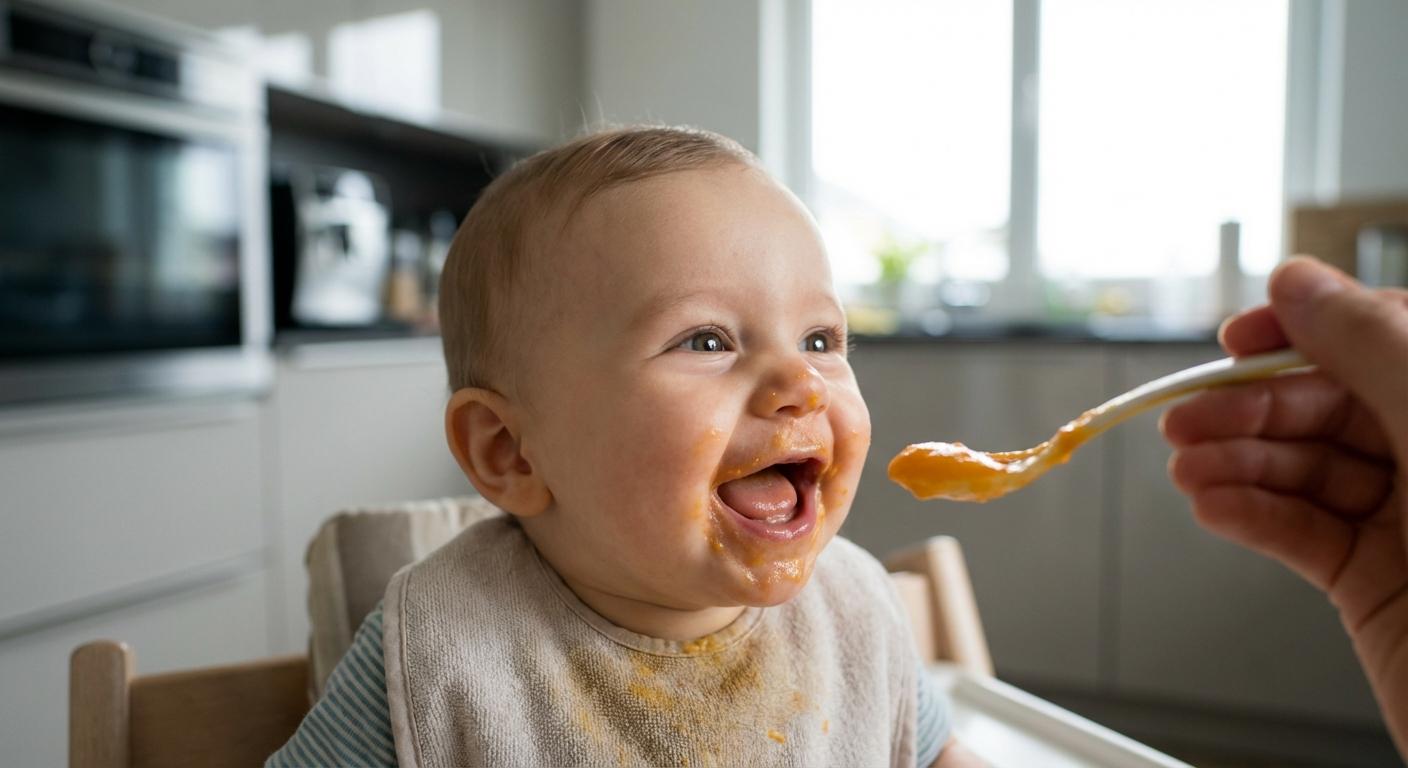
Used thoughtfully, baby food pouches can support fibre and micronutrients, and help babies transition from milk feeds to thicker foods. If your baby makes a face, that’s common. Preferences are built with relaxed repetition.
Why parents choose baby food pouches
Convenience for Indian routines
Commutes, hospital visits, daycare tiffins, family travel: baby food pouches are easy backups because they’re shelf-stable before opening.
Less mess
Feeding outside the home can be easier with pouches than with bowls.
Self-feeding support (with one smart modification)
Some babies like holding the pouch. Still, spout-feeding doesn’t teach chewing. A good middle path is to squeeze pouch contents into a bowl and offer by spoon, or let your baby self-feed with a pre-loaded spoon.
Baby food pouches vs homemade baby food
Can store-bought be as nutritious as homemade?
Sometimes, yes—particularly savoury baby food pouches with vegetables, protein, and added fat. But fruit-heavy pouches are often low in iron and protein.
Homemade makes it easier to build iron-rich meals (dal, egg, meat, iron-fortified cereal) and to control texture progression.
A realistic mixed strategy
Many families do best with a mix:
- keep a few baby food pouches for travel, daycare, emergencies
- use homemade most days
- mix pouch purée into curd, oats/dalia, or soft khichdi for quick variety
Batch cooking helps too: cook in bulk, blend, portion, freeze.
Downsides to know (and how to keep balance)
Texture exposure and oral-motor development
Feeding is skill-building: tongue movement, jaw strength, chewing patterns, lip closure, and comfort with variety.
Because baby food pouches are often very smooth, relying on them too frequently can narrow texture exposure.
Preventing “only smooth purée” habits
Small shifts:
- pour the pouch into a bowl and offer by spoon
- choose thicker options as your baby grows
- add texture next to it: soft idli pieces, well-cooked veg sticks, ripe banana chunks, soft roti soaked in dal
Gagging can happen when learning textures and is different from choking. If you see persistent coughing, distress, or repeated refusal, slow down and discuss with your paediatrician.
Avoiding grazing
Pouches are easy to sip slowly, turning into grazing. Try structured eating moments: sit, offer a portion, end when your baby signals fullness.
Snacks vs meals: avoiding nutrient gaps
Fruit-only baby food pouches can work as occasional snacks. If used too often, they may crowd out iron and protein.
Easy pairings:
- pouch + plain curd/yogurt
- pouch + paneer (age-appropriate)
- pouch + savoury finger food
Safety first: caps, hygiene, temperature
Caps are a choking hazard
- remove immediately
- keep out of reach
- never allow play with caps
Discard pouches that are swollen, leaking, punctured, or damaged.
Hygiene for spouts
- wipe before and after feeding
- don’t share pouches between children
- if your baby drank from the spout and didn’t finish, refrigerate promptly and use within 24 hours
Heating: avoid microwaving the pouch
Microwaving can cause hot spots.
- warm the unopened pouch in warm water
- or squeeze into a bowl and warm gently
- test temperature before feeding
How to read labels and choose better baby food pouches
Ingredient list priorities
Ingredients are listed by weight.
- If fruit is first, it’s usually sweeter.
- For frequent use, prefer vegetable-forward or savoury blends with legumes/meat.
Aim for a short list of recognisable ingredients and “no added sugar”, “no added salt”.
Added sugars and “no added sugar”
“No added sugar” doesn’t always mean low sugar if fruit concentrates are used.
Check:
- total sugars per 100 g
- whether concentrates appear in the ingredient list
Sodium
Babies need very little sodium. Compare sodium per 100 g between similar savoury options.
Protein, iron, allergens
For meals, prioritise baby food pouches with a clear protein source. Still, many pouches won’t meet daily iron needs.
Simple ways to cover gaps:
- include iron-rich foods elsewhere that day
- pair plant-iron with vitamin C foods (age-appropriate forms)
- check allergen statements (milk, egg, soy, wheat/gluten, nuts, sesame)
Digestive comfort: small fixes parents actually use
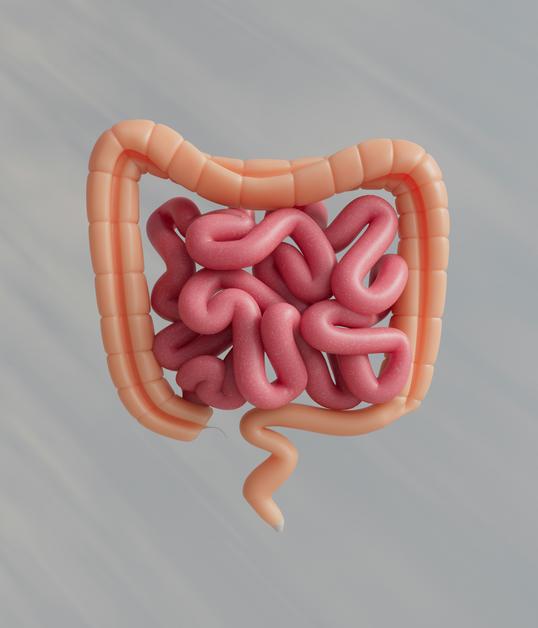
Some babies get gassy, constipated, or develop loose stools when fruit-heavy pouches become frequent. That does not automatically mean the pouch is “bad”. It often means the balance needs a tweak.
- If stools become hard: try pear, papaya, or a small amount of prune, plus extra water sips with meals if your paediatrician allows.
- If stools become too loose: pause the very juicy fruits for a day or two and keep milk feeds steady.
- If redness shows up around the mouth: wipe gently, apply a barrier cream, and reduce acidic fruits (orange, pineapple) for a while.
You may be wondering about reflux. Smaller portions, slower pace, and thicker textures can suit some babies.
Baby-led weaning and pouches: can you mix them?
Yes, many Indian families do, especially when grandparents help with feeding and routines vary day to day. The skill focus stays the same.
- If you’re doing spoon-feeding: use the pouch as the ingredient, not the “sippy” method.
- If you’re doing BLW: offer the pouch alongside soft finger foods (steamed veg, soft fruit, idli, omelette strips if introduced).
The goal is exposure to textures and chewing practice, while still keeping meals realistic. With time, most babies move from mostly smooth foods to mixed textures.
Storage and food safety (home and on the go)
Unopened storage
Store unopened baby food pouches in a cool, dry place. Check date, seal, and no swelling/leaks.
After opening
- refrigerate promptly
- use within 24 hours
- avoid leaving opened purée at room temperature beyond 1–2 hours (less in peak summer)
If travelling without reliable refrigeration, treat an opened pouch like perishable food and discard leftovers.
Power cuts and travel: a practical India-specific note
If the fridge temperature is uncertain after a long power cut, be cautious with opened pouch leftovers. When in doubt, discard. It feels wasteful, but gastrointestinal infections in babies dehydrate quickly.
Key takeaways
- Baby food pouches are convenient and generally safe when packaging is intact and handling is hygienic.
- Start solids based on readiness (often around 6 months), milk remains the main nutrition in the first year.
- For regular use, choose baby food pouches that are more vegetable- and protein-forward, keep fruit-only pouches as occasional snacks.
- Support chewing skills by serving pouch contents in a bowl or on a spoon and offering finger foods.
- Keep caps away, supervise feeding, and avoid microwaving the pouch.
- Refrigerate opened pouches promptly and use within 24 hours, in hot weather, be extra strict with time limits.
- Professionals can support feeding challenges. For personalised tips and free child health questionnaires, you can also download the Heloa app.