That line of tiny bumps around your child’s mouth can look deceptively simple… and yet it often triggers big questions. Is it contagious? Is it “just drool”? Did a cream make it worse? Perioral dermatitis is a frequent reason for persistent redness and papules around the lips, but it’s far from the only culprit, especially in babies and toddlers, where saliva, friction, and a fragile skin barrier can set the stage for repeated flares. You’ll find clear ways to recognize typical patterns, understand common triggers (including topical corticosteroids), choose everyday care that actually calms skin, and know when a clinician should take a closer look.
Perioral dermatitis: what it is (and what it isn’t)
Perioral dermatitis is an inflammatory facial eruption made of small red bumps and surrounding redness. It tends to cluster around the mouth, but it can extend.
A word you may hear at the clinic: periorificial dermatitis. Same idea, wider map. It means the rash is around more than one facial opening: mouth, nostrils, sometimes eyes. In pediatrics, periocular involvement can happen more often than families expect.
Typical locations and a classic clue: “vermilion border sparing”
With perioral dermatitis, lesions often appear:


- Around the mouth, sometimes spreading to the chin
- Along the nasolabial folds (the lines from nose to mouth)
- Around the nostrils (perinasal)
- Around the eyes (periocular), in some children
A useful clinical sign is vermilion border sparing: the immediate lip edge often looks oddly untouched, while the nearby skin is irritated.
Is perioral dermatitis contagious?
No. Perioral dermatitis is inflammation, not an infection you “catch.” Your child cannot transmit it by touching, kissing, or sharing toys.
“Rash around the mouth” in babies: description vs diagnosis
In infants and toddlers, “rash around the mouth” is a symptom, not a label. The lip-and-chin zone gets soaked, rubbed, and exposed to wind very quickly. Many conditions can mimic each other.
Common look-alikes include:
- Drool rash (saliva irritation) with moisture-related breakdown
- Irritant contact dermatitis (wipes, cleansers, repeated rubbing)
- Atopic dermatitis (eczema)
- Infant acne (early months)
- Infections such as impetigo or herpes
If the rash spreads quickly, becomes very painful, oozes, crusts heavily, or your child seems unwell, medical advice is wise.
Perioral dermatitis symptoms: what parents usually notice
What it looks like: papules, pustules, erythema
Perioral dermatitis often shows as clusters of tiny bumps:
- Papules: small, firm bumps
- Pustules: bumps with a white/yellow tip (a little pus)
The surrounding redness is called erythema. On darker skin tones, erythema may be subtle, the texture and bump pattern can be more obvious than “redness.”
Words that help you describe the rash
If you’re trying to explain what you see, these terms can clarify things quickly:
- Papules: bumps without fluid
- Pustules: bumps with a pus-filled tip
- Vesicles: tiny clear blisters (think herpes more than perioral dermatitis)
- Crusts: dried fluid, thick “honey-colored” crusts suggest impetigo
What it feels like: burning, stinging, tightness
Many children (and adults) describe burning or stinging more than itching. Tightness after washing is common. Babies can’t say “it stings,” so behavior becomes the clue.
Texture changes: scaling, flaking, roughness
A disrupted barrier often produces:
- Fine scaling
- Dry flaking
- A rough, sandpaper-like feel
Corners of the mouth may crack more easily when skin stays damp.
How to spot discomfort in a baby
You might see:
- Rubbing the chin on sheets or clothing
- Hands repeatedly going to the mouth
- Fussiness during face cleaning
- More pacifier-seeking (sometimes as self-soothing)
If feeding becomes uncomfortable, mention it to your clinician.
Why the mouth area flares so easily in children
Immature skin barrier in infants
Infant skin is thinner and its outer layer (the stratum corneum) is still developing. Water escapes more easily, with higher transepidermal water loss (TEWL), and irritants penetrate more readily. Result: faster inflammation.
Saliva + moisture = maceration
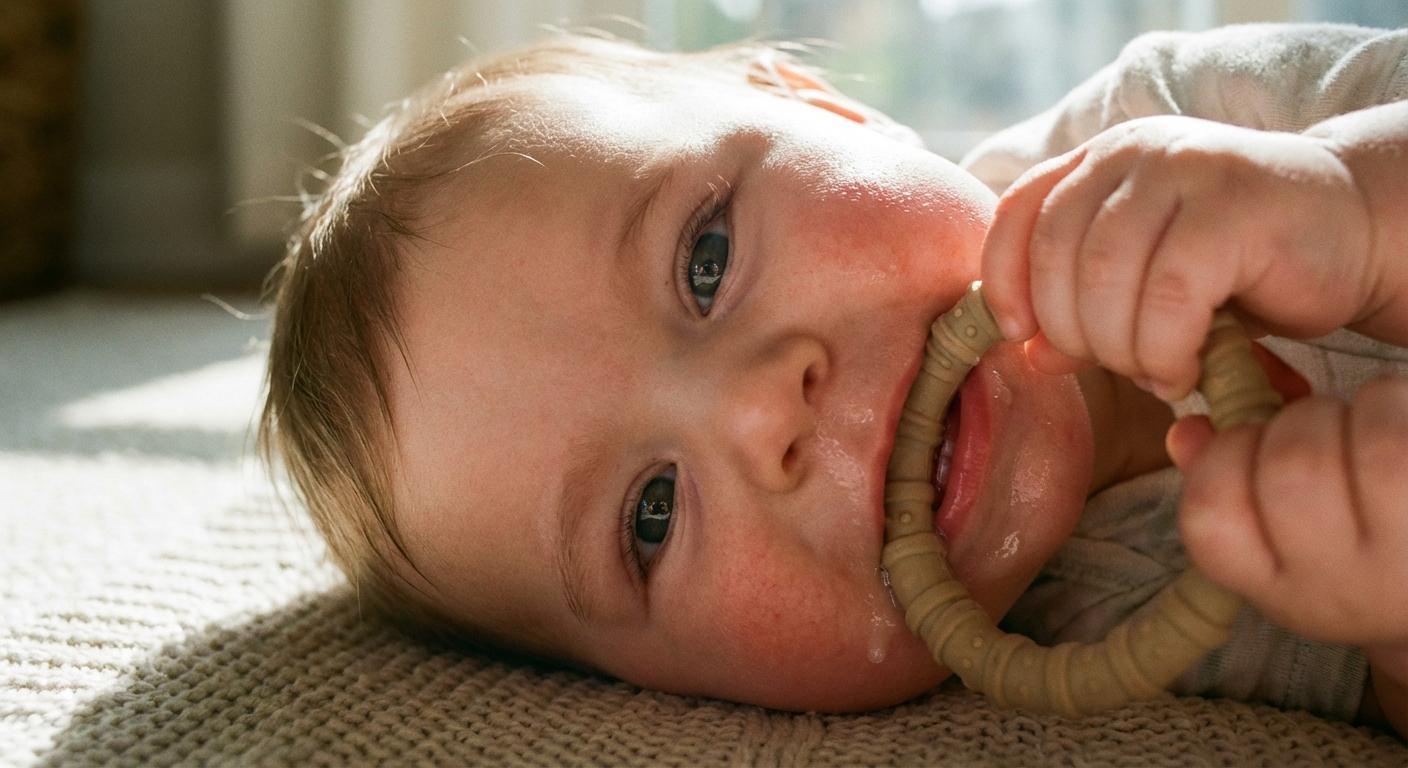
During teething, saliva often increases. Prolonged wetness causes maceration (the top layer softens and weakens). Then friction from wiping, pacifiers, and bottle feeding can turn mild irritation into persistent redness and bumps.
Repeated friction and “micro-trauma”
Bibs, collars, rough wiping, and pacifier edges create repeated micro-injuries. Add moisture and you get the classic cycle: irritation -> barrier damage -> more sensitivity -> more irritation.
Why perioral dermatitis happens: causes and triggers
Perioral dermatitis is usually multifactorial. Several triggers can pile up.
Topical steroids: a common trigger
Facial topical corticosteroids (even over-the-counter hydrocortisone) are strongly linked with perioral dermatitis. They may calm redness briefly, then the eruption returns, often wider or more inflamed.
Steroid exposure can also be indirect:
- Nasal steroid sprays with residue on the upper lip
- Inhaled corticosteroids (mask or spacer leakage) contacting perioral skin
Steroid withdrawal and rebound flares
Stopping steroids can cause a rebound flare: temporary worsening that feels alarming. Depending on potency and duration, clinicians may suggest a taper rather than abrupt cessation.
Skincare triggers: occlusion and irritation
During perioral dermatitis, heavy layers can trap heat and moisture (occlusion) and amplify inflammation.
Common aggravators:
- Thick occlusive balms used repeatedly
- Fragranced products and essential oils
- Alcohol-based toners
- Frequent exfoliation (scrubs, acids)
- Too many “actives” at once
Toothpaste and mouth products
Fluoridated toothpaste is sometimes associated with flares in families. That does not mean fluoride is “bad” or always responsible. Still, if toothpaste contact repeatedly precedes a flare, discuss a temporary switch with your dentist or clinician (and focus on careful rinsing and wiping after brushing).
Environment and irritants
Wind, cold dry air, sun, heat, and face coverings can worsen perioral dermatitis by increasing barrier stress and local irritation.
What’s happening under the skin (simple, medical, and reassuring)
Barrier disruption and TEWL
When the barrier is leaky, TEWL rises. Skin dries faster, becomes reactive, and stings with products that used to feel “fine.”
Inflammation around follicles
In perioral dermatitis, inflammation often centers around tiny hair follicles (perifollicular inflammation). That’s why bumps can look acne-like, yet classic acne markers like comedones (blackheads/whiteheads) are usually absent.
Microbiome shifts: bacteria, Demodex, Malassezia
Researchers suspect changes in the local microbiome contribute in some cases:
- Bacteria may play a role
- Demodex mites are sometimes implicated
- Malassezia yeast may contribute in selected presentations
This is not the same as a straightforward infection. Think of it as inflammation plus a changed local ecosystem, sometimes adding fuel.
Conditions that can mimic perioral dermatitis (especially in kids)
Drool rash (saliva irritation)
Often more diffuse on the chin and around the mouth, closely linked to meals, teething, pacifiers, and visible wetness. It usually improves with pat-drying and a thin protective barrier.
Contact dermatitis (irritant or allergic)
- Irritant contact dermatitis: common in toddlers, driven by wipes, soaps, repeated rubbing. Can burn.
- Allergic contact dermatitis: less common in very young children, often itchier, and tends to persist where the allergen touches.
Simplifying products is frequently more effective than adding new ones.
Atopic dermatitis (eczema)
Often very dry with significant itch, sometimes widespread. If eczema suddenly worsens with weeping, thick crusts, or tenderness, infection can be layered on.
Infant acne
Typically cheeks and chin in early months, often self-resolving. Over-cleansing usually worsens irritation.
When infection is more likely
Seek medical input if you see patterns like:
- Impetigo: oozing plus thick yellow “honey-colored” crusts, contagious
- Herpes: grouped painful blisters that crust, in young infants, prompt assessment matters
- Chickenpox: widespread lesions in different stages plus systemic symptoms
How perioral dermatitis is diagnosed
Diagnosis is usually clinical: distribution, lesion type, history of triggers.
Clinicians often ask:
- Any facial steroid creams used recently?
- Any inhaled/nasal steroids?
- What products touch the perioral area (balms, wipes, toothpaste)?
Additional tests are occasional:
- Patch testing when allergy is suspected
- Swab/culture or scraping if bacterial/fungal infection is a concern
- Biopsy rarely, for atypical or treatment-resistant rashes
Perioral dermatitis treatment: what tends to work
Goals: calm inflammation, restore barrier, prevent relapse
Treating perioral dermatitis means doing two things at once: reduce inflammation and stop the drivers that keep the barrier irritated.
First steps: trigger removal and “zero-therapy”
For mild presentations, a minimalist routine can be surprisingly effective:
- Stop facial steroids unless a clinician directs otherwise
- Pause irritating cosmetics/actives
- Use only a gentle cleanser (or just lukewarm water) and a simple moisturizer
Fewer products also makes it easier to identify the real trigger.
Managing topical steroids safely
If steroids were used on the face, ask for a stopping plan. A rebound flare can happen, so the plan may involve gradual reduction, depending on what was applied and for how long. Avoid restarting steroids for quick relief unless a clinician has confirmed a different diagnosis.
Prescription topical options
Common options for perioral dermatitis include:
- Topical metronidazole
- Topical erythromycin
- Calcineurin inhibitors (pimecrolimus or tacrolimus) in selected cases as steroid-sparing anti-inflammatory therapy
Your clinician chooses based on age, severity, skin sensitivity, and location (especially near eyes).
Oral antibiotics for moderate to severe cases
When inflammation is more extensive or persistent, oral antibiotics may be used mainly for anti-inflammatory effects.
- Tetracyclines (doxycycline/minocycline) are used in appropriate ages, but are generally avoided in younger children.
- Macrolides may be chosen when tetracyclines are not suitable.
Timeline: what to expect
With the right approach, families often notice fewer new bumps and less burning within a few weeks. Full clearance commonly takes 6-12 weeks. Residual redness or color change can linger even after bumps flatten.
Everyday care that fits real family life
Cleansing: gentle and not too frequent
Use lukewarm water and a soft cloth. If cleanser is needed, choose a mild, fragrance-free option and rinse well.
After every drool episode? Usually no soap. Dab, don’t scrub.
Drying and moisture control
Pat dry. Replace damp bibs quickly. Check the neckline: rough seams or scratchy fabric can keep inflammation going.
A small practical step: keep one soft cotton cloth just for the face, washed with fragrance-free detergent.
Barrier protection and moisturizers: thin layers win
Support the barrier with simple, well-tolerated products:
- A thin layer of barrier cream (often zinc oxide, sometimes lanolin if tolerated)
- A basic fragrance-free emollient for dryness
Apply a thin layer before predictable triggers: meals, outdoor wind/cold, naps if drooling is heavy. Very thick layers can be too occlusive for some children with perioral dermatitis.
Sunscreen that stings less
Sun can prolong irritation and post-inflammatory marks. Broad-spectrum SPF 30+ helps.
Mineral filters (zinc oxide or titanium dioxide) are often better tolerated on sensitive skin.
What to avoid during flares
During perioral dermatitis, less is more. Avoid:
- Fragrance and essential oils
- Scrubs and exfoliating acids
- Layering multiple balms
- Facial topical steroids unless specifically prescribed for another confirmed condition
A quick sorting tool: simple irritation or something else?
Ask yourself:
- Is the skin visibly wet often (teething, pacifier, bib)? Think drool rash.
- Are there grouped papules that persist, spreading toward nose, with lip edge spared? Think perioral dermatitis.
- Is itch dominant and dryness widespread? Think eczema.
- Are there thick honey-colored crusts and spreading? Think impetigo.
- Are there grouped blisters, pain, contact history? Think herpes.
Not sure? That’s a valid reason to seek a clinical opinion.
Healing time and relapse prevention
Perioral dermatitis typically improves over weeks, not days. Relapses happen most often with:
- Re-exposure to facial steroids
- Return to irritating or heavy skincare
- Ongoing moisture + friction around the mouth
A simple, consistent routine usually lowers recurrence risk.
When to see a doctor
Seek medical advice if:
- No improvement after 7-14 days of gentle care for a baby’s perioral-area rash
- Rash persists beyond 2-4 weeks or keeps returning
- Diagnosis is unclear
Get prompt help if you notice:
- Oozing, pus, thick adherent crusts
- Rapid spread or significant pain
- Fever, poor feeding, fewer wet diapers, or a child who seems unwell
- Rash close to the eyes, eyelid swelling, watery eye
For infants under 3 months, a new perioral rash, especially with blisters or changes in general condition, deserves medical advice.
Key takeaways
- Perioral dermatitis is a non-contagious inflammatory rash with small papules/pustules around the mouth, sometimes also around the nose and eyes.
- In babies and toddlers, saliva, maceration, friction, and wind can mimic or worsen perioral dermatitis: not every “mouth rash” is the same problem.
- Facial topical corticosteroids are a frequent trigger for perioral dermatitis, and stopping them can cause rebound flares, ask for a safe plan.
- Gentle care works: lukewarm cleansing, pat-drying, thin barrier protection, simple emollients, and well-tolerated mineral sunscreen.
- If symptoms persist, recur, spread quickly, involve the eyes, or your child seems unwell, a clinician can help. You can also download the Heloa app for personalized guidance and free child health questionnaires.
Questions Parents Ask
Can perioral dermatitis leave scars or marks on my child’s face?
Reassuringly, true scarring is uncommon. What parents often notice instead is temporary color change after the bumps settle (pink/red in lighter skin tones, or darker/lighter patches in deeper skin tones). These marks usually fade gradually over weeks to months. Keeping the routine gentle and protecting skin from sun (often with a mineral SPF) can help the skin tone even out more smoothly.
Why does it keep coming back even when it looks better?
Relapses are frustrating—and also quite common. Perioral dermatitis tends to flare when triggers quietly return: a “quick fix” steroid cream, residue from an inhaler or nasal spray around the mouth, or a new product that feels soothing but is too occlusive for this sensitive area. If recurrences happen, it can be helpful to revisit recent changes (toothpaste, lip balms, wipes, skincare) and aim for a simple, consistent routine for a few weeks.
Is it safe to use acne products (benzoyl peroxide, salicylic acid) on these bumps?
It’s understandable to think “acne treatment,” because the rash looks spotty. Still, many acne actives can sting and further weaken the skin barrier, making the rash last longer. For children, it’s often more comfortable to pause harsh actives and discuss child-appropriate options with a clinician—especially if the rash sits close to the lips or eyes.

Further reading: