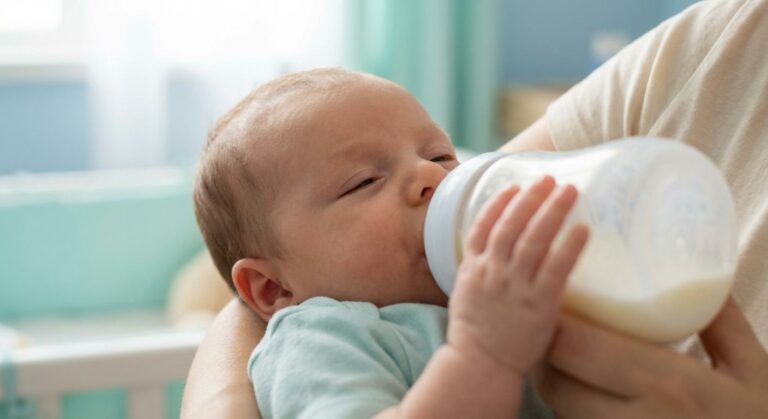
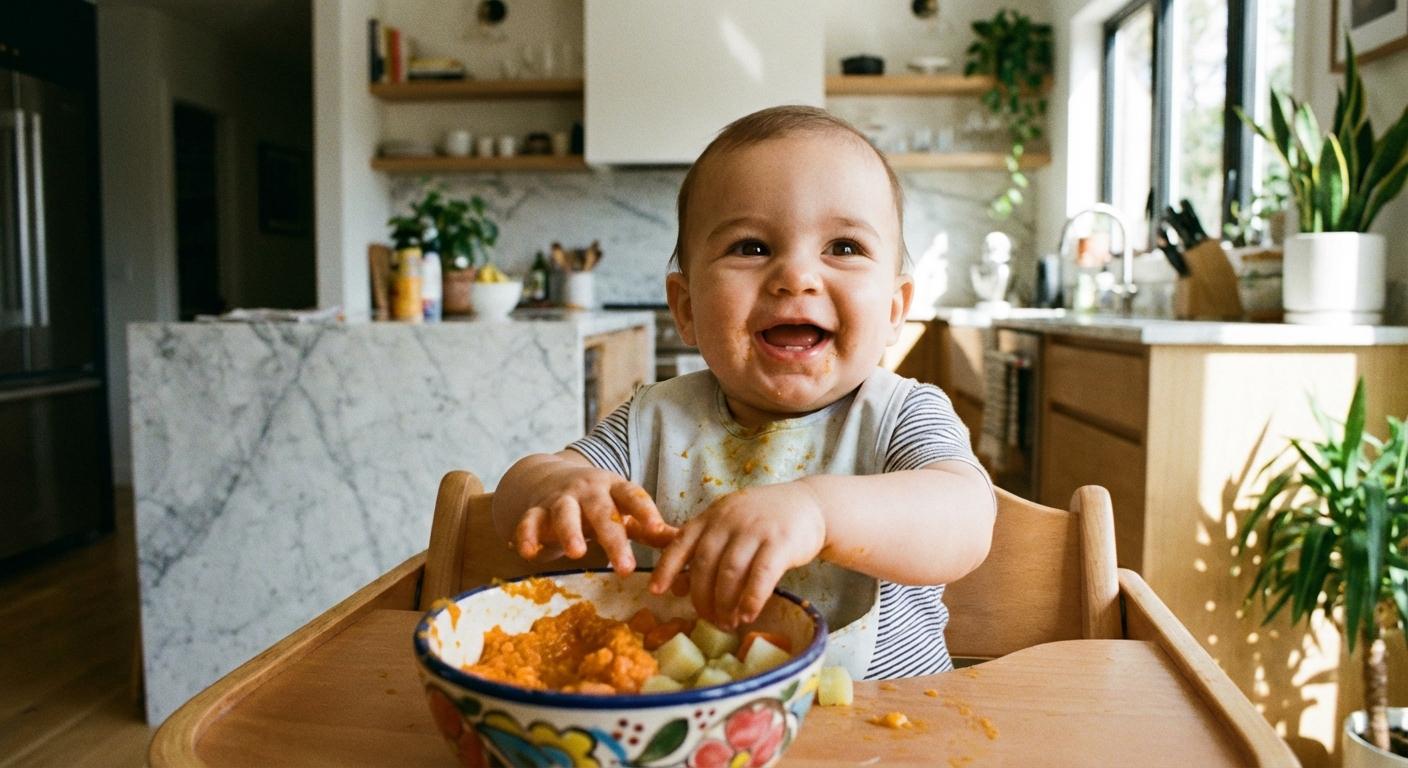
Feeding a 10-month-old can feel oddly paradoxical: your baby is suddenly eager, curious, and fast, yet one day they devour lunch and the next they seem to live on milk and air. Is that normal? Often, yes. At this age, baby food 10 months is about balance: milk still carries much of the nutrition, while solids expand in texture, iron, and variety, safely, calmly, and without turning the high chair into a battleground.
Baby food 10 months: the big picture (milk, meals, safety)
How milk and solids fit together at 10 months
At baby food 10 months, breast milk or follow-on formula remains the backbone. It supplies a substantial share of energy, fat, and calcium, while solids contribute more iron, zinc, and texture practice.
Many babies land somewhere around 700–900 ml of milk over 24 hours (some less, some more), often split into 3–4 feeds. Then real life happens: teething, a short night, a new skill, a stuffy nose, a growth spurt. Appetite can swing.
What deserves your attention? Not one “tiny” dinner, but the pattern across several days, your baby’s energy, wet diapers, and steady growth.


Meal rhythm at 10 months: often four eating times
A common structure for baby food 10 months is four eating times: breakfast, lunch, afternoon snack, and dinner. Some babies keep an early-morning milk feed, others drop it naturally.
Practical anchors:
- Breakfast: breast milk or bottle, optionally a small add-on (mashed fruit, iron-fortified baby cereal, oats).
- Lunch: vegetables + a starch + added fat + an iron source (meat/fish/egg/legumes).
- Afternoon snack: milk + fruit (unsweetened applesauce/fruit purée or ripe mashed fruit), optionally yogurt.
- Dinner: often simpler (vegetables + starch + added fat), then milk depending on appetite.
How much milk at 10 months (without obsessing)
Even with solids going well, many clinicians look for at least about 500 ml/day of milk (or the equivalent in breastfeeds) until 12 months.
- Breastfeeding: keep nursing on demand.
- Follow-on formula: a frequent range is about 500–700 ml/day, usually across 2–4 bottles.
If your baby wants milk after a solid meal, it can be perfectly typical. With baby food 10 months, the aim is rarely to “replace” milk, it’s to broaden the food repertoire while milk stays central.
This month’s priorities: textures, iron, key nutrients, allergens, water
Textures often shift the most in baby food 10 months. Many babies can manage thicker mashes, small soft lumps, soft chopped foods, and early finger foods. That gradual progression supports chewing (mastication), tongue lateralization (moving food side-to-side), and later texture acceptance.
From a nutrition perspective, iron is the headline. By 10 months, iron stores from early infancy are lower, yet needs remain high. Try to include an iron-rich food most days.
Iron sources that work well:
- meat, poultry
- fish
- fully cooked egg
- lentils/beans/chickpeas
- tofu
- iron-fortified cereals
Other nutrients often highlighted:
- Zinc (meat, fish, egg, legumes, grains)
- Vitamin A (carrot, sweet potato, pumpkin, well-cooked spinach)
- Vitamin C (kiwi, berries, citrus if already introduced, tomato, pepper, broccoli). Vitamin C boosts absorption of non-heme iron (plant-based iron).
- Vitamin D: supplementation is common in infancy, follow your clinician’s local guidance.
Allergens: once peanut, egg, fish, or tree nuts are tolerated in baby-safe forms, keep them in rotation a couple of times per week.
Water: offer a few sips with meals in a cup (open cup or straw cup). Milk still covers most fluid needs, sweet drinks are unnecessary.
Safety mindset: upright seating, calm pacing, close supervision
For baby food 10 months, safety begins before the first bite. Seat your baby upright in a stable high chair, a footrest helps stability and chewing. Stay within arm’s reach. Keep pacing calm. Cook foods until they are soft enough to squash between your fingers, and cut them into safe shapes.
How much milk vs solids at 10 months
Milk remains the main nutrition through the first year
Even when solids are going well, milk remains the primary source of calories and fat until 12 months. If solids look small on some days, that alone is not a red flag.
Solids increase without pressure: responsive feeding
Responsive feeding is a simple, powerful frame for baby food 10 months:
- You decide what is offered and when.
- Your baby decides whether to eat and how much.
Progress matters more than portions. Offer regular meals, include at least one familiar item, and avoid chasing intake with constant snacks.
Readiness and development at 10 months (what parents often notice)
Oral skills: from mashing to early chewing
Many 10-month-olds “chew” by grinding with gums and moving food laterally with the tongue. If your baby has mainly had smooth purées, a gentle progression usually helps:
smooth → thicker mash → fork-mashed with tiny soft bits → small soft pieces → melt-in-the-mouth finger foods
Want thicker food without making it hard to manage? Reduce cooking water, add a starch (potato, oats), and mash with a fork instead of blending.
Coughing or gagging with lumps: learning vs warning signs
A brief gag or cough, followed by your baby continuing to eat, is often part of learning. The gag reflex is naturally sensitive in infancy, and coordination between chewing, saliva control, and swallowing is still developing.
Speak with your pediatrician if you notice:
- repeated significant coughing during feeds,
- breathing changes or clear distress,
- persistent refusal of even tiny textures,
- poor weight gain or slowed growth.
Self-feeding skills: pincer grasp and early spoon practice
The pincer grasp (thumb and forefinger) is often strong now. Offer pieces that are easy to pick up: soft sticks or small squashable chunks. Preload a spoon with yogurt or mash and let your baby bring it to their mouth.
Best foods to offer at 10 months (and how to serve them)
Iron-rich proteins
For baby food 10 months, include an iron source regularly:
- Meat and poultry: very tender, finely shredded or minced, mix with sauce or vegetable mash.
- Fish: well-cooked, carefully deboned, flaked (low-mercury options like salmon, trout, cod, pollock, sardines).
- Egg: fully cooked scrambled egg or omelet strips.
- Legumes: cook until very soft, then mash, pair with vitamin C foods.
- Tofu: soft cubes or crumbled.
- Iron-fortified cereals/oats: practical for small eaters.
Vegetables and fruit: variety with gentle fiber
Good options (cook until very soft, or serve very ripe):
- Vegetables: carrot, zucchini, sweet potato, pumpkin, very tender green beans, well-cooked broccoli/cauliflower, peas lightly mashed, spinach cooked soft and finely chopped.
- Fruit: ripe banana, avocado, cooked apple/pear, very soft berries mashed or mixed into yogurt/oatmeal.
Starches and added fats
- Starches: potato, very soft rice, small pasta cooked very tender, couscous, well-cooked quinoa, oats.
- Added fats: often around 1–2 teaspoons per day of olive oil or rapeseed/canola oil, or a small knob of butter.
Dairy foods: optional extras
If milk feeds cover needs well, yogurt or cheese can be occasional additions:
- Plain, full-fat yogurt (no added sugar)
- Pasteurized cheese in small amounts (watch salt)
Textures and self-feeding (including finger foods)
Texture progression that stays realistic
A practical ladder for baby food 10 months:
smooth → thicker mash → fork-mashed → small soft pieces → soft finger foods
Finger foods: autonomy, with clear boundaries
Do you wonder whether spoon-feeding and finger foods can coexist? Absolutely. Many babies alternate: they accept a spoon when tired, then insist on grabbing everything when well rested.
Try a simple rule: baby stays seated and supervised, food stays soft and appropriately sized, and you keep your role steady (offer, pause, observe).
Safe finger food ideas (soft, squashable, easy to hold)
- Vegetables: very soft carrot sticks, sweet potato wedges, zucchini sticks, broccoli florets cooked until very soft.
- Fruit: ripe banana spears, avocado slices, cooked pear/apple sticks.
- Protein: omelet strips, tofu strips, fish flakes pressed into soft patties.
- Grains: overcooked pasta spirals, toast strips with a very thin spread (yogurt or thinned nut butter if already tolerated).
Portion sizes and building a balanced plate (without turning meals into math)
Portions in baby food 10 months can look surprisingly different from one child to another, and even from one meal to the next. A helpful way to think is “starting offer” rather than “target amount”:
- 1–2 tablespoons of mash per component, then refill if interest stays high
- a small handful of soft pieces, then add more slowly
If your baby wants to eat more, you can respond. If they stop, you can stop too. That back-and-forth is how appetite regulation is practiced.
Foods to avoid and choking safety rules
Choking hazards to avoid (and safer ways to serve)
Avoid or modify:
- Whole grapes and cherry tomatoes: quarter lengthwise.
- Whole nuts, popcorn, hard candy, gum: unsafe at this age.
- Raw apple slices and raw carrots: steam or bake until soft.
Honey and undercooked animal foods
Avoid honey under 12 months due to infant botulism risk. Avoid unpasteurized dairy. Cook eggs until firm, cook meat, poultry, and fish thoroughly.
Fish choices and mercury basics
Choose low-mercury fish such as salmon, trout, sardines, cod, and pollock. Avoid high-mercury species like shark and swordfish.
Sample meal plans (simple, repeatable ideas)
A typical day (four eating times)
- Breakfast: milk feed + optional oats/fruit
- Lunch: vegetables + starch + iron-rich protein + added fat + water
- Afternoon snack: milk + fruit ± yogurt
- Dinner: vegetables + starch + added fat + water, then milk depending on appetite
Sample 1-day plan
- Breakfast: iron-fortified oatmeal + mashed berries + yogurt
- Lunch: shredded chicken + soft rice + very soft broccoli + water
- Afternoon snack: milk + ripe banana
- Dinner: salmon flakes + mashed sweet potato + peas lightly mashed + water
Common feeding challenges (and calm solutions)
Refusals and appetite swings
With baby food 10 months, “light” days happen. Keep offering variety without pressure. Many babies need multiple exposures before accepting a new food.
A small but meaningful detail: repeated exposures work best when the atmosphere stays neutral. Offer, let your baby explore, and avoid bargaining. The goal is familiarity.
Constipation: small adjustments
Helpful levers:
- Offer water with meals.
- Use gentle fiber sources (pear, prune in small amounts, very soft zucchini).
- Rotate starches, avoid rice and carrots every day if stools harden.
- Keep added fats in meals.
Seek medical advice if constipation is painful, persistent, or there is blood in the stool.
Teething days
Teething can temporarily shrink interest in solids. Cooler textures (yogurt, fruit mash) often feel better. Milk feeds can carry the day, solids can return when comfort improves.
Batch cooking, storage, and hygiene
Cool cooked foods promptly and refrigerate in airtight containers. Use refrigerated baby foods within about 48 hours (or freeze portions). Thaw in the fridge. Reheat until steaming hot and stir well.
Wash hands before food prep and feeding, keep raw meat separate, and discard leftovers from your baby’s bowl.
Key takeaways
- Baby food 10 months still revolves around milk, many babies need at least about 500 ml/day (or equivalent breastfeeds) up to 12 months.
- A common rhythm is four eating times, with lunch often carrying the iron focus.
- Prioritize an iron-rich food most days and move textures forward gradually.
- Keep tolerated allergenic foods in rotation in baby-safe forms.
- Reduce choking risk with upright seating, close supervision, soft textures, and safe shapes.
- For extra support, parents can download the Heloa app for personalized tips and free child health questionnaires.
Questions Parents Ask
Can my 10-month-old eat the same food as the family?
Yes, often—just with a few adjustments. You can offer softened versions of family foods (well-cooked vegetables, tender meat/fish, pasta, rice), ideally without added salt and without spicy chunks that could irritate. Keep textures soft enough to squash between your fingers, and cut foods into safe shapes. If you’re unsure, try “fork-mashable” as your everyday benchmark—simple, realistic, and reassuring.
How do I know if my baby is ready for more “table foods” instead of purées?
Many babies are ready when they can sit well, bring food to their mouth, and manage thicker mashes without frequent distress. A bit of gagging can be part of learning—no panic. If your baby seems interested in grabbing food, try offering one soft finger food alongside the usual spoon option. Going step by step is perfectly fine, there’s no prize for rushing textures.
Should I avoid salt and sugar at 10 months?
It’s generally best to keep added salt and added sugar very low at this age. Babies’ kidneys are still maturing, and early sweetness can crowd out more nourishing tastes. You can still make meals enjoyable: use naturally flavorful foods (tomato, herbs, cinnamon, ripe fruit) and add richness with healthy fats like olive or rapeseed/canola oil. If you’re doing your best most days, that’s already a big win.
Further reading :