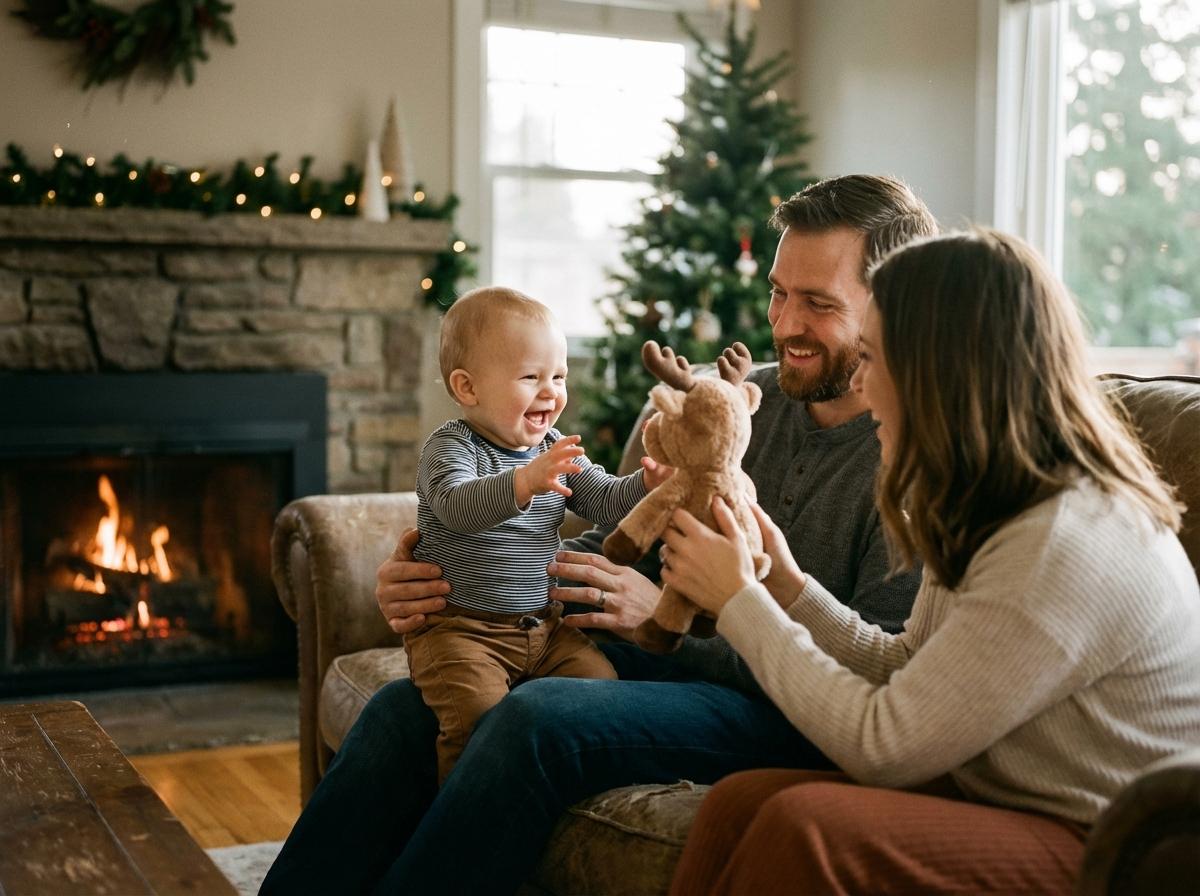
Baby’s first Christmas often comes with a tender, slightly chaotic mix: you want cozy moments, yet you’re counting naps, watching for overstimulation, and wondering who will try to “just hold the baby” right before bedtime. Add winter viruses, late dinners, and a living room full of shiny hazards, and the whole thing can feel tight. The good news? baby’s first Christmas can stay simple, meaningful, and medically sensible, without draining the joy.
Why baby’s first Christmas can feel overwhelming
A tiny nervous system meets big stimulation
For baby’s first Christmas, the main challenge is biological. Your baby’s brain is still learning sensory regulation (managing noise, lights, touch, movement). When stimulation piles up, the stress response rises, settling becomes harder, sleep gets lighter, and feeds may turn fussy.
Early overload signs are often subtle: looking away, yawning, eye rubbing, stiffening, back arching, sudden irritability, refusing breast or bottle. Bad timing? Or just a nervous system asking for less.
“But my baby won’t remember”, does it still matter?
Your baby may not form a story-like memory, but they do store implicit memory: body sensations linked to safety. Warm arms, predictable routines, a calm voice, the smell of home. During baby’s first Christmas, those signals matter more than decorations.


Baby-led expectations: connection over performance
Baby-led does not mean doing nothing, it means planning around what your baby tolerates.
- Keep gatherings short, or split them across days.
- Choose one anchor moment (a photo, a short walk to see lights, one gift).
- Protect “reset tools”: a feed, dim light, skin-to-skin, babywearing, a nap.
Flexibility is not giving up. It’s supporting regulation.
Sleep and routine during baby’s first Christmas
Plan around naps, feeds, and a solid Plan B
With infants, the celebration happens at nap level. Overstimulation can show up as shorter naps, difficulty falling asleep, more night waking, or “wired” crying.
Helpful anchors for baby’s first Christmas:
- Keep nap timing and bedtime close to usual when possible.
- Do big moments fast (photos, greetings, gift opening).
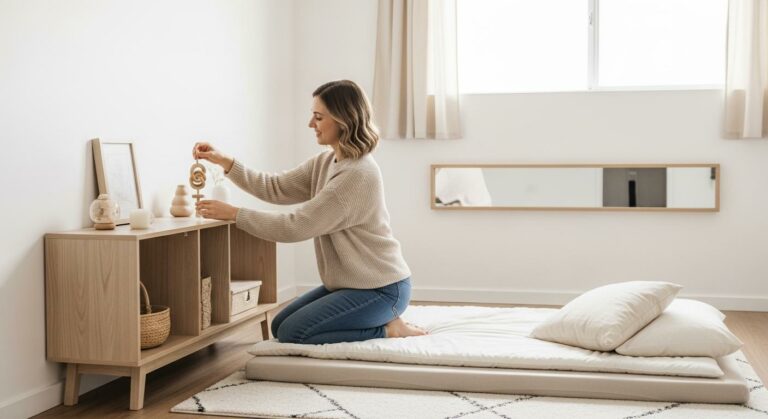
- Create a calm corner (darkened room, white noise, play mat).
- Keep a Plan B: leave earlier, skip a stop, or celebrate in two rounds.
Spot tiredness before the meltdown
You might see yawning, eye rubbing, ear tugging (often tiredness rather than otitis), gaze aversion, escalating agitation. Ask yourself: “Can we slow down right now?” Ten quiet minutes can change the evening.
What babies enjoy by age (0–12 months)
- 0–3 months: faces, high-contrast shapes, warmth. Keep it brief.
- 4–6 months: reaching, mouthing, giggles, simple sensory play.
- 7–9 months: sitting/crawling, grabbing everything (choking risk rises).
- 10–12 months: cruising/standing, more separation anxiety, short attention for “unwrap” moments.
Baby’s first Christmas gifts: safe, useful, memorable
How to choose: simple beats flashy
A good baby’s first Christmas gift is safe, sturdy, and fits your baby’s motor stage. Many babies tire quickly from loud electronic toys, calmer sensory items often work better.
Prefer BPA-free and phthalate-free materials, well-stitched fabrics, smooth edges.
Gift ideas by age
0–3 months
- High-contrast cards or soft books
- Play mat/activity gym with secure attachments
- Large-handled rattle (no loose beads)
- One-piece teether (rubber or silicone)
4–6 months
- Textured fabric books (no detachable parts)
- Shatterproof mirror toy
- Easy-grip rattles/sensory balls
- Simple musical toy with safe volume and screw-secured battery compartment
7–9 months
- Stackable cups, large soft blocks
- Bath toys that dry easily (mold prevention)
- Cause-and-effect toys with big buttons
- Chunky board books
10–12 months
- Stable push toy
- Chunky shape sorter (large pieces)
- Oversized stacking rings
- Thick-page picture books
The “less but better” formula
Two or three gifts are often plenty:
- one developmental toy
- one practical item (sleep sack, crib sheets)
- one symbolic keepsake
It keeps baby’s first Christmas meaningful without overstimulation.
Gift safety basics
- Respect age labels, simpler designs often mean fewer hazards.
- Avoid accessible button batteries and loose magnets.
- Skip shedding glitter, tinsel, or fragile ornaments.
- Check toys for cracks, peeling parts, loose seams.
Outfits: warmth, comfort, and photos
Gentle fabrics for sensitive skin
Baby skin is thinner and reactive. Prioritize soft cotton, stretchy knit, smooth velvet, flat seams. Avoid cords, jewelry, and detachable decor.
Overheating: easy to miss
Babies don’t regulate temperature like adults. Signs of overheating include a sweaty neck, damp hair, flushed cheeks, restlessness. Check the back of the neck, if it’s hot and damp, remove a layer.
Car seat winter safety
No bulky coats under the harness. Buckle in thin layers, tighten properly, then add a blanket over straps.
Traditions that fit baby’s first Christmas
Small traditions stick
- One holiday book at bedtime
- A short weekly walk to see outdoor lights
- A yearly photo in the same spot
Christmas Eve and morning, baby-paced
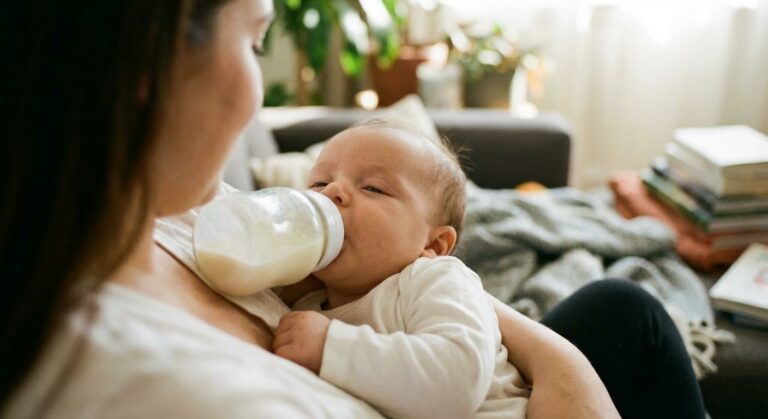
Warm bath, pajamas, milk feed, one book. Dim lights after dinner. Keep bedtime close to usual, overtired babies often wake more. If family visits, consider adult gift exchanges during nap time.
Baby-friendly advent ideas
- Storybook countdown (re-read favorites)
- A daily photo of one detail (hands, toes, tree lights)
- Activity prompts instead of objects: one song, one cuddle, a short walk
Decor and home safety for baby’s first Christmas
Tree safety: stability first
If your baby is or will soon be mobile:
- Anchor the tree to a wall or sturdy furniture.
- Use shatterproof ornaments on lower branches.
- Keep hooks, small ornaments, and tinsel out of reach.
- Use cool LED lights, check wires.
- Keep real-tree water inaccessible.
Wrapping, cords, breakables
Secure cords along baseboards. Avoid glass ornaments at baby level. Remove ribbons, plastic films, and small packaging quickly (choking/suffocation risk).
Candles and fragrance
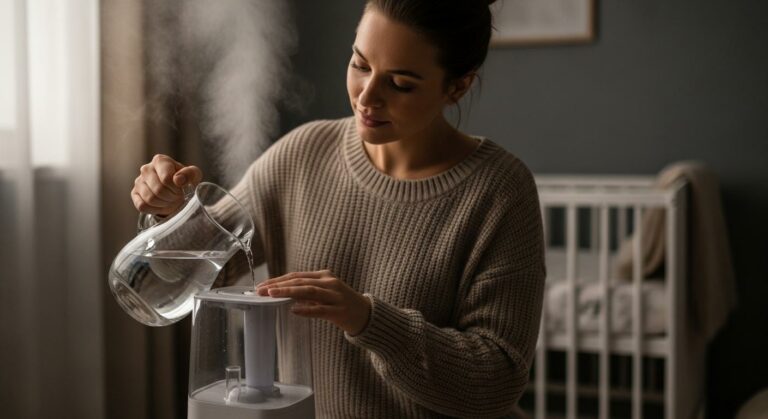
Infant airways are sensitive. Prefer flameless LED candles, ventilate well, and avoid heavy sprays or diffusers.
Photos you’ll love from baby’s first Christmas
Photo timing that works
A 15–20 minute mini session after a nap and a feed is often perfect. Natural window light helps.
Simple setups:
- Baby on a blanket near a window
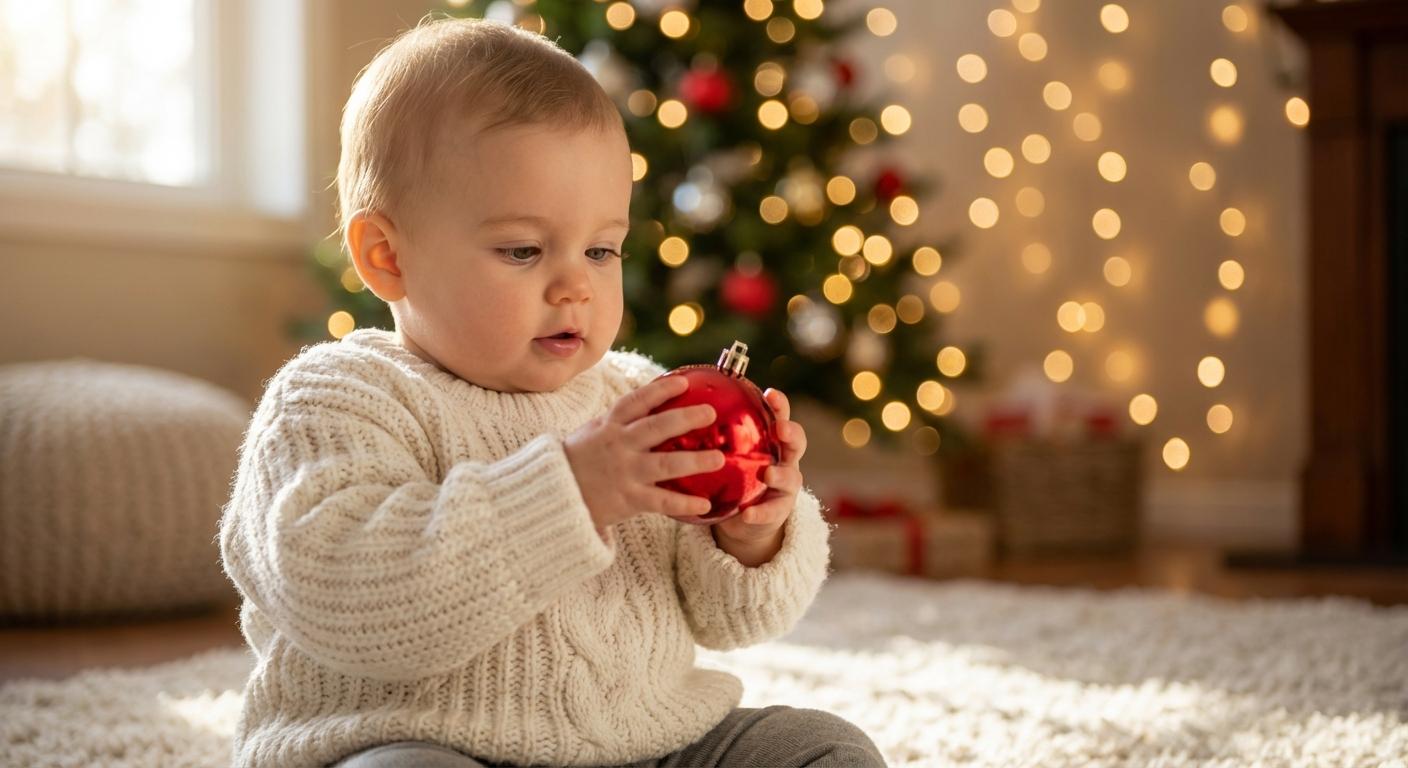
- Baby in arms with the tree blurred behind
- Close-ups: hands, eyelashes, tiny feet
Safety rule: never leave baby unattended on a raised surface, supportive arms in-frame are fine.
Mini shot list (fast and realistic)
- Baby + caregivers portrait
- Baby by the tree (held or safely on the floor)
- Hands/feet detail
- Stocking/ornament with the year
- One candid: yawn, feeding cuddle, giggle
Keepsakes from baby’s first Christmas
Keepsakes in minutes
- A shatterproof dated ornament hung high
- Salt-dough or non-toxic clay footprint/handprint
- A short note for a memory box (age + one funny detail)
A practical tip: do hand/foot prints right after a feed, when muscles are softer and your baby is more relaxed.
Food and mealtimes during baby’s first Christmas
Milk remains the main food before solids are established. If your baby eats solids, keep textures familiar.
Safety reminders:
- No honey under 12 months (infant botulism risk).
- High-risk choking foods: whole grapes, nuts, popcorn, hard candy, sausage rounds.
- Offer soft foods cut appropriately, seat baby upright and supervise.
Refrigerate leftovers within 2 hours, reheat thoroughly, then cool before serving.
Family gatherings: boundaries that protect health
Respiratory viruses and “just one kiss”
Winter is peak season for RSV, influenza, and COVID-19, and infants can develop lower respiratory tract symptoms quickly (bronchiolitis, wheezing, dehydration from poor feeding). During baby’s first Christmas, it’s reasonable to put simple protective measures in place.
Consider:
- asking adults to wash hands before holding the baby
- avoiding face kisses
- keeping distance from anyone with fever, cough, sore throat, stomach symptoms
- stepping outside for fresh air if a room feels crowded
You may be thinking, “Will this offend people?” Possibly. Yet it’s a health boundary, not a personal critique.
When to call a clinician during the holidays
During baby’s first Christmas, minor colds are common. Still, some signs deserve medical advice, especially for young infants.
Seek prompt guidance if your baby has:
- breathing that looks hard work (ribs pulling in, fast breathing, grunting)
- poor feeding or fewer wet diapers
- fever (follow your local guidance, in many settings, fever in a baby under 3 months needs same-day assessment)
- unusual sleepiness, persistent vomiting, or a worrying change in color
Planning with grandparents and friends
Share your baby’s nap and feeding windows, and how long you can stay. For parties, arrive early and leave early when needed. Babywearing often reduces pass-the-baby pressure and supports regulation.
Useful phrases:
- “We’ll say hello, then it’s nap time.”
- “Please hand him back if he turns away or rubs his eyes.”
- “We’re keeping things calm tonight.”
Planning made simple: timeline, checklist, budget
A light timeline (starting in November)
- Week 1: pick one ritual (photo by the tree, dated ornament).
- Week 2: notice your baby’s best time of day.
- Week 3: choose useful items, keep shopping minimal.
- Week 4: map the day: travel, people, quiet sleep space.
Essentials checklist
- Feeding: milk, bottles if used, bibs
- Outings: car seat, stroller or carrier, blanket
- Calm corner: mat, dim light option, comfort item
- Diaper bag: diapers, wipes, saline, spare outfit, laundry bags, muslin cloth, pacifier if used
A simple budget frame
For baby’s first Christmas, the most expensive items are not always the most helpful. If you want a structure:
- one “daily life upgrade” (sleep sack, carrier, thermometer)
- one book or toy
- one keepsake
It’s neat, predictable, and easy to repeat next year.
Travel during baby’s first Christmas
Packing by category
- Sleep: portable crib, fitted sheet, sleep sack, white noise option
- Feeding: bottles/formula or pump supplies
- Health: thermometer, saline, nasal aspirator, prescribed meds
- Comfort: favorite book, small toy
Car travel safety
- Harness snug, chest clip at armpit level.
- No bulky layers under straps, blanket over harness after buckling.
- Plan stops for feeds and diaper changes on longer drives.
Staying with family: quick baby-proof scan
Look for cords, small objects on the floor, unstable furniture. Set up a firm, flat sleep space with no loose bedding.
A small extra: if you’re traveling across time zones, shift bedtime by 15–20 minutes for a few days rather than trying to “reset” overnight. Babies tend to adapt better to gradual changes, especially during baby’s first Christmas.
Baby’s first Christmas by age: what to prioritize
Newborn (0–3 months)
Warmth, feeds, sleep. Keep visits short. Photos near a window after a feed, with baby supported in arms.
4–6 months
Interactive gifts, short songs, a textured book, a teether. Plan around naps.
7–9 months
Floor-based photos are safest. Move breakables and assume fast grabbing hands.
10–12 months
Secure the environment: anchored tree, hidden cords, moved breakables. Short unwrap moments work best before patience runs out.
Key takeaways
- baby’s first Christmas is better baby-led: comfort, connection, flexible plans.
- Protect naps and feeds, a calm corner prevents overload.
- Choose a few safe, age-appropriate gifts, simpler often works best.
- Dress in breathable layers and watch for overheating.
- Baby-proof decor: anchored tree, cords secured, wrapping cleared fast, LED candles preferred.
- Keep meals familiar and choking-safe, no honey under 12 months.
- Photos and keepsakes can stay simple and safe.
- If you’re unsure about symptoms, feeding changes, or sleep disruption, your pediatrician can help, for personalized guidance and free child health questionnaires, download the Heloa app.
Questions Parents Ask
How do we handle Santa photos if our baby cries?
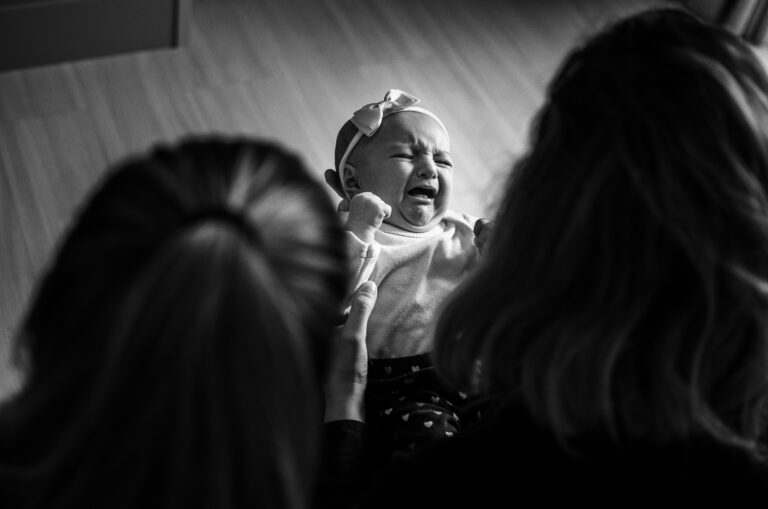
It’s very common for babies to cry with Santa—new face, bright lights, different smells, lots of noise. You can keep it gentle by going right after a feed and a nap, staying close (baby on your lap is perfectly fine), and keeping the “session” to a few minutes. If your baby isn’t settling, it’s also okay to skip it and do a cozy at-home photo instead: near a window, in your arms, with the tree softly in the background. The memory can be sweet without pushing through tears.
What Christmas scents are safe around babies (candles, essential oils, diffusers)?
Babies’ airways can be sensitive, especially in winter. If you enjoy holiday scents, a simple option is good ventilation and mild choices (or going fragrance-free). Many families prefer flameless candles and avoid essential-oil diffusers around infants—concentrated oils can irritate breathing and, in some cases, be risky if spilled or ingested. If you do use fragrance, keeping it subtle and out of baby’s sleep space helps.
When can we start a stocking or “first ornament” tradition?
Any time feels right—newborns included. Babies won’t follow the story yet, but they do benefit from the warmth and predictability of small rituals. A simple approach: one stocking item you’d use anyway (pajamas, board book), plus one shatterproof dated ornament placed out of reach. Easy, meaningful, and low-stimulation.