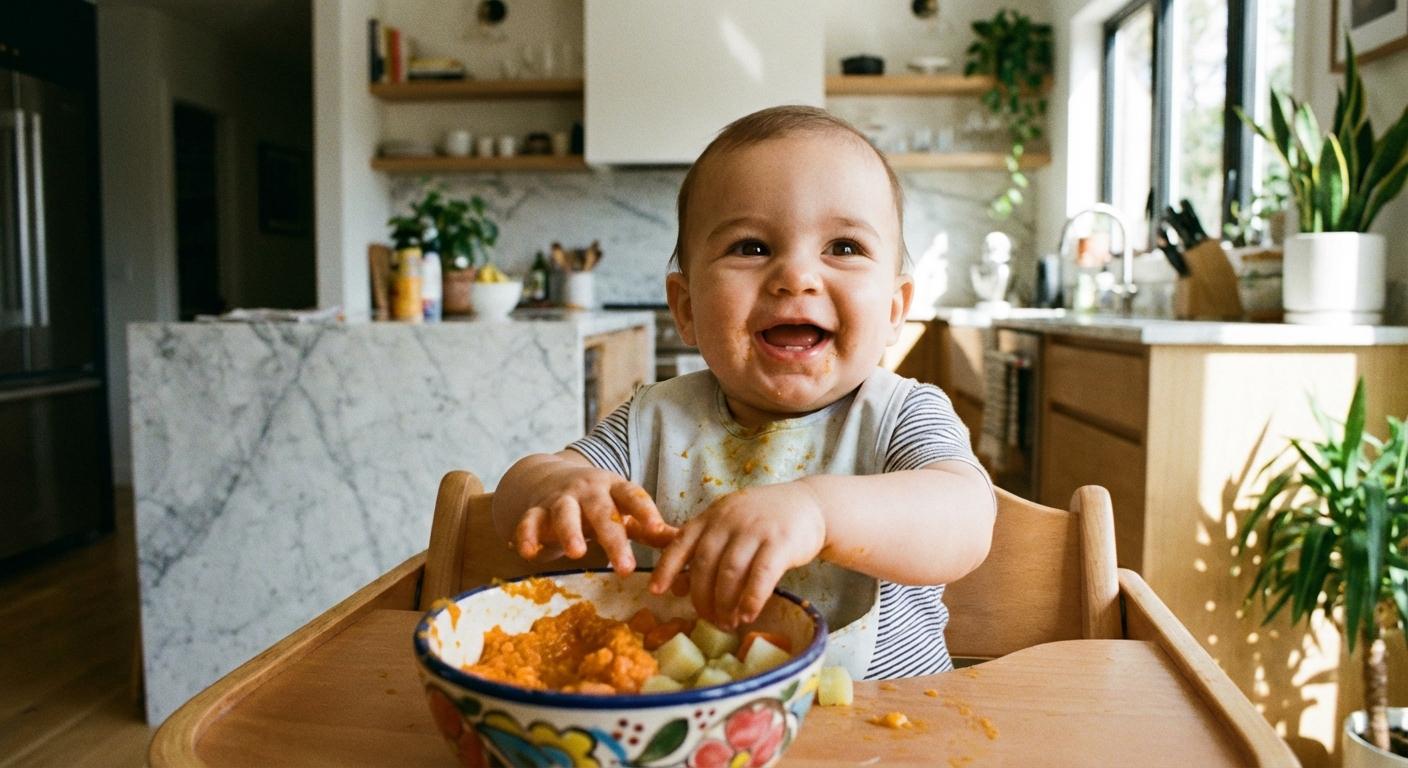
Feeding a 10-month-old can feel like a mix of excitement and second-guessing. One day your baby wants to taste everything on the plate, the next day, milk seems to be the only “yes”. With baby food 10 months, that push-and-pull is common. Milk still carries a big share of calories and fat, while solids build skills (chewing, self-feeding) and bring in nutrients that milk alone cannot cover well, especially iron.
You may be wondering: How much milk is enough? How lumpy can food be? What is safe, especially with finger foods? Let us set a clear, practical rhythm, Indian household-friendly, medically sound, and realistic for daily life.
Baby food 10 months: the big picture (milk, meals, safety)
How milk and solids fit together at 10 months (breastfed or formula-fed)
At baby food 10 months, breast milk or follow-on formula remains a pillar of nutrition. It provides energy, essential fats (important for brain and eye development), and calcium, while solids bring variety, iron, and texture.
Many babies take roughly 700 to 900 ml over 24 hours (some more, some less), split into 3 to 4 feeds. Appetite changes are expected: teething, skipped naps, minor viral infections, or simply being busy learning to stand can reduce interest in solids for a day or two.


What matters is the pattern across several days: alertness, wet diapers, steady growth, and general wellbeing, not whether one dinner looked “small”.
Meal rhythm at 10 months: often 4 eating times
A common pattern for baby food 10 months is four eating times: breakfast, lunch, afternoon snack, and dinner, with milk feeds woven in.
Practical landmarks many Indian families find workable:
- Breakfast: breastfeed/bottle, optionally soft oats, ragi porridge, or mashed fruit.
- Lunch: vegetables + a starch + added fat + an iron source (egg, fish, chicken, dal, chana, rajma, tofu).
- Afternoon snack: milk + fruit (mashed banana, stewed apple/pear) and sometimes curd/yogurt.
- Dinner: often lighter: veg + starch + added fat, milk after, based on appetite.
If your schedule includes a daycare drop or a long commute, keep the pattern flexible. The order is less important than the overall total: milk feeds stay steady, and solids show up consistently.
How much milk at 10 months (without obsessing over millilitres)
Even with solids progressing, many clinicians look for at least about 500 ml of milk per day (or the equivalent in breastfeeds) up to 12 months.
- Breastfeeding: continue on demand.
- Follow-on formula: often around 500 to 700 ml/day, across 2 to 4 bottles.
If your baby asks for milk after a meal, it can be normal. At baby food 10 months, solids are not meant to replace milk overnight, they broaden nutrients and textures while milk remains the base.
One nuance parents appreciate: if milk is offered before solids, some babies fill up and refuse lunch. If solids come first, some babies eat well but then ask for milk for comfort. Both patterns can work, watch which one gives you calmer, more predictable meals.
What to aim for this month: textures, iron, key nutrients, allergens, water
Textures are a big milestone in baby food 10 months. Many babies can manage thicker mashes, small soft lumps, soft chopped foods, and beginner finger foods. Moving forward gradually supports oral-motor development (tongue movements, jaw strength, coordination of chewing and swallowing).
Iron deserves special attention. By 10 months, babies have lower iron stores than earlier infancy, but still high needs. Try to include an iron-rich food most days:
- chicken/meat (well-cooked, shredded/minced)
- fish (well-cooked, deboned)
- fully cooked egg
- lentils/beans (moong dal, masoor, chana, rajma: cook very soft, then mash)
- tofu
- iron-fortified cereals
A useful pairing to remember: plant iron (from dals/beans) is absorbed better when vitamin C is on the plate too. Even a few spoons of tomato, guava, or soft orange can help.
Other helpful nutrients:
- Zinc: meat, fish, egg, legumes, cereals.
- Vitamin A: carrot, sweet potato, pumpkin, well-cooked spinach.
- Vitamin C: guava (soft), orange/sweet lime if tolerated, tomato, capsicum, broccoli.
- Vitamin D: supplementation is common, follow your paediatrician’s advice.
Allergens: once peanut, egg, fish, or tree nuts are tolerated in safe forms, keep them in rotation a couple of times a week. Think “little and often” rather than rare big servings.
Water: offer a few sips with meals in a cup (open cup or straw cup). Sweet drinks are not needed.
A quick safety mindset: supervision, seated eating, calm pacing
Safety in baby food 10 months starts with the setup:
- baby seated upright in a stable high chair
- ideally a footrest
- adult within arm’s reach
- calm pacing (avoid feeding while walking around)
Cook foods until soft enough to squash between your fingers, and cut them into safe shapes.
How much milk vs solids at 10 months
Milk remains the main nutrition through the first year
Milk is still the main source of calories, fats, and many micronutrients up to 12 months. If solids vary from day to day, that can still be normal.
Do you need to measure every spoon? Not really. A steadier approach is to watch energy, sleep, stools, and growth.
How solids increase without pressure: responsive feeding
With baby food 10 months, responsive feeding keeps mealtimes steady:
- you choose what is offered and when
- your baby chooses whether to eat and how much
A practical routine is three meals a day plus an afternoon snack. If frequent snacks start replacing milk or meals, appetite at the table can drop.
Readiness and development at 10 months
Oral skills: moving from mashing to early chewing
Many 10-month-olds handle thicker mashes and small lumps by moving food side-to-side and grinding with gums. If your baby has mostly had smooth purees, a gentle progression often helps:
- smooth
- thicker mash
- fork-mashed with tiny soft bits
- small soft pieces
- melt-in-the-mouth finger foods
To make this easier in an Indian kitchen, think of textures you already cook: soft khichdi mashed with a fork, dal thickened and slightly grainy, or idli soaked and broken into tiny soft bits.
Gagging with lumps: learning vs when to ask for help
A brief gag, then continuing to eat, is often part of learning. The gag reflex is sensitive at this age.
Speak to your paediatrician if you notice repeated significant coughing during feeds, breathing changes, consistent refusal even for tiny textures, or poor weight gain.
Self-feeding skills: pincer grasp and early spoon practice
Offer easy-to-pick pieces (soft sticks, small squashable chunks). You can preload a spoon with curd/yogurt or mash and let your baby bring it to the mouth.
If mess feels stressful, try one “messy meal” a day and keep the others simpler. Skill-building still happens.
Best foods to offer at 10 months (and how to serve them)
Iron-rich proteins
Aim for a regular iron source in baby food 10 months:
- Meat/chicken: tender, finely shredded or minced, mix with gravy or veg mash.
- Fish: well-cooked, fully deboned, flaked (choose low-mercury options like salmon, trout, sardines, rohu, catla).
- Egg: fully cooked scrambled egg or omelette strips.
- Legumes: dals and beans cooked very soft, then mashed, pair with vitamin C foods.
- Tofu: soft cubes or crumbled.
- Iron-fortified cereals/oats: useful for small eaters.
If your family is vegetarian, iron can still be managed well, but it needs planning: dals/beans, tofu, fortified cereals, and vitamin C pairings become your regular toolkit.
Vegetables and fruit
Good options (cook until very soft, fruits very ripe):
- Vegetables: carrot, lauki/bottle gourd, pumpkin, sweet potato, very tender beans, well-cooked cauliflower, peas lightly mashed, spinach cooked soft and finely chopped.
- Fruit: ripe banana, chikoo (very ripe, mashed), stewed apple/pear, soft papaya.
If gas or loose stools happen after a new fruit, pause it for a few days and reintroduce later in a smaller amount.
Starches and added fats
- Starches: soft rice, overcooked dalia, soft idli pieces, small pasta cooked very tender, potato, oats.
- Added fats: around 1-2 teaspoons per day of oil, plus small amounts of ghee or butter if used at home.
Fats are not “extra” at this age, they support growth and help babies feel satisfied.
Dairy foods: optional extras
If milk feeds are solid, curd/yogurt or cheese can be occasional:
- Plain, full-fat curd/yogurt
- Pasteurised cheese in small amounts (watch salt)
Textures and self-feeding (including finger foods)
Texture progression you can actually follow
For baby food 10 months, texture progression works best when it is steady, not sudden:
- fork-mashed khichdi today
- khichdi with tiny soft bits tomorrow
- soft finger foods alongside spoon foods on weekends
If your baby had been on smooth purees for a long time, the first lumps can feel surprising. Slow down, but keep moving.
Finger foods with structure
Many families use a mixed approach: spoon-fed foods some days, finger foods other days.
A simple finger-food plate:
- 1 iron-rich food
- 1 veg or fruit
- 1 starch
- a little added fat
Safe finger food ideas:
- very soft sweet potato wedges
- banana spears
- omelette strips
- tofu strips
- overcooked pasta spirals
Allergenic foods at 10 months
Once tolerated, keep allergens going in baby-safe forms:
- peanut butter thinned into porridge/curd (never a thick spoonful)
- egg fully cooked
- fish well-cooked and boneless
If there is eczema, asthma in the family, or past reactions, discuss the plan with your clinician.
Foods to avoid and choking safety rules
Avoid or modify:
- whole grapes and cherry tomatoes (quarter lengthwise)
- whole nuts, popcorn, hard candy
- raw apple slices and raw carrots (steam or bake)
Avoid honey under 12 months (botulism risk). Avoid raw/undercooked eggs, meat, and fish.
A quick reminder about nut butters: they are nutritious, but thick nut butter can behave like a choking hazard. Always thin it and spread very lightly.
Sample meal plans
A typical day (4 eating times)
- Breakfast: milk + oats/ragi or mashed fruit
- Lunch: veg + starch + iron-rich protein + added fat + water
- Afternoon snack: milk + fruit, with or without curd
- Dinner: veg + starch + added fat + water, then milk if wanted
One sample day
- Breakfast: oats + mashed fruit + curd
- Lunch: mashed dal + soft rice + very soft veg + water
- Snack: milk + banana
- Dinner: fish flakes (or egg) + mashed sweet potato + water
Common feeding challenges
Refusals and appetite swings
With baby food 10 months, hunger is not linear. Keep offering variety without pressure. Look at intake across several days.
Practical signs your baby is done:
- lips closed tightly
- head turned away
- pushing the spoon away
- throwing food repeatedly and losing interest
Constipation
Offer water with meals, rotate starches, include soft fruits (pear, a little prune), and keep added fats. If stools are painful, hard, or there is blood, seek medical advice.
Teething days
Softer, cooler foods often feel better (curd, fruit mash). Milk feeds can carry the day.
Batch cooking, storage, and hygiene
Cool cooked foods promptly and refrigerate in airtight containers. Use within about 48 hours or freeze portions. Reheat until steaming hot and stir well.
Wash hands before prep and feeding. Discard leftovers from your baby’s bowl.
Key takeaways
- At baby food 10 months, milk remains a pillar, many babies still need at least about 500 ml/day (or equivalent breastfeeds) up to 12 months.
- A common rhythm is four eating times, with iron-rich foods offered most days.
- Progress textures gradually towards fork-mashed foods and soft finger foods.
- Keep tolerated allergenic foods in rotation in baby-safe forms.
- Parents can download the Heloa app for personalised guidance and free child health questionnaires.
Further reading :