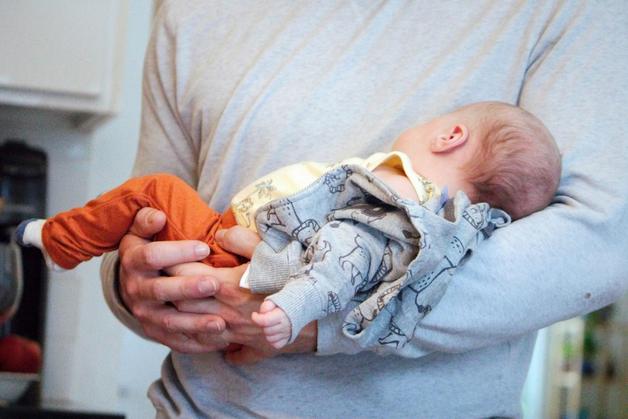
Parents often picture baby daily care as a long checklist: bath, cream, nails, laundry, perfect naps… and somehow dinner too. But daily care is not about controlling the day. It is about protecting comfort and health with a few repeatable steps: remove irritants (milk, drool, sweat, stool), limit moisture trapped in skin folds, support the skin barrier, and keep your baby safe.
You might be wondering: what truly needs to happen every day—and what can wait? The answer changes with age, skin type, and family rhythm. Still, the foundations of baby daily care stay remarkably stable.
What “baby daily care” really includes (and what it doesn’t)
Baby daily care is a blend of hygiene, feeding, sleep, development, and prevention. Not a perfection contest.
Core elements:


- Feeding (breast, formula, or mixed) with signs intake is adequate (steady growth, alert periods, regular wet diapers).
- Diaper care: prompt changes, gentle cleansing, skin protection.
- Targeted hygiene: face/hands, eyes, folds, and genitals cleaned when needed (not necessarily a full bath).
- Sleep rhythm: safe sleep space, calming cues.
- Comfort and development: cuddles, voice, age-appropriate play, supervised tummy time.
- Safety habits: hand hygiene, safe sleep, car seat checks, early babyproofing.
What it doesn’t require? A daily bath. Or a cabinet full of scented products.
Why routines help: the biology behind the “same steps”
Babies thrive on repetition. When events come in a familiar order—feed, diaper, cuddle, sleep—the nervous system starts predicting what’s next. That predictability supports early self-regulation (the ability to shift from alert to calm), and it can reduce stress responses.
For parents, a simple baby daily care flow reduces decision fatigue and makes changes easier to spot: fewer wet diapers, a new rash, unusual sleepiness, a sudden feeding struggle.
Daily rhythm by age: from newborn to 12 months
Many days feel like a loop. Normal.
- Wake windows are often 45–60 minutes.
- Feeds commonly happen every 2–3 hours, including at night.
- Total sleep is often 14–17 hours/24h, in short blocks.
Hygiene tends to be “local”: wipe what is dirty, keep folds dry, and do brief baths as you like. Until the umbilical stump falls off, sponge cleaning is often preferred.
4–6 months: more predictable naps, longer play, early solids readiness
Awake time stretches, often 60–120 minutes. Sleep typically settles around 12–15 hours/24h.
Some babies show signs they are ready to start solids: good head control, sitting with support, interest in food, reduced tongue-thrust reflex. Milk (breast milk or formula) remains the main nutrition source.
7–12 months: meals structure, mobility, and safety steps
Wake windows often reach 2.5–3.5 hours, and many babies move toward two naps by 9–12 months.
Mobility accelerates (rolling, crawling, pulling to stand). Baby daily care now includes active supervision, choking-prevention habits, furniture anchoring, and consistent car seat use.
A flexible routine that follows your baby’s cues
A practical pattern is “feed–play–sleep”. Not a rigid schedule—more like a rhythm.
Typical wake windows (approximate):
- Newborn: 45–60 minutes
- 2–4 months: 60–90 minutes
- 4–6 months: 90–120 minutes
- 6–9 months: 2–3 hours
- 9–12 months: 3–4 hours
What if naps are short and crankiness builds? Shorten awake time a little. What if sleep is fought like a sport? Offer sleep earlier for a few days and reassess.
Cues to watch: hunger, tiredness, overstimulation
Early hunger cues: rooting, hand-to-mouth, lip-smacking, turning toward breast/bottle. Crying is a late sign.
Sleep cues: yawning, eye rubbing, looking away, reduced movement, sudden fussiness.
Overstimulation cues: frantic movements, arching, turning away from faces, escalating crying after noise/light/activity. Reduce input (dim lights, quieter voice), then move toward feeding or sleep.
Hygiene frequency: bath vs. “key areas”
Baby skin is thinner and more permeable than adult skin. The acid mantle (a slightly acidic protective film) and the skin microbiome are still stabilizing, so too much cleansing—or harsh cleansers—can increase dryness, tightness, flaking, and redness.
So the goal of baby daily care is cleanliness without friction.
How often to bathe?
Many families find this rhythm works:
- 0–1 month: mostly local cleansing, short baths if needed.
- 1–6 months: 2–3 baths per week.
- After 6 months: adjust for solids, crawling mess, and season.
A daily bath can be soothing for some babies, but keep it short, lukewarm, and watch for dryness.
What to clean daily (without stripping the skin)
Focus on what truly gets dirty:
- Face and hands: lukewarm water + soft cloth, pat dry.
- Eyes: saline on a compress, gentle wipe.
- Skin folds (neck, armpits, groin): clean only if damp/dirty, then dry well.
- Diaper area/genitals: every diaper change.
Less soap. More gentleness.
Preparing the setup: warmth, supplies, and clean hands
A wet baby cools fast. A parent searching for cotton pads mid-bath also cools fast—emotionally.
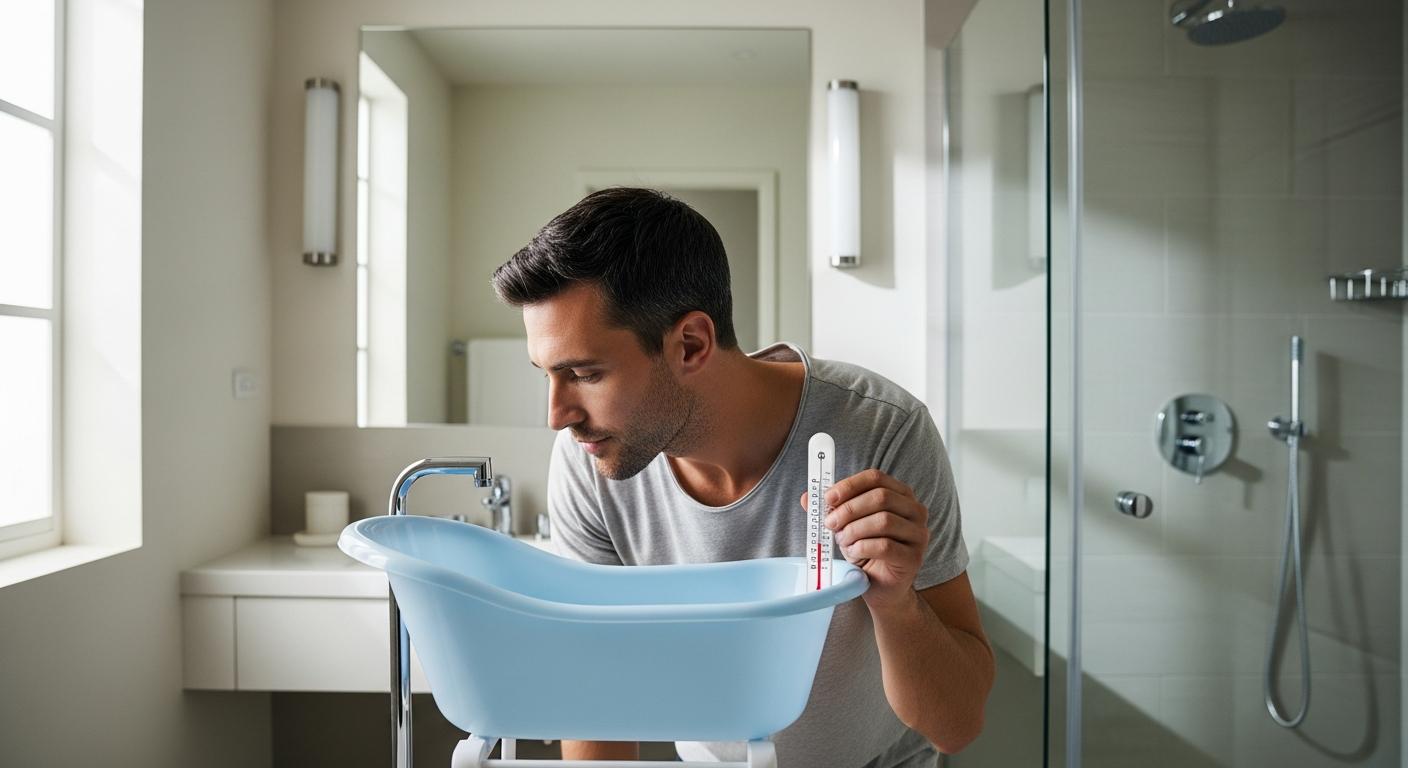
- Room temperature: about 22–24°C (no drafts).
- Bath water: around 37°C.
Essentials:
- Soft towel
- Washcloth
- Cotton pads/compresses
- Saline single-use vials
- Mild, fragrance-free cleanser (used sparingly)
- Diaper barrier cream if redness appears
Face care: quick, predictable, and gentle
This is classic baby daily care: small actions, big comfort.
Eyes: one pad per eye
- Saline on a cotton pad/compress.
- Wipe inner corner to outer corner.
- New pad for the second eye (limits germ transfer).
Nose and ears: no “digging”
- Nose: saline as needed (often during colds).
- Ears: clean only the outer ear. No cotton swabs in the canal (injury risk, wax pushed deeper).
The “milk and drool zones”
Cheeks, chin, neck fold, behind the ears. Moisture sits there, skin softens, redness follows. Clean gently, then pat dry.
Skin folds and diaper area: moisture control is the priority
Repeated rubbing irritates skin more than you might think.
Skin folds: clean, then dry thoroughly
Moisture in folds can cause maceration (whitish, softened skin), redness, and tiny cracks.
- Damp cloth to remove milk/sweat.
- Pat dry—always.
Diaper area: prevention and early soothing
Steps:
1) Clean gently (especially after stool).
2) Pat dry fully.
3) If red or after stool, apply a thin barrier layer (often zinc oxide).
If rash persists, spreads, or shows “satellite” bumps, it may be yeast-related (Candida) and a clinician can confirm.
Genital care: simple and respectful
- Girls: clean front to back.
- Boys: clean penis and scrotum without forcing anything.
If there is a foreskin, do not retract it by force. Natural separation can take years.
Bath basics: safe, short, and skin-friendly
- Water around 37–38°C.
- A few inches of water is enough.
- Continuous supervision (no stepping away).
A simple sequence:
1) Face
2) Hair/scalp (often 1–2×/week)
3) Body (cleanser only where needed)
4) Diaper area last
After bath: pat dry and moisturize within about 3 minutes while skin is slightly damp. This helps reduce transepidermal water loss (water evaporating from the skin surface).
Sensitive or eczema-prone skin: simplify, then protect
Long hot baths and perfumed products often worsen dryness.
Helpful habits:
- 5–10 minute baths, lukewarm.
- Cleanser only where needed.
- Daily moisturizer if skin is dry.
If skin seems reactive after a new product, step back to basics: one cleanser, one moisturizer, one barrier cream. Reintroduce slowly.
Feeding as part of baby daily care
Feeding is not “separate” from baby daily care. It drives hydration, growth, mood, and sleep.
Breastfeeding or pumping
Pain is a signal to adjust latch/position or seek support (midwife, lactation consultant). Signs feeds are going well often include steady weight gain and regular wet diapers.
Formula and bottle safety
Prepare formula exactly as directed. Use paced bottle feeding (pause, let baby breathe). Never prop a bottle.
Storage habits often used in pediatrics:
- Prepared formula refrigerated up to about 24 hours.
- Leftovers after a feed discarded after about 1 hour.
Solids and allergens (around 4–6 months if ready)
Solids are practice. Milk stays central.
- Start with single-ingredient foods.
- Offer iron-rich options early.
- Introduce common allergens one at a time in safe textures, ask your pediatrician for a plan if eczema or strong family history.
Sleep: daily care also means safe sleep
Safe sleep basics:
- Back to sleep, every time.
- Firm, flat surface with fitted sheet only.
- No pillows, loose blankets, bumpers, or stuffed toys.
A calming bedtime routine can be short: dim lights, diaper, pajamas, optional bath a few times/week, feed if needed, then down.
When to seek medical advice
Contact a clinician urgently for:
- Fever ≥38.0°C (100.4°F) in any baby under 3 months.
- Dehydration signs: markedly fewer wet diapers, very dark urine, dry mouth, no tears, unusual sleepiness.
- Breathing difficulty: rapid/labored breathing, retractions, grunting, blue lips/face.
- Feeding refusal with low urine output, lethargy, or persistent vomiting.
Also seek advice for umbilical redness spreading, oozing, bad odor, or a worsening rash.
Key takeaways
- Baby daily care works best as a rhythm: feeding, a little play, then sleep—guided by cues.
- Daily hygiene rarely means a full bath, focus on face, hands, folds, and the diaper area.
- Most babies do well with 2–3 baths/week, keep them short, warm, and supervised.
- Pat dry (especially folds) and use moisturizer when skin is dry to support the skin barrier.
- Diaper rash prevention is mostly moisture control plus barrier care.
- Professionals can help when fever, dehydration, breathing trouble, feeding refusal, or skin/umbilical changes appear.
- For personalized tips and free child health questionnaires, you can download the Heloa app.
Questions Parents Ask
How do I clean my baby’s scalp if there’s cradle cap?
No worries—cradle cap is very common and usually improves with gentle care. You can soften the flakes by applying a small amount of baby oil or fragrance-free emollient for 10–20 minutes, then use a soft brush to loosen them and rinse with lukewarm water. If you use cleanser, keeping it mild and limited to the scalp can help avoid dryness. If the skin looks very red, oozes, smells unusual, or seems painful, it may be worth checking in with a clinician for reassurance and options.
How can I trim my baby’s nails safely without hurting them?
It’s normal to feel nervous—tiny fingers move fast. Many parents find it easier after a feed or during sleep, when hands are relaxed. You can use baby nail scissors or a soft file, and gently press the fingertip pad away from the nail before trimming. Taking off just a little at a time can reduce accidental nicks. If a small cut happens, a clean compress and gentle pressure is often enough.
When is it safe to use sunscreen on my baby?
In general, sunscreen is typically used from around 6 months. Before that, it’s often more comfortable to focus on shade, lightweight covering clothing, and a hat. If sun exposure is hard to avoid, you can ask your pediatrician about applying a small amount of mineral sunscreen to limited areas (like cheeks or the back of hands).
Further reading :
- Washing and bathing your baby (https://www.nhs.uk/baby/caring-for-a-newborn/washing-and-bathing-your-baby/)