Leaving for a few days in the mountains can feel like a small reset: crisp air, quieter nights, views that make you breathe deeper. And then a practical worry pops up: altitude and baby. Will your child breathe well, sleep decently, and stay comfortable? Between the fear of “not enough oxygen,” ears that protest, unexpected cold, and naps that disappear, stress can rise faster than the road to the pass. Clear reference points help. So does a slow ascent, a warm baby, and close observation.
Altitude and baby: what changes for your child at elevation
What “altitude” means for families (day trips vs sleeping altitude)
Altitude isn’t only a number on a sign. For infants, the key is sleeping altitude, because a full night gives lower oxygen availability and dry air many hours to influence breathing, feeding, and sleep.
Think of it like this:
- Day trips: short exposure is often well tolerated if your baby is warm and feeds normally.
- Overnight stays: families usually choose a more cautious approach, because symptoms related to altitude and baby tend to appear in the first 24 hours and can be more obvious after the first night.
Pressure, oxygen, and “less available oxygen” (the basic mechanism)
As you go higher, atmospheric pressure falls. The air still contains about 21% oxygen, but the partial pressure of oxygen drops, so less oxygen moves from the lungs into the blood with each breath. This is why oxygen saturation (SpO2) tends to be lower at altitude.


Most healthy adults compensate at moderate elevation by breathing a bit faster and increasing oxygen delivery. With altitude and baby, that balance can be less stable, especially if other stressors pile on (fatigue, dehydration, getting chilled, or a stuffy nose).
Why babies respond differently than adults
Babies are not “small adults.” Their respiratory control is still maturing, particularly during sleep, and their adaptation can be less predictable in early infancy. Their airways are narrower, their energy and fluid reserves are smaller, and a minor problem (a reduced feed, mild dehydration, a colder night) can disrupt the whole picture.
Mountain air is often dry, which can dry the nasal mucosa and make congestion more likely, one more reason sleep may fragment.
Stressors that amplify risk
Several factors make altitude and baby harder:
- Rapid ascent (little time to adjust)
- Cold, wind, low humidity (heat loss and airway dryness)
- Stronger UV exposure (thinner atmosphere + reflection from snow)
- Illness, especially respiratory infections or significant nasal congestion
How altitude affects a baby’s body (clear physiology, practical cues)
Oxygen and breathing control
At elevation, lower oxygen pressure may lead to faster breathing. Because infant breathing control is immature, sleep can bring more irregular patterns. You might notice periodic breathing (brief pauses alternating with quicker breaths). Often, that is benign when your baby stays pink, wakes normally, and feeds well.
Useful reassurance cues:
- steady feeding
- normal responsiveness and interaction
- normal skin color
- no increased work of breathing (no grunting, no chest retractions, no nasal flaring)
Temperature regulation: cooling vs overheating
Infants have limited thermoregulation. Mountains add wind chill, quick temperature swings, and cold rooms at night. A baby can cool rapidly in a stroller, on a lift platform, or during a diaper change.
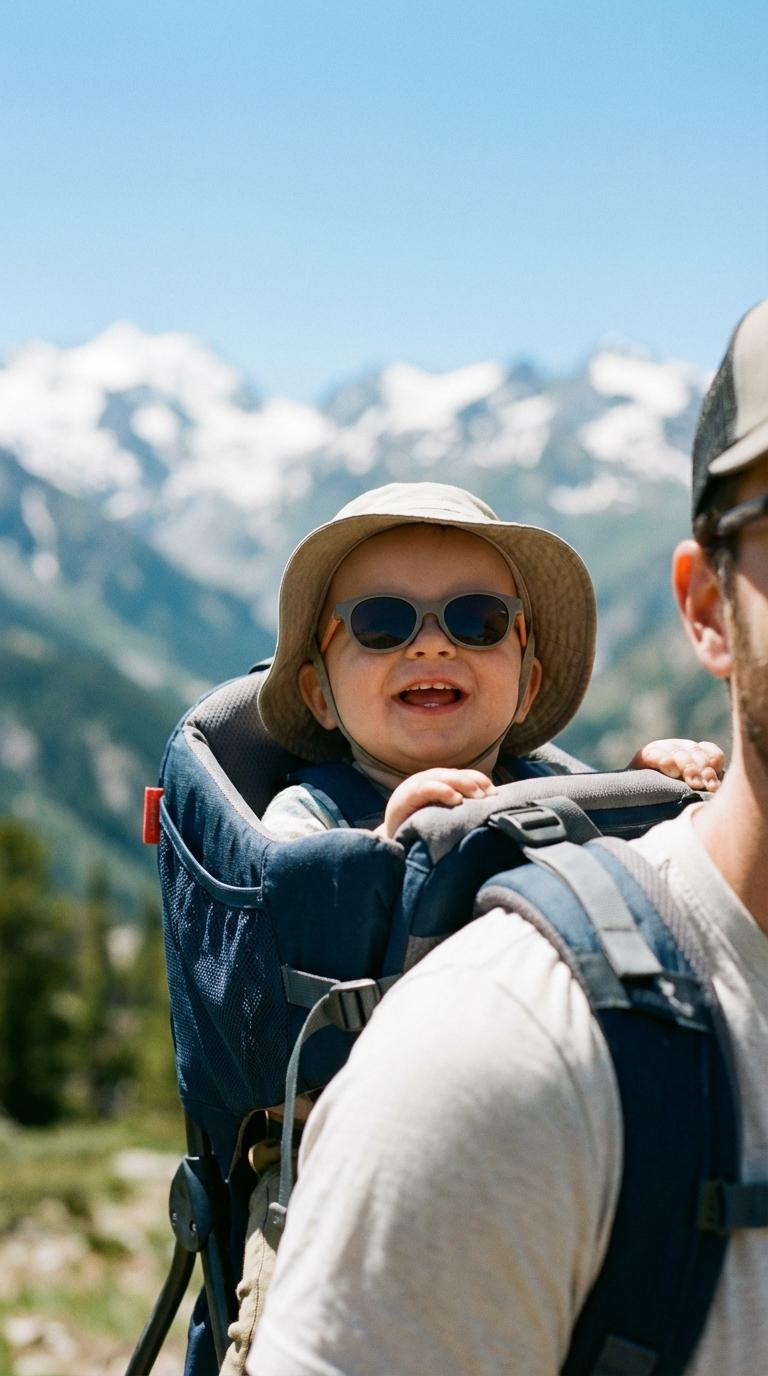
Overheating can also happen, especially in a carrier, where your body heat warms your baby. Check the chest or upper back rather than only hands and feet.
Hydration, digestion, energy
Dry air increases insensible water loss (water lost through breathing and skin). Many babies do better with more frequent feeds at altitude. Appetite can vary: some infants feed less the first day, others comfort-feed more.
Vomiting and irritability can be linked to altitude and baby, but also to dehydration, gastroenteritis, reflux, or infection. Wet diapers and overall behavior help you sort it out.
Sleep at elevation
Sleep fragmentation is common: lighter sleep, more micro-awakenings, shorter naps. Lower oxygen availability, dry air, temperature changes, and unfamiliar surroundings all contribute. Many families notice the toughest stretch after the first night at a new sleeping altitude.
Practical altitude ranges by age
Newborns (0–3 months): keep sleeping altitude low
A cautious approach is to keep overnight stays around 1,200 m (≈3,900 ft) or lower. Newborn respiratory control is still very immature, and reserves are limited.
Need a daytime outing higher up? Keep it gentle: short exposure, warmth, shade, and an easy way back down.
Babies (3–12 months): respect rhythm and pacing
Between 3 and 12 months, adaptation improves, yet routine remains your best compass. Short days, protected naps, and gradual altitude gain usually make altitude and baby manageable at moderate elevations. Because humidity is lower, offering feeds more often is frequently helpful.
6+ months and toddlers: no single cutoff
After 6 months, many families manage sleeping altitudes around 2,000 m (≈6,560 ft) with a slow ascent and careful monitoring, but there is no universal “safe number.” Consider the trio:
- ascent speed
- baseline health (a cold changes everything)
- symptoms in the first 24–36 hours
A simple zone approach
- Moderate altitude: up to ~1,500 m
- Intermediate altitude: 1,500–2,500 m
- High altitude: above 2,500–3,000 m
Often:
- 1,000–1,500 m feels comfortable for many families, with possible lighter sleep.
- 1,500–2,500 m calls for closer observation and slower days.
- Above 2,500–3,000 m, think carefully about overnight stays and discuss plans if your baby has any medical history.
Babies who need extra caution
Extra caution is needed if your baby:
- was born premature, especially with prior respiratory support or bronchopulmonary dysplasia
- has a history of apnea
- has congenital heart disease or suspected pulmonary hypertension
- has chronic lung disease or significant anemia
- has frequent ear infections
- is currently ill (bronchiolitis, pneumonia, otitis media) or very congested
With altitude and baby, the goal is usually simple: sleep lower, ascend slowly, and keep descent easy.
Acclimatization made simple
What acclimatization looks like in babies
Adjustment often shows up as:
- smaller, more frequent feeds
- a temporary appetite dip
- more fussiness
- faster breathing, or more noticeable pauses during sleep
- unusual sleepiness
If your baby acclimatizes, feeding and settling typically become steadier.
A gentle ascent strategy
Two rules often keep altitude and baby on track:
- Pause every 300–500 m of ascent to feed, change, and reassess (closer to 300 m for younger babies).
- When possible, sleep 300–500 m lower than the highest point of your day.
For the first 48 hours: short outings, easy evenings, and a low-key day if sleep and appetite unravel.
Travel planning details parents ask about
Ears and pressure changes: why swallowing helps
Pressure changes do not “damage” the ear in a healthy baby, but they can hurt. The middle ear is connected to the throat by the Eustachian tube (a small channel that equalizes pressure). In babies it is shorter and more horizontal, so it can clog more easily, especially with mucus.
What can you do?
- Offer breastfeeding, bottle, or a pacifier during climbs and descents.
- If your baby refuses to suck, pause the ascent when possible (a break can be enough).
- Avoid rapid altitude changes when your baby has heavy congestion.
Stuffy nose at altitude: dry air and simple relief
Dry air irritates the nasal lining, the mucosa swells, and suddenly breathing sounds louder at night. With altitude and baby, this is a frequent reason for broken sleep.
Helpful basics:
- saline drops or spray before feeds and bedtime
- gentle suction only when necessary (too much can irritate the nose)
- add humidity in the room if it is very dry
Pulse oximeters: use with a clear mindset
A pulse oximeter can be reassuring or can create spiraling worry. At altitude, readings are naturally lower, and small errors are common with movement or cold fingers.
If you choose to use one:
- measure when your baby is calm and warm
- look at trends, not one isolated number
- match the reading to the real-life picture: color, feeding, alertness, breathing effort
Getting there: car, cable car, train, flying
- Car: breaks, careful temperature control, and swallowing (breast/bottle/pacifier) during climbs can ease ear pressure.
- Cable car: very rapid ascent, sometimes more ear discomfort, watch for sudden crying or feed refusal.
- Train: usually a gentler climb and often easier to tolerate.
- Flying: cabin pressure can feel like 1,800–2,400 m, congestion increases ear pain risk.
Altitude sickness in babies: what to watch, what to do
Babies cannot report headache. So altitude and baby can be tricky: altitude illness may look like “just a bad day.” Timing helps.
Possible early signs
- unusual irritability or inconsolable crying
- refusing feeds or clear drop in intake
- vomiting or markedly increased spit-up
- reduced interaction, marked fatigue
- sleep that becomes abruptly very disrupted
A common pattern is symptoms after ascent that improve with rest or descent.
Urgent warning signs
Seek urgent care and descend if you see:
- fast breathing at rest that keeps worsening
- chest retractions, nasal flaring, grunting
- pallor or cyanosis (bluish lips/face)
- unusual drowsiness or difficulty waking
Pause, stop ascending, or descend
- Pause: mild symptoms soon after arrival. Rest, warm up, offer feeds.
- Stop ascending: symptoms persist after rest or recur with higher altitude.
- Descend: symptoms worsen, or breathing, color, or alertness becomes concerning.
Dropping 300–500 m is often a practical first step.
Sleep and feeding: the two comfort levers
Sleep at altitude
Dry air plus a slightly blocked nose can trigger repeated wakings. Be more cautious if there is labored breathing at night or prolonged pauses.
Keep nights simple:
- breathable layers
- a comfortably warm room without overheating
- consider humidity if the room air is very dry
Safe sleep basics still apply: back sleeping, firm flat surface, no loose bedding.
Feeding and hydration
Offer feeds more often. Dry air increases water loss. After 6 months, small amounts of water in addition to milk can help when humidity is low.
Signs of dehydration:
- fewer wet diapers
- dark urine
- dry mouth, fewer tears
- unusual sleepiness or irritability
Outdoor safety: cold, wind, sun
For altitude and baby, weather protection matters as much as oxygen.
- Use a three-layer outfit: moisture-wicking base, insulating mid-layer, windproof shell.
- Wind cools fast, pack spare dry clothing.
- In a carrier, overheating is possible, in a stroller, keep airflow and shade.
- UV is stronger at altitude and snow reflects light: prioritize shade, hat, sunglasses, protective clothing, sunscreen for older babies on exposed skin.
If altitude and baby don’t mix: a calm action plan
1) Stop ascending, keep your baby comfortably warm, offer frequent feeds, and reassess at rest.
2) Descend a few hundred meters if symptoms persist. Improvement can be quick.
3) Seek urgent care for breathing distress, cyanosis, repeated vomiting with poor intake, or unusual lethargy.
Key takeaways
- With altitude and baby, lower oxygen availability can affect fatigue, sleep, and feeding, often most noticeably after the first night.
- Between 1,500 and 2,500 m, vigilance increases, above 2,500–3,000 m, be very cautious with overnight stays.
- Your best markers are breathing effort, skin color, alertness, feeding, and sleep.
- Slow ascent, pauses, warmth, UV protection, and more frequent feeds make trips smoother.
- If concerns appear, stop going higher, descending often helps quickly. Pediatric clinicians can support planning, and you can download the Heloa app for personalized advice and free child health questionnaires.
Questions Parents Ask
Can altitude cause reflux, gas, or more spit-up in babies?
Yes, it can happen—and it’s often temporary. A change in routine, more swallowed air (from faster breathing or crying), and mild dehydration in dry mountain air may all make spit-up feel worse. You can try smaller, more frequent feeds, extra burping breaks, and keeping your baby upright for a short moment after feeds. If vomiting becomes repeated, intake drops, or diapers are clearly fewer, it’s reasonable to pause, rest, and consider sleeping lower.
Is it safe for a baby to take a cable car or gondola to high altitude?
Many families do it without trouble, but the rapid ascent can be uncomfortable for ears. If your baby is willing to swallow (breast, bottle, pacifier) during the climb and descent, that often helps a lot. If there’s heavy congestion, discomfort may be stronger—choosing a slower ascent (train/car with breaks) can feel gentler. Any breathing difficulty, unusual sleepiness, or color change deserves quick medical advice and an easy plan to descend.
Do babies need special medicine to prevent altitude sickness?
Usually, no. Prevention is mostly about pacing: gradual ascent, calmer first day, good warmth, and frequent feeds. Preventive medication isn’t routinely recommended for infants without a clinician’s guidance. If your baby has heart/lung conditions, was premature, or had past apnea, it’s important to discuss mountain plans with your pediatric team in advance.
Further reading: