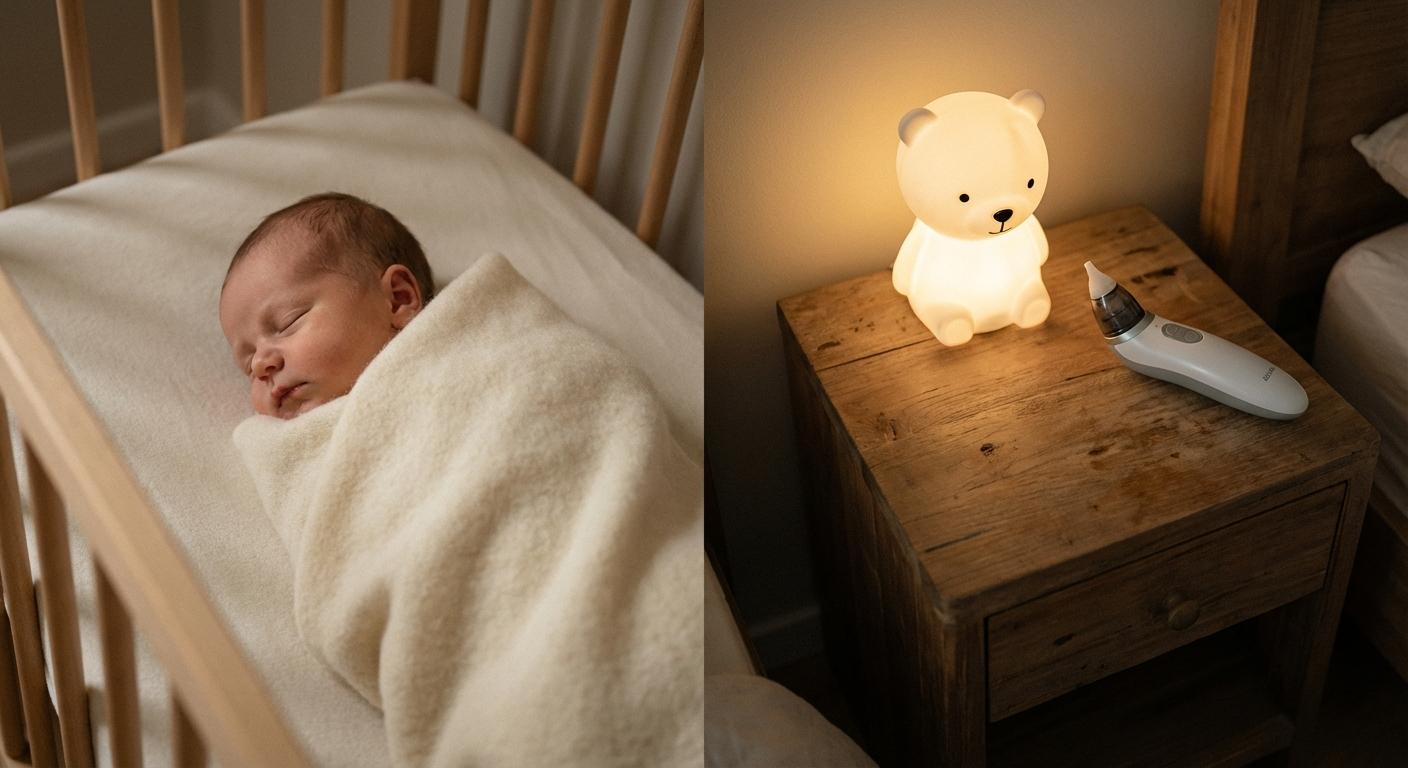
A blocked little nose can flip a day upside down: feeds become stop-start, sleep gets choppy, and breathing sounds worryingly noisy. A Nasal aspirator can help—when it’s used for the right reason, in the right way. Think comfort, not “emptying” the nose. Add saline first, keep suction brief, and protect that delicate nasal lining.
What a Nasal aspirator actually does (and what it doesn’t)
A Nasal aspirator is a baby nasal suction device meant to remove mucus sitting near the entrance of the nostrils—useful before a child can blow their nose.
It can:
- Move mucus that is physically blocking airflow at the front of the nose.
It can’t:


- Stop a virus, “treat” inflammation, or prevent a cold from running its course.
If congestion seems to return right away, it’s often because the nasal mucosa (the inner lining) is still swollen, still producing secretions, or drying out in heated air.
Why congestion hits babies so hard
In early months, babies are mainly nasal breathers. A small amount of mucus can cause a big effect:
- Breathing: noisy breathing, restless sleep, faster fatigue.
- Feeding: the suck–swallow–breathe coordination gets disrupted, babies unlatch, gulp air, and tire sooner.
- Sleep: more awakenings, shorter naps.
You may be wondering: “Is this dangerous?” Most of the time, it’s discomfort rather than danger. The day-to-day aim is easier breathing and adequate hydration.
Saline first: the step that changes everything
Before reaching for the Nasal aspirator, start with sterile saline (drops or gentle spray). Saline hydrates the mucosa and thins thick secretions, making suction effective without scraping sensitive tissue.
A practical rhythm:
- Saline in each nostril (often 1–2 drops).
- Wait 30–60 seconds.
- Use the Nasal aspirator only if breathing still seems clearly blocked.
Skipping saline often leads to the worst combo: poor results and more irritation.
When a Nasal aspirator helps… and when to pause
Times it’s genuinely useful
A Nasal aspirator can reduce nasal obstruction during:
- Common colds (upper respiratory infections).
- Allergy flares.
- Dry indoor air that turns mucus sticky.
- Bronchiolitis supportive care (it doesn’t open the chest airways, but a clearer nose can make drinking easier).
Most helpful timing:
- Before feeds.
- Before naps and bedtime.
- After a warm bath (steam loosens secretions).
Times to limit or skip suction
Pause suction if you notice:
- Active nosebleed, or very dry, fragile nostrils.
- Increasing redness, swelling, or obvious pain.
- A baby who is gagging, coughing hard, or fighting intensely.
After a nasal injury or procedure, follow clinician instructions—healing tissue can be easily damaged.
Types of Nasal aspirator: which style fits which family?
Bulb syringe (manual)
Simple: squeeze, place at the entrance, release slowly.
- Pros: tiny, no batteries, handy on the go.
- Cons: suction can be uneven, some bulbs trap moisture inside and are hard to dry (mold risk).
Mouth-suction systems (manual)
Tip + tube + reservoir (often with a filter).
- Pros: very good control, often effective after saline.
- Cons: requires careful cleaning and correct filter use.
Electric suction devices
An electric Nasal aspirator can be fast, consistent, and practical with a wriggly baby.
Look for:
- Multiple suction levels (start low).
- Soft, age-sized tips.
- Easy disassembly and complete drying, parts that the manufacturer lists as dishwasher-safe parts (if applicable).
Watch-outs:
- Motor noise can upset some babies.
- Strong or prolonged suction irritates the mucosa.
Choosing a Nasal aspirator: the criteria that really matter
- Age and fragility: newborn nostrils bleed easily, prioritize soft, depth-limiting tips.
- Comfort at the entrance: the tip should seal gently without being pushed inward.
- Controlled suction: short bursts beat long pulls.
- Hygiene design: anti-backflow and filters reduce mess, avoid sharing tips between siblings.
- Cleaning reality: the best Nasal aspirator is the one you can fully wash and fully dry after each use.
- Consumables: some models need replacement filters or tips—factor that into cost.
How to use a Nasal aspirator safely (step by step)
Before you start
- Wash hands.
- Check the tip: no cracks, no sharp edges.
- If your model uses a filter, use a clean one.
Saline first (especially with crusts or thick mucus):
- 1–2 drops (or a gentle spray) per nostril.
- Wait 30–60 seconds.
- Good light, baby well-supported, head slightly elevated.
Electric Nasal aspirator technique
- Start on the lowest level.
- Place the tip at the nostril entrance (no deep insertion).
- Suction 1–2 seconds, then stop and reassess.
Stop if there’s bleeding, worsening distress, new swelling, or repeated gagging.
Manual Nasal aspirator technique
- Keep the tip at the entrance.
- Use gentle, steady suction (mouth-suction) or a slow bulb release.
If nothing moves after a couple of tries, it often means “more saline and a break,” not “more power.”
After suction
- Expect mild pinkness sometimes.
- Marked redness, swelling, or blood means stop and space sessions out.
- Clean the Nasal aspirator immediately.
If the skin under the nose gets sore from wiping, a small amount of fragrance-free moisturizer can help on the outside skin only.
Frequency: how much is too much?
Use a Nasal aspirator when it improves breathing—not on a strict schedule. A realistic upper limit for many babies is about up to 4 times in 24 hours, with very short sessions.
Too frequent or too intense suction can inflame the mucosa, making congestion feel worse.
Safety details parents often ask about
Why gentleness matters
The nasal lining is thin and rich in small blood vessels. Irritation is more likely when:
- The tip is inserted inward.
- Suction is prolonged.
- Attempts are repeated back-to-back.
Can suction affect ears?
Very strong pressure changes can push secretions toward the back of the nose, near the Eustachian tube opening (the canal linked to the middle ear). Brief, controlled suction helps avoid unnecessary pressure.
When to call a pediatrician
Contact your child’s clinician if congestion significantly affects feeding or sleep despite saline and gentle suction.
Seek urgent care for:
- Breathing difficulty (fast breathing, chest pulling in, grunting, pauses, blue/gray lips).
- Signs of dehydration (far fewer wet diapers, very dry mouth, no tears, sunken fontanelle).
- Fever: any fever ≥38°C (100.4°F) in a baby under 3 months, or fever lasting more than 3 days in older children.
- Unusual lethargy, poor feeding, repeated vomiting, or rapid worsening.
Cleaning and maintenance: hygiene that actually works
After each use, disassemble washable parts.
- Rinse mucus away with warm water.
- Wash with warm soapy water, rinse well.
- Dry completely before reassembly (moisture encourages mold).
For electric models: keep the motor unit dry, wipe only as instructed.
For bulb syringes: draw soapy water in and out several times, rinse repeatedly, then dry thoroughly.
Replace tips if cracked or sticky, replace filters exactly as directed (many are single-use).
Key takeaways
- A Nasal aspirator is for quick breathing comfort, especially before feeds and sleep—not for “emptying” the nose.
- Saline first thins secretions and protects the nasal mucosa, suction should be brief and gentle.
- Electric and manual Nasal aspirator options can both work well, prioritize soft tips, adjustable suction, and easy cleaning.
- Limit suction if there’s bleeding, swelling, or escalating distress, and avoid deep insertion.
- Pediatric clinicians can guide you when symptoms persist or feeding/breathing becomes concerning. For personalized tips and free child health questionnaires, you can also download the Heloa app.
Questions Parents Ask
Can a nasal aspirator spread germs between siblings?
It can happen, so hygiene is your best ally. If possible, each child can have their own tip (or their own device). After every use, washing the parts that touch mucus with warm soapy water and letting everything dry fully helps limit germ transfer. For mouth-suction models, using a fresh filter as recommended also reassures many parents.
What’s the safest way to use a nasal aspirator on a newborn?
Newborn noses are tiny and can get irritated quickly—so gentleness really matters. You can aim for saline first, then place the tip only at the nostril entrance (no deep insertion) and keep suction very short. If your baby becomes very upset, coughs a lot, or you notice any blood, it’s perfectly OK to pause, cuddle, and try again later (or stick to saline alone).
Is it normal if my baby seems worse right after suction?
Yes—sometimes the lining of the nose swells when it’s irritated, which can briefly make breathing sound noisier. A short break, humid air (or a warm bath), and another small dose of saline often helps. If the “worse” feeling persists, feeding becomes hard, or you’re seeing frequent bleeding, a quick check-in with a pediatric clinician can bring peace of mind.