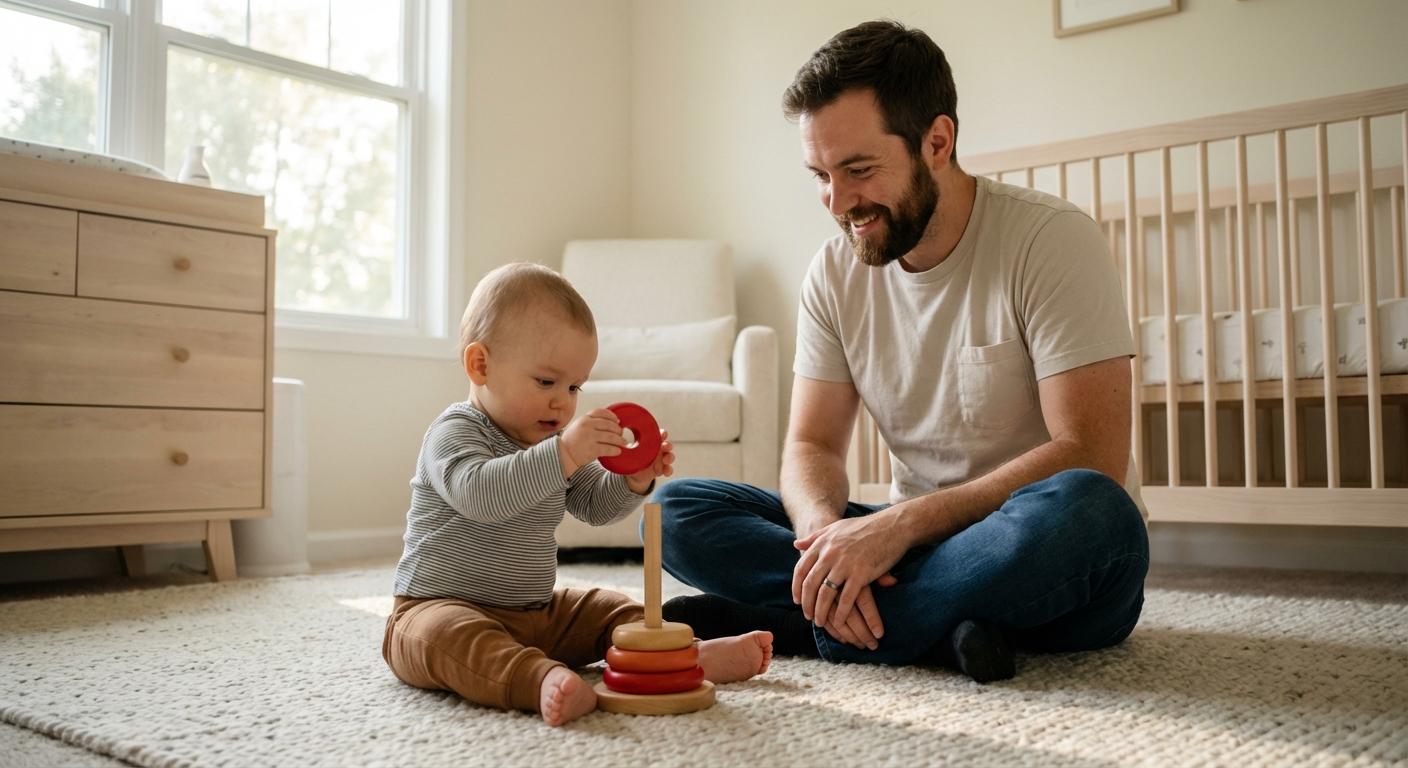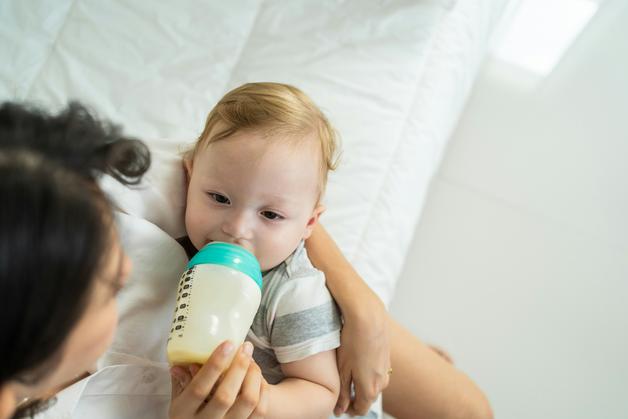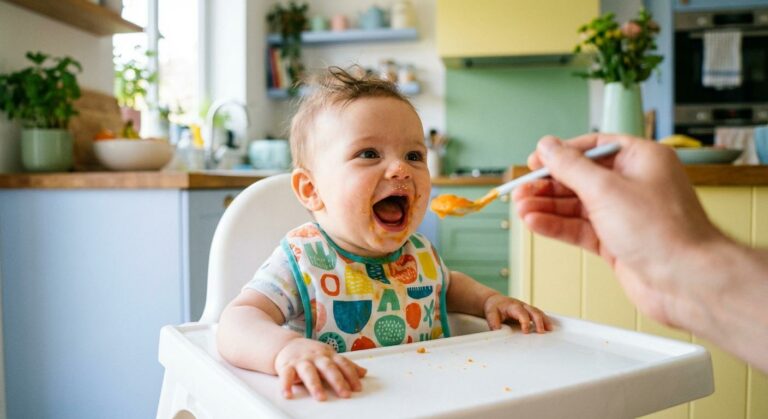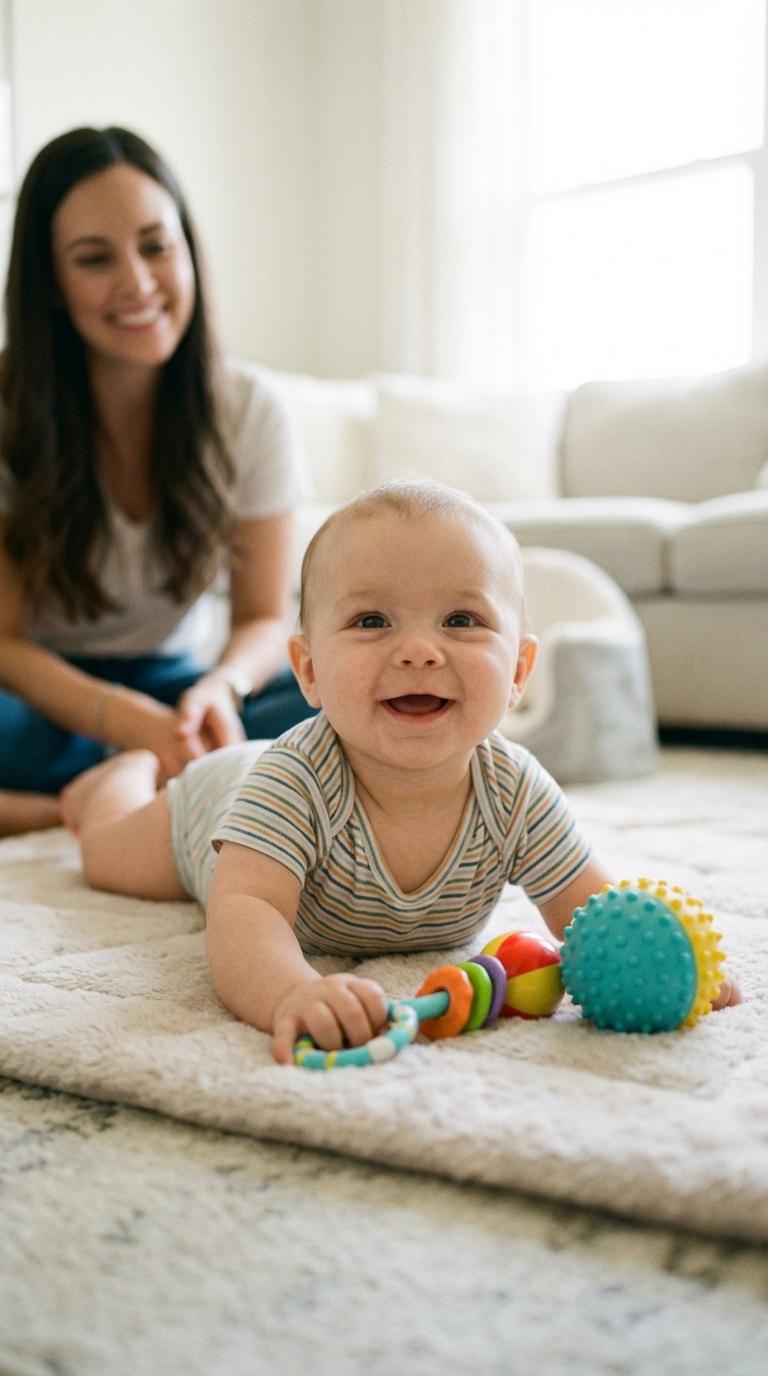
Babies in India grow up with a mix of modern toys, household objects, and lots of family interaction. Still, many parents pause at the toy shelf and think: are Baby developmental toys genuinely helpful, or just loud and flashy? A fair doubt. In the first year, your baby’s brain is building connections at lightning speed—through seeing, hearing, mouthing, holding, dropping, and repeating the same experiment again and again.
So the goal is not to “teach fast”. The goal is to offer play that feels safe, doable, and a little bit challenging. You’ll find how to choose Baby developmental toys by age (0-12 months), how to prevent overstimulation, and how to keep safety tight without making play stressful.
Baby developmental toys that support early learning
What “developmental” means and why simple play matters
“Developmental” does not mean complicated, battery-operated, or expensive. It means the toy (or a safe daily-life object) supports a skill your baby is working on right now—then gives a tiny next step.
Clinically, babies learn best when:

- they are calm enough to stay curious (not hungry, not too sleepy)
- the task is not too easy and not too frustrating
- they can repeat the action many times (repetition builds brain pathways)
This is why simple Baby developmental toys often win: a rattle, a soft block, a baby-safe mirror, nesting cups. These invite your baby to act and watch what happens. Toys that “do everything” can reduce active exploration.
You may be thinking, “But my baby keeps doing the same thing!” Yes. That repetition is practice, and practice is how the nervous system becomes more precise month by month.
How play supports sensory, motor, cognitive, language, and social-emotional growth
One set of Baby developmental toys can support several areas at the same time:
- Sensory processing: textures, gentle sounds, contrast patterns, movement
- Gross motor skills: head control, rolling, sitting balance, crawling during floor play
- Fine motor skills: grasp, bringing hands together, transferring between hands, early pincer grasp
- Thinking skills: early cause-and-effect, trial-and-error, simple problem solving
- Communication: babbling back-and-forth, pointing, shared attention with you
- Social-emotional growth: feeling secure, supported, and proud after small successes
Babies also need regulation to learn. If a toy overstimulates (very loud sound, bright flashing light, constant music), some babies become dysregulated and stop engaging. Often it is not the “wrong toy”. It is a tired baby, a short awake window, or too much stimulation at once. One idea at a time is usually more effective.
Caregiver interaction that boosts learning (serve-and-return, co-play)
Babies learn best through serve-and-return. Your baby “serves” with a look, a sound, a wiggle, or a reach—and you return with a warm, timely response. This back-and-forth supports attention, emotional security, and early language.
Easy co-play habits (very doable even in a busy home):
- Come close and watch first, at baby’s level.
- Copy what baby does (shake, bang, mouth, vocalise), then pause.
- Add one small variation: move the toy slightly away, change rhythm, name the action.
- Keep turns short. Your baby’s turn matters more than a “perfect activity”.
How babies develop and play from 0-12 months (without pressure)
Month-by-month developmental landmarks (clinical pointers, no checkbox mindset)
Every baby develops at their own pace. Prematurity, temperament, reflux, sleep, and daily chances for floor time all influence progress. It is common for a baby to be quick in one area (social, language) and slower in another (motor) and still be doing well.
Common patterns across the first year:
- 0-3 months: Vision is still immature. High contrast is easier than busy prints. Babies track slowly at close distance (around 8-12 inches / 20-30 cm), settle with a familiar voice, and start organising awake periods. Very short tummy-time moments (built up slowly) support neck and shoulder strength.
- 3-6 months: Grasp becomes more voluntary: reach, squeeze, release, repeat. Hand-eye coordination improves, and midline play (hands centred in front of the body) becomes important. Mouthing is normal sensory exploration.
- 6-9 months: Sitting becomes steadier, freeing the hands for transferring, rotating, tapping, and shaking. The brain focuses strongly on action-result links (cause-and-effect). Mobility often increases (pivoting, belly crawling, hands-and-knees crawling).
- 9-12 months: Upright skills take more space: pulling to stand with support, cruising along furniture, sometimes early steps. Fine motor becomes more precise (posting, opening/closing, thumb-index grasp). Imitation supports communication (gestures, sounds, intentions).
If you wonder whether you should “train” sitting or crawling, the most helpful foundation is simple: safe floor time, interesting objects, and responsive adults.
What toys are for at this age (and why less can mean more)
Baby developmental toys are not for performance. They support fast-maturing neural pathways at your baby’s pace:
- Sensory learning: clear input (one contrast, one texture, one brief sound), not sensory overload
- Motor skills: gross motor first (floor time, rolling, moving), then fine motor (grasping, transferring, stacking)
- Early cognition: cause-and-effect, then object permanence, then imitation
When toys start piling up, many babies engage less. Fewer choices can lead to deeper play.
Open-ended vs close-ended toys (and the just-right challenge)
Open-ended toys vs close-ended toys (when each can help)
- Open-ended toys: blocks, nesting cups, scarves, balls, mirrors. Many ways to play, long usefulness.
- Close-ended toys: a basic pop-up, a press-to-play sound toy, a simple shape sorter. Clear goals and predictable outcomes, useful for practising one skill.
A balanced mix works well: open-ended for flexibility, close-ended for focused practice.
Choosing the just-right challenge based on today’s skills and the next step
The “just-right” challenge is a helpful clinical concept: your baby can do most of it, and you support the hard part lightly.
Signs a toy is just-right:
- your baby tries repeatedly with interest
- success happens with small help (modelling once, stabilising the toy)
- frustration is brief and recoverable
Too hard for now:
- baby avoids it, arches away, cries quickly, becomes tense
- baby cannot reach the fun part even with help
Too easy:
- baby loses interest quickly
- baby uses it the same way every time, no exploration
Baby developmental toys by age (0-12 months)
How to use age ranges in real life
Age ranges are only a starting point. Choose Baby developmental toys based on what your baby does today, then add a small stretch:
- place the toy slightly farther to encourage reaching
- offer a second toy to practise transferring
- hide part of a toy to invite searching
A “good toy” is often one your baby can succeed with quickly—then keep returning to because new uses appear over time.
Quick checklist for matching toys to milestones (and avoiding overwhelm)
- Can baby see it? (high contrast early on, simple visuals)
- Can baby grasp it? (easy-to-hold shapes, light weight)
- Does it invite two-handed play? (rings, soft blocks, cups)
- Does it support floor time? (mirror, tummy time prop, gentle motivating sound)
- Does it teach a concept? (object permanence, in/out, big/small)
- Is it safe to mouth and bang? (durable, no loose parts)
- Is it easy to clean and dry? (important in the first year)
Baby developmental toys for 0-3 months (gentle sensory foundations)
How babies play at 0-3 months (vision, soothing, early floor time)
In the early months, babies are learning to focus close, track slowly, and calm with familiar voices and rhythms. Many babies do best with one stimulus at a time—often your face plus one simple object.
Tummy time should be gradual and supportive. Micro-sessions count.
Best toy ideas for 0-3 months
- High-contrast cards or simple black-and-white cloth books
- A very lightweight rattle (minimal design, nothing detachable)
- A baby-safe mirror for face interest and tracking
- A simple stable mobile placed out of reach
- A play mat with only a few hanging items (2-3 is often enough)
A practical tip: at this age, Baby developmental toys work best when they leave space for you—your voice, your gaze, your pacing.
Baby developmental toys for 3-6 months (reach, shake, mouth, repeat)
What changes at 3-6 months
This is a big hands-and-mouth stage:
- grasp becomes more voluntary and accurate (aim, miss, try again)
- hand-eye coordination strengthens, midline play becomes a training zone
- mouthing increases as normal sensory exploration
- tummy time supports stronger forearm support and gradual rotation
Best toy ideas for 3-6 months
- Easy-grip rattles and grasping toys
- Soft sensory balls
- One-piece teethers (avoid detachable parts)
- Cloth books with crinkle paper and an unbreakable mirror
- Nesting cups for banging and early in/out
Musical toys can be fine when they stay simple: one button, one brief response. Too many chained effects can fatigue attention.
Baby developmental toys for 6-9 months (sit, transfer, cause-and-effect)
How babies play at 6-9 months
As sitting becomes steadier, babies use their hands more freely. You’ll often see purposeful banging, shaking, turning, transferring. Dropping becomes a serious experiment.
A cup may become a drum, a container, a hiding place, even a hat. That “multi-use” play is cognitive growth in action.
Best toy ideas for 6-9 months
- Nesting cups, stacking rings with large pieces, chunky blocks
- A textured ball to roll and chase
- Simple cause-and-effect toys: press then a brief sound, action then a pop-up
- Bath toys for filling/emptying and squeezing (constant close supervision, even with very little water)
Simple games that build object permanence and “find it” skills
Object permanence grows when baby learns things still exist even when hidden.
Try:
- cover a toy partially with a cloth and pause
- hide a rattle under a cup and tap the cup
- say “Where is it?” then reveal calmly
Baby developmental toys for 9-12 months (autonomy, imitation, early problem-solving)
How babies play at 9-12 months
Mobility changes everything. Crawling or cruising lets your baby seek toys out and repeat experiments. Imitation blossoms: clapping, banging two blocks, copying simple actions, repeating daily-life gestures.
If your baby opens the same lid many times, that repetition is brain work—sequencing and prediction.
Best toy ideas for 9-12 months
- Posting toys and simple shape sorters with large pieces (done together at first)
- Open/close containers: lids, flaps, simple latches
- Nesting cups and stacking toys
- Chunky board books with thick pages
- Simple instruments (shakers, small drum) with modest volume
- Push/pull toys with a wide, stable base on a flat surface
- Washable pretend-play items without small parts
Supporting crawling, cruising, and pull-to-stand through play
Choose movement-supporting Baby developmental toys that do not tip easily:
- stable push toys with a broad base (avoid fast, flimsy walkers)
- low sturdy furniture for cruising (always supervised)
- balls to chase and retrieve
Types of Baby developmental toys and why they work
Rattles and rattle play ideas
Rattles support listening, tracking, grasping, and early hand-eye coordination.
Play ideas:
- move the rattle slowly up and down, then pause for baby to look
- place it at midline for two-handed reaching
- let baby shake, then you copy the rhythm
Mirrors and what babies learn from reflection play
Mirrors encourage tracking, head lifting during tummy time, and interest in faces.
Try:
- mirror at eye level during tummy time
- peek-a-boo with a cloth
- name facial features in a calm voice
Sound and musical toys (keep it simple)
Sound play supports attention, rhythm, and early communication.
Use:
- gentle shakers
- simple instruments with soft volume
- singing, then pausing for baby’s vocal “reply”
If your baby startles, turns away, stiffens, or cries when sound starts, it is likely too intense.
Shapes and sizes: early concept play (in/out, big/small)
Early concepts can be simple:
- big cup and small cup
- in and out
- round ball and square block
Your words plus repeated action make the idea stick.
Blocks and how to play with blocks across the first year
- 0-6 months: hold, mouth, bang gently
- 6-9 months: transfer hand-to-hand, knock down a small stack you build
- 9-12 months: place one block on another with your help, then celebrate effort
Avoiding overstimulation: what to watch for
Subtle signs your baby may be overloaded
Sometimes babies say “stop” without loud crying:
- looking away, yawning, stretching
- becoming suddenly tense or very wiggly
- crying as soon as a sound or light starts
- seeking the breast, pacifier, or close contact to regulate
In those moments, quieter Baby developmental toys often work best.
Choosing and organising Baby developmental toys at home
Toy rotation (less clutter, more engagement)
Toy rotation supports attention and reduces overwhelm. Keep a small set available, store the rest, and swap regularly. Many families do well with about 3-6 visible toys (or 4-8 depending on space), with partial changes every few days.
A simple mix:
- 1-2 sensory toys
- 1-2 grasping/teething items
- 1 cause-and-effect toy
- 1 book
- 1 open-ended set (blocks/cups)
Setting up an inviting play space (safe floor zone)
A good play space is simple:
- a clean floor mat for floor time
- a low basket with a few safe choices
- open area for body movement (too many items can interfere with rolling and mobility)
Baby developmental toy safety for 0-12 months
Safety checklist (supervision and toy condition)
- Supervise play, especially with new toys.
- Inspect weekly: cracks, sharp edges, loose seams, loose eyes/buttons on plush.
- Discard damaged toys.
- Keep play on a flat floor area, avoid leaving toys loose in sleep spaces.
A practical question: “If I pull hard on this, could anything come off?” If yes, skip it.
Choking hazards and sizing
Avoid any part small enough to fit entirely in the mouth. If you can imagine it fitting through a small-parts tester (about 3 cm / 1.25 inches), treat it as a choking hazard.
Hidden hazards to watch for (magnets, button batteries, cords, seams)
- Button batteries: choose toys with a screwed, secure battery compartment only. Suspected ingestion needs immediate emergency care.
- Magnets: avoid toys with small detachable magnets, swallowed magnets can cause severe internal injury.
- Cords/strings: avoid long cords and loops.
- Seams: check plush and fabric toys for tearing and loose stuffing.
Materials, finishes, and hygiene
Choose toys labelled non-toxic and meeting recognised safety standards (for example ASTM F963 or EN71). Many parents prefer BPA-free and phthalate-free options for mouthed items. Durability matters: anything that chips or cracks becomes a risk.
For hygiene:
- choose items that can be washed or wiped and dry quickly
- clean mouthed toys regularly and dry fully
Daily play ideas that build milestones (simple, realistic, repeatable)
Quick sensory play (during diaper changes, after naps)
- Diaper change: offer one high-contrast card, or a soft ring to hold
- After naps: 2-3 minutes of mirror play or gentle rattle tracking
- Feeding prep: a teether to mouth while you talk calmly
Midline and “hands together” play
- Hold a toy at the centre of baby’s body and wait for two hands
- Gently bring baby’s hands to the toy, then release
- Offer a wide ball that invites a two-handed hold
Reaching, grabbing, and coordination games
- Place a toy within reach, then slightly farther once baby succeeds
- Use a slow-moving rattle to encourage visual tracking before reaching
- Roll a ball a short distance and pause to let baby plan
Simple narration scripts (model, pause, expand)
- Model: “I shake… listen.”
- Pause: wait quietly for a look, a reach, a sound.
- Expand: “You shook it! Again… up… down.”
Short words, repeated actions, and following your baby’s attention are powerful.
À retenir
- Baby developmental toys help most when they match your baby’s current skills and offer a small next-step challenge.
- The first-year progression often looks like: sensory input → manipulation → cause-and-effect → imitation.
- Less can mean more: simpler toys and fewer choices often lead to deeper play and fewer overload cues.
- Floor time supports the motor foundation, short, frequent play windows are often more effective than long sessions.
- Safety is non-negotiable: avoid small detachable parts, long cords, accessible magnets, and unsecured button batteries, check toys regularly for wear.
- Support is available: your paediatrician, a child development therapist, and trusted health professionals can guide you based on your baby’s needs. For personalised tips and free child health questionnaires, download the “Heloa app” (https://app.adjust.com/1g586ft8).