Starting baby food 6 months can feel like a big milestone in an Indian home: one auntie suggesting ragi, another insisting on dal ka pani, and you simply wanting safe, steady steps. Milk is still the anchor, while solids become a gentle training ground for the tongue, jaw, and swallowing coordination. The focus stays on growth, nutrients (especially iron), and a calm feeding relationship, no race, no rigid charts, just clear signs and sensible routines.
Is my baby ready for baby food 6 months?
Six months is a common time to begin, but readiness is more about development than the calendar. Safety comes first: posture, head control, and the ability to move food back and swallow.
Signs of readiness
Look for a cluster of signs:
- Your baby can sit with minimal support and has steady head and trunk control.
- Hands and mouth work together (bringing toys to the mouth, coordinated movements).
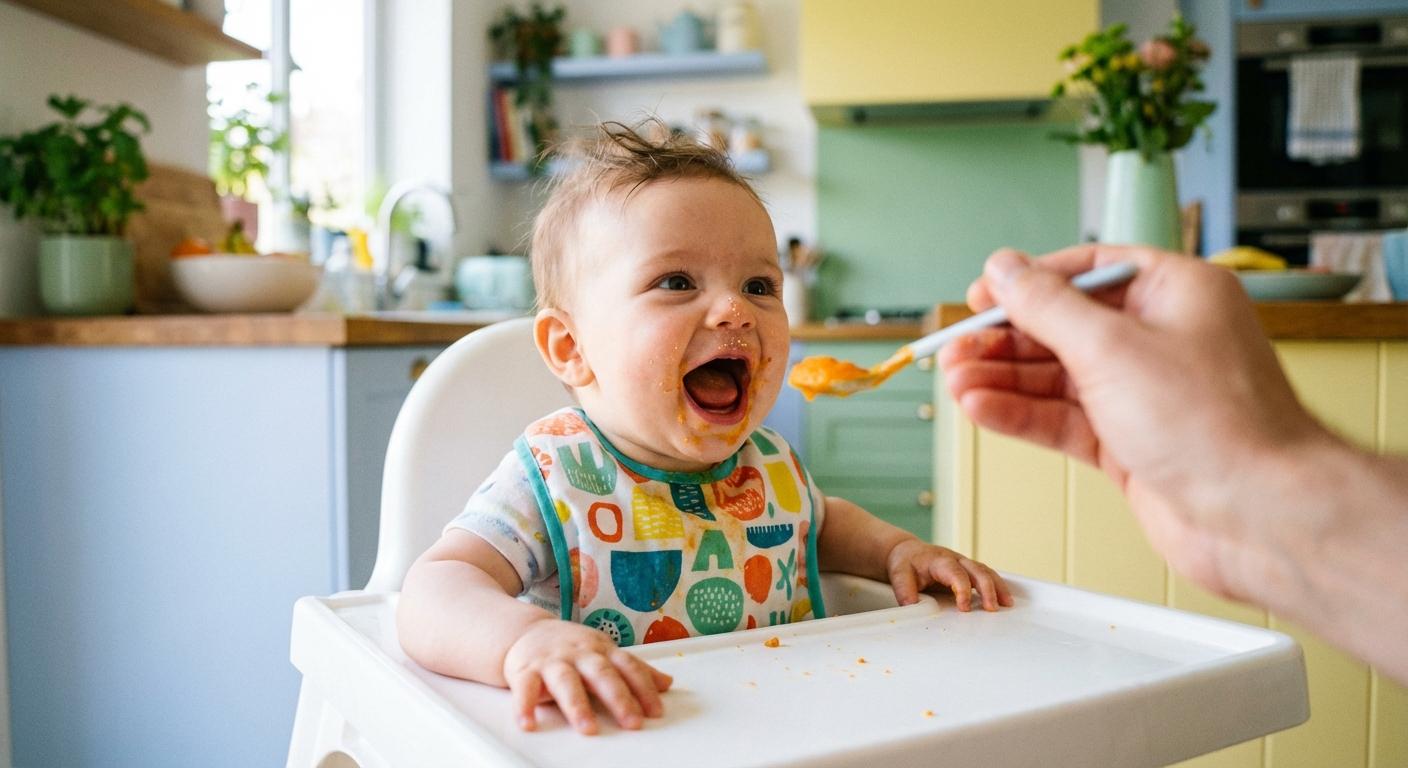
- Curiosity at family mealtimes: leaning towards the spoon, opening the mouth.
- Less tongue-thrust (extrusion) reflex (food is not pushed straight out each time).
Only seeing a couple of signs? Slow down. With baby food 6 months, comfort and safety matter more than speed.

Tongue-thrust reflex: what to expect
The extrusion reflex is normal in early infancy. When solids start, it may look like food pushed out immediately, drooling, messy spit-outs. It commonly reduces around 6 months and tends to be much less by 7-9 months. If it is strong, keep textures very smooth, offer tiny tastes, and pause between spoonfuls.
Myths vs facts (teeth, size, interest)
- Teeth are not required: soft foods can be managed with gums.
- Bigger baby does not mean must start early, and smaller baby does not mean delay forever.
- Interest is helpful, but posture and swallowing skills are the safety markers.
Hunger and fullness cues
- Hunger/interest: leaning forward, reaching, mouth opening, staying engaged.
- Fullness/tiredness: turning away, lips sealed, fussing, pushing the spoon.
A new taste can cause a dramatic face. That is often surprise, not dislike.
Milk still comes first at 6 months
Even with baby food 6 months, breast milk or formula remains the main source of calories, protein, calcium, iodine, vitamins, and hydration. Solids are complementary: they build chewing/swallowing skills and bring in key nutrients, especially iron.
How much milk at 6 months?
Typical patterns (wide normal range):
- Breastfeeding: on demand, growth, alertness, and wet nappies are reassuring.
- Formula: many babies take about 500-800 ml in 24 hours, sometimes more, sometimes less.
Avoid forcing a finish. Preserving hunger-fullness regulation reduces future mealtime struggles.
Best timing for solids
Many families find this rhythm easier:
- Offer solids after a milk feed, when your baby is calm.
- Start with 1 small solid meal per day.
- Keep it short: 5-15 minutes.
If your baby comes to solids very hungry and overtired, the meal can unravel. Shifting by 30 minutes can change everything.
Water in a cup
Milk covers most hydration. Once solids begin, offer a few sips of plain water with meals:
- Think practice, not replacement.
- Helpful in hot weather, or if stools get firmer.
Avoid fruit juice at this age.
Best first foods for baby food 6 months
A simple, manageable progression:
- Vegetables (single ingredient, smooth)
- Fruits (very ripe or cooked, no added sugar)
- Starches (well-cooked, to add body)
- Proteins in tiny amounts (fully cooked, blended smooth)
Refusal today does not predict refusal tomorrow. Calm re-offers matter.
Iron-rich foods to prioritise
Around 6 months, iron stores from pregnancy begin to reduce. Iron supports haemoglobin (oxygen transport) and neurodevelopment.
Good choices for baby food 6 months:
- Puréed chicken/mutton/beef (fully cooked, blended smooth)
- Well-cooked moong dal or masoor dal, blended very smooth
- Cooked chana/rajma in tiny amounts, blended smooth (start slowly)
- Iron-fortified infant cereals (oat or multigrain)
Iron + vitamin C pairing
Vitamin C improves absorption of non-heme iron (plant sources). Practical pairings:
- Dal purée + a little mashed ripe papaya
- Cereal + fruit purée
- Veg purée + a vitamin C vegetable on the same day
Protein and zinc options to rotate
- Soft puréed meats
- Lentil or chickpea purée
- Soft tofu, blended smooth
- Low-mercury fish (fully cooked, carefully deboned)
- Fully cooked egg, mashed
Healthy fats
Fats support brain development and energy needs:
- 1 teaspoon oil added after cooking
- A small amount of ghee or butter
- Avocado mash
- Plain full-fat pasteurised curd/yogurt (small amounts)
Vegetables and fruits: gentle Indian-friendly starters
Vegetables (well-cooked and blended): carrot, pumpkin, bottle gourd (lauki), ridge gourd (turai), sweet potato, beans, then expand to palak (well cooked) and peas (strained if needed).
Fruits: stewed apple/pear, ripe banana mash, ripe papaya mash.
Grains and starches (including gluten)
- Well-cooked rice (not every day)
- Suji/semolina cooked soft
- Oats cooked very soft
- Ragi porridge cooked well and made smooth
If introducing wheat (gluten), do it gradually and observe tolerance.
Flavour exposure without salt or sugar
Gentle aroma is fine: a pinch of jeera powder or cinnamon. Avoid adding salt and sugar.
Foods to avoid and smart safety limits
Honey, unpasteurised foods, salt and sugar
- No honey under 12 months (infant botulism risk).
- Avoid unpasteurised dairy and juices.
- Skip added salt and added sugar.
Cow’s milk: drink vs dairy
- Avoid cow’s milk as the main drink before 12 months.
- Pasteurised curd/yogurt and small amounts of paneer can be used in age-appropriate amounts, depending on your clinician’s advice.
Fish and mercury
Choose low-mercury fish, avoid shark and swordfish.
Textures and feeding methods for baby food 6 months
A very smooth purée supports safer swallowing. Thin with breast milk, formula, or water if needed.
Progressing textures
As your baby improves: thicker purées → fork-mashed textures → very soft melting pieces. Gagging is common while learning, it often means too big or too lumpy.
BLW and combination feeding
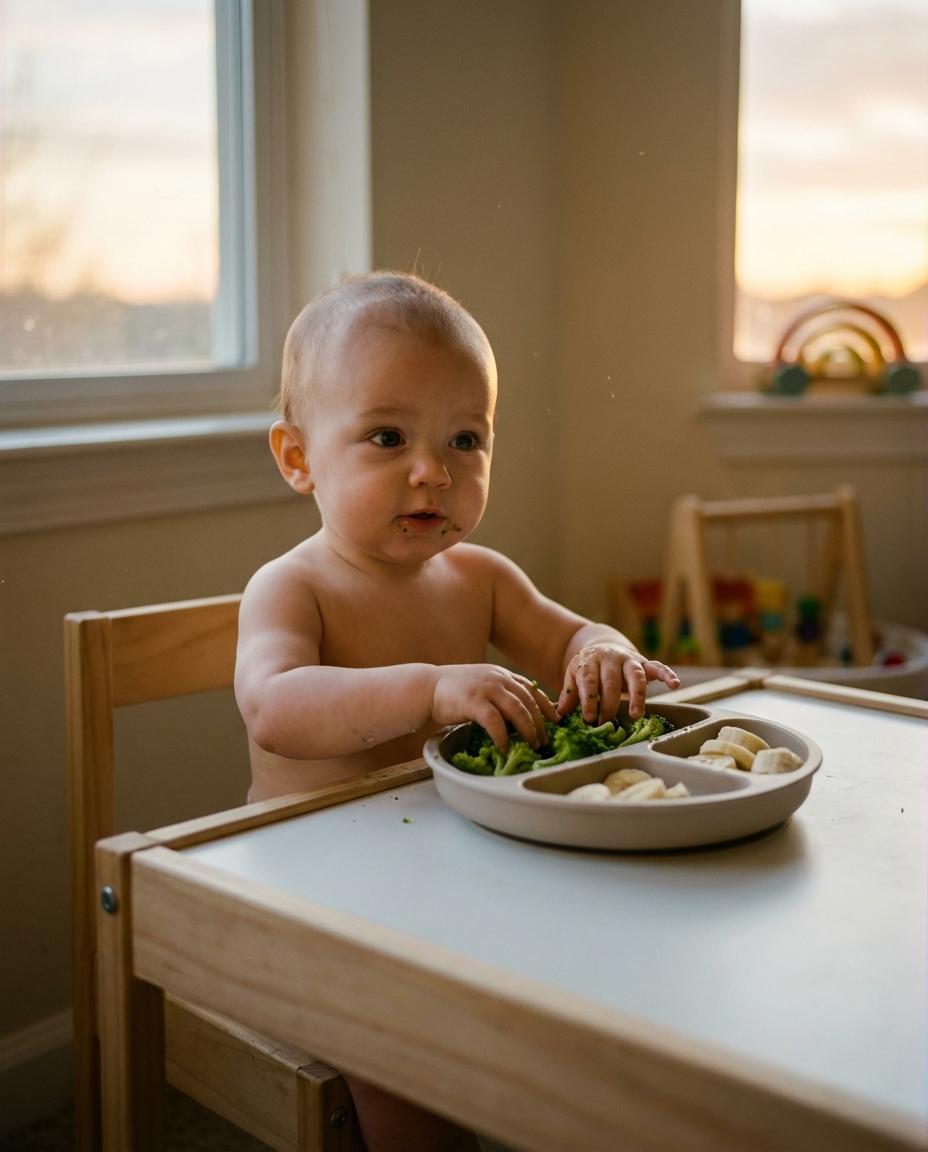
If sitting is stable (often 6-7 months), you may offer very soft finger foods that mash between fingers. Many families mix methods: spoon-feeding for iron-rich foods, finger foods for skill practice.
Choking prevention and confident feeding
- Feed fully upright in a sturdy high chair.
- Use the harness, foot support helps stability.
- Stay within arm’s reach.
Gagging vs choking
- Gagging: noisy, coughing, air moving.
- Choking: silent or nearly silent, trouble breathing, colour change.
If you suspect choking, treat it as an emergency and follow infant first-aid steps.
High-risk choking hazards
Avoid or modify: whole grapes/cherry tomatoes, popcorn, whole nuts/seeds, hard raw carrot/apple, sausage rounds, thick globs of nut butter.
Introducing new foods and allergens
Rotate vegetables, fruits, proteins, and grains across the week. Digestive changes are common, seek advice for persistent diarrhoea, blood in stool, dehydration signs, or a baby who seems very unwell.
How to introduce allergens safely
Once a few basics are tolerated:
- Offer a tiny amount of one allergen.
- Keep the rest of the meal familiar.
- Wait 3-5 days before another new allergen.
- Choose daytime, when your baby is well.
Safe forms:
- Peanut: smooth peanut butter well thinned and mixed into purée
- Egg: fully cooked, mashed
- Sesame/tree nuts: smooth butter, well thinned
- Fish: low-mercury, fully cooked, mashed
Stop the new food and seek medical advice for hives, swelling, repeated vomiting, wheeze, or breathing difficulty. Breathing symptoms or facial swelling need urgent emergency care.
How much should a 6-month-old eat?
With baby food 6 months, tiny amounts are normal.
- Start with 1 meal/day.
- 1-2 tablespoons total is common (or a few BLW bites).
Increase gradually, without pressure. If milk intake drops sharply, discuss with your paediatric clinician.
6-month feeding schedule examples
Start with 1 solid meal per day, after a couple of weeks, some babies move to 2 small meals.
Sample rhythm:
- Morning: milk feed
- Midday: baby food 6 months meal + milk as usual
- Afternoon: milk feed
- Evening: milk feed
If your baby has a late-evening witching hour, keep solids earlier and let bedtime stay milk-led. If mornings are calmer, shifting the solid meal to mid-morning is also fine. The best schedule is the one that keeps your baby alert, upright, and interested.
Sample 7-day starter menu:
- Day 1: iron-fortified oat cereal
- Day 2: pumpkin purée
- Day 3: carrot purée
- Day 4: sweet potato purée
- Day 5: banana mash
- Day 6: apple/pear stewed purée
- Day 7: moong dal purée (very smooth)
Easy baby food 6 months recipes (Indian-friendly)
- Pumpkin: steam, blend smooth.
- Lauki: cook till soft, blend.
- Moong dal: pressure cook well, blend smooth.
- Chicken: cook till tender, blend with cooking liquid.
Simple combos (after single foods are tolerated): pumpkin + rice + ghee, dal + sweet potato (blended).
Homemade vs store-bought
Homemade allows you to control salt, sugar, and texture. Store-bought can help on travel days or clinic days.
Two label checks matter a lot at baby food 6 months stage:
- Ingredient list: avoid added sugar, jaggery, honey, and unnecessary salt.
- Texture stage: smooth early on, then move to mashed later.
If using pouches, consider serving via spoon sometimes. Sucking purée from a spout is easy, but spoon and finger practice helps oral motor skills (lip closure, tongue movement) that later support lumps and pieces.
Storage and hygiene
Refrigerate within 2 hours, use within 24-48 hours. Freeze small portions and label dates. Thaw in the fridge, reheat once, discard leftovers touched by saliva.
Troubleshooting common early feeding worries
It is a common hope in many households. In reality, solids do not reliably improve sleep at this age because milk still provides most calories. If nights worsen after starting solids, it may be timing (too close to bedtime), tummy adjustment, or simply developmental change. Try offering solids earlier in the day and keep evenings calm and milk-focused.
Constipation after starting solids
- Keep milk intake steady.
- Offer a few sips of water with meals.
- Include pear/apple/prune purée in small amounts.
- Rotate grains (oats and ragi may suit some babies better than daily rice).
Seek medical advice if constipation persists, stools are very hard, or there is blood.
Baby refuses solids or pushes food out
Common early on.
- Try when rested.
- Keep portions tiny.
- Re-offer calmly on different days.
Gas, diarrhoea, rashes
Track what was new and when symptoms began. Contact a clinician for persistent diarrhoea, dehydration signs, widespread rash, swelling, wheeze, repeated vomiting, or a baby who seems unwell.
When to move beyond baby food 6 months
Signs: swallows thicker purées comfortably, less tongue-thrust, tries to grab food. Typical progression: 6-7 months smooth → thicker → mashed, 7-9 months more texture, 9-12 months soft family foods (low salt, low sugar).
Essential gear
Sturdy high chair with harness and footrest, small spoon, bowl with non-slip base, bib with pocket, open cup/training cup, pressure cooker/steamer, blender, airtight containers, freezer trays.
Key takeaways
- baby food 6 months works best when readiness signs are present: posture, head control, coordinated swallowing.
- Milk remains the main nutrition, solids complement and bring iron and skill practice.
- Start smooth, then progress textures gradually, choose safe finger foods if doing BLW.
- Avoid honey, unpasteurised foods, added salt/sugar, juice, and choking hazards, cow’s milk is not a main drink before 12 months.
- Introduce allergens one at a time in safe textures, urgent care is needed for breathing symptoms or facial swelling.
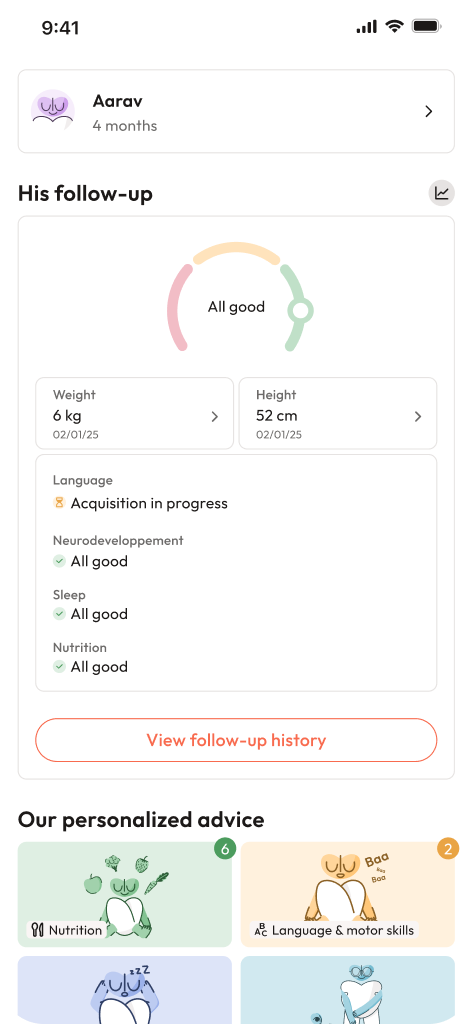
- Support is available through your paediatric clinician, and you can download the Heloa app for personalised advice and free child health questionnaires.
Further reading: