By Heloa | 30 April 2025

Baby eye color: everything parents need to know

6 minutes
de lecture
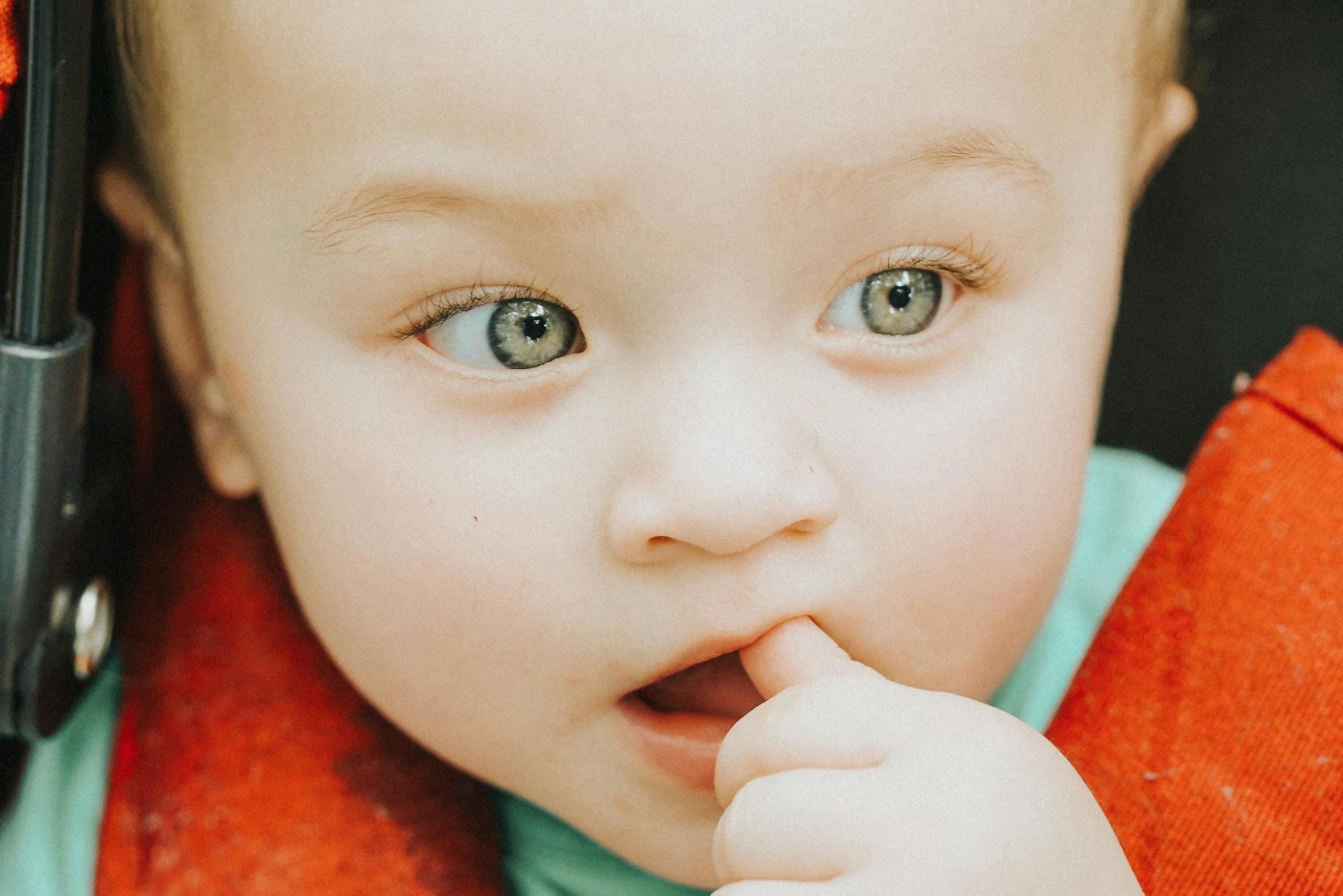
Couleur des yeux d'un bébé avec le pouce dans la bouche

By Heloa | 30 April 2025

Baby eye color: everything parents need to know

6 minutes
Couleur des yeux d'un bébé avec le pouce dans la bouche

Par Heloa, le 30 April 2025

Baby eye color: everything parents need to know

6 minutes
de lecture
Couleur des yeux d'un bébé avec le pouce dans la bouche

When a new baby arrives, curiosity swirls around every blink of their delicate eyelids – and few questions are as mesmerizing, or as persistent, as those surrounding baby eye color. Will those eyes remain the luminous blue they seem in the first days, or will sunlight and time usher in hints of green, flecks of hazel, or the rich warmth of brown? Parents watch, fascinated, as the iris gradually reveals its secrets, sometimes puzzling even pediatricians with its unpredictable dance. Uncertainties can feel daunting – especially when advice varies from friend to friend, or family traits hint in opposite directions. Here, clarity emerges: peeling back the science, untangling genetics, and unwrapping practical ways you can support your little one’s journey – while also diving into the captivating diversity marked in every gaze.

Understanding Baby Eye Color: The Making of Unique Eyes

What Really Decides a Baby’s Eye Color?

The story begins with the pigments in the iris – the coloured ring that frames each pupil. Two fundamental players set the initial palette: melanin, a pigment produced by the action of specialized cells called melanocytes, and the arrangement of collagen fibers within the iris itself. Newborns are often born with blue or gray eyes. Why? Because their irises contain minimal pigment at birth – so little, in fact, that scattered light reflects back a blue or slate-gray tint, a phenomenon reminiscent of the afternoon sky (Rayleigh scattering, to borrow the scientific term).

As your baby matures, exposure to light subtly instructs the melanocytes: increase melanin production! For some infants, the result is softly deepening blue, for others, a dramatic transition towards hazel or brown. What determines this? The interplay of two core gene regions, particularly OCA2 and HERC2, sets the primary framework, yet dozens of other genes can tip the scale, introducing diversity and sometimes, surprise.

Why Do So Many Babies Start With Blue or Gray Eyes?

Is it just genetics? Not entirely. In light-skinned newborns, the absence of significant eumelanin and pheomelanin (types of iris pigment) leaves eyes appearing pale blue or gray – but this isn’t universal. Babies with darker skin, reflecting higher baseline melanin inherited from their ancestry, often debut with brown or slate-gray irises. As weeks melt into months, an infant’s eyes adjust and shift, gradually embracing the hue encoded in their DNA.


Can You Really Predict Baby Eye Color?

A tricky question, indeed. Family snapshots might suggest patterns, and prediction charts promise probabilities, but the odds can tease and even baffle. A dominant gene (think: brown) does often override a recessive (like blue), but the genetic lottery occasionally favours recessive alleles resurrected from grandparents or even further back. Even two blue-eyed parents may, rarely, welcome a child with green or brown eyes – the tapestry of genetics weaves in whispers and echoes from generations past.

From Birth to Early Childhood: The Evolution of Baby Eye Color

How Often Do Eye Colors Change – And When Is It “Set”?

The transformative period is most dramatic in the first 6-12 months of life. Observe closely: sudden glints of green sprinkled in a sea of gray, or a softening of blue towards hazel. For many infants, by the first birthday the final baby eye color has declared itself. But for others, especially those with lighter shades, this shifting can extend right into the toddler years, sometimes up to age 3. Any parent who has puzzled over baby photos and compared them months later knows the landscape can shift under your very eyes.

Melanin, Light, and the Magical Transition

So, what causes these changes, really? Melanin remains the centerpiece. Little at birth, boosted incrementally by both genetics and exposure to natural light. More sunlight can, over many months, prompt melanocytes to ramp up pigment production – sometimes resulting in a slightly darker hue in children growing up outdoors, compared to those shielded indoors. This process is gradual. It is not generally affected by diet, medication, or common home remedies, despite popular tales.

Iris, Genetics, and Outliers: When Patterns Surprise

Genes can behave in unexpected ways, blending alleles to craft not just the classic brown, blue, or green, but also rarer shades – amber, gray, even hazel flecked with gold. Occasionally, a condition called heterochromia emerges – one eye a deep brown, the other shimmering green, or perhaps only a single segment within the iris standing apart in colour (sectoral heterochromia). These variations, usually benign, remind us that the story of baby eye color is never monotone.

Science Spotlight: Deep Dive into Genetics and Eye Health

Genetics: More Than Dominant and Recessive

Polygenic inheritance – a jigsaw of multiple genes, each tipping the scale – is at play. The interplay between OCA2 and HERC2 genes, in particular, controls how much melanin reaches the iris, but supporting roles abound. Sometimes, a phenomenon called epistasis means that one gene’s effect “masks” another. That’s why inheritance does not follow straight lines: children can surprise parents, and siblings may differ as if painting from separate palettes.

Health and the Iris: When to Seek Medical Advice

Most shifts and quirks in baby eye color are entirely natural. However, sudden or extreme changes, one-sided color shifts (where one eye alone changes), or associated symptoms like redness or cloudiness should prompt a timely conversation with a paediatrician or ophthalmologist. In rare cases, early indicators of albinism or Waardenburg syndrome can include distinctive changes in iris appearance. Stringent hygiene, avoidance of adult eye drops or medicated creams, and gentle cleaning around the eyes are sensible practices, especially for lighter-eyed infants whose eyes may be more photosensitive.

  • Look out for:
  • Persistent white “rings” or patches within the iris
  • Obvious cloudiness or irregular pupil shapes
  • Discharge, persistent redness, or extreme light sensitivity
  • Heterochromia coupled with hearing difficulties

Routine examinations generally track eye growth and function, but any noticeable shifts outside what’s explained above warrant a quick consultation.

Exploring Eye Color Diversity: Population Patterns and Rare Cases

Which Eye Colors Are Common – And Which Are Unusual?

Worldwide, brown eyes predominate, courtesy of abundant melanin and its sun-shielding benefits. Blue eyes cluster more often in those with European roots, while green remains the rarest major color. Gray occasionally emerges, while hazel (a blend of melanin and lipochrome pigments) and amber reflect unique genetic signatures.

The Fascination With Heterochromia

When parents spot one eye diverging from the other, or sectors of color standing apart, the effect is striking – but typically harmless. Heterochromia may be inherited or can arise from spontaneous developmental quirks. It nearly never interferes with sight or comfort. Still, abrupt changes or symptoms – eye pain, sudden loss of vision, or associated health concerns – should prompt expert evaluation.

Myths, Facts, and the Cultural Mosaic

Reshaping Common Beliefs

Myth: all children are born with blue eyes. Fact: Genetic diversity means many are born with shades of brown or gray right from the start. Myth: Eye color locks in by six months. Fact: subtle shifts can continue for years. Myth: eye color follows a simple grid. Fact: the interplay of alleles, ancestral heritage, and scientific unpredictability turns every gaze into a unique signature.

Did You Know? Fascinating Factoids

  • Each iris is distinctly patterned – as unmatched as a fingerprint.
  • Across cultures and eras, specific eye colors have held special meaning – sometimes even believed to bring luck, protection, or mystery.
  • Some famous personalities, like Elizabeth Taylor, drew attention for their rare violet eyes (actually due to specific lighting and unique melanin distribution), while conditions like anisocoria (unequal pupil size) have also obsessed the world of art and music.

Everyday Care: Supporting Healthy Eye Development

A few simple habits can help your child’s developing vision:

  • Use hats or stroller shades to provide gentle cover from strong sun, especially for infants with blue or gray irises who may be more light-sensitive.
  • Soft, damp cloths for cleaning around the eyes help reduce risk of irritation or infection.
  • Avoid adult medications unless prescribed for your child’s specific needs.
  • Schedule regular paediatric check-ups – not only for vaccinations but to monitor eye alignment, tracking, and response to light.

Key Takeaways

  • Baby eye color transforms in the first year, sometimes up to three years – patience unveils the final hue.
  • Melanin’s dance, stirred by both genetics and sunlight, is responsible for mesmerizing shifts in colour.
  • Lack of blue eyes at birth is no cause for alarm – genetics, ancestry, and baseline pigmentation all influence the initial palette.
  • Rarer patterns, like heterochromia, are mostly harmless and a stunning twist in human diversity.
  • Attentive eye care, gentle sun protection, and regular check-ups empower a child’s healthiest start.
  • Professional guidance is recommended if you notice abrupt changes or odd symptoms.
  • For access to more expert-backed health advice or personalized health checklists, try the Heloa app – a supportive hand for every parent.

Questions Parents Ask

Is there a way to predict my baby’s final eye color?

Prediction sometimes becomes a bit of a guessing game for families – using genetics as a rough map, but the landscape can surprise. No tool or chart offers a guarantee, since hidden alleles or subtle gene mixes may play their own hand. Enjoy the journey; the result is as unique as your child.

What does a baby eye color calculator or chart really tell me?

Their role? Mostly, to entertain and inform, not to prescribe. These calculators consider parents’ and sometimes grandparents’ shades, presenting probabilities rather than promises. Genetics is a world of variables – always a measure of the unexpected.

Can I track the evolution of my baby’s eye color?

Most certainly! Documenting the subtle changes month by month, through snapshots and observations, offers a lovely keepsake and a reference for paediatric appointments if needed. Notice a sudden difference in just one eye? Or rapid changes? Better to consult your paediatrician, though gradual shifts and evolving palettes remain part of the normal tapestry.

Further reading:

Similar Posts

Curiosity often surrounds the topic of baby eye color—that remarkable feature which can shift and surprise within the first few years of life. Many parents find themselves contemplating: Will my child keep those bright blue eyes, or will they turn hazel, emerald, or a deep brown? This question—simultaneously captivating and, for some, a source of low-grade anxiety—reflects broader wonderings about heredity, ancestry, and health. If you’re gazing into your baby’s eyes and wondering what the future holds, you’re not alone. Parental concerns range from possible genetic factors to the timing of changes, and from the health implications of unusual hues to the influence of sunlight or ancestry. By understanding the science and physiology behind baby eye color, parents can better anticipate changes, appreciate genetic quirks, and recognize when to reach out for support.

Understanding the Real Origins of Baby Eye Color

When staring at your little one’s captivating eyes, you might ask—what determines this ever-evolving color? Baby eye color is not set in stone at birth. Instead, it’s shaped by the amount and type of pigment—specifically, melanin—deposited in the iris, that delicate colored ring around the pupil. At birth, melanin levels are generally low, particularly for lighter-skinned infants, causing most newborns to sport striking blue or gray eyes. Why blue or gray? It’s all about physics: low melanin lets light scatter, giving a bluish hue (a phenomenon known as Rayleigh scattering). However, as melanocytes—those specialized pigment-producing cells—wake up in response to light exposure, they start producing more melanin, progressively shading the iris from blue or gray toward brown, green, or hazel.

Genetics, too, wields an intricate brush. While the inheritance of eye color used to be described simplistically as “brown dominates blue,” modern understanding shows that several genes (including OCA2 and HERC2) orchestrate the final shade, and even recessive traits can reappear unexpectedly. Have you ever met siblings with completely different eye colors? That’s genetic diversity and polygenic inheritance at play.

Not All Babies Have Blue Eyes: The Diversity at Birth

A widespread assumption persists: all babies start with blue eyes. Yet, reality is more nuanced and rich in variation. Babies with darker skin tones—Black, Hispanic, Asian, and others—are often born with gray or brown eyes, reflecting a higher baseline of melanin. Melanin functions not only as a pigment but as a natural sun shield, meaning populations historically exposed to intense sunlight tend to have darker eyes. The prevalence of blue eyes is highest among babies of Northern European descent but is not guaranteed even within those families due to the complex genetic interplay.

The Genetics of Baby Eye Color: A Closer Look

Eye color inheritance is a fascinating example of what geneticists call polygenic inheritance. Several genes, each with variants passed down from both parents (and grandparents), contribute to the final outcome. The two main players, OCA2 and HERC2, control the quantity and distribution of melanin in the iris. Combinations of dominant and recessive alleles (the alternative forms of a gene) can yield unexpected results: two blue-eyed parents may have a brown-eyed child if a hidden brown allele is present. Genetic prediction charts, while entertaining, lack the precision to promise a specific baby eye color—there will always be room for surprise.

Environmental influences, although secondary to genetics, do carry subtle weight. Light stimulates melanin production; thus, infants exposed to more direct sunlight may see their eye pigment deepen over time. That said, this process is gentle and typically only shifts the shade a little rather than transforming a color entirely.

When and How Does Baby Eye Color Change?

Wondering when those sapphire-blue eyes might shift—and what to expect next? The development of baby eye color is dynamic. In many cases, the most notable changes occur between birth and six months of age. For most infants, by their first birthday, the majority of pigmentation transitions have played out, but, especially in children with initially light eyes, subtle adjustments can still unfold until about age three. During these captivating months, a baby’s eyes may move from clear blue to steely gray, morph into green, or settle into the warm brown so prevalent worldwide.

For some, this transformation is dramatic and visible; for others, it’s a barely perceptible transition. Persistence of blue or gray eyes at nine months isn’t definitive—shifts remain possible as melanin continues to accumulate in the iris. And in rare stories (perhaps you’ve heard them whispered by relatives), gentle changes may extend well into preschool years.

Uncommon Variations: Heterochromia and Rare Eye Colors

While most eye color changes follow a predictable spectrum, some babies are born with heterochromia—where each eye is a different color (complete heterochromia) or a single iris contains two distinct shades (sectoral heterochromia). This trait is uncommon yet typically harmless and confers a striking, unique appearance. Occasionally, heterochromia may arise from a genetic syndrome or occur after injury or medical intervention, but the vast majority of cases have no impact on vision or health.

Rare eye colors such as amber, hazel, or even violet may appear, influenced by a cocktail of melanin, lipochrome pigment, and unique patterns of light scattering within the iris. Notably, brown eyes remain the most prevalent globally, followed by blue, with green being the rarest of the major hues. Each color, no matter how common or rare, tells a genetic tale stretching back generations.

Medical Insights: When Eye Color Signals a Health Issue

Most parents cherish the evolution of baby eye color as simply another milestone—one to photograph, debate, and, perhaps, marvel over. Yet, parents should watch for certain signs. A sudden change in eye color (for instance, only one eye turning dramatically lighter or darker), a white or pinkish appearance of the pupil, or accompanying symptoms such as persistent redness, discharge, or cloudiness warrant prompt medical evaluation. These signs could be related to ocular conditions, pigment disorders (such as albinism), or syndromic associations (Waardenburg syndrome, for example), and deserve professional expertise.

Supporting Healthy Eye Development

Protecting your child’s eyes, especially during those formative first months when melanin levels may be lower, is a simple yet often-overlooked preventive step. Shielding their sensitive eyes from direct sunlight using hats, stroller shades, or ambient indoor light can make a difference. Daily hygiene should involve only a soft, damp cloth around the eyes—never adult eye products or solutions without explicit medical guidance. Routine pediatric appointments offer a valuable opportunity for eye health checks, ensuring that developmental changes are progressing as expected.

Debunking Myths and Embracing Diversity

A persistent urban legend claims that all babies are born with blue eyes, reinforced by family anecdotes and cultural lore. The real story is much richer—initial eye color reflects melanin levels, genetics, and ancestry in a complex interplay. Another misconception: eye color is fixed at birth. The first year is a whirlwind of change, with the curtain not fully falling until toddlerhood for some.

The iris is as unique as a fingerprint. Scientific curiosity aside, human fascination with rare or striking shades—be it vivid green, intense amber, or the celebrated violet of legendary figures—endures in pop culture and family histories alike. Every child’s baby eye color charts its own path within this dynamic palette.

Key Takeaways

  • Baby eye color is not fixed at birth—it transforms through an intricate blend of genetics, light exposure, and melanin dynamics.
  • Most infants demonstrate their final eye color by the end of year one, but lighter eyes may continue subtle transitions up to age three.
  • Not every newborn has blue eyes; true diversity arises from varied melanin levels and ancestral patterns.
  • Uncommon patterns like heterochromia or abrupt color changes generally pose no threat, but persistent or sudden changes should prompt a consultation with an eye health professional.
  • Simple preventive strategies—like sun shading and gentle hygiene—support healthy visual development.
  • The evolution of your child’s baby eye color stands as a testimony to their individuality and genetics.
  • If questions or uncertainties linger, trusted professionals stand ready to help. For free pediatric health questionnaires and tailored advice, you can download the Heloa app, designed to support you on every step of your parenting journey.

Questions Parents Ask

Is there a way to predict my baby’s final eye color?

Many parents enjoy trying to guess their child’s future eye color based on family traits. While prediction tools and comparison charts can provide some guidance, the reality is a bit more complex. Eye color depends on several genes from both parents and even grandparents, which means outcomes can occasionally surprise. These tools may be fun to explore, but remember: your baby’s final eye color is a beautiful expression of their unique heritage.

What does a baby eye color calculator or chart really tell me?

Eye color calculators and charts use information about your and your partner’s eye colors to estimate probability for your baby’s future hue. Although these resources are based on genetics, they offer only a rough estimation—not a promise. Genetics is influenced by many factors, making each child’s result just a little bit different. If you enjoy these tools, use them as a lighthearted guide, while keeping in mind that the natural process will unfold in its own time.

Can I track the evolution of my baby’s eye color?

Absolutely—many families mark this charming change by taking regular photos as their baby grows. Noticing subtle shifts month by month can be a joyful part of your child’s development. Some parents find reassurance or celebration in these progress pictures, as it helps affirm that what they’re seeing is a normal experience. If you ever notice a sudden or unexpected change, especially in just one eye, it is always wise to seek the advice of a professional—but for most children, gentle day-to-day changes are all part of their unique journey.

Further reading:

Similar Posts