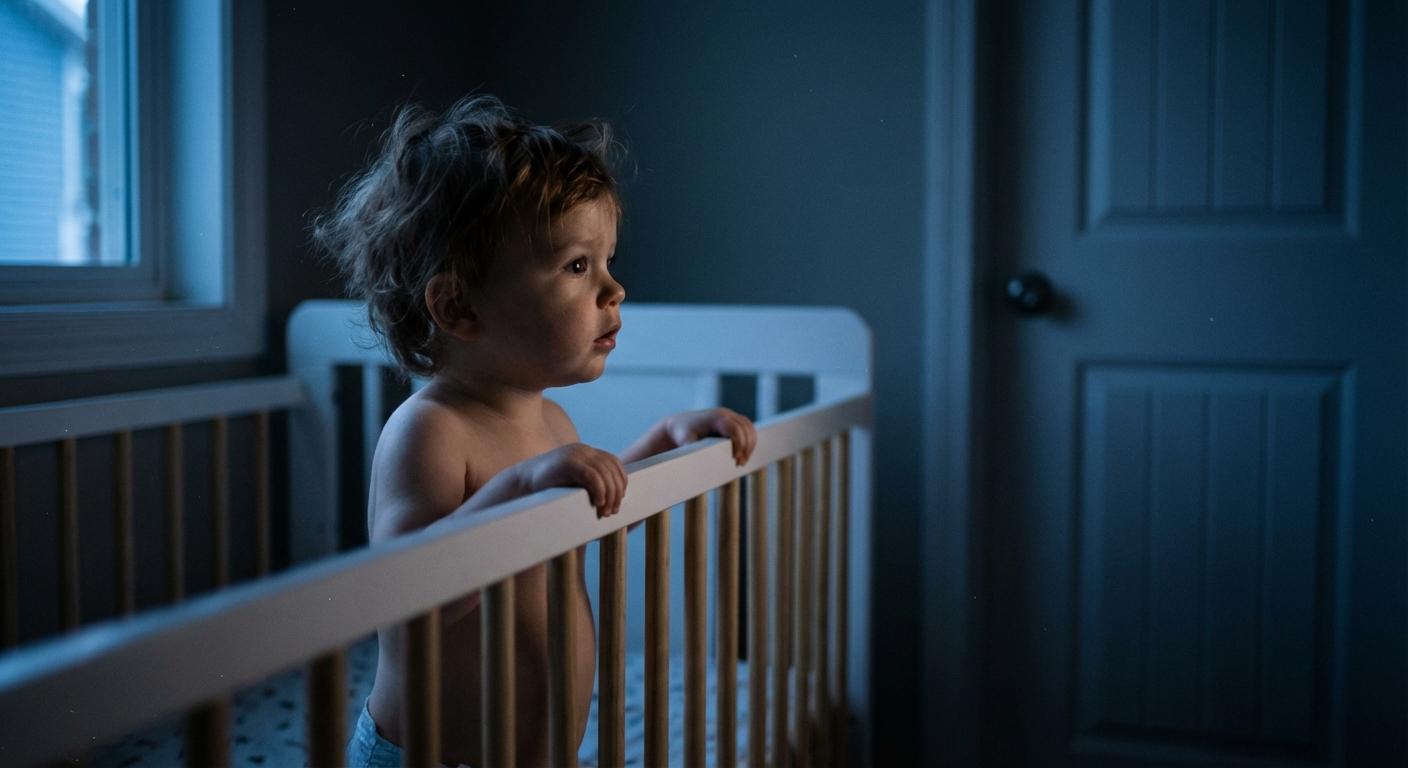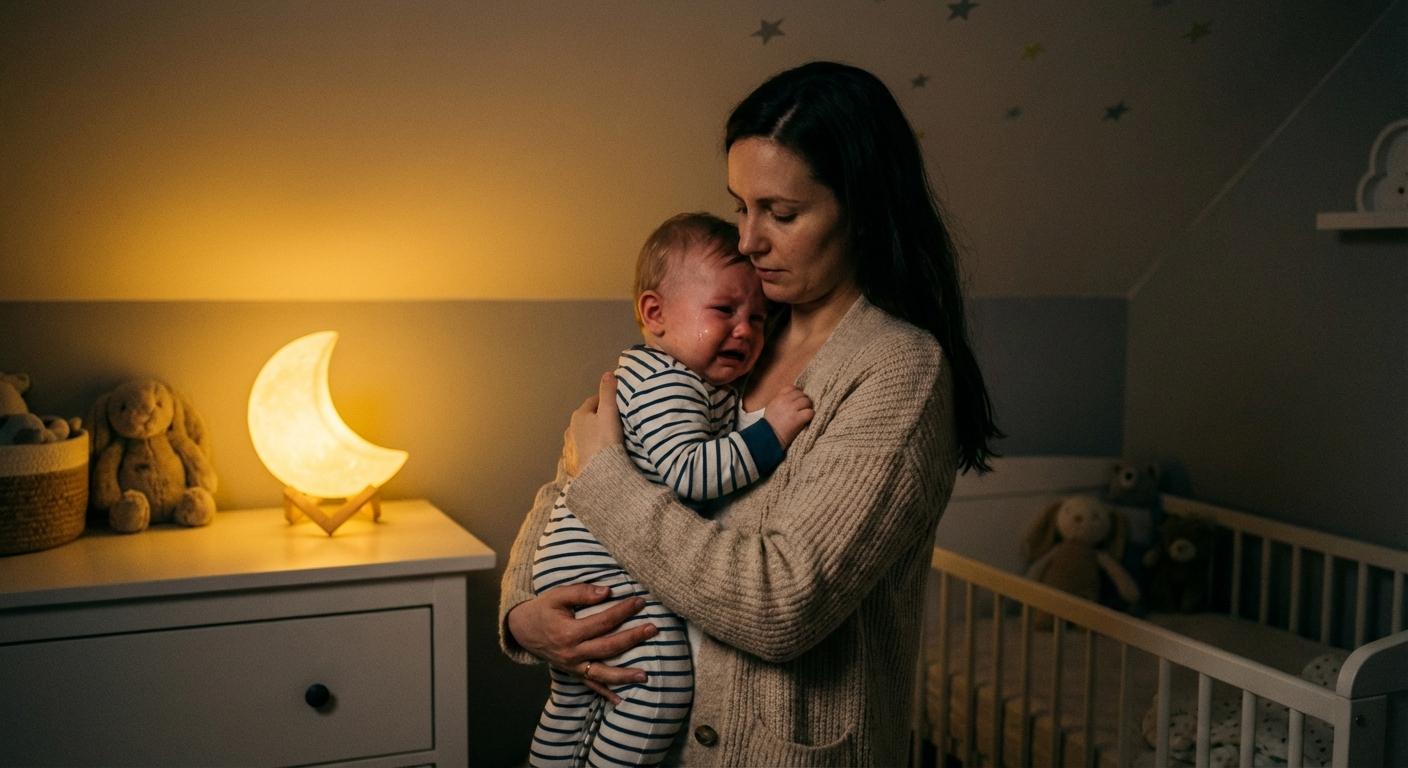
When baby wakes up screaming at night, it can feel like an alarm bell in your whole body. One moment the room is quiet, the next, you are wide awake, trying to decide: hunger, pain, fear, a bad dream, or “just” a sleep-cycle blip? The aim is to sort the urgent from the common, keep nights low-stimulation, and spot patterns your pediatrician can use if a medical cause is suspected.
What “screaming” at night can mean
Not all night cries are equal. Some babies vocalize while still asleep (grunts, brief cries, little shouts) without fully waking. Others bolt awake, panicked and hard to console. Naming the pattern helps.
Crying, yelling, screaming: what your baby’s body may be expressing
Baby sleep includes many partial arousals (a brain “half-wake” that does not always reach full consciousness). That is why you may see eyes open, a stiff body, and a startled cry, yet your baby seems oddly unreachable.
Practical clues:


- Brief crying in waves, then quiet: often a micro-wake at the end of a sleep cycle, with self-settling.
- Sudden, intense screams: think pain (ear, belly, teething), reflux discomfort, or a confusional arousal.
- Long, escalating screaming: first check basic physical needs (hunger, diaper, temperature), then comfort needs (reassurance, separation).
Questions that clarify the moment:
- Do they recognize you when you speak?
- Do they calm with steady pressure (hand on chest/back)?
- Are their eyes open but “not quite connected,” as if still asleep?
Why timing matters: wakes at sleep-cycle transitions (about 45–60 minutes)
Many infants have a micro-wake between cycles, often 45–60 minutes after falling asleep. If baby wakes up screaming at night at nearly the same interval, a sleep-cycle transition is a strong candidate.
Two clues tend to travel together:
- Timing: fairly regular.
- Brevity: a few minutes, sometimes less.
Bright lights and lots of talking can convert a micro-wake into a full wake.
Baby sleep basics that prevent burnout
You may be doing everything “right” and still have nights where baby wakes up screaming at night. That does not mean you caused it, it often reflects normal sleep maturation, or discomfort that needs fixing.
Why night waking can be normal (sleep maturation and fragmented sleep)
Infant sleep is naturally fragmented. Micro-wakes are like a neurological check-in: breathing, position, safety, environment. With maturation, cycles consolidate and these “check-ins” become quieter.
A useful distinction:
- Brief wake: your baby may drift back without help.
- Full wake: a need, discomfort, pain, or fear keeps them up.
Sleep associations: the “same conditions” trap
Rocking, feeding, a pacifier, contact: these are valid supports. They can also become powerful sleep associations. At each micro-wake, your baby may look for the exact same setup to fall asleep again.
If bedtime always ends in your arms, it makes sense that baby wakes up screaming at night asking for your arms again.
Realistic age patterns
Trends (with lots of individual variation):
- 0–6 months: frequent feeding needs, short cycles, many partial arousals.
- 6–12 months: more consolidation, but spikes with teething, illness, separation anxiety, and motor milestones.
- 12–24 months: often steadier nights, yet emotions, nap changes, and parasomnias can disrupt sleep.
A grounding question: is your baby recovering overall (mood, appetite, curiosity, growth)?
What to do right now when baby wakes up screaming at night
In the moment, you need a short script. Something that protects safety first, then calms quickly.
Safety first: breathing and a safe sleep space
Start with a fast scan:
- Breathing and color: steady breathing and normal color are reassuring. Retractions (ribs pulling in), grunting, wheezing, long pauses, or blue lips/face need urgent evaluation.
- Safe sleep: firm flat mattress, baby on the back, no loose blankets, pillows, bumpers, or toys.
A 30-second needs checklist
Before you chase rare explanations, check:
- Hunger (especially in young infants or during growth spurts)
- Wet/soiled diaper, leaks, skin irritation
- Uncomfortable position
- Nasal congestion (makes feeding and sleep harder)
- Temperature mismatch
A frequent hidden trigger is overheating: sweaty neck, restlessness, fragmented sleep. A room around 19–20°C (66–68°F) is a useful reference for many families, with breathable layers.
Look for hidden discomfort
These quick checks can save hours:
- Hair tourniquet (hair/thread wrapped around toes, fingers, or penis)
- Tight waistbands, scratchy tags, twisted pajamas
- New rash, hives, diaper rash, or eczema itch flares
Keep stimulation low while settling
If a quick return to sleep is possible, make everything boring:
- Dim light only if needed
- Quiet, slow voice
- One steady soothing pattern (hand on chest/back, slow patting, gentle rocking), then back down
Give a chance to resettle (when it’s safe)
If the crying is intermittent and your baby is safe, waiting 2–3 minutes can be enough for some babies to downshift.
Why baby wakes up screaming at night: common causes
When the sound is sharper, higher-pitched, or “not your baby’s usual cry,” think pain or illness sooner.
Sleep-related causes (overtiredness, overstimulation, sleep associations)
- Overtiredness: long wake windows or short/late naps can fragment sleep. Often the fix is protecting naps and moving bedtime earlier.
- Overstimulation: busy evenings keep the nervous system “on.” A short, dim wind-down helps.
- Sleep associations: if your baby falls asleep only while feeding or rocking, they may protest between cycles. Supporting self-settling can be gradual, less help over time rather than no help.
Physical discomfort and health causes
Common culprits when baby wakes up screaming at night include:
- Teething: gum sensitivity, drooling, chewing, face rubbing.
- Gastroesophageal reflux (GER/GERD): discomfort lying flat, crying after feeds, arching. Spit-up can be normal, persistent distress, feeding refusal, or poor growth needs assessment.
- Gas, constipation: tight belly, straining, hard stools.
- Ear infection (otitis media): worse when lying down, ear tugging, possible fever.
- Breathing discomfort: congestion, cough, noisy breathing.
A useful reflex: look for an associated sign (fever, reduced intake, labored breathing, repeated vomiting, unusual sleepiness) before labeling it “just sleep.”
Emotional and developmental causes
From around 6 months, separation anxiety can appear suddenly. Your baby wakes and needs confirmation you are still there. Travel, daycare changes, and recent illness can also destabilize nights.
Environmental triggers
Small changes matter when sleep is light:
- Light leaking from a hallway
- Intermittent noise
- Dry air
- Irritating fabrics or detergents
Aim for a stable, dark, low-stimulation setup.
Nightmares, night terrors, and confusional arousals
Parents often ask if baby wakes up screaming at night because of nightmares. Sometimes, but age matters.
How to tell them apart (timing, responsiveness, recall)
- Nightmares: later in the night (REM sleep). Your child wakes fully, recognizes you, and wants comfort.
- Night terrors: most common from 18 months to 4 years, usually early in the night (deep non-REM). Your child may scream and look terrified, yet remain asleep and not recognize you.
- Confusional arousals: partial awakenings from deep sleep, the child seems confused, may resist comfort, and has little awareness.
In babies under about 18–24 months, classic nightmares and night terrors are less common, but partial arousals can still happen.
What to do during a nightmare
Keep it simple: reassurance, dim light, brief comfort, then back to sleep cues.
What to do during a night terror
Do not force waking. Keep the space safe, stay close with slow movements, and wait it out.
When frequent episodes deserve medical advice
Ask for help if episodes are frequent, prolonged, unsafe, include unusual movements, or if you wonder about seizures.
Age-specific clues when baby wakes up screaming at night
Most often physical needs:
- Hunger
- Gas or reflux-like discomfort
- Diaper discomfort
- Congestion
- Temperature mismatch
Seek medical advice if crying is unusual plus fever, repeated vomiting, feeding refusal, or a clear drop in overall condition.
6 to 12 months
Cycle transitions, separation anxiety, teething, and new skills (rolling, sitting, standing) can drive loud protests. Some babies scream because they are “stuck” in a new position.
12 to 24 months
Big emotions, nap changes, and accumulated fatigue can trigger night waking. Strong sleep associations can amplify the scream.
18 months to 4 years
A common window for parasomnias, fears, and imagination. If episodes are frequent, unsafe (sleepwalking), or very draining, discuss it with a clinician.
When to call the pediatrician or seek urgent care
When baby wakes up screaming at night, medical causes are not the most common, but you want a clear threshold for action.
Fever guidance by age and infection signs
- Under 3 months: any fever ≥ 38°C (100.4°F) needs urgent evaluation.
- 3–6 months: fever around 38–38.5°C, or fever with poor feeding, unusual sleepiness, or worsening symptoms should be assessed.
- 6–24 months: fever ≥ 39°C (102.2°F), fever lasting > 48 hours, or fever with dehydration, persistent vomiting, lethargy, or concerning rash needs medical advice.
Emergency signals
Seek emergency care for:
- Breathing difficulty, retractions, grunting, pauses, blue lips/face
- Severe lethargy, hard to wake, unresponsiveness
- Seizure-like activity
- Dehydration signs (very few wet diapers, dry mouth, no tears, sunken fontanelle)
Vomiting, rash, or persistent pain
Call promptly if there is:
- Persistent vomiting, vomiting blood or bile
- Non-blanching rash or rash with fever
- Persistent pain or inconsolable crying
- Poor weight gain, feeding refusal
Calming techniques by age
- Swaddling only if not rolling, stop once rolling begins.
- Gentle rocking or swaying.
- Steady white noise.
- Brief contact to reset, then back down drowsy.
Older babies and toddlers
Short, predictable phrases work better than long explanations.
Gentle in-crib support
Pick-up/put-down, hands-on soothing, or a chair method can reduce stimulation while staying responsive.
Sleep strategies that reduce screaming wake-ups
A simple 10–15 minute routine (diaper, pajamas, dim lights, feed if needed, short book or song) supports winding down.
Managing overtiredness
If early-night screaming is common, try an earlier bedtime by 15–30 minutes for several nights and protect naps.
Daytime feeding and hydration
Low daytime intake can worsen night waking. Support age-appropriate feeds and monitor wet diapers.
Tracking and troubleshooting
Track bedtime, naps, wake times, intensity, what helped, and any physical signs (congestion, spit-up, bowel movements).
One change at a time
Choose one likely cause and one change, then try it for 5–7 nights.
Key takeaways
- When baby wakes up screaming at night, first sort: micro-wake, full wake, or parasomnia.
- Many wakes happen 45–60 minutes after falling asleep, at a cycle transition.
- Start with quick checks: breathing, safe sleep setup, hunger, diaper, position, congestion, temperature, plus hidden discomfort like hair tourniquets and itchy skin.
- Common triggers: overtiredness, sleep associations, separation anxiety, teething, reflux/GERD, gas/constipation, ear pain, congestion, and environmental factors.
- Seek medical help for fever in young infants, breathing trouble, dehydration, unusual sleepiness, seizure-like activity, persistent vomiting, concerning rash, feeding refusal, or prolonged inconsolable episodes.
- Support exists, and you can download the Heloa app for personalized guidance and free child health questionnaires.
Questions Parents Ask
Why does my baby wake up screaming but still seem “asleep”?
This can happen during a partial arousal (sometimes called a confusional arousal). Your baby may have eyes open, look frightened, and resist comfort, yet not fully wake or “connect.” It’s often linked to overtiredness, a big day, illness, or a schedule change. Reassuringly, many babies settle faster with a consistent, low-stimulation response (dim room, quiet voice, steady touch) and tend to outgrow these episodes as sleep matures.
Why is my baby waking up screaming at night and inconsolable?
When crying is intense and nothing works, it’s reasonable to think “pain” first. Along with the usual checks (hunger, diaper, temperature), consider less obvious triggers: constipation, reflux discomfort after feeds, an eczema itch flare, or a hair/thread wrapped around a toe or finger. If you notice fever, repeated vomiting, breathing difficulty, ear tugging, a new rash, or your baby seems unusually sleepy or unwell, it’s important to contact a clinician for advice.
Can an ear infection make baby wake up screaming at night?
Yes. Ear pain often feels worse when lying flat, so some babies wake suddenly and cry sharply. Clues can include recent cold symptoms, fever, increased irritability, or pulling at the ear (though not always). If you suspect ear pain—especially with fever or reduced feeding—reaching out to your pediatrician can help you get the right evaluation and relief plan.