When your baby is drooling, chewing everything in sight, and sleeping in short bursts, a warm forehead can quickly set off alarms. Is it teething? Is it an infection? And, most confusing of all, how long can it last?
Teething fever duration is a phrase many parents type at 2 a.m., because gum pain is expected, but a real fever feels like a different story. The goal is to sort “normal teething warmth” from a true fever, understand timing around tooth eruption, and know exactly when a call to a clinician is the safer move.
Teething fever duration: what parents usually observe
What people often call “teething fever”
Teething is a tooth moving through the gum (the gingiva, meaning the gum tissue). That movement triggers local inflammation: more blood flow in the gum, swelling, tenderness, and a baby who seeks pressure by chewing.
That local process can make a child feel warmer. Sometimes you’ll see a small temperature bump. But a sustained, high fever is not well explained by teething alone.


So when parents talk about teething fever duration, they are often describing one of two things:
- a short, mild rise in temperature close to eruption, or
- a true fever that happens to overlap with teething months (which are long).
Typical teething fever duration: often 1–3 days
When a temperature rise is truly linked to teething, teething fever duration is usually short, often 24 to 72 hours, and tends to cluster right as the tooth is about to break through or has just done so.
The tooth itself may take longer to fully show. The “fever-like” window should not stretch across many days.
Temperature range: mild and brief fits teething better
Many clinicians consider temperatures staying below ~38.5°C (101.3°F) more compatible with teething-related warmth.
A temperature approaching 39°C (102.2°F), especially if it comes with chills, a striking drop in energy, or persistent irritability, points more toward an infection than to teething discomfort.
What is a fever, medically speaking?
Warmth vs true fever: the difference matters
A true fever is a whole-body response regulated by the brain (the hypothalamus). During many infections, often viral in infants and toddlers, the immune system releases messengers called cytokines. These cytokines reset the body’s “thermostat,” and temperature rises.
Teething, in contrast, creates inflammation that is mostly local to the mouth. That’s why the idea of a long teething fever duration doesn’t fit the biology very well.
Timing: teething symptoms can linger, fever should not
One tooth can cause waves of symptoms for about a week:
- roughly 4 days before eruption, then
- about 3 days after.
During that time, fussiness and sleep disruption can come and go.
But when temperature changes happen, they typically sit in a narrower band, often from the day before eruption to 1–2 days after. If the fever keeps going, it is more likely coincidence with an illness.
Teething fever duration: a practical timeline around one tooth
Days -4 to -1: pressure builds
You might notice:
- swollen, red gums
- heavy drooling
- a strong need to chew
- shorter naps, more night waking
Irritability can look dramatic, then vanish after a cuddle or something cool to bite. That “on and off” pattern is classic.
Day 0: eruption day
For some babies, discomfort peaks when the gum finally opens and the tooth edge appears. Saliva can irritate cheeks and chin, and bedtime may feel like a negotiation.
Days +1 to +3: settling
After eruption, the general trend should improve. The gum can stay sensitive, but you should see more comfortable moments return.
If you’re tracking teething fever duration, this is when a mild temperature bump, if it happened at all, should be fading.
Common teething signs (and what they mean)
Gums: swollen, tender, sometimes a visible bump
The gum may look puffy or reddened. Sometimes you see a pale, raised area where the tooth is close.
Feeding can fluctuate because pain is not steady. A baby might refuse a spoon at lunch, then eat better at dinner.
Drooling and drool rash: frequent, annoying, manageable
Drooling increases because chewing stimulates saliva. When saliva sits on skin, it breaks down the protective barrier and causes irritation.
Helpful habits:
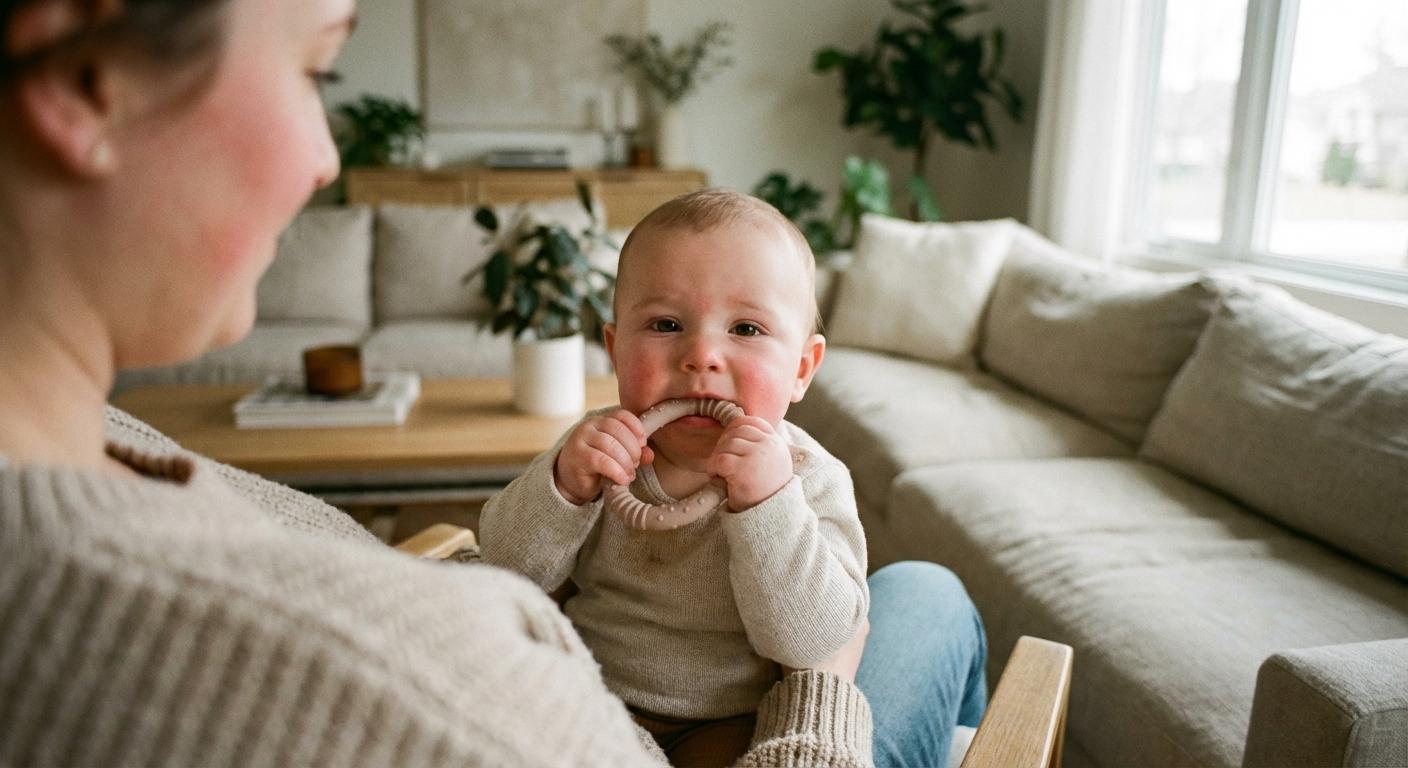
- offer a teething ring cooled in the refrigerator (not frozen solid)
- let your baby chew a clean, cool washcloth under close supervision
- pat the skin dry, use a barrier ointment (like petroleum jelly) if redness appears
Sleep and crying: often worse in the evening
Pain tends to feel louder at night. Babies may wake more, settle less easily, or want to feed for comfort.
Stools and diaper area: where normal ends
Swallowing extra saliva can soften stools. More moisture plus friction can trigger diaper rash.
But consider another cause if you see:
- frequent watery diarrhea
- diarrhea that persists
- vomiting plus diarrhea
Those patterns don’t match typical teething physiology, especially if teething fever duration is stretching past a couple of days.
When “teething fever duration” suggests something else
Fever beyond 48–72 hours
A fever that lasts longer than 48–72 hours deserves a closer look. Common explanations include:
- viral upper respiratory infection (runny nose, cough)
- acute otitis media (middle ear infection, often more crying when lying down)
- urinary tract infection (fever with few other signs, irritability)
- gastroenteritis (vomiting, diarrhea, reduced appetite)
A simple way to think about teething fever duration: if it’s “too long,” another diagnosis is more likely.
Higher fever (39–40°C) is unlikely from teething
A tooth pushing through the gum typically doesn’t explain 39–40°C (102.2–104°F). If your child has that temperature, it’s safer to search for another cause even if the gums are swollen.
Fever plus respiratory symptoms
A congested nose, cough, noisy breathing during sleep, or breathing that looks difficult suggests infection first. Ear infections also overlap with teething ages, which is why the picture can blur.
Fever plus repeated vomiting or significant diarrhea: check hydration
Dehydration can develop quickly in babies.
Watch for:
- fewer wet diapers
- dry mouth or crying without tears
- a sunken fontanelle (the “soft spot”)
- unusual sleepiness or low interaction
The key question is not only temperature, it’s how well your child is coping overall.
Teething vs illness: quick daily clues
More compatible with teething
- chewing and gum rubbing
- drool rash on chin/cheeks
- symptoms that come in waves
- teething fever duration that is mild and brief
- playful moments between cranky ones
More compatible with infection
- fever that is high, persistent, or spiking
- a child who seems unusually tired, less responsive, or in pain
- drinking much less or refusing feeds
- clear extra symptoms (respiratory, digestive, ear pain)
Why overlap is common
Teething spans months. Viruses circulate in the same months (siblings, daycare, family gatherings). Timing often overlaps by chance.
A practical mindset: attribute mouth-specific signs to teething, but evaluate fever with an infection lens if duration or intensity is not reassuring.
Comfort measures for sore gums
Cooling and gentle pressure
- chilled teething ring (refrigerator, not freezer)
- a cool spoon or cool washcloth, supervised
- gentle gum massage with a clean finger
Avoid anything frozen rock-hard: very cold objects can irritate gum tissue.
Fluids and skin care
- offer fluids more often (breast milk, formula, water if age-appropriate)
- keep the chin dry, use a barrier ointment for drool rash
Medicines and gels: careful use
Acetaminophen (paracetamol)
If pain disrupts sleep or feeding, acetaminophen can help. Dose should be based on your child’s weight and the product instructions (or a clinician’s advice).
Be cautious with combination “cold” products, some contain acetaminophen already, which raises the risk of double dosing.
Teething gels
If you choose a gel, pick one meant for infants and use the smallest amount.
Stop and seek advice if you notice a reaction (worsening redness, swelling, hives). And avoid prolonged self-treatment when teething fever duration or symptom intensity is making you uneasy.
When to seek medical advice
Situations where a clinician’s input is helpful
- teething fever duration goes beyond 48–72 hours
- temperature is ≥ 38.5°C (101.3°F), especially if it rises quickly
- your baby is under 3 months and has any fever
- refusal to drink, repeated vomiting, or pronounced fatigue
- your intuition says something is off compared with usual behavior
Urgent warning signs
Seek prompt evaluation if you see:
- breathing difficulty (fast breathing, increased effort, pauses, bluish color)
- a baby who is hard to wake, unusually floppy, or inconsolable in an unusual way
- seizure with fever
- rash with fever and a clearly unwell child
- clear signs of dehydration
Age, tooth timing, and special situations
When teething starts and the usual sequence
First teeth often appear between 4 and 7 months, with wide normal variation.
A common sequence:
- lower central incisors
- upper central incisors
- lateral incisors
- first molars
- canines
- second molars
The journey is long, fever shouldn’t be
Most children have all 20 baby teeth by about 2.5–3 years. Discomfort can accompany each tooth for about a week, but teething fever duration should stay short.
Early or late teeth
Early (3–4 months) or late (after 12 months) eruption is often normal.
What deserves discussion is not the tooth timing, but fever that lingers, significant digestive symptoms, poor weight gain, or hydration concerns.
Several teeth close together
When teeth arrive back-to-back, the gums get less rest, so irritability may feel continuous.
Even then, a high fever or prolonged teething fever duration suggests infection more than “multiple teeth.”
Key takeaways
- Teething causes local gum inflammation and discomfort, sometimes there is a mild, short temperature rise.
- When present, teething fever duration is usually 1–3 days, centered around eruption.
- Teething symptoms can last about a week per tooth, but fever should not last that long.
- Temperatures around 39°C (102.2°F), fever beyond 48–72 hours, or fever with respiratory or digestive symptoms are more consistent with illness than teething.
- Comfort can include gentle cooling, gum massage, extra fluids, and drool-rash skin protection.
- Use acetaminophen by weight and product directions, use teething gels cautiously and stop if there’s a reaction.
- Health professionals can help you assess fever, pain, and hydration. You can also download the Heloa app for personalized guidance and free child health questionnaires.
Questions Parents Ask
Can teething cause a fever at night?
Yes, a slight temperature rise can seem more noticeable in the evening because babies are often more tired, more unsettled, and sleep is lighter. Still, teething is more likely to cause mild “warmth” than a true fever. If the temperature is clearly elevated or your baby seems unusually unwell, it can simply be an infection overlapping with teething months—something many families experience.
Can teething fever come and go for a week?
What can come and go is discomfort: drooling, chewing, crankiness, and disrupted sleep often fluctuate for several days around one tooth. A real fever, however, tends to be more consistent. If your child has repeated fever spikes over a week, it’s worth considering other common causes (viral infections, ear infection, UTI), even if gums look swollen. If you’re unsure, a quick clinical check can be reassuring.
What’s the best way to take my baby’s temperature when I’m worried?
For the most reliable reading in babies and toddlers, many clinicians recommend a rectal temperature (especially under 3 months). For older babies, a digital thermometer in the armpit can be useful for screening, but it may read lower than the true temperature. Forehead/temporal scanners are convenient, yet results can vary—if the number doesn’t match how your child looks, recheck with a more reliable method.