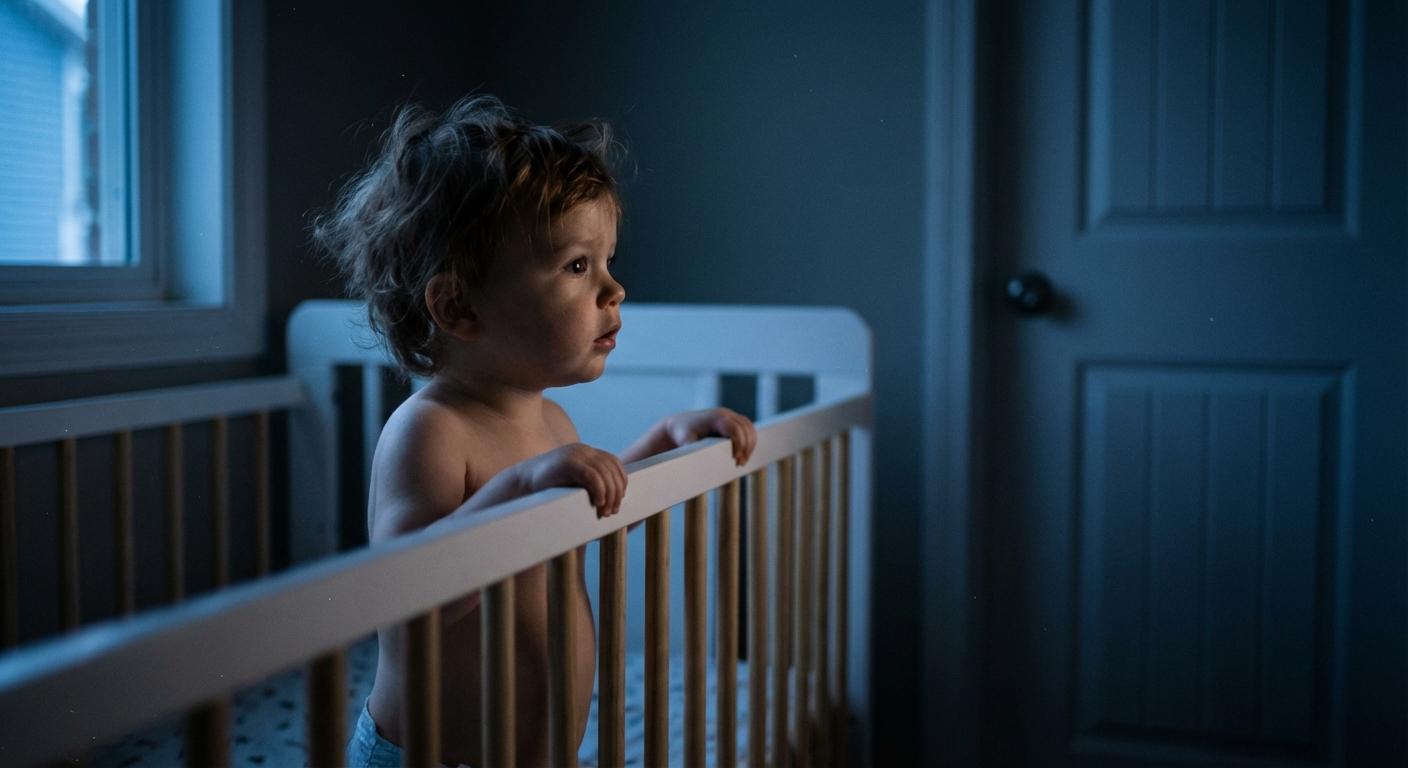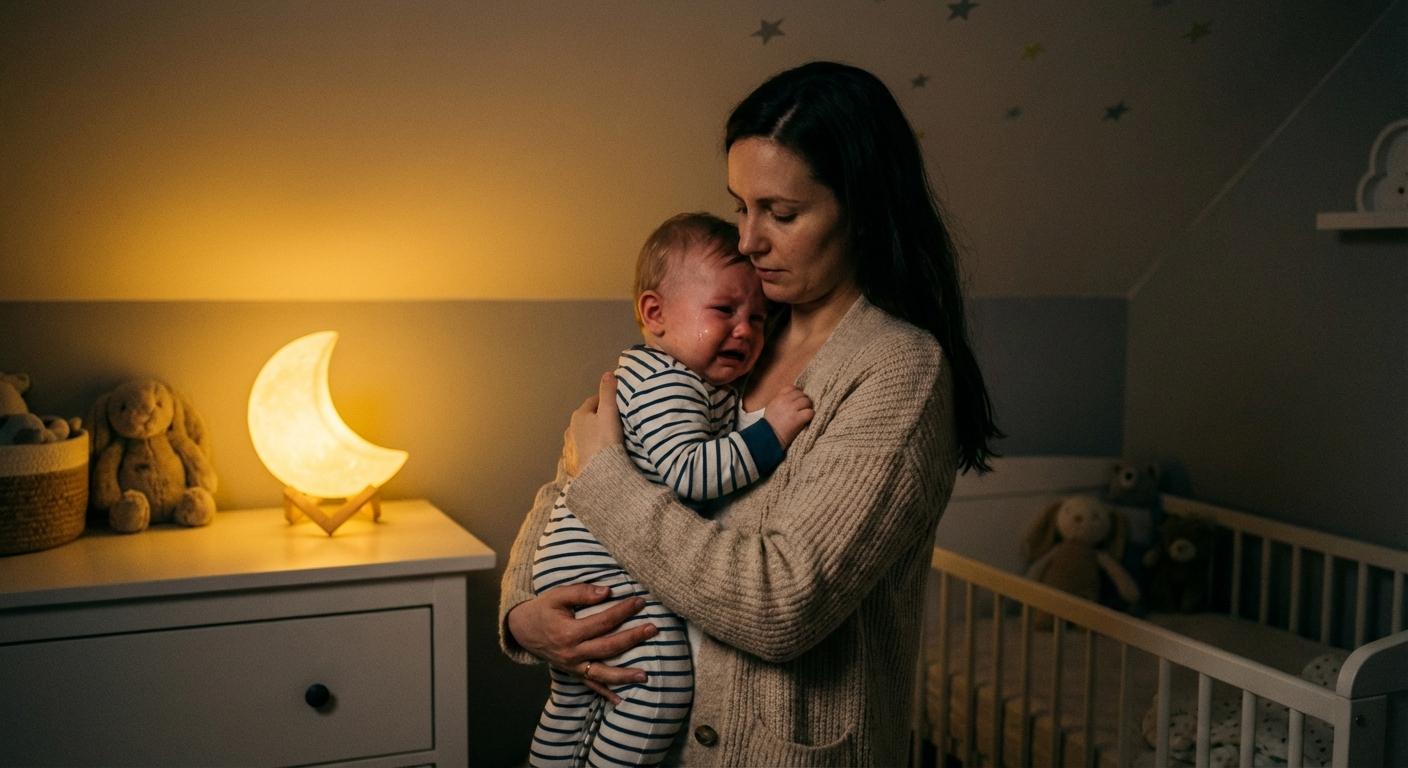
When baby wakes up screaming at night, it can feel like an alarm bell in your whole body. One moment the home is quiet, the next, you are up, trying to decide: hunger, pain, fear, gas, or simply a sleep-cycle shift? In many Indian homes there are extra variables too: power cuts, street noise, mosquitoes, joint-family routines, and sudden weather changes. The aim is to spot what is urgent, what is common, and what you can tweak without turning the night into a full wake-up.
What “screaming” at night can mean
Night “screaming” varies a lot. Some babies cry with eyes closed and settle quickly. Others cry hard, arch their back, or look startled. The more clearly you name the pattern, the easier it gets to respond.
Crying, yelling, screaming: what your baby’s body may be expressing
Babies can vocalise while still asleep: grunts, brief cries, little shouts, sometimes without fully opening their eyes. In lighter sleep, the line between “asleep” and “awake” is genuinely blurred.
Practical clues:


- Brief crying in waves, then quiet: often a micro-wake at the end of a sleep cycle, with spontaneous resettling.
- Sudden, intense screams: can be pain (ear, tummy, teething), a partial arousal (confusional arousal), or a startle.
- Long, escalating screaming: first think physical needs (hunger, diaper/nappy, temperature), then comfort needs (reassurance, separation).
Questions that help you read the moment:
- Does your baby recognise you when you speak?
- Do they calm when you place a steady hand on their chest/back?
- Are their eyes open but not really seeing you, as if disconnected?
Why timing helps: wakes at sleep-cycle transitions (about 45-60 minutes)
Many babies have a micro-wake between sleep cycles, often 45-60 minutes after falling asleep. If baby wakes up screaming at night at nearly the same interval, a sleep-cycle transition is a strong suspect.
Two useful clues:
- Timing (often at regular intervals)
- Brevity (a few minutes)
In this situation, a highly stimulating response (bright light, lots of talking, fully picking up) may accidentally convert a micro-wake into a full wake.
Understanding baby sleep so you can respond without burning out
When baby wakes up screaming at night, it can feel personal, like something has gone wrong in the routine. Often, it is sleep biology.
Why night waking can be normal (sleep maturation and fragmented sleep)
Infant sleep is naturally fragmented. Micro-wakes act like a brain check: breathing, position, environment. As the nervous system matures, sleep cycles consolidate.
A helpful distinction:
- a brief wake (baby may settle again)
- a full wake (a need, discomfort, pain, or fear keeps them awake)
Sleep associations: the same conditions trap
Feeding, rocking, pacifier, being held, or a parent’s presence are normal supports. But they can become strong sleep associations: at a micro-wake, your baby may look for the exact same sequence.
If bedtime always happens only in your arms, it is logical that baby wakes up screaming at night asking for your arms again.
Realistic age patterns
Every child differs, but common trends:
- 0-6 months: very fragmented sleep, frequent night feeds
- 6-12 months: gradual consolidation, spikes with separation anxiety, teething, motor milestones
- 12-24 months: more stable nights, wakes can still happen due to emotions, fatigue, or parasomnias
A simple question: is your baby recovering overall (mood, feeding, curiosity, growth)?
Quick steps to try when baby wakes up screaming at night
A short action plan keeps you calm and efficient.
Safety first: fast body check (breathing and safe sleep space)
Start with a quick scan:
- Breathing and colour: steady breathing and normal colour are reassuring. Retractions (ribs pulling in), grunting, wheeze, long pauses, or bluish lips/face need urgent assessment.
- Safe sleep space: firm, flat mattress, baby on the back, no loose blankets, pillows, bumpers, or toys.
A 30-second needs checklist (hunger, nappy, position, congestion, temperature)
Before you jump to complex explanations, check:
- Hunger/thirst (especially in young infants)
- Wet/soiled nappy, leaks, skin irritation
- Uncomfortable position
- Blocked nose (congestion makes feeding and sleep harder)
- Temperature mismatch
A hidden trigger is overheating: sweaty neck, restlessness, broken sleep. Many families find 19-20°C a useful reference, but in Indian summers that is not always realistic. Focus on breathable cotton, a fan that is not directly on baby’s face, and avoiding too many layers.
Look for hidden discomfort (hair tourniquet, tight clothing, rash/itch)
Quick checks that can prevent long crying:
- Hair/thread wrapped around toes, fingers, or (in boys) the penis
- Tight waistbands, scratchy tags, twisted pyjamas
- New rash, hives, diaper rash, or eczema itching (often worse at night)
Keep stimulation low while settling (dim light, calm voice, steady touch)
If your baby may drift back quickly, keep it boring:
- Dim light only if needed
- Quiet voice, minimal eye contact
- One steady soothing pattern (hand on chest/back, slow pat, gentle rocking), then back down once calmer
Give your baby a chance to resettle (when it’s safe)
If the crying is on-and-off rather than escalating, pausing 2-3 minutes can be enough for some babies to resettle.
Common reasons baby wakes up screaming at night
If the cry sounds different, sharper, higher-pitched, unusual for your baby, think pain earlier.
Sleep-related causes (overtiredness, overstimulation, sleep associations)
- Overtiredness: long wake windows or late naps can fragment sleep and increase loud protests.
- Overstimulation: a busy evening, loud TV, lots of visitors, or exciting play close to bedtime can keep the nervous system on.
- Sleep associations: if baby falls asleep only while feeding/rocking/being held, they may fully wake between cycles and protest when the same cue is missing.
Small fixes that often help: protect naps, shift bedtime earlier, and keep evenings calmer.
Physical discomfort and health causes
When baby wakes up screaming at night and is hard to console, consider discomfort or illness, especially if daytime behaviour changes.
Common causes:
- Teething: gum tenderness, drooling, chewing
- Reflux (GER/GERD): discomfort lying down, crying after feeds, arching
- Gas, constipation: tight belly, hard stools
- Ear infection (otitis media): crying at bedtime, ear tugging, fever
- Breathing discomfort: congestion, cough, noisy breathing
A useful rule: look for an associated sign: fever, reduced intake, laboured breathing, repeated vomiting, unusual sleepiness.
Emotional and developmental causes
From around 6 months, separation anxiety can show up suddenly. Your baby wakes, then checks whether you are there. Travel, a new caregiver, or a recent illness can also strain sleep.
Environmental triggers
Small changes can matter:
- Light from the hallway or phone screens
- Intermittent noise (street dogs, neighbours)
- Very dry air or monsoon dampness
- Clothing that causes sweating or itching
Aim for a stable, dark, low-stimulation setup.
Nightmares, night terrors, and confusional arousals
Parents often worry that baby wakes up screaming at night due to nightmares. True nightmares are more typical in older toddlers, but partial arousals can happen earlier.
How to tell them apart
- Nightmares: later in the night (REM sleep). Child wakes fully and recognises you.
- Night terrors: more common between 18 months and 4 years, usually early in the night (deep non-REM). Child may scream and sweat, yet still be asleep and not recognise you.
- Confusional arousals: partial awakening, child seems confused and may resist comfort.
What to do
For nightmares: reassure briefly, keep lights dim, and return to sleep cues.
For night terrors: do not force waking, keep the area safe and wait it out.
When frequent episodes need medical advice
Seek advice if episodes are frequent, risky (injury), prolonged, include unusual movements, or if you are unsure about seizures.
Age-specific clues when baby wakes up screaming at night
Newborn to 6 months
Mostly physical needs: hunger, gas, reflux-like discomfort, nappy discomfort, congestion, temperature mismatch.
Get medical advice if crying is unusual plus fever, repeated vomiting, feeding refusal, or a clear worsening in overall condition.
6 to 12 months
Cycle transitions, separation anxiety, teething, and milestones can drive louder protests. Some babies scream because they are stuck after rolling.
12 to 24 months
Big emotions, nap transitions, and fatigue can trigger wakes. Strong sleep associations may intensify the crying.
18 months to 4 years
Common period for night terrors, nightmares, fears, imagination. If episodes are frequent or unsafe (sleepwalking), discuss with your clinician.
When to call the paediatrician or seek urgent care
When baby wakes up screaming at night, you want clear red flags.
Fever guidance by age
- Under 3 months: any fever ≥ 38°C needs urgent evaluation.
- 3-6 months: fever around 38-38.5°C, or fever with poor feeding/unusual sleepiness, should be assessed.
- 6-24 months: fever ≥ 39°C, fever > 48 hours, or fever with dehydration, persistent vomiting, lethargy, or concerning rash needs medical advice.
Emergency signals
Seek emergency care for breathing difficulty, blue lips/face, severe lethargy, seizure-like activity, or dehydration (very few wet nappies, dry mouth, no tears, sunken fontanelle).
Calming techniques that fit your baby’s age
Younger infants
Gentle rocking, steady white noise, and brief contact can help. Swaddle only if baby is not rolling, always place baby on the back.
Older babies and toddlers
Use short, predictable phrases: “You are safe. It is sleep time.” Then keep interaction minimal.
Gentle in-crib support
Pick-up/put-down (only to calm), hands-on soothing (hand on chest/back), or sitting nearby can reduce stimulation.
Sleep strategies that can reduce screaming wake-ups
A consistent bedtime routine
Keep it simple: nappy, pyjamas, dim lights, feed if needed, short book/song, cuddle, into bed.
Managing overtiredness
If early-night screaming happens, try an earlier bedtime by 15-30 minutes for several nights and protect naps.
Daytime feeding and hydration
Support age-appropriate feeds/meals and monitor wet nappies and growth.
Optimising the sleep environment for calmer nights
Keep the room dark, reduce sudden noise, avoid overheating, and choose breathable cotton.
Tracking and troubleshooting what’s really happening
A 7-14 day sleep log (bedtime, naps, wake times, what helped, illness signs) can make patterns clearer.
A simple 7-10 day plan to improve nights
- Keep a steady bedtime window.
- Use the same calming ladder each wake.
- Aim for the shortest effective help.
Key takeaways
- If baby wakes up screaming at night, first sort: micro-wake, full wake, or parasomnia.
- Timing helps: wakes 45-60 minutes after falling asleep often happen at cycle transitions.
- Start with quick checks: breathing, safe sleep, then hunger, nappy, congestion, temperature, also check hair tourniquets and itchy skin.
- Common triggers: overtiredness, sleep associations, teething, reflux, constipation, ear pain, congestion, and environmental factors.
- Seek medical advice for fever in young infants, breathing trouble, dehydration, unusual sleepiness, seizure-like activity, persistent vomiting, concerning rash, feeding refusal, poor weight gain, or prolonged inconsolable episodes.
- Support exists, and you can download the Heloa app for personalised tips and free child health questionnaires.