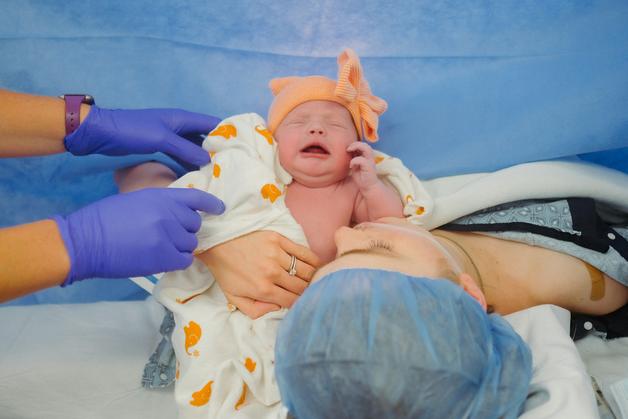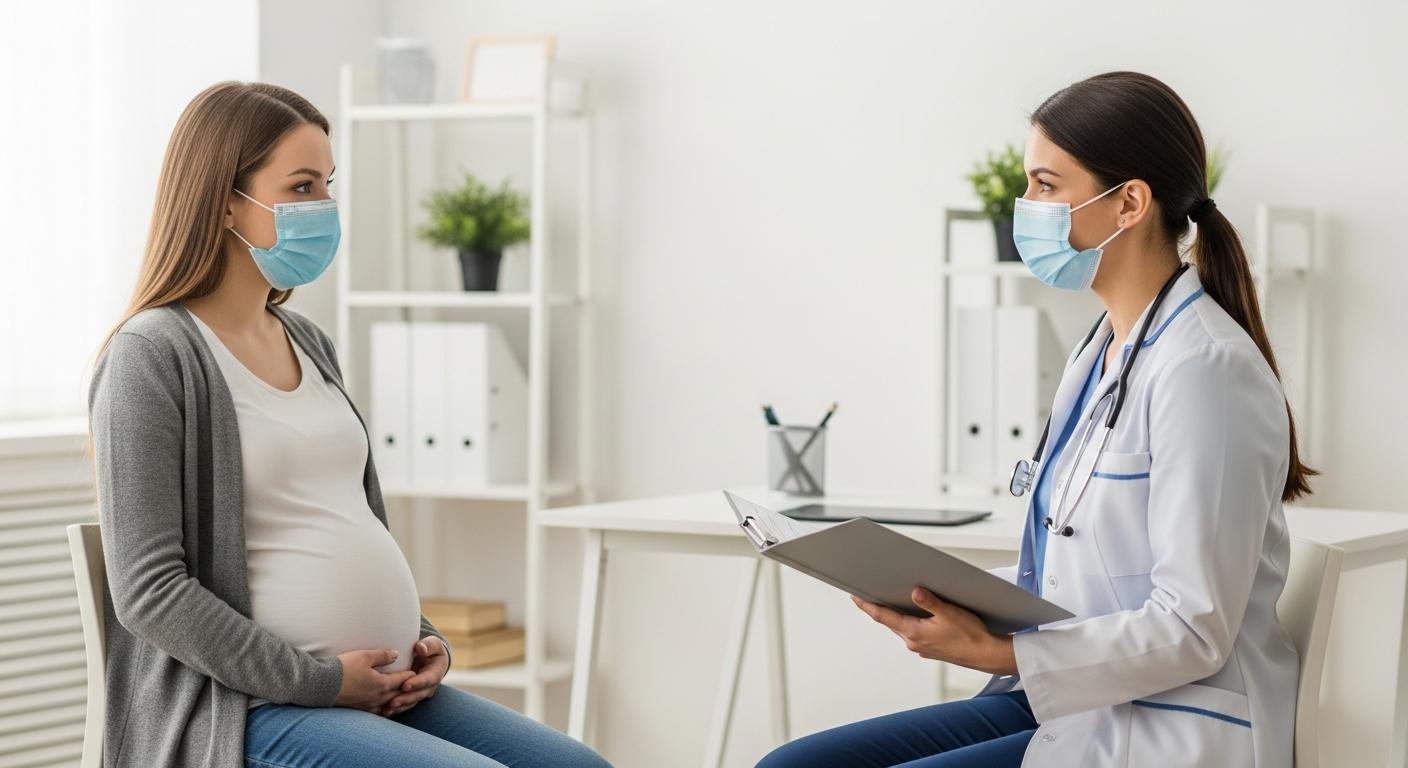
Hearing “positive test” while you’re pregnant can make time feel elastic—minutes stretch, thoughts race, and suddenly every cough sounds louder. COVID pregnancy is usually mild, yet pregnancy changes breathing mechanics, circulation, and immune signaling, so the same virus can hit differently than it would outside of pregnancy. Parents often want the same things, fast: what symptoms matter, when to call, what helps at home, what happens at appointments, whether birth plans change, and how to protect the newborn without sacrificing bonding.
What “COVID pregnancy” really means
COVID pregnancy means a SARS‑CoV‑2 infection occurring at any point while pregnant. The virus spreads mainly through airborne aerosols and respiratory droplets, especially indoors with poor ventilation and prolonged close contact.
Illness severity sits on a spectrum:
- Asymptomatic: positive test, no symptoms
- Mild: sore throat, runny nose, cough, low fever, fatigue, body aches
- Moderate: higher fever, notable shortness of breath with activity, marked exhaustion
- Severe: pneumonia with low oxygen levels needing oxygen therapy
- Critical: respiratory failure and/or multi‑organ support in intensive care
Most cases of COVID pregnancy stay mild and can be managed at home with guidance. Still, pregnancy reduces the margin for error when lungs or circulation are stressed.


Why pregnancy can increase the impact of a respiratory virus
You may wonder: “Does pregnancy weaken immunity?” The better picture is a shift, not a shutdown.
- Immune adaptation: pregnancy balances inflammatory and anti‑inflammatory responses so the body can tolerate the fetus and still fight pathogens.
- Respiratory physiology: oxygen demand rises, blood volume increases, and the diaphragm sits higher as the uterus expands—so there is less respiratory reserve.
- Coagulation changes: pregnancy is a naturally hypercoagulable state. COVID can add endothelial inflammation, which is why teams assess thrombosis risk early when symptoms are moderate/severe or mobility is reduced.
Symptoms during COVID pregnancy
Symptoms usually match those in nonpregnant adults: fever, chills, cough, sore throat, nasal congestion, headache, myalgia (muscle aches), fatigue, and sometimes taste/smell changes.
Shortness of breath deserves special attention in late pregnancy. Two quick questions help:
- Is it new or rapidly worsening?
- Is it happening at rest, or only with exertion?
Signs symptoms may be escalating
Contact your maternity team promptly if you notice:
- Increasing shortness of breath, especially if you can’t speak full sentences comfortably
- Worsening cough over hours to a day
- Persistent high fever that feels poorly tolerated
- Repeated vomiting or inability to drink enough fluids
- Dizziness, fainting, confusion, or a sense that you are deteriorating quickly
A home pulse oximeter can provide useful numbers to share, but it cannot replace a clinical assessment if you feel worse.
When urgent care is warranted
Seek urgent assessment right away for:
- Breathing difficulty at rest
- Chest pain or chest pressure
- Bluish lips/face
- Confusion
- Severe dehydration (very low urine output, inability to keep fluids down)
Later in pregnancy, a clear decrease in your baby’s usual movements is also an urgent reason to contact your maternity unit.
Testing during COVID pregnancy: PCR vs rapid antigen
- RT‑PCR: highest sensitivity, useful when symptoms are significant, you are high‑risk, or you need a definitive answer.
- Rapid antigen tests: faster results, but can miss infection (early after exposure, late in illness, or with mild symptoms).
After a known exposure, repeat testing around day 5 can be helpful. If antigen is negative but symptoms persist, many clinicians advise confirmatory PCR or repeating antigen in 24–48 hours.
How clinicians judge severity in COVID pregnancy
Clinicians look at:
- Temperature, heart rate, blood pressure
- Respiratory rate and work of breathing
- Oxygen saturation
Then come pregnancy‑specific considerations: gestational age, medical history, and whether fetal wellbeing checks are needed. Chest imaging can be used when indicated, clarifying maternal lung status often outweighs minimal fetal exposure when appropriately performed.
Risks for the pregnant parent
Severe illness and respiratory complications
Across studies, symptomatic COVID pregnancy is linked to higher rates of hospitalization, oxygen therapy, and ICU monitoring than in nonpregnant adults of similar age. Risk rises in the third trimester and with comorbidities. Vaccination lowers the likelihood of severe disease.
Blood clots (thrombosis)
Pregnancy increases clotting factors. COVID can amplify vascular inflammation (endotheliitis). In hospital, teams may consider preventive anticoagulation (often low‑molecular‑weight heparin) depending on protocols and individual risk.
Preeclampsia overlap
COVID, particularly severe infection, has been associated with hypertensive disorders such as preeclampsia. Because symptoms overlap, report promptly:
- Severe headache that doesn’t settle
- Visual changes
- Right‑upper abdominal pain
- Sudden swelling of face/hands
- Blood pressure concerns
Gestational diabetes: follow-up still matters
Some analyses find higher rates of gestational diabetes after severe illness, and infection can disrupt sleep and activity. Keep the usual screening (often 24–28 weeks) unless your clinician suggests an adjusted plan.
Risks for pregnancy and the baby
Preterm birth
The most consistent signal in COVID pregnancy research is a higher likelihood of preterm birth, especially with moderate or severe maternal illness. Prematurity may be spontaneous or linked to a medical decision when maternal oxygenation or obstetric complications become concerning.
Growth, low birth weight, stillbirth
Low birth weight can be a downstream effect of prematurity, and severe illness may be associated with growth concerns. Some studies suggest stillbirth risk may increase with severe disease, while others do not show a clear rise across all populations. Clinically, decreased fetal movements and significant maternal symptoms prompt closer fetal surveillance.
Vertical transmission and newborn outcomes
Vertical transmission through the placenta appears uncommon overall, though possible. After birth, spread is mainly through close contact.
If you are contagious, prevention focuses on practical steps while keeping bonding and feeding possible:
- Hand hygiene before touching or feeding
- Masking if you are coughing or still infectious
- Ventilation (fresh air, air filtration)
- Limiting visits from anyone with symptoms
Hospitals may observe the newborn more closely if infection occurred near delivery (breathing, feeding, temperature stability, sometimes testing depending on local protocol).
Who is at higher risk for severe COVID pregnancy
Risk rises with high BMI/obesity, chronic hypertension, diabetes, chronic lung disease (including asthma), heart or kidney disease, older maternal age, and social factors that increase exposure or delay access to care.
After ~32 weeks, the uterus leaves less room for the lungs and oxygen needs are high. Extra caution late in COVID pregnancy reflects physiology.
COVID pregnancy by trimester
- First trimester: no consistent causal link with congenital anomalies has been shown, priorities are fever control, hydration, and keeping screening (including the 18–22 week anatomy scan).
- Second trimester: maintain key prenatal tests, use telehealth when appropriate and reduce exposure in crowded indoor settings.
- Third trimester: higher risk of severe maternal illness, antivirals may be discussed early, and fetal checks may be added depending on symptoms and baseline risk.
Prevention during COVID pregnancy
Think in layers:
- Well‑fitted mask in crowded indoor settings
- Better ventilation (open windows, outdoor meetups, HEPA filtration)
- Hand hygiene
At home during a household illness: air out rooms, avoid sharing cups/utensils/towels, clean high‑touch surfaces, and keep distance when feasible.
COVID vaccine and COVID pregnancy
Health authorities advise staying up to date on COVID vaccination in pregnancy.
mRNA vaccines have extensive safety monitoring: large newborn cohorts have not shown an increased risk of major congenital anomalies after first‑trimester exposure. Side effects are usually sore arm, fatigue, and mild fever.
Vaccination lowers the risk of severe COVID pregnancy and hospitalization. Antibodies (IgG) can cross the placenta, supporting newborn protection. Vaccination is compatible with breastfeeding, antibodies can be detected in breast milk.
Treatment and home monitoring in COVID pregnancy
For higher‑risk pregnant patients, nirmatrelvir/ritonavir (Paxlovid) may be considered for mild‑to‑moderate COVID when there are no contraindications, it works best early, and medication interactions must be reviewed.
For mild illness at home:
- Drink regularly, dehydration can worsen fatigue and uterine irritability
- Rest, with gentle position changes
- Track temperature and breathing symptoms twice daily
- Use acetaminophen for fever/aches if approved by your clinician
From the stage your team advises (often after 28 weeks), monitor fetal movement patterns daily and report a clear decrease.
Delivery, postpartum, and breastfeeding after COVID pregnancy
Hospitals may test on admission and use isolation precautions. Most labor care stays the same, COVID pregnancy alone is not an indication for cesarean delivery.
After birth, seek urgent care for one‑sided leg swelling/pain, sudden chest pain, worsening shortness of breath, severe headache/vision changes, or heavy bleeding.
Breastfeeding is usually supported, breast milk is not considered a common route of SARS‑CoV‑2 transmission. If contagious, wash hands, mask if symptomatic, clean pump parts carefully, ventilate rooms, and limit symptomatic visitors.
Long COVID: when symptoms persist
If symptoms last beyond about 12 weeks—fatigue, breathlessness, palpitations, chest tightness, sleep disturbance, cognitive fog—follow up. Clinicians may check oxygenation, consider blood tests (anemia, thyroid), and arrange referrals when needed.
Key takeaways
- COVID pregnancy is often mild, but pregnancy reduces respiratory reserve and raises the risk of severe disease, especially in the third trimester and with comorbidities.
- Warning signs need fast assessment: worsening breathlessness, chest pain/pressure, confusion, inability to hydrate, rapid decline, or reduced fetal movement.
- Pregnancy is a hypercoagulable state, and COVID may raise clot risk, thrombosis prevention may be considered in hospital.
- Vertical transmission appears uncommon, after birth, hand hygiene, masking if contagious, ventilation, and limiting symptomatic visitors reduce spread.
- Vaccination (including mRNA vaccines) is considered safe in pregnancy and breastfeeding and lowers severe illness risk.
- If you test positive, contact your maternity team early, ask about antiviral eligibility, keep essential prenatal care on track, and seek prompt help if symptoms worsen.
Support exists through your maternity team, midwife, and pediatric clinician. For personalized tips and free child health questionnaires, you can download the Heloa app.
Questions Parents Ask
Can COVID during pregnancy cause birth defects or miscarriage?
Rassurez-vous: current data have not shown a consistent link between COVID-19 infection and congenital anomalies. In early pregnancy, the bigger concern is often high fever, which can happen with many infections. If you feel feverish, you can contact your maternity team to discuss safe fever control and hydration. If you notice bleeding, strong one-sided pain, or you simply feel something isn’t right, it’s always appropriate to seek advice quickly.
If I had COVID while pregnant, does my baby need extra check-ups after birth?
Most babies do well. Some teams may suggest a little extra monitoring depending on timing (for example, infection close to delivery), how unwell you were, and whether there were pregnancy complications such as preterm birth. This might include checking feeding, breathing, temperature stability, and sometimes newborn testing based on local protocols. If your baby seems sleepier than usual, feeds poorly, breathes fast, or has a fever, you can reach out promptly—there are clear pathways to assess and support newborns.
When can I stop isolating if I’m pregnant and still have symptoms?
Isolation recommendations vary by country and can change over time, so it’s sensible to confirm local guidance. Many parents find it helpful to think in practical terms: fever improving, symptoms getting better, and extra caution around coughing (masking, ventilation, hand hygiene) when close to others—especially a newborn. If you’re unsure, your maternity team can help you decide what feels safe and realistic at home.

Further reading:
- Pregnancy and COVID-19: https://www.nhs.uk/pregnancy/keeping-well/pregnancy-and-covid-19/
- Pregnancy and COVID-19: What are the risks?: https://www.mayoclinic.org/diseases-conditions/coronavirus/in-depth/pregnancy-and-covid-19/art-20482639
- COVID-19 and pregnancy: https://www.newcastle-hospitals.nhs.uk/services/maternity/covid-19-and-pregnancy/