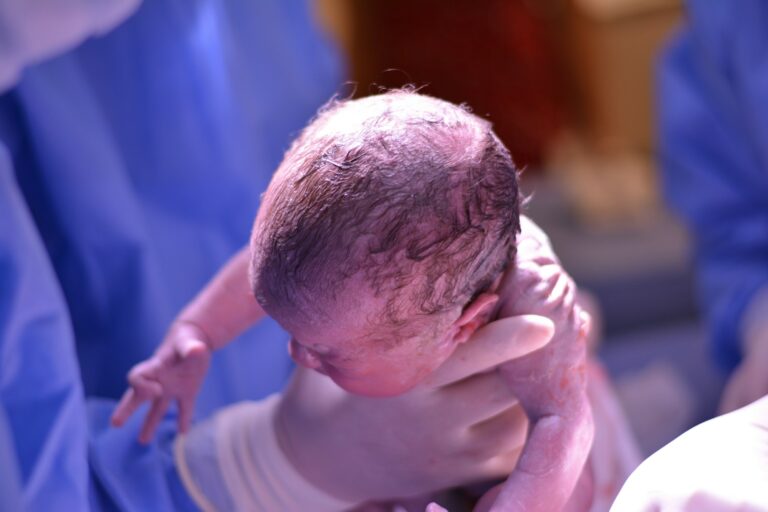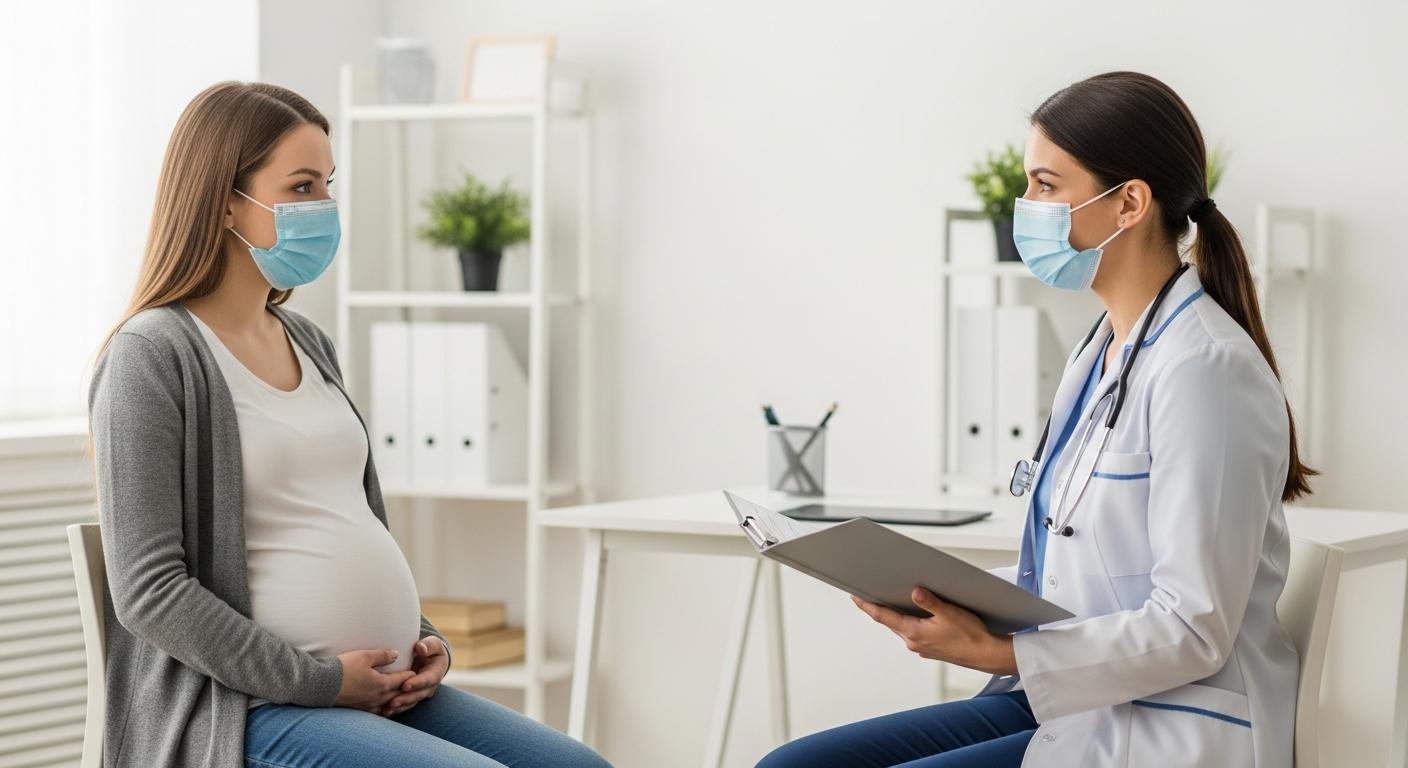
A positive test during pregnancy can feel like a sudden jolt: too many questions, too little time, and a body already doing overtime. COVID pregnancy is often mild, but pregnancy changes breathing mechanics, blood volume, and immune signalling. So the same infection may feel heavier, or need closer observation, especially in late pregnancy.
COVID pregnancy: what it means and what to expect
COVID pregnancy means SARS‑CoV‑2 infection at any time during pregnancy. It is not a different disease, but pregnancy physiology can change how your body copes.
Transmission and severity spectrum
SARS‑CoV‑2 spreads mainly through the air (aerosols) and respiratory droplets, especially in crowded indoor places with poor ventilation (lifts, packed buses, clinics, family functions in closed halls).
Severity can range from:

- Asymptomatic: positive test, no symptoms
- Mild: sore throat, cold-like symptoms, cough, tiredness
- Moderate: higher fever, breathing discomfort, marked weakness
- Severe: pneumonia with low oxygen levels needing oxygen
- Critical: respiratory distress needing ICU care
Many women with COVID pregnancy recover at home. A smaller group needs hospital care, particularly when other risk factors exist.
Why pregnancy can change risk (immune, lungs, and clotting)
Pregnancy adjusts immune responses so the body can support the baby while still fighting infections. Meanwhile, the body changes in ways that matter during a respiratory illness:
- Blood volume increases and the heart works harder.
- Oxygen demand rises.
- The diaphragm sits higher as the uterus grows, leaving less lung reserve.
So if pneumonia develops, there is less room to compensate.
Another point: pregnancy is a hypercoagulable state (a natural tendency to clot more, helping reduce bleeding at delivery). COVID can add blood vessel inflammation, which may increase thrombosis risk, especially in moderate/severe illness or prolonged bed rest.
Parent and baby outcomes: what studies most consistently show
Compared with nonpregnant adults of similar age, symptomatic COVID pregnancy is linked with higher chances of:
- Hospital admission
- Need for oxygen support
- ICU monitoring (more often in the third trimester)
For babies, the clearest association across studies is higher risk of preterm birth, particularly when the mother is more severely ill. Vertical transmission (infection passing via the placenta) is possible but uncommon overall.
Variants and vaccination
Variants can shift how fast the virus spreads and, sometimes, severity at a population level. Delta was linked with more severe disease than earlier strains. Omicron spreads very easily, severe illness can still happen in pregnancy, especially with risk factors.
What stays steady: being up to date with vaccination reduces the chance that COVID pregnancy becomes severe, and lowers hospital and ICU needs.
Symptoms of COVID-19 during pregnancy
Common symptoms
Symptoms are usually similar to those in nonpregnant adults:
- Fever or chills
- Cough, sore throat, blocked/runny nose
- Headache, body aches
- Fatigue
- Sometimes altered taste or smell
Shortness of breath needs extra attention in late pregnancy, because normal third-trimester breathlessness can mask early deterioration.
Red flags suggesting worsening illness
Mild illness means you can drink fluids, pass urine normally, and breathing is not worsening. Contact your maternity team promptly if you notice:
- Rapidly increasing breathlessness
- Difficulty speaking full sentences
- Worsening cough
- Persistent high fever that feels hard to tolerate
- Dizziness, fainting, confusion
- Repeated vomiting or inability to drink
A pulse oximeter is useful if available, especially in COVID pregnancy, because oxygen saturation gives objective information. Still, if you feel worse, do not wait for numbers to “prove it”.
When urgent care is needed
Go for urgent evaluation if there is:
- Trouble breathing at rest
- Chest pain or chest pressure
- Bluish lips/face
- Confusion or severe drowsiness
- Severe dehydration (very little urine, cannot keep fluids down)
In later pregnancy, reduced fetal movements compared to the baby’s usual pattern is also urgent.
Testing and diagnosis during COVID pregnancy
RT-PCR vs rapid antigen
- RT-PCR: most sensitive, preferred when you need confirmation, symptoms are significant, or you are high-risk.
- Rapid antigen: quick and convenient, but can miss infection early after exposure or when viral load is low.
When to test and when to repeat
If symptoms start, test early. After a known exposure, a negative test very early may not mean “no infection”, so repeating around day 5 can help. If a rapid test is negative but symptoms continue, repeating in 24-48 hours or doing a PCR is often advised.
How doctors assess severity in pregnancy
Clinicians check vitals: temperature, pulse, blood pressure, respiratory rate, and especially oxygen saturation.
They also consider pregnancy-specific conditions that can overlap with COVID symptoms, such as preeclampsia. If needed, chest imaging may be done, understanding the mother’s lung status generally outweighs minimal fetal risk when performed appropriately.
COVID pregnancy risks for the pregnant parent
Severe illness and hospitalisation
Symptomatic COVID pregnancy carries a higher risk of hospitalisation and ICU care than infection in nonpregnant women of the same age, especially in the third trimester. Vaccination reduces the likelihood of severe disease.
COVID can cause pneumonia and low oxygen levels. Because pregnancy already increases oxygen needs, even a smaller oxygen drop can have more impact. Hospital teams focus on supporting maternal oxygenation to maintain oxygen delivery to the placenta.
Blood clots (thrombosis)
In COVID pregnancy, doctors may assess clot risk early. Preventive anticoagulation (often heparin) may be considered in hospital depending on individual risk and local protocols.
Preeclampsia overlap
Severe COVID has been associated with higher rates of hypertensive disorders like preeclampsia. Report promptly:
- Severe headache
- Visual disturbances
- Upper abdominal pain (especially right side)
- Sudden swelling of face/hands
- High blood pressure readings if you have home monitoring
Gestational diabetes follow-up
Some analyses show an association between severe infection and gestational diabetes. Even without direct causality, disrupted sleep and reduced activity can worsen glucose control. Keep scheduled screening (often 24-28 weeks) and discuss results with your obstetrician.
COVID pregnancy risks for pregnancy and the baby
Preterm birth
The strongest and most consistent finding: COVID pregnancy is linked with a higher chance of preterm birth, especially when maternal illness is moderate or severe. Sometimes delivery is advised for maternal or fetal safety.
If the baby arrives early, the neonatal team may focus on breathing support, temperature control, feeding support (including expressed breastmilk), and infection monitoring. Many babies do very well, though a short NICU stay may be required.
Growth, low birth weight, and monitoring
Low birth weight can be due to prematurity, and severe maternal illness has been linked in some studies to growth concerns. Your doctor may suggest extra ultrasound growth scans, particularly after a complicated COVID pregnancy.
Stillbirth risk
Evidence is mixed: some datasets show increased risk with severe maternal disease, while other large analyses do not find a clear increase across all populations. Clinically, reduced fetal movements and maternal deterioration are treated seriously, with additional fetal surveillance when needed.
Vertical transmission and newborn infection
Placental infection is possible but appears rare. Most newborns of mothers with COVID pregnancy do not have confirmed infection at birth.
After delivery, spread is mainly through close contact. If you are contagious:
- Wash hands before holding/feeding baby
- Wear a mask if coughing or still infectious
- Keep good ventilation
- Limit visitors with symptoms
If infection happened near delivery, hospitals may observe the baby more closely for breathing, feeding, and temperature stability. Some units test the baby depending on timing and local policy.
Who is at higher risk for severe COVID pregnancy
Risk increases with obesity/high BMI, chronic hypertension, diabetes (preexisting or gestational), asthma or other chronic lung disease, heart disease, kidney disease, and older maternal age. Social factors such as high-exposure jobs and delays in accessing care also affect outcomes.
After about 32 weeks, the uterus takes more space under the lungs and oxygen needs are high. Respiratory infections can worsen faster. Extra precautions in late COVID pregnancy are a practical response to physiology.
COVID pregnancy by trimester
First trimester
Research has not shown a consistent causal link between first-trimester infection and birth defects. Fever management matters: persistent high fever should be discussed early, along with safe options for fever control and hydration. Routine scans, including the 18-22 week anomaly scan, remain important.
Second trimester
Keep routine tests on schedule. Teleconsultation can help for symptom checks and reports, while in-person visits remain important for examinations and ultrasounds.
Third trimester
This is the period with the highest risk of severe maternal illness. If COVID pregnancy occurs now, your team may discuss antivirals early, monitor oxygen levels more closely, and add fetal wellbeing checks depending on symptoms and baseline risk. Infection alone does not automatically mean a caesarean.
Preventing COVID-19 during pregnancy
Prevention works best as layered habits:
- Masking in crowded indoor places (metro, bus, clinic waiting areas)
- Better ventilation (open windows, outdoor meetings)
- Hand hygiene, especially before eating and after public surfaces
At home, if someone is ill:
- Air out rooms
- Avoid sharing towels/utensils
- Clean high-touch surfaces
- Keep distance when feasible
COVID vaccine and COVID pregnancy
Major public health bodies support staying up to date with COVID vaccination during pregnancy. The reason is simple: vaccination reduces severe disease risk in COVID pregnancy.
Large studies have not shown an increased risk of major congenital anomalies after first-trimester mRNA vaccine exposure. Side effects are usually sore arm, fatigue, and mild fever.
Vaccination can also lead to maternal IgG antibodies crossing the placenta, which may support the baby’s early protection. Vaccination during breastfeeding is considered compatible, antibodies can be found in breast milk.
Treatment and home care for COVID pregnancy
Treatment is individualised. For higher-risk pregnant women with mild-to-moderate illness, nirmatrelvir/ritonavir (Paxlovid) may be considered when appropriate and without contraindications, it works best early, and drug interactions must be reviewed.
For mild illness at home:
- Fluids (small frequent sips if nausea)
- Rest, but avoid complete immobility for long stretches
- Temperature morning and evening
- Track breathlessness (at rest vs on walking)
Paracetamol (acetaminophen) is commonly used for fever/aches in pregnancy when taken as directed by your doctor. Avoid starting NSAIDs, strong decongestants, or herbal supplements without medical advice.
Prenatal care, delivery, postpartum, and breastfeeding
Routine prenatal care usually continues. If actively infectious, some visits may shift to teleconsultation or be rescheduled, while essential monitoring is maintained. If illness was moderate/severe or risk is higher, your doctor may add growth scans, blood pressure follow-up, or third-trimester fetal surveillance depending on gestational age.
Hospitals may use admission testing and isolation precautions. Vaginal birth is often appropriate, infection alone is not a reason for caesarean. If maternal oxygen levels drop significantly or obstetric issues arise, earlier delivery may be discussed.
Breastfeeding is usually supported, as breast milk is not considered a common route for SARS‑CoV‑2 spread. If symptomatic, wash hands, consider masking while feeding if coughing, and clean pump parts carefully.
Long COVID in pregnancy and postpartum
Long COVID is discussed when symptoms persist beyond about 12 weeks: fatigue, breathlessness, palpitations, chest tightness, headaches, sleep disturbance, and cognitive fog. Seek follow-up if symptoms limit daily function, worsen, or include severe chest pain, fainting, or significant shortness of breath at rest.
To remember
- COVID pregnancy is often mild, but late pregnancy and comorbidities increase the chance of severe disease.
- Red flags: breathlessness at rest, chest pain/pressure, confusion, inability to hydrate, rapid worsening, or reduced fetal movements.
- Pregnancy increases clotting tendency, COVID can add to clot risk, so teams may assess thrombosis early.
- Vertical transmission is uncommon, after birth, prevention focuses on hand hygiene, masking if contagious, ventilation, and limiting symptomatic visitors.
- Vaccination reduces severe illness risk in COVID pregnancy and is considered compatible with pregnancy and breastfeeding.
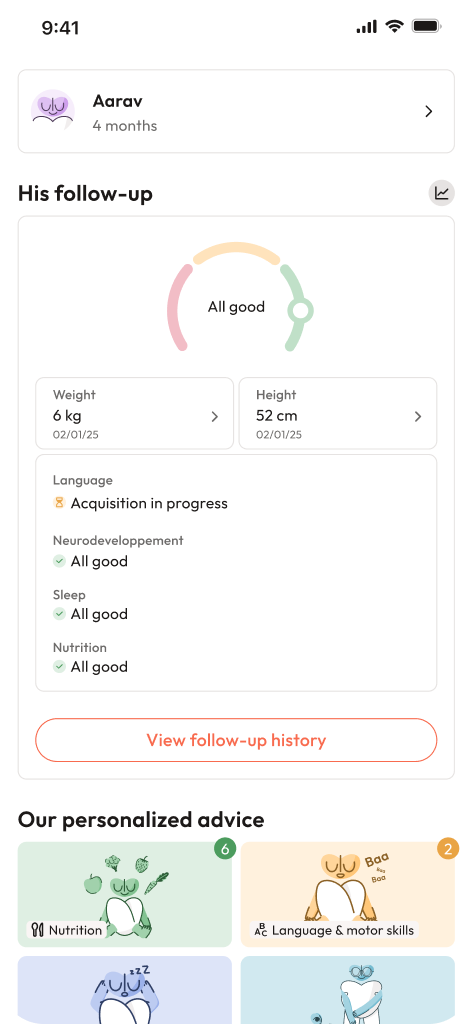
- Support is available through your obstetrician, midwife, and paediatrician. For personalised tips and free child health questionnaires, you can download the Heloa app.

Further reading:
- Pregnancy and COVID-19: https://www.nhs.uk/pregnancy/keeping-well/pregnancy-and-covid-19/
- Pregnancy and COVID-19: What are the risks?: https://www.mayoclinic.org/diseases-conditions/coronavirus/in-depth/pregnancy-and-covid-19/art-20482639
- COVID-19 and pregnancy: https://www.newcastle-hospitals.nhs.uk/services/maternity/covid-19-and-pregnancy/