
Legs that feel fine at breakfast and oddly heavy by late afternoon—does that sound familiar? In pregnancy, the circulatory system is working overtime, and gravity does not take a day off. Many parents wonder whether compression stockings pregnancy are safe, whether they truly help with swelling, and how to pick a pair that won’t end up rolled into a drawer. Comfort matters, but so does physiology: venous blood has to travel “uphill” from the feet, and pregnancy changes the rules. Let’s look at what compression stockings pregnancy do, when they are most useful, how to choose a pressure level, and the situations that require a quick call to a clinician.
What compression stockings are (and why pregnancy makes them useful)
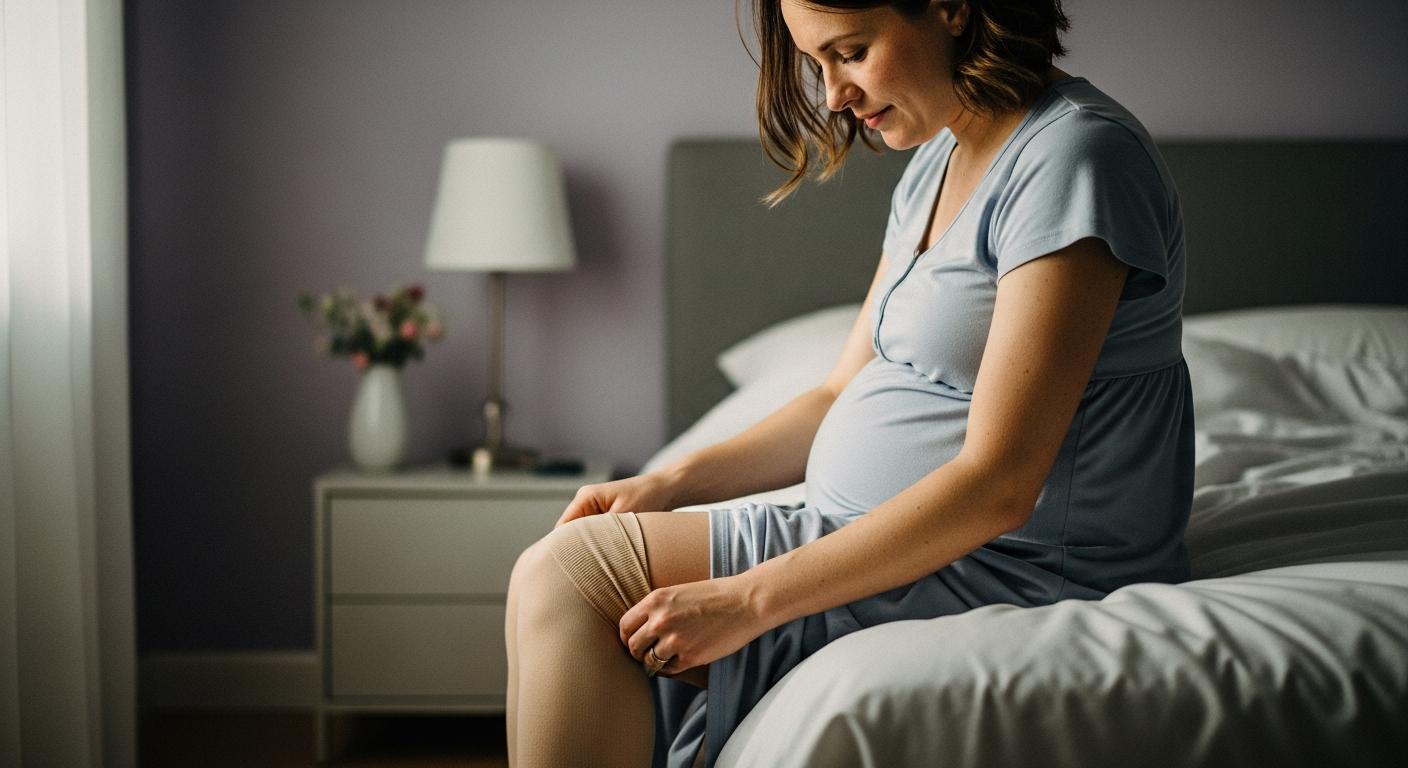
Compression stockings pregnancy refers to elastic garments—knee-high socks, thigh-high stockings, or maternity tights—designed to apply a controlled squeeze to the legs. The aim is not to “shrink” your calves. The aim is to support blood flow back toward the heart and limit fluid collecting in the tissues.
In everyday terms: less pooling in leg veins often means less swelling, less aching, and fewer “my shoes feel tight at 5 p.m.” moments.
Graduated compression: stronger at the ankle, lighter up the leg
Most medical and maternity options use graduated compression. Pressure is highest at the ankle and gradually decreases up the calf (and thigh, if the garment goes that far). That gradient helps:


- the calf muscle pump (your calf muscles “milk” blood upward when you walk)
- venous return (the upward flow of blood back to the heart)
- venous valves (tiny “one-way doors” inside veins) work more efficiently
When veins are better supported, less fluid tends to seep out into surrounding tissues, which can soften swelling (edema) over the day.
Compression socks vs compression stockings: what changes in real life?
Both can be helpful in compression stockings pregnancy routines, length is the main practical difference.
- Knee-high compression socks: often easiest to wear daily, ideal when swelling is mainly in feet, ankles, and calves.
- Thigh-high stockings: useful if discomfort or visible veins extend above the knee, fit is more sensitive, and slipping can happen.
- Maternity compression tights/pantyhose: full coverage plus a stretchy belly panel, practical with dresses or work outfits.
Why legs feel heavier in pregnancy (the physiology behind the feeling)
If your legs “deflate” overnight and “refill” during the day, that pattern matches pregnancy physiology—not weakness, not poor fitness, not imagination.
Blood volume rises, veins relax, and return flow slows
During pregnancy, blood volume increases substantially—often around 40–50% by late pregnancy. At the same time, progesterone relaxes vessel walls, veins become more distensible. Add a growing uterus that can compress pelvic veins and you get a perfect setup for venous stasis (blood moving more slowly and pooling in the legs).
That’s where compression stockings pregnancy can make a noticeable difference:
- narrowing superficial veins slightly, so blood moves more efficiently
- supporting valve closure, limiting backward flow (reflux)
- improving flow during movement, especially walking
Mechanical pressure from the uterus: a very physical reason for swelling
As pregnancy progresses, pelvic pressure increases. Venous return from the legs may slow further. Many parents feel this as:
- heavier legs by evening
- ankle or foot swelling
- varicose veins becoming more prominent
Starting compression stockings pregnancy early in the day can prevent the “build-up” effect.
When compression stockings pregnancy tends to help the most
Compression works best as prevention: it limits swelling from accumulating, rather than trying to reverse significant swelling that is already present.
Heavy legs and end-of-day discomfort
A realistic goal is simple: fewer hours feeling weighed down. With consistent wear, many pregnant women report less aching, less pulling, and better tolerance of standing—whether that’s commuting, working shifts, or caring for other children.
Night cramps sometimes improve too, although cramps have multiple causes (hydration, magnesium status, muscle fatigue), so results vary.
Swollen feet and ankles (pregnancy edema)
Pregnancy edema commonly appears in the feet and ankles. Compression stockings pregnancy can reduce fluid accumulation by improving venous return and supporting lymphatic drainage.
Timing is often the deciding factor:
- Put them on in the morning, before swelling starts.
- Waiting until afternoon can make them harder to put on and less comfortable.
Varicose veins and spider veins: symptom relief, not a “magic eraser”
Pregnancy can encourage spider veins (telangiectasias) and varicose veins—especially with family history, previous pregnancies, prolonged standing, or significant weight changes.
Important nuance: compression stockings pregnancy will not remove an established varicose vein. What they often do is reduce symptoms such as tension, warmth, throbbing, or heaviness, and they may slow worsening during pregnancy.
Long travel, seated days, standing jobs: “stasis” situations
When you sit still for hours—plane, car, train—or stand without much walking, the calf muscle pump is quieter. Pooling increases.
For these days, compression stockings pregnancy works best paired with small habits:
- ankle circles and flex/point movements
- short walks when possible
- regular hydration
- avoiding crossed legs for long periods
Blood clot context (DVT): what compression can and can’t do
Pregnancy is a hypercoagulable state (blood clots more easily). This protects against bleeding, but it also increases the risk of deep vein thrombosis (DVT), particularly postpartum.
In certain situations—long immobility, cesarean birth, prior clotting history, thrombophilia—compression stockings pregnancy may be part of a prevention plan by reducing stasis. But they do not replace medical evaluation, anticoagulant decisions, or postpartum monitoring when risk is elevated.
When to start wearing compression stockings pregnancy (by trimester)
There is no single “right week.” The best time is when symptoms start—or when your clinician suggests prevention because of your history.
First trimester
Yes, symptoms can appear early, especially if venous insufficiency existed before pregnancy. Mild to moderate compression may be enough. If symptoms are intense, unilateral, or rapidly worsening, seek medical advice rather than self-adjusting compression strength.
Second trimester
Many parents notice the shift here: more visible veins, swelling that appears earlier, and the classic “fine in the morning, worse by evening” pattern. Compression stockings pregnancy is often particularly helpful in this phase.
Third trimester
Swelling becomes more frequent, pelvic pressure increases, and fatigue can reduce activity. Putting on compression stockings pregnancy soon after waking is often one of the simplest comfort measures with the best payoff.
Choosing compression level (mmHg): how strong is “strong enough”?
Compression pressure is measured in mmHg (millimeters of mercury). You may see ranges such as 8–15, 15–20, or 20–30 mmHg, or “classes” depending on the country and brand.
A practical way to think about it:
- Light compression: often used for mild symptoms or prevention
- Moderate compression: commonly used when heaviness/swelling is regular
- Strong compression: usually for significant symptoms and often with clinician input
More pressure is not automatically better. Stronger garments are harder to put on and less forgiving if sizing is off.
A very common choice in pregnancy: moderate compression (often 15–20 mmHg)
For many people, moderate pressure is a good balance when:
- swelling is recurrent
- legs ache daily
- spider veins or varicose veins appear
- standing or sitting still is unavoidable
If a pair “does nothing,” pause and reassess before jumping to a higher level:
- Is the size correct?
- Are you putting them on early enough?
- Are there wrinkles or rolling creating pressure points?
Picking the right style for your symptoms
Length and design should match where the problem shows up.
Knee-high: often the easiest daily routine
Best when symptoms are mainly feet/ankles/calves. They are often more breathable and simpler to put on—two features that matter a lot late in pregnancy.
Thigh-high stockings
Useful when visible veins or discomfort extend above the knee. Watch for slipping: it’s often a sizing or shape mismatch rather than “your legs doing something wrong.”
Some parents prefer thigh-high styles because they avoid any fabric over the abdomen.
Maternity tights/pantyhose
Helpful for full-leg symptoms or when you want coverage under dresses. Look for a belly panel that feels supportive without compressing the abdomen.
Open-toe vs closed-toe
- Open-toe: cooler, often more comfortable with swelling or warm weather.
- Closed-toe: warmer and sometimes easier inside closed shoes.
Choose whichever avoids toe pressure and rubbing.
Stay-up bands and skin sensitivity
Silicone bands can keep thigh-high stockings in place. If you notice itching, redness, or irritation at the band, switching style or material is reasonable—skin can become more reactive in pregnancy.
Sizing and fit: the factor that decides comfort and effectiveness
With compression stockings pregnancy, correct sizing is not a detail, it is the whole experience.
Measure in the morning (before swelling builds)
Morning is when legs are least swollen, so measurements are more accurate. Depending on the product, you may need:
- ankle circumference
- calf circumference
- thigh circumference (for thigh-high)
- leg length/height
A garment that is too short may bunch, too long may slip. Both reduce comfort and effective compression.
Signs the fit is off
Recheck sizing (and stop wearing them if symptoms are concerning) if you notice:
- pronounced wrinkles or folds
- rolling at the top band
- pain or a “tourniquet” sensation
- persistent tingling or numbness
- red marks that last
- stockings sliding down repeatedly
Getting fitted by a trained professional can save time, money, and frustration.
How to put them on without a daily wrestling match
As your belly grows, bending and grip change. Technique matters.
Step-by-step
- Put them on after waking, before prolonged standing.
- Sit down, keep skin dry.
- Turn the stocking inside out down to the heel.
- Place your foot in and align the heel.
- Pull up gradually—small adjustments, no yanking.
- Smooth fabric to remove wrinkles.
Helpful extras:
- rubber donning gloves (better grip)
- a donning aid (especially if hip/back discomfort limits bending)
Moisturizer: better at night
Apply lotion after removing them. Lotion right before donning can make fabric twist or slip.
How long to wear compression stockings pregnancy (and can you sleep in them?)
Most people wear them during the day and remove them at night. When you lie down, gravity is less of a problem, so routine nighttime wear is rarely necessary unless a clinician specifically advises it.
Around birth and postpartum, your care team may suggest continuing compression stockings pregnancy, especially after a cesarean birth or if mobility is reduced.
Safety: when to be cautious and when to seek care
Properly fitted graduated compression is generally safe in pregnancy. Problems usually come from poor sizing, wrinkles that create pressure points, or using compression when it isn’t appropriate.
Main contraindication: significant arterial disease
Severe peripheral arterial disease (reduced blood flow to the legs) is a key reason to avoid compression without medical supervision. If you have cold feet, pain in calves when walking (claudication), or a known vascular history, discuss compression first.
Situations needing extra caution
Closer monitoring may be needed with:
- diabetes with complications such as reduced sensation (neuropathy)
- neuropathy from other causes
- significant or unstable heart failure
Warning signs: prompt assessment is needed
Seek medical help promptly if you develop:
- one-leg pain with asymmetric swelling, warmth, or redness
- shortness of breath, chest pain, fainting (emergency)
- immediate strong pain, numbness, or color change after putting them on
- a wound, oozing, or skin irritation that worsens
Supporting swelling beyond stockings: small habits, big payoff
Compression stockings pregnancy works best when paired with daily circulation-friendly habits:
- gentle walking (several short bouts can be easier than one long walk)
- ankle pumps and toe raises during seated time
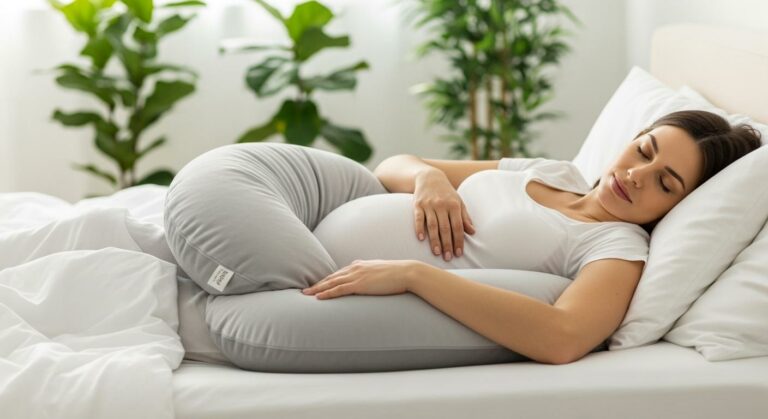
- leg elevation during rest
- cool water over calves if it feels soothing
- adequate hydration
- fiber-rich foods (constipation increases abdominal pressure and can worsen venous pressure)
Care, durability, and when to replace
Wash in lukewarm water with mild detergent, skip fabric softeners, and air-dry away from heat. Many parents like having two pairs so one can dry while the other is worn.
Replace them if they:
- slip despite correct fit
- feel noticeably looser
- show thinning, snags, or loss of elasticity
Key takeaways
- Compression stockings pregnancy can support circulation and often relieve heavy legs, swelling, and symptoms linked to spider veins or varicose veins.
- Best results usually come from wearing them morning to evening, especially on days with long sitting or standing.
- Pressure level matters, but fit matters even more: measure in the morning, avoid wrinkles, and reassess if bands roll or numbness appears.
- They don’t erase varicose veins and they don’t replace medical care when clot risk is high.
- Seek urgent care for one-sided swelling and pain, warmth/redness, or any chest symptoms or shortness of breath.
- If you want tailored tips and free child health questionnaires, you can download the Heloa app.
Questions Parents Ask
Can compression stockings help with hemorrhoids during pregnancy?
They can sometimes bring a bit of comfort indirectly. By supporting venous return in the legs, compression may reduce overall “pooling” in the lower body, which some parents find helps them feel less pressure by the end of the day. That said, hemorrhoids are also influenced by constipation and pelvic pressure, so stockings are usually just one small piece. Gentle movement, good hydration, and fiber can make a bigger difference—your clinician can suggest pregnancy-safe options if symptoms are painful.
What’s the best way to wear compression stockings in hot weather?
Rassurez-vous, it’s possible to stay comfortable. Many parents prefer open-toe styles and lighter, breathable fabrics in summer. Putting them on early (before heat-related swelling builds) often feels easier. If you tend to overheat, knee-highs may be more tolerable than full tights, and short walking breaks plus cool water on calves can feel soothing.
Do I need a prescription, or can I buy them over the counter?
Both options exist. Many mild-to-moderate compression stockings are available without a prescription and can be a good starting point when symptoms are mild. If you have significant varicose veins, a history of clots, unusual swelling, or any medical condition affecting circulation or sensation, it’s perfectly reasonable to ask for medical advice—and sometimes a fitted, medical-grade option is suggested for better comfort and accuracy.