Parents often wonder what really makes a toy “worth it.” Is it the price tag? The realism? The lights and sounds? With pretend play toys, the answer is usually simpler: a child picks up a prop, says “Let’s do it like this,” and their brain starts practicing real life—safely, playfully, and on repeat. That can look like “making soup” from empty bowls, treating a teddy’s “ouch,” or running a tiny grocery store with grand seriousness.
You may be hoping for more language, smoother routines, fewer meltdowns during transitions, or a way to prepare for doctor visits. You might also be thinking about safety (small parts, magnets, button batteries). All of that fits here: what pretend play toys are, when pretend play tends to appear, which sets match each age, and how to choose materials that stand up to mouthing, throwing, and daily cleaning.
What pretend play toys are (and what they are not)
Pretend play toys are props that support “as if” play: acting out a scene that is real, remembered, or invented. In developmental terms, you might hear:
- Symbolic play (make-believe): one object stands for another (a block becomes a phone).
- Dramatic play: a child takes a role (parent, vet, chef) and performs actions with intention.
- Small-world play: stories built with miniatures (animals, vehicles, figures, dollhouses).
A useful detail: realism is optional. What matters is that the toy leaves space for your child’s ideas.


Pretend play vs. role play vs. sensory play
These categories overlap, so keep the goal in mind:
- Pretend play: the umbrella term—acting “as if.”
- Role play: a branch of pretend play—being “someone” and following a mini scenario.
- Sensory play: exploring texture, sound, movement (shaking, banging, mouthing). Essential in infancy, but not primarily about storytelling.
A toddler “calling Grandma” with a remote control is not random. They’re practicing a social script—long before they can explain it.
Open-ended toys vs. scripted electronic toys
Some electronic toys are enjoyable, but toys that “perform” can crowd out your child’s voice.
Pretend play toys tend to work best when they allow many right answers:
- a kitchen set that invites conversation (“Do you want soup or pasta?”)
- a doctor kit that supports a sequence (hello → check-up → bandage → goodbye)
- a cash register that encourages turn-taking (not just button-pressing)
If you do choose electronic features, look for toys that still require the child to plan, talk, and decide.
Why pretend play toys support development (the science, in parent language)
Children don’t separate “play” from “learning.” Their nervous system learns through repetition, emotion, and interaction.
Sequencing and early thinking (planning, flexibility, working memory)
When a toddler repeats “cook → serve → wash,” they are training:
- working memory (holding the goal in mind: “feed the doll”)
- cognitive flexibility (adapting when the spoon falls)
- sequencing (beginning → middle → end)
It can look small. It isn’t. Even “I pour” is an exercise in prediction.
Language and communication (from words to stories)
Pretend play toys create a reason to communicate.
Children practice:
- vocabulary (food, tools, body parts, community helper words)
- pragmatic language (greetings, requests, “please/thank you,” turn-taking)
- early narration (“The baby is sick… now doctor.”)
A parent technique that often helps is recasting: you repeat your child’s words with slightly richer grammar.
- Child: “Baby sick.”
- Adult: “The baby feels sick. Let’s check her tummy.”
No quiz. No pressure. Just a gentle upgrade.
Social-emotional growth (empathy, co-regulation, emotional safety)
When children comfort a doll or “help” a customer, they rehearse empathy at a safe distance.
You can support emotional literacy with one short sentence:
- “He looks worried. You’re helping him feel better.”
That kind of calm narration links body cues, emotions, and soothing actions.
Executive function (self-control and “mental management”)
Executive functions are the brain’s management skills: inhibition (stop/think), shifting (change plans), and planning.
Pretend play toys support these skills when children:
- agree on roles (“You’re the vet, I’m the owner.”)
- stick to a routine (check-in → exam → treatment)
- cope with changes (“We’re out of eggs—what else can we cook?”)
These are the same skills used to get dressed, wait, and handle transitions.
Motor skills (fine motor and whole-body coordination)
Many pretend play toys naturally train hands and coordination:
- fasteners in dress-up (Velcro, zippers)
- utensils and tongs (grip strength, precision)
- dressing a doll (bilateral coordination—both hands working together)
- pushing a stroller or sweeping (gross motor patterns)
The best sets match your child’s size and strength. If it’s too hard, frustration rises fast.
From “as if” to “I can” (real-life transfer)
Parents often notice a shift: after practicing in play, children want to participate in real routines—bringing a diaper, wiping a small table, “helping” set the table.
The aim is participation, not a perfect chore.
When pretend play tends to emerge (0–3 years)
Pretend play builds in layers.
- 0–6 months: face-to-face exchanges, smiles, vocal back-and-forth
- 6–12 months: imitation of gestures (clapping, waving), intense interest in adult actions
- 12–18 months: single-step imitation with objects (feed, brush, “phone call”)
- 18–24 months: linking steps (prepare → serve → clean)
- 24–36 months: roles, dialogue fragments, early characters
You may be wondering: “When should I worry?” Without panic, it’s reasonable to discuss with a clinician if, over time, you see very limited joint attention (shared gaze and shared focus), few communicative gestures (pointing, showing, giving), little response to name, or a persistent absence of pretend play after age 2–3.
Pretend play toys by age (what tends to work best)
0–12 months: imitation before “pretend”
At this age, pretend play toys are often… not toys. They’re faces, voices, peekaboo, action songs.
Helpful props:
- a baby-safe mirror
- a soft doll or plush (for naming body parts)
Try: make one gesture, then pause. Waiting time invites your baby to respond.
12–18 months: one action at a time
Toddlers love short, familiar routines.
Good first pretend play toys:
- a sturdy cup and spoon
- a doll or plush to “feed”
- a chunky toy phone (or a thick cardboard DIY phone)
Safety note: avoid cords, loose magnets, button batteries, and tiny accessories.
18–24 months: chaining actions (and repeating them)
Now play often becomes “cook → serve → wipe → tidy,” again and again.
Helpful pretend play toys:
- simple play kitchen elements
- a basic doctor kit with large pieces
- child-sized household tools (small broom, cloth)
Parent move: add one accessory or name one action—then let your child lead.
24–36 months: roles, dialogue, mini stories
Children often enjoy clearer roles: doctor/patient, cashier/shopper, parent/baby.
Great pretend play toys here:
- a market stall with large play food
- a simple register with big “money”
- puppets for conversation practice
- easy dress-up pieces (hat, scarf, cape)
Offer a role, not a script: “Do you want to be the vet or the pet owner?”
3–5 years: longer narratives and cooperative play
Preschoolers can plan: menus, shopping lists, “appointments,” construction projects.
Add-ons that extend play without taking over:
- notepads, clipboards, paper signs
- a few open-ended props (scarves, boxes)
Supervise sets with small pieces, and store older siblings’ tiny accessories out of reach.
The pretend play toys families choose most (and what each supports)
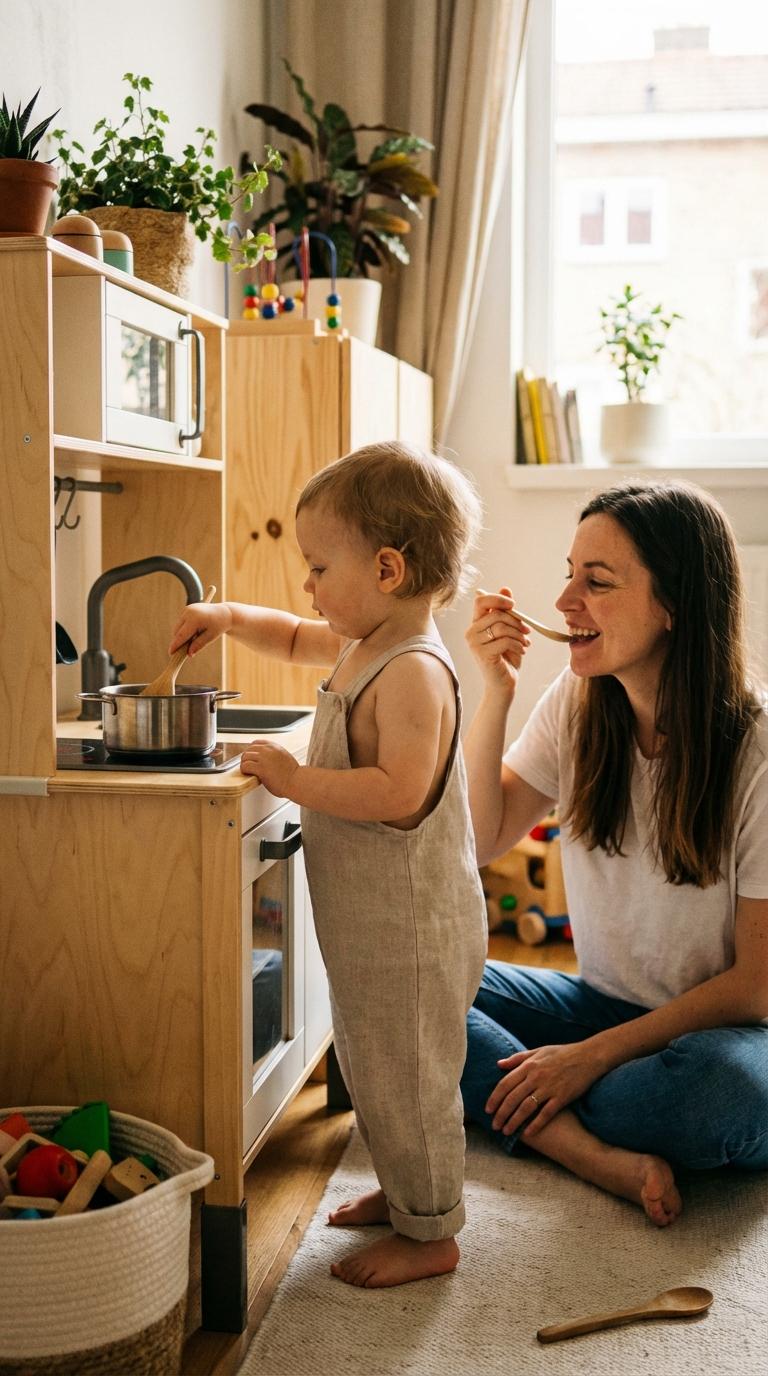
Kitchen and play food
A classic because it supports solo play, siblings, and guests.
It builds:
- sequencing (wash → cut → cook)
- concepts (hot/cold, full/empty)
- conversation (“Do you want more?”)
Choose pieces that open/close if your child enjoys fine-motor challenges, but keep parts large for toddlers.
Doctor, nurse, vet, dentist kits
These pretend play toys can make care routines feel predictable.
Start gently:
- treat a doll or stuffed animal first
- follow a simple routine (hello → check → bandage → goodbye)
Never use real medications or real syringes in play.
Tool sets and workbenches
Tool play supports “fixing” language and hand control.
Look for:
- big screws and wide pieces for younger children
- sturdy materials that won’t splinter
If magnets are included, they must be fully secured.
Cleaning and household play
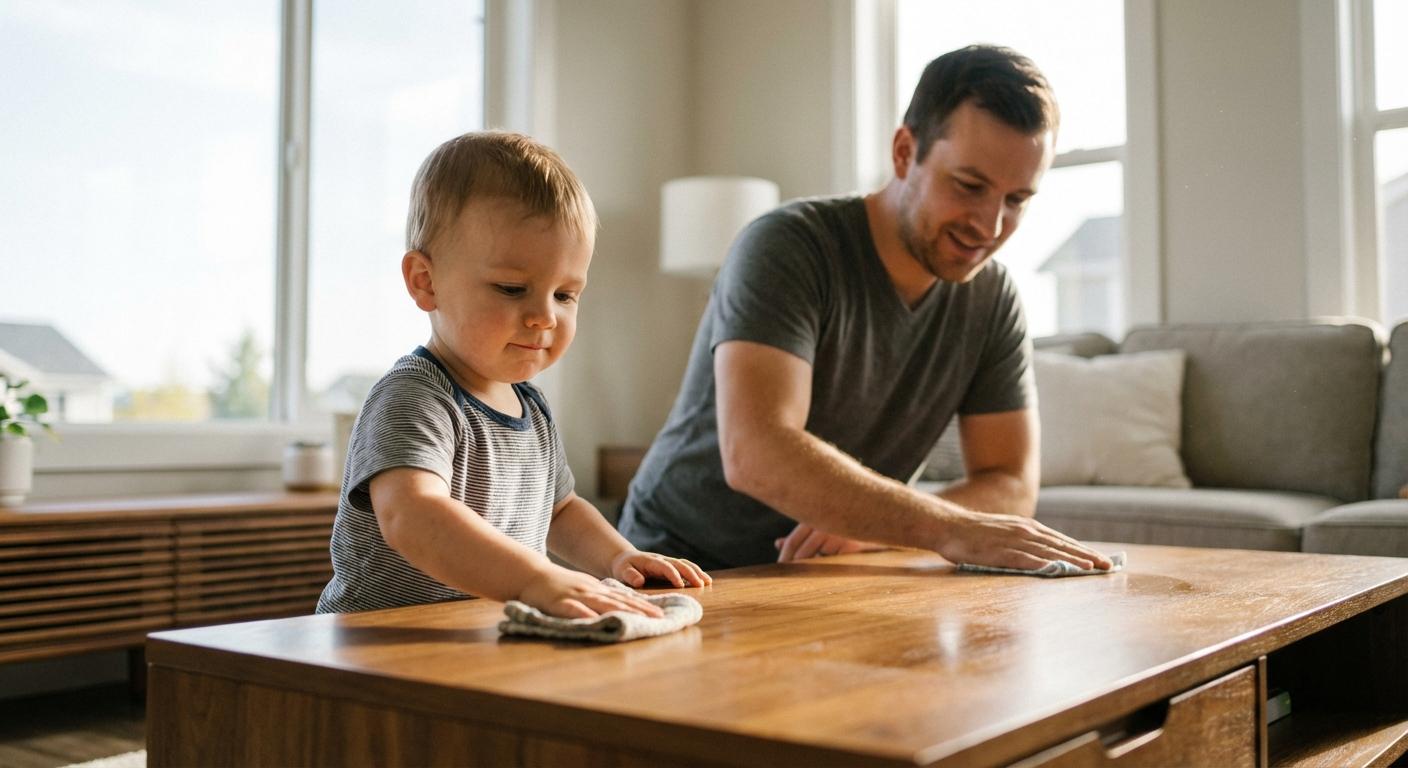
Child-sized brooms and cloths can channel energy—and give a real sense of competence.
Keep it playful and optional. The moment it becomes a demand, the magic evaporates.
Shop, café, and service play
Perfect for turn-taking and early “math talk” (counting, categories).
A basket plus a few items is enough. Coins should be large to reduce choking risk.
Dress-up and costumes
A hat, a scarf, an apron: often more wearable than a complicated outfit.
Avoid long cords or tight neck openings.
Dolls and family play
Doll care supports attachment-themed stories: separation, reunion, soothing, bedtime.
Choose washable dolls and skip tiny accessories when younger siblings are around.
Puppets and theater
Puppets can help children express feelings “through” a character—sometimes easier than speaking as themselves.
Outdoor role play
Gardening, transporting, filling and dumping: big movement plus pretend.
Extra supervision outdoors matters (small stones, soil, water).
Pretend play at home (simple setups, big impact)
You don’t need a playroom full of equipment for pretend play toys to shine.
- Three-step cooking: “I pour. I mix. I serve.”
- Express store: two piles—“for sale” and “sold”—then swap roles.
- Gentle doctor play: name body parts calmly, practice “check-up” routines.
- Doll routine: feed → change → sleep (your child decides the order).
- Two-minute mini-clean: blocks in a basket, quick wipe, stop early.
- Repair shop: prepare → screw → test (one step at a time).
- Phone calls: hello → one message → goodbye.
- Rhythm concert: copy, pause, “stop/again.”
Ordinary moments are often the best stage: bath time, meals, getting dressed.
Choosing pretend play toys: safety, materials, and common sense
Safety essentials (especially under 3)
Because mouthing and throwing are common, safety deserves full attention.
Check for:
- choking hazards (small detachable parts)
- button batteries (must be secured, ingestion is an emergency)
- magnets (loose magnets are extremely dangerous if swallowed)
- cords/long strings (strangulation risk)
- cracked plastic, splintering wood, peeling paint
Age labels: mainly about safety
A label is a safety filter, not a measure of intelligence.
A toy that does everything “for” the child can shrink imagination. Often, fewer pieces and more flexibility win.
Materials and finishes
Wood, plastic, fabric, silicone can all work well.
What matters:
- smooth edges
- sturdy construction
- washable or wipeable surfaces
- secure battery compartments (if present)
Re-check toys over time. Wear and tear changes safety.
Rotation: less clutter, deeper play
Too many options can fragment attention.
Try leaving out two or three themes of pretend play toys, and rotate every couple of weeks. An “old” toy often feels new.
DIY is welcome—when sturdy
Cardboard ovens, paper menus, fabric scarves: excellent.
Avoid staples, flaking materials, and glued-on tiny parts that can detach.
Practical life play: when imitation becomes real competence
You might notice a bridge between pretend and real gestures: pouring a little water, wiping, brushing, carrying.
A simple routine helps:
- “I take → I do → I put back.”
A small basket with two cloths, a tiny brush, a lightweight pitcher—simple tools, repeated steps, calmer routines.
Playing alone, together, or with siblings
Solo play: repetition is productive
Repeating the same sequence is not “stuck.” It’s consolidation.
One supportive sentence is often enough.
Two children: one rule to start
“Your turn / my turn.” Keep it clean. More rules often create conflict.
Siblings: roles reduce friction
Chef/customer, doctor/patient—roles organize the play.
Store small parts from older siblings out of reach.
Temperament matters
- high-energy children often enjoy transporting, cleaning play, outdoor roles
- observers may prefer dolls, kitchen, puppets
- hands-on builders often enjoy tools, containers, sorting
If frustration rises, shorten the activity. One successful action protects confidence.
Key takeaways
- Pretend play toys support symbolic play, sequencing, language, motor skills, executive function, and social-emotional growth.
- Pretend play often develops step-by-step: imitation → single actions → action chains → roles and stories.
- A balanced mix works well: one themed “anchor” plus open-ended props (boxes, scarves, signs).
- For under-3s, safety checks are essential: small parts, cords, button batteries, and magnets.
- Families can support play with short narration, turn-taking, and simple routines.
- For tailored tips and free child health questionnaires, you can download the Heloa app and find guidance that matches your child’s age and needs.
Questions Parents Ask
What are the best pretend play toys for a child with a speech delay?
No pressure—pretend play can support speech gently, even with just a few words. Sets with clear actions work well: a simple kitchen (pour, stir, eat), a doll (feed, sleep), or a doctor kit (listen, bandage). You can model short, repeatable phrases like “More soup?” or “Teddy hurt.” If your child mostly points or sounds things out, that still counts as communication. Small steps add up.
How can I encourage pretend play if my child “doesn’t know what to do”?
Some children need a tiny spark to get started, and that’s completely normal. Try a one-step demo (feed the doll once), then pause and let your child take over. Keeping props simple and predictable often helps more than adding lots of accessories. Following your child’s interests (cars, animals, babies, cooking) can make pretend play feel easier and more motivating.
Is pretend play different for autistic children (and is that okay)?
Yes—pretend play can look different, and that’s okay. Some autistic children prefer repeating familiar routines, lining up props, or focusing on parts of a toy, these can be meaningful ways of exploring. If you’d like to expand play, you can use their favorite theme, break scenes into small, repeatable steps, and add visual cues (a picture “menu,” a simple “check-up” sequence). If concerns about development persist, discussing them with a pediatric professional can bring clarity and support.