At 12 months, many parents ask the same things: does my child still need a lot of milk? Are pieces and lumpier textures safe now? And when appetite drops for a day, should you worry? baby food 12 months sits right at the hinge between early complementary feeding and family meals: textures broaden, routines settle, and a few nutrition anchors (iron, calcium, vitamin D, healthy fats) keep things steady without turning the table into a battlefield.
Baby food 12 months: what changes around the first birthday
New eating skills (pincer grasp, chewing, independence)
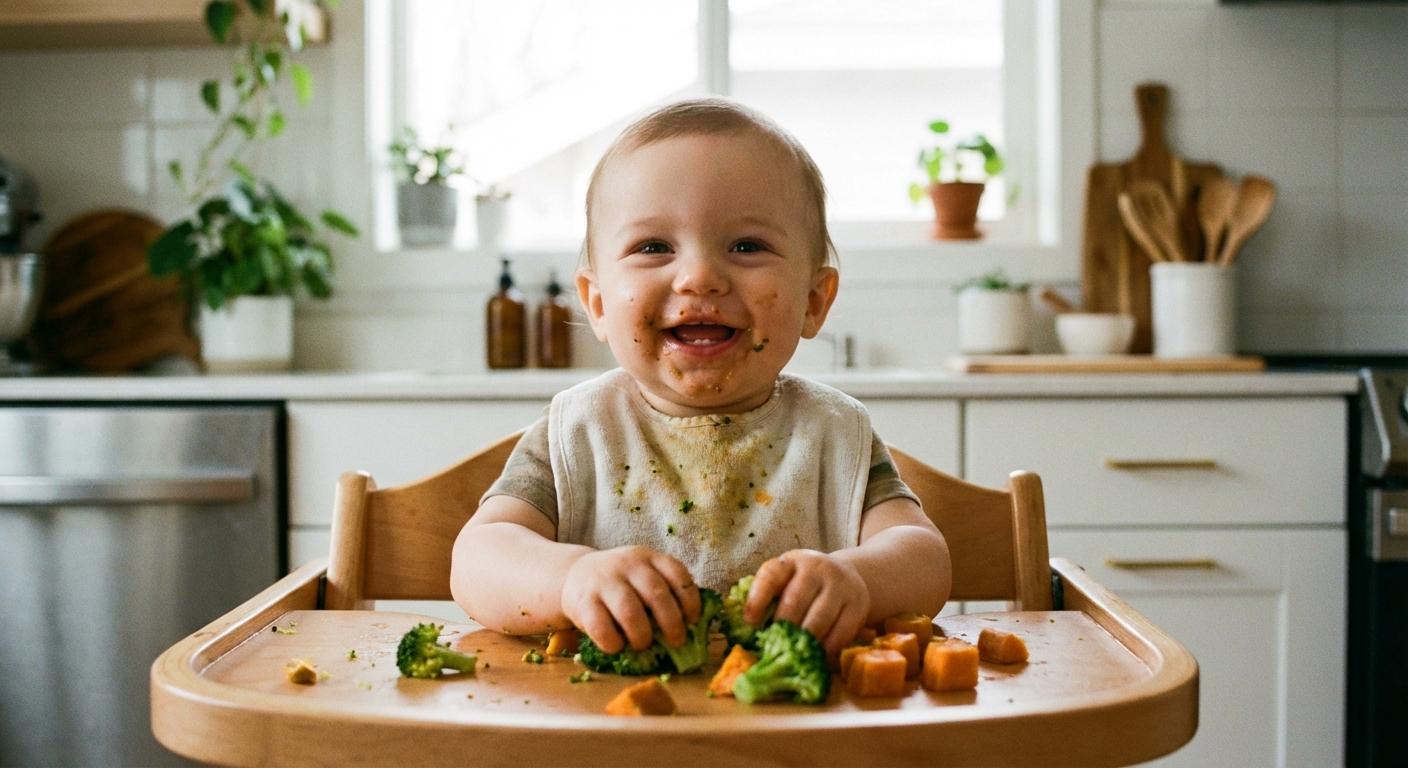
Around one year, many children refine the pincer grasp (thumb and index finger), so small soft pieces become easier to manage. Chewing evolves too: instead of only mashing with gums, the tongue starts moving food side-to-side to break it down. Add the motor boom (crawling, cruising, sometimes walking) and you may see higher energy needs, plus a stronger wish to leave the chair after three minutes.
So yes, baby food 12 months can look messy. That is learning.
Finger foods help: soft, bite-size options that let your child self-feed. Coordination improves, and hunger/fullness signals tend to stay clearer, even if the cleanup takes longer.


Appetite ups and downs: often normal
Appetite variation is typical at this age. Growth slows compared with the first months of life, so intake looks less predictable. Teething, minor illnesses, constipation, fatigue, and new skills can all change what gets eaten.
Try a weekly view: patterns matter more than one lunch.
Usually reassuring:
- good energy and alertness
- regular wet diapers
- steady growth curve
In baby food 12 months, balance often happens across days. A light lunch and a stronger snack can still add up.
Responsive feeding and the division of responsibility
You might wonder, “Should I push a few more bites?” A calmer framework is the division of responsibility:
- You decide what is offered, when, and where.
- Your child decides whether to eat and how much.
Small habits that reduce tension:
- predictable meal and snack times
- upright seating and close supervision
- small portions first (seconds are less intimidating)
- no pressure or bargaining
Nutrition priorities in baby food 12 months
Iron, calcium/vitamin D, omega-3
Iron supports hemoglobin (oxygen transport) and neurodevelopment. After 12 months, very high milk intake plus limited iron-rich foods can raise the risk of iron deficiency.
Iron-rich choices:
- meat, poultry
- fish
- fully cooked egg
- legumes (lentils, chickpeas, beans)
- iron-fortified cereals
Plant iron (non-heme) is absorbed better with vitamin C. Easy pairs:
- iron-fortified cereal + kiwi or strawberries
- lentils + tomato sauce
- beans + citrus fruit at the end of the meal
Calcium and vitamin D support bones and teeth. Calcium comes from milk, yogurt, cheese, and fortified alternatives, vitamin D is sometimes supplemented depending on intake and clinician advice.
Omega-3 fats (DHA/EPA) support brain and vision. Offer low-mercury fatty fish (salmon, sardines, trout) well cooked and flaked, plant oils such as canola oil also contribute.
Energy: quality and rhythm
Rather than counting calories, focus on a steady pattern: 3 meals plus 2 to 3 snacks. Each eating moment can include:
- a carbohydrate (grain, potato, fruit)
- a protein
- a fat
Toddlers should not follow low-fat diets unless a clinician directs it, fat supports brain growth and provides lasting energy.
Micronutrients to keep in mind
Common reference intakes for ages 1 to 3 years:
- iron ~7 mg/day
- calcium ~700 mg/day
- vitamin D ~600 IU/day
- zinc ~3 mg/day
Other nutrients that matter:
- choline (egg is a strong source)
- iodine (dairy, eggs, seafood, iodized salt for the family table, but do not add salt to your child’s portion)
- vitamin B12 (animal foods or fortified foods)
Vegetarian or vegan family pattern? Discuss B12, iodine, iron, and vitamin D with your pediatric clinician.
Added fats: how much and when
A practical benchmark often used in baby food 12 months is about 2 teaspoons per day of vegetable oil (olive or canola). Add it after cooking when possible.
Fluids: water and milk
Water and milk are the main drinks. Offer water with meals and snacks.
After 12 months, cow’s milk intake is often kept around 480 to 720 ml/day (16 to 24 oz). Regularly exceeding that can reduce appetite for solids and is associated with higher iron deficiency risk.
Portions and balanced plates (flexible, not rigid)
Toddlers are not consistent eaters. In baby food 12 months, portions work best as loose guides.
Common benchmarks around 12 months:
- vegetables spread across the day
- fruit about 2 portions/day
- animal protein about 20 g/day meat or fish, or 1/2 a fully cooked egg
- added fats about 2 teaspoons/day
What does 20 g look like? Often 2 to 3 tablespoons of finely shredded meat or flaked fish.
Per-meal ranges many children fit into:
- vegetables 1/4 to 1/2 cup
- fruit 1/4 to 1/2 cup
- grains/starches 1/4 to 1/2 cup cooked
If your child fills up quickly, offer the iron-rich food early in the meal.
Daily routine: meals, snacks, and timing milk
Many 12-month-olds do well with a simple rhythm: breakfast, lunch, afternoon snack, dinner, plus a morning snack if needed. Spacing eating moments about every 2 to 3 hours helps appetite cues stay clear.
If milk crowds out food, try solids first at meals, then milk in a cup after a few bites. Scheduled milk is often easier than all-day sipping.
A common target in baby food 12 months is around 500 ml/day of milk, or equivalent dairy. Breastfeeding can continue as long as it suits you and your child, formula transitions may be individualized.
Texture progression and finger foods
Moving from purees to soft pieces
A typical progression in baby food 12 months:
- thick purees and mash with texture
- shredded, chopped, or flaked tender foods
- small soft pieces (steamed vegetables, very well-cooked pasta, ripe fruit)
Even with few teeth, gums can manage soft foods. Molars often arrive later.
Safe finger foods (soft enough to mash between fingers)
- ripe banana, avocado, very soft pear or peach
- steamed zucchini, carrot sticks, sweet potato cubes
- flaked fish, shredded chicken, tender meatballs
- soft pasta shapes, rice clumps
- toast strips with a thin spread (nut butter thinned, hummus)
- fully cooked omelet strips
A quick texture ladder when your child hesitates
Some days, pieces go down easily. Other days, the same food gets spat out. With baby food 12 months, a small step-down often helps without giving up on progress:
1) mashed version of the food
2) finely chopped or shredded version
3) soft bite-size pieces
Keep one “easy” texture on the plate and one “practice” texture. That mix can reduce frustration.
Cutting and serving tips
- quarter grapes and cherry tomatoes lengthwise
- cook hard fruits/vegetables until soft
- avoid large cubes of cheese or meat
- do not offer thick spoonfuls of nut butter
Safety: choking prevention
Gagging is usually noisy (coughing, retching) while breathing continues. Choking is often silent, with difficulty breathing, inability to cry or cough, or color change.
High-risk foods at this age:
- whole grapes, cherry tomatoes, olives
- popcorn, whole nuts
- hard candy
- chunks of raw apple or carrot
- coin-shaped pieces such as hot dog rounds
Meals should happen seated upright, with close supervision.
If your child is coughing strongly, let them cough. If they cannot breathe or make sound, treat it as choking, call emergency services, and start first aid if trained.
Allergens: keep them in the routine
Once an allergen is tolerated, regular exposure helps maintain tolerance. Common allergens include milk, egg, peanut, tree nuts (safe textures), fish/shellfish, wheat, soy, sesame.
Introduce a new allergen when your child is well, earlier in the day, starting small, in a safe texture (for example, smooth peanut butter thinned in yogurt).
Seek urgent care for breathing difficulty, major swelling, repeated vomiting with lethargy, or severe symptoms.
What to limit or avoid
For baby food 12 months, keep salt and added sugar low. Flavor can come from herbs, mild spices, garlic, onion, lemon, and naturally sweet vegetables.
Choose pasteurized dairy. Avoid raw or undercooked eggs, meat, poultry, and fish.
Avoid high-risk choking foods (whole nuts, popcorn, hard candies) and modify round firm foods rather than avoiding variety.
What to serve: simple building blocks
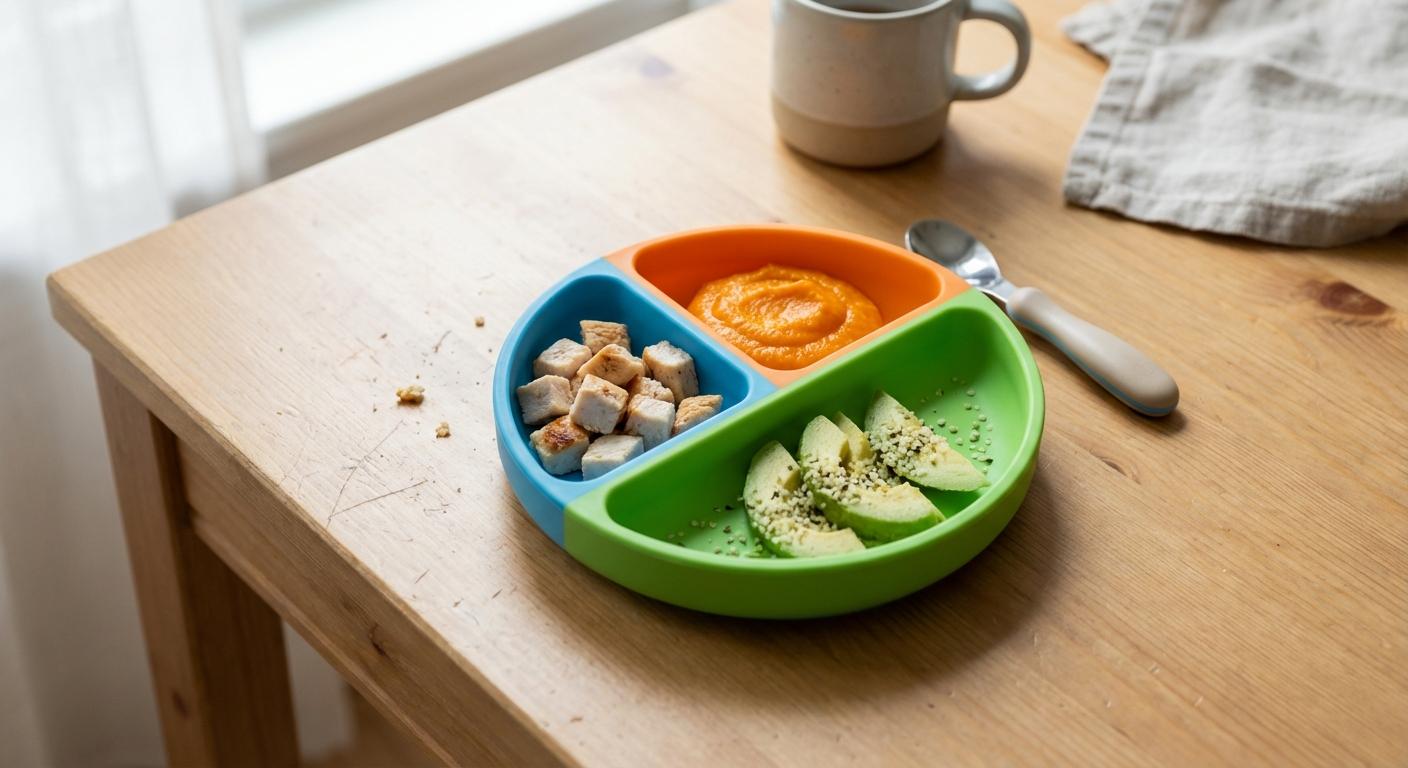
A practical plate idea for baby food 12 months:
- vegetables (cooked soft) plus fruit across the day
- starches (pasta, rice, potato, porridge, soft bread)
- legumes for fiber and plant protein (lentils, beans, chickpeas, well cooked and mashed if needed)
- protein rhythm: about 20 g/day meat or fish, fish twice per week including one fatty fish, and fully cooked egg options
Choose low-mercury fish (salmon, sardines, trout, cod, pollock). Flake carefully and check for bones.
Sample menus for baby food 12 months
One simple day
- Breakfast: milk or breastfeeding + plain yogurt + mashed banana
- Lunch: vegetables + starch + shredded chicken (~20 g) + oil + fruit
- Snack: unsweetened applesauce + fresh cheese
- Dinner: steamed vegetables + very well-cooked pasta + milk
3-day mini plan
Day 1: fortified cereal + strawberries, lunch lentils with soft pasta, dinner salmon flakes + mash + broccoli
Day 2: scrambled egg + tomato + toast, lunch beef and veggie pasta, dinner baked white fish + sweet potato mash + peas
Day 3: oats + mashed banana + thin peanut butter, lunch chicken + black beans + avocado, dinner red lentil soup + soft bread
Handling common challenges
Constipation
Increase water and fiber gently: pears, prunes, peaches, berries, peas, broccoli, oats, beans. If constipation persists, review milk quantity and discuss with a clinician, especially if there is pain, blood in stool, fever, or vomiting.
Low appetite days
During colds or teething, offer small familiar foods more often and prioritize fluids. Appetite usually returns after recovery.
Throwing food and distractions
Keep portions small, stay neutral, and end the meal if throwing continues. Screen-free meals help attention and safety.
When to ask for extra support
In baby food 12 months, some situations deserve a closer look with a professional:
- frequent gagging with most textures after repeated practice
- coughing or choking episodes at meals
- very limited food variety plus slow weight gain
- persistent constipation or vomiting
- signs of iron deficiency (pallor, unusual fatigue), or a known low ferritin/hemoglobin result
Your pediatric clinician can assess growth, feeding skills, and, when needed, order blood tests (for example hemoglobin and ferritin) or refer to a pediatric dietitian or speech and language therapist with feeding expertise.
Key takeaways
- baby food 12 months is a transition: more textures, more autonomy, and a steadier meal rhythm.
- Focus on iron daily, plus calcium/vitamin D and healthy fats (including omega-3 sources).
- Responsive feeding reduces pressure: you choose what/when/where, your child chooses whether/how much.
- Milk remains part of baby food 12 months, many families aim around 500 ml/day (or equivalent) while protecting appetite for solids.
- Choking prevention relies on safe shapes, soft textures, and seated, supervised meals.
- If doubts persist (growth, anemia, allergies, feeding stress), health professionals can support you, and you can download the Heloa app for personalized recommendations and free child health questionnaires.
Questions Parents Ask
How many meals should a 12-month-old eat in a day?
Many 1-year-olds feel best with a predictable rhythm: 3 meals + 2 snacks (sometimes 3 snacks on busy, high-energy days). If your child “picks” at meals, it doesn’t automatically mean something is wrong—some toddlers simply do better with smaller, more frequent eating moments. A helpful sign you’re on track: your child has energy, wets diapers regularly, and keeps a steady growth pattern.
What are the best healthy snacks for a 12-month-old?
Snacks can be simple and still nourishing. Many parents find it easier when a snack includes two parts: one energy food + one “building” food. Examples:
- fruit + plain yogurt or cheese
- avocado on toast strips
- soft oat bar (low sugar) + milk in a cup
- hummus thinly spread on soft bread + cucumber sticks cooked until soft
If snacks are turning into “mini meals,” no stress—try slightly smaller portions at snack time and keep meal times consistent.
Can my 12-month-old eat what the family eats?
Often yes, with a few adjustments. Family foods can work well when they’re soft, low in salt, and cut safely. You can set aside your child’s portion before adding extra salt or very spicy seasonings, then offer the same ingredients in a toddler-friendly shape (shredded, flaked, or bite-size). If you’re unsure about a food’s texture, the “mash between fingers” test is a reassuring quick check.
Further reading :