Parents in India often wonder when to give baby water, especially in peak summer, during travel, or when elders suggest “just a little water”. The doubt is understandable. Babies do need fluid. But in early life, fluid and nutrition are bound together, and the kidneys are still learning their job. Add too much plain water too soon, and you can dilute blood sodium (hyponatremia). Add too little milk because water filled the tummy, and growth can slow.
So let’s keep it simple and practical: when to give baby water, how much is sensible, which situations need extra caution (loose motions, vomiting, fever), and how to make choices without stress.
When to give baby water: the quick age answer most parents need
Around 6 months: small sips with solids
For most babies, when to give baby water becomes “around 6 months”, when complementary feeding starts. Begin with tiny amounts, just a few sips from a cup during meals, and often a few sips after the meal too.
This is skill-building. Practice. Not “drinking to fill up”. Through the first year, breast milk or properly prepared infant formula still provides the bulk of hydration and calories.

Under 6 months: milk already covers hydration (even in Indian summer)
Before 6 months, plain water is generally unnecessary. Breast milk is mostly water, prepared formula is mostly water as well. In most real-life situations, including hot weather, humid days, fan/AC changes, and typical sweating, the most effective reflex is simple: offer milk more often.
Why? Milk supplies water plus energy plus electrolytes (like sodium and potassium). Water alone does not.
Some babies need personalised medical advice (certain premature babies, babies with kidney/heart disease, metabolic conditions, poor weight gain, or major fluid losses). In such cases, when to give baby water and the exact amount should be decided with a paediatric clinician.
After 12 months: when water becomes the main drink
After 12 months, water becomes the default drink with meals and between meals. As solids increase (protein, salt, fibre) and activity rises, regular water helps balance fluid intake. Milk can still have a place, depending on your child’s needs and family routine, but water becomes the everyday thirst-quencher.
Why babies rarely need water before 6 months
Hydration and nutrition are joined in early infancy
In the early months, “eating” and “drinking” are nearly the same. Milk provides:
- water
- energy (calories)
- protein
- fat
- vitamins and minerals
So before solids, the key question usually is not “How much water?” but “Is my baby feeding well, gaining weight, and passing urine normally?”
Breast milk changes during a feed
During breastfeeding, milk at the beginning is more watery (helpful for thirst), and later milk becomes richer in fat (helpful for fullness). In warm weather, shorter but more frequent feeds are a common, effective adjustment.
Formula hydrates, if mixing is exact
Prepared formula hydrates, but only if the mixing is correct: level scoops, correct water volume, exactly as per the tin.
- Too concentrated: higher solute load (extra particles for the kidneys to handle)
- Too diluted: too much free water and too few nutrients
A practical point for India: very high-mineral water can add extra sodium, sulphates, or fluoride. Many families choose water labelled suitable for infants for formula preparation.
Immature kidneys and sodium balance: why extra water can be risky
Newborn kidneys have limited ability to handle large volumes of free water. Too much plain water can dilute blood sodium (hyponatremia). It is uncommon, but serious.
Possible signs include marked sleepiness, unusual irritability, vomiting, and in severe cases seizures. This is one reason when to give baby water is usually “not before 6 months” for healthy infants.
Can newborns have water?
0–3 months: safe hydration comes from milk
For healthy newborns, the answer is no: do not offer plain water. Hydration should come from breast milk or properly prepared formula. In hot weather or with fever, increase the frequency of milk feeds rather than giving water. Any exception should be clinician-directed.
4–5 months: still generally not
At 4–5 months, water is still usually avoided. Babies are typically not ready for meaningful water until solids start around 6 months. If you are worried about hydration due to heat or illness, focus on feeds and contact your clinician rather than trying to top up with water.
Starting water at 6 months: how to introduce it gently
Best times to offer water (without replacing milk)
Once when to give baby water is appropriate, timing helps avoid reduced milk intake:
- During the solid meal: a few sips can help manage thicker textures
- After breastfeeding or a bottle: water comes only once milk has done its job
- Between meals (6 months+): if it is hot, your baby is active, or your baby asks
If your baby is taking only tiny amounts of solids, avoid water right before meals as it can reduce appetite.
Learning to drink: offer, observe, stop
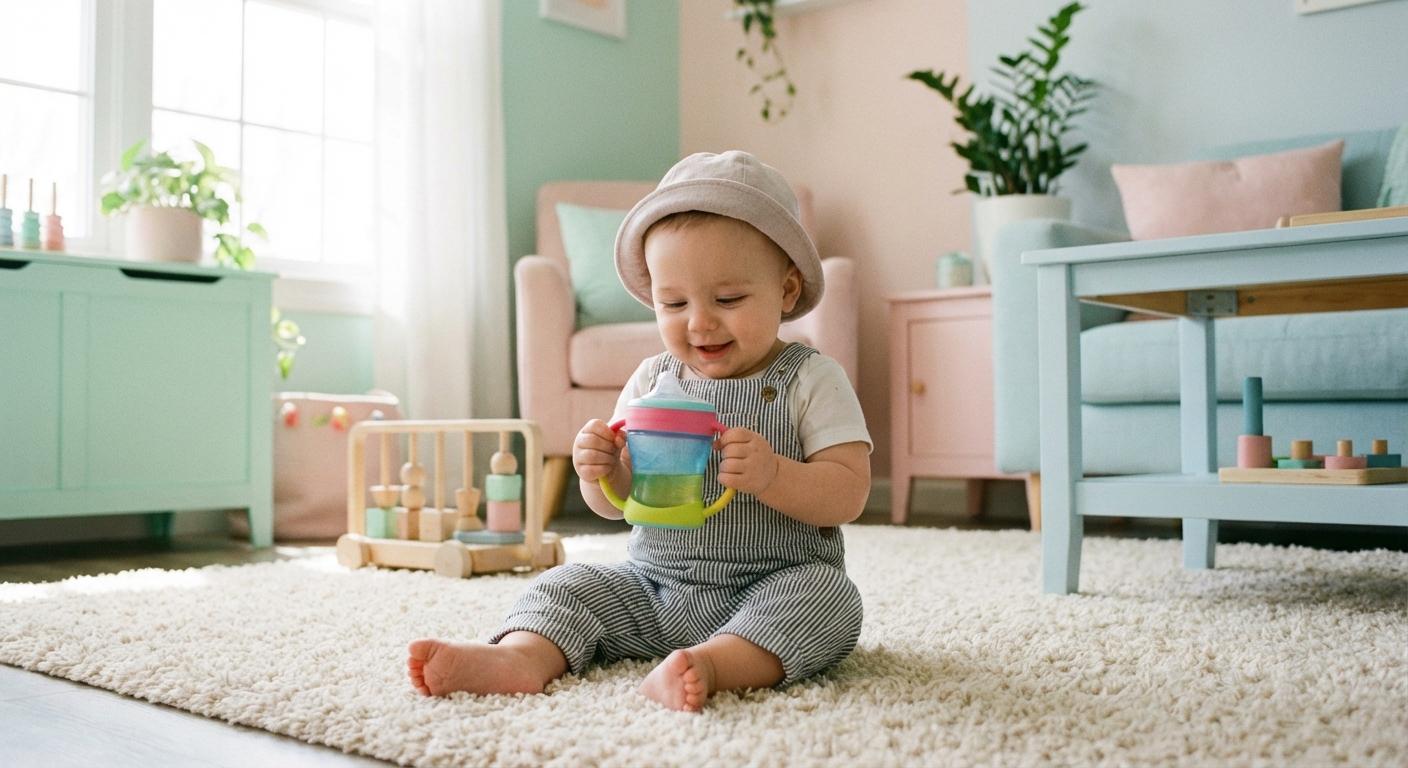
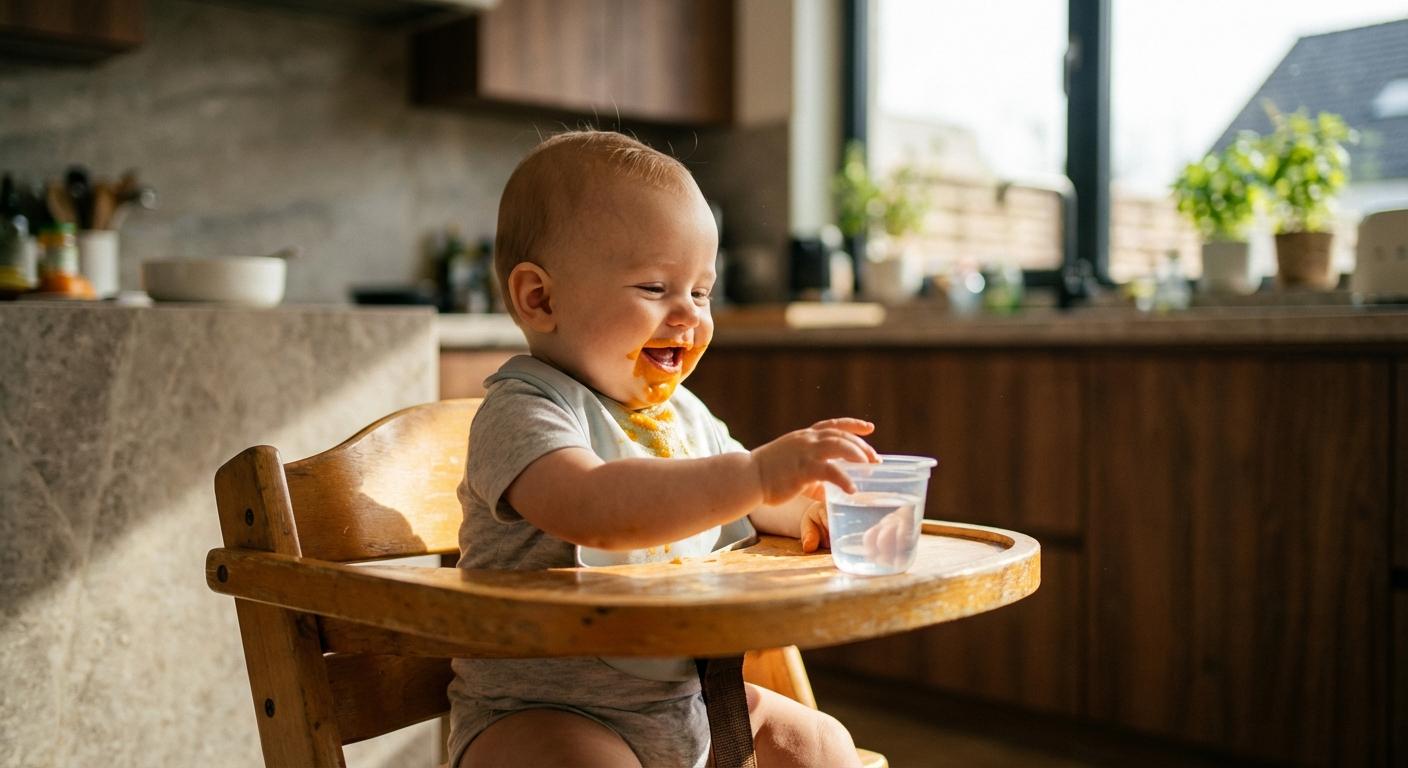
Some babies take to water immediately, others refuse for weeks. Keep it calm. Show the cup, let your baby touch it, offer a small sip, then pause.
Cues to stop are clear: turning away, lips closed, pushing the cup away, fussiness.
If more water lands on the bib than in the mouth, that is normal. It is practice.
Open cup or straw cup vs bottle
Choose a cup that encourages sipping: a small open cup or a free-flow cup. A straw cup is also fine once your baby can manage it.
Try not to use a bottle for water. Bottles can lead to faster intake and larger volumes, which is not ideal in babies.
How much water can babies have by age? (Flexible guides)
6–12 months: small sips, then adjust
Parents often see “total water intake” numbers. Those include milk, water, and water in foods. They are not a plain-water target.
Practical ranges:
- Early solids: 20–30 mL with a meal (a few sips)
- Later: 50–100 mL across the day if your baby wants it
- Sometimes a bit more after meals as solids increase
Milk remains the main drink in the first year.
Water is also hidden in food
Dal ka pani mixed into khichdi, fruit purées, curd, soups, and water-rich fruits/vegetables all contribute fluid. Even cooked rice and suji absorb cooking liquid. Thinking “whole day hydration” is often more helpful than chasing a single number.
Suggested upper limit before 12 months
Before 12 months, many families cap plain water near 240 mL/day (8 oz). The aim is to prevent water from displacing feeds and to reduce hyponatremia risk.
After 12 months: water increases naturally
As toddlers eat more solids, move more, and sweat more, water intake usually rises. Keeping water as the reference drink supports self-regulation.
Hot weather, fever, vomiting, and diarrhoea: how to adapt safely
Hot weather: milk first, then water when age-appropriate
- Under 6 months: increase breastfeeding or formula feeds
- 6 months and older: prioritise milk, add small water offers more frequently, especially with meals
A simple tip: in heat, babies tire quickly while feeding. If your baby gets upset at the breast or bottle, pause, burp, and offer again.
Fever: frequent small amounts
Fever increases fluid loss. Babies may drink less because they feel unwell. Offer milk in small, repeated feeds. After 6 months, water can be added as a small complement.
Vomiting and loose motions: plain water may be inadequate
With gastroenteritis, babies lose fluid and electrolytes. Plain water does not replace electrolytes and can worsen imbalance.
Oral rehydration solution (ORS) is designed to replace both fluid and electrolytes safely.
When vomiting is frequent, a commonly used approach is 5–10 mL every 5 minutes (spoon or oral syringe), then increase as tolerated. Continue breastfeeding or formula, shorter, more frequent feeds often work.
Seek medical advice promptly if your baby is very sleepy or hard to wake, refuses to drink, vomits everything, has blood in stool, has very heavy diarrhoea, or wet diapers drop clearly, especially in younger infants.
How to tell if your baby is hydrated
Wet diapers and urine colour
Steady wet diapers and pale straw-coloured urine are reassuring. Many babies have around 4–6 wet diapers in 24 hours after the early newborn phase (a broad guide, not a strict target).
Energy and behaviour
A well-hydrated baby is typically alert for age, feeds in a usual pattern, and has typical colour and tone. Unusual sleepiness or marked irritability, especially during illness, can be an early sign something is off.
When to seek advice about dehydration
Call if you notice a clear drop in wet diapers, dark urine, dry mouth/lips, crying without tears, sunken fontanelle (soft spot) along with other symptoms, persistent vomiting/diarrhoea, poor feeding, or a baby who seems unusually quiet. For babies under 6 months, seek advice earlier.
Too much water: what to watch for
Water intoxication (hyponatremia): why babies are vulnerable
Water intoxication happens when excess water dilutes sodium in the bloodstream. Babies are more vulnerable due to small size and immature kidneys, and because large volumes can be taken quickly from bottles or from over-diluted feeds.
Signs your baby may be getting too much water
Unusual sleepiness, unusual irritability, vomiting, puffiness/swelling, low body temperature, or a baby who suddenly seems off after a lot of water.
Red-flag symptoms: urgent care
Seek urgent care for seizures, extreme lethargy, difficulty waking, breathing changes, bulging fontanelle, or repeated vomiting with poor responsiveness, especially if excess water intake or diluted formula is suspected.
Choosing water for your baby: simple, calm criteria
Tap water or bottled water?
If local tap water is declared safe, it can be suitable once you have reached when to give baby water (around 6 months). If you have doubts (older plumbing, local advisories, recent repairs), bottled water labelled suitable for infants can simplify decisions.
What to look for on labels
- Low mineral content (low mineralisation)
- Low nitrates
- Low sodium
Avoid: highly mineralised water, sparkling water, flavoured water, sweetened drinks.
Well water and nitrates
If you use borewell/well water, testing matters, especially for nitrates.
As a practical benchmark, do not use well water for infants if nitrate exceeds 10 mg/L as nitrate-nitrogen (NO3-N) or 45 mg/L as nitrate (NO3-). If unsure, use a safer source until testing confirms levels.
Boiling water: what it helps, what it does not
Boiling helps reduce germs. It does not remove nitrates, and it does not reliably remove chemical contaminants like lead, it can even concentrate some minerals if water evaporates. For formula preparation, follow the formula instructions and local guidance.
Temperature, cups, hygiene
Room-temperature water is fine. From about 6 months, an open cup or straw cup supports skill development.
Wash cups, straws, and lids with warm soapy water, rinse well, dry fully. Offer fresh water and discard water left standing.
Drinks to avoid in the first years
Sugary drinks and juice
Sugary drinks and juice are not needed for hydration and raise tooth decay risk. They can also reduce appetite for nutritious foods and milk. Avoid juice under 12 months, later, if offered, keep it occasional and small.
Diluted formula, herbal teas, flavoured waters
Never dilute formula to make it last longer. Incorrect mixing can cause poor nutrition and electrolyte imbalance.
Herbal teas and many “natural” drinks are not well studied in infants. Flavoured waters (even lightly sweetened) train a preference for sweet tastes and can harm teeth.
Common mistakes parents make (and simple alternatives)
Offering water too early (before 6 months)
If your baby seems thirsty, offer more breast milk or formula instead of water.
Replacing feeds with water
Water should complement feeds, not replace them. After 6 months, offering water after milk feeds helps protect milk intake.
Changing formula dilution
Do not adjust the mixing ratio. Use level scoops and the exact water volume.
Forcing your baby to drink
Offer, try a different cup if needed, and stop when your baby shows they are done. Refusal is communication.
Swapping water for sweet drinks
Keep water as the reference drink.
Key takeaways
- The safest answer to when to give baby water is usually: around 6 months, with solids, as small sips.
- Before 6 months, breast milk or correctly prepared formula typically covers hydration, even in hot weather, increase feed frequency instead of water.
- From 6–12 months, keep water modest and avoid letting it replace feeds, many families keep plain water near 240 mL/day.
- With vomiting or loose motions, ORS is often safer than plain water, seek advice early if wet diapers drop or your baby seems unwell.
- There are professionals who can guide you, and you can download the Heloa app for personalised tips and free child health questionnaires.
Further reading: