A warm, damp diaper area can turn from “all fine” to fiery red in just a few hours. If you are seeing diaper rash again and again, you may be wondering: is it just irritation from urine and stools? Is it yeast? Are wipes making it worse? And how do you calm the skin without overdoing it?
Most diaper rash settles quickly when you reduce moisture, cut friction, and support the skin barrier. Sometimes, though, Candida (yeast) or bacteria step in, and the pattern of the rash gives useful clues.
Diaper rash: what it is and why it happens
What diaper rash (diaper dermatitis) means in everyday terms
Diaper rash (also called diaper dermatitis) is inflammation of the skin under the nappy/diaper. In simple words: the skin stays warm and wet for too long, rubs against the diaper, and gets exposed to urine and stool, so it becomes red, sore, and easily irritated. Most episodes are irritant contact dermatitis and improve with basic care. Occasionally, Candida or bacteria complicate the picture.
Who gets it most often and why it is so common in babies
Babies are prone to diaper rash because their skin barrier is still maturing: the outer layer (stratum corneum) is thinner, loses water more easily, and reacts faster to irritants.


Now add three classic triggers:
- Frequent wet nappies
- Frequent stools (especially in early months)
- A diaper that traps heat and moisture (occlusion)
The skin becomes over-hydrated (maceration) and fragile. As urine breaks down, it can raise skin pH (more alkaline). That higher pH allows stool enzymes (proteases and lipases) to irritate skin even more.
Where it shows up: buttocks, genitals, inner thighs, and skin folds
Diaper rash usually appears on the buttocks, around the genitals, and the upper inner thighs, exactly where the diaper sits and rubs.
Folds matter. Many irritant rashes affect the more exposed, rounded areas first, while a rash that strongly involves creases can hint at yeast.
What diaper rash looks like (symptoms parents notice)
Redness and skin irritation in the diaper area
You will typically see erythema (redness) that may be patchy or widespread. The skin can look shiny or moist, feel warm, and sometimes peel slightly as it heals.
Tenderness, stinging, and comfort cues (crying during changes)
A sore diaper area can sting when urine touches it, or when wiping happens. Babies may grimace, stiffen, pull legs up, arch away, or cry as the diaper comes off. These are pain cues, nothing to do with “being naughty”.
Mild vs severe: spotting early signs vs worsening inflammation
- Mild diaper rash: local redness, skin still intact, no oozing.
- More severe inflammation: brighter red, wider spread, swelling, marked tenderness.
If diaper rash keeps worsening despite careful home care, it may be yeast, a product reaction, or an infection.
When skin looks broken: oozing, open sores, and bleeding
Skin breakdown can appear as raw areas (erosions), cracks, tiny bleeding spots, or oozing. Mild weeping can happen when the surface layer is damaged. Pus, bad smell, or crusts are not typical of simple irritation and need medical advice.
What can cause diaper rash (and what makes it more likely)
Moisture and prolonged wetness: urine, stool, and digestive enzymes
Moisture is the main driver of diaper rash. Wet skin softens, breaks easily, and becomes more reactive. When diarrhoea happens, frequent stools plus enzyme exposure can trigger fast flares.
Friction, chafing, and diaper fit
Rubbing on damp skin damages the outer layer. Too tight a diaper increases friction, too loose a diaper can also rub if it shifts. Rough wiping can create micro-injuries and worsen diaper rash.
Infrequent diaper changes, including overnight occlusion
Long contact time matters. Overnight, the diaper area stays warm and closed for hours, so maceration and inflammation can build quickly.
Diarrhoea, new foods, and more acidic stools
New foods, tummy infections, and even a change in formula can alter stool frequency and acidity.
Recent antibiotics and higher risk of yeast overgrowth
After antibiotics, yeast may overgrow more easily because the normal microbial balance shifts. A diaper rash that persists despite classic irritant care, especially with fold involvement and satellite lesions, raises suspicion for Candida.
Wipes, soaps, fragrance, dyes, and adhesives
Some wipes, cleansers, detergents, diaper materials, or adhesive tabs can irritate sensitive skin or trigger contact dermatitis. Fragrance and dyes are common troublemakers. If the rash matches the product-contact pattern, or starts after switching wipes/diapers, think irritation or allergy.
Heat and humidity, especially with less airflow
Hot weather and humidity slow drying and increase sweating. Warm, damp skin also favours yeast and bacterial growth. Layered clothing can trap extra heat in the diaper area.
Sensitive or eczema-prone skin
Babies with atopic tendencies may react strongly to smaller triggers because their barrier is already less efficient.
Different types of diaper rash and how to tell them apart
Irritant diaper rash: mainly on rounded areas, often spares deep folds
This is the most common. It tends to be diffuse redness on areas with the most contact and rubbing. Deep folds may look less affected early on.
With consistent care, irritant diaper rash often shows improvement within 24 to 48 hours.
Yeast (candidal) diaper rash: involves folds with “satellite” spots
A candidal rash is often bright red, involves creases, and has sharper edges. The hallmark: small red bumps or pustules around the main rash (satellites). Sometimes there is a creamy-looking coating.
If you only use barrier cream, a yeast diaper rash may linger.
Bacterial diaper rash clues: crusts, pus, or very painful bright-red areas
Bacterial involvement may show as drainage/pus, increasing warmth and swelling, or spreading redness. Honey-coloured crusts suggest impetigo.
Allergic contact rash: patterns linked to products
Often patterned along diaper edges, where a cream is applied, or after a new wipe/soap. It can be itchy and recur with re-exposure.
When it may be something else
Not every diaper-area rash is truly diaper rash. Possibilities include atopic dermatitis, seborrhoeic dermatitis, psoriasis, or heat rash.
Preventing diaper rash with a simple routine
Change diapers promptly and match frequency to your baby
Aim to change as soon as the diaper is wet or soiled. Many babies need changes every 2 to 3 hours in the day, and more often during diarrhoea.
Keep skin clean and dry: gentle wiping, then patting
Clean gently, then pat dry, rubbing adds friction. If stool is stuck, rinsing with lukewarm water can be kinder than repeated wiping.
Choose wipes thoughtfully
Fragrance-free, alcohol-free wipes are generally better tolerated. If wiping stings or diaper rash worsens, switch to water and a soft cloth for a few days.
Add diaper-free time
Short breaks (10 to 20 minutes on a towel) help the skin dry and recover, especially after stools.
Use a barrier early: zinc oxide or petrolatum
Barrier products work best before inflammation becomes intense. A thin layer can prevent flare-ups, a thicker layer helps once redness starts.
Choose a well-fitting, absorbent diaper
A highly absorbent diaper reduces maceration. Fit should be snug but not tight in creases. If diaper rash keeps recurring, adjusting size or brand can help.
Treating diaper rash at home: a step-by-step approach
First steps: clean gently, dry well, protect the skin barrier
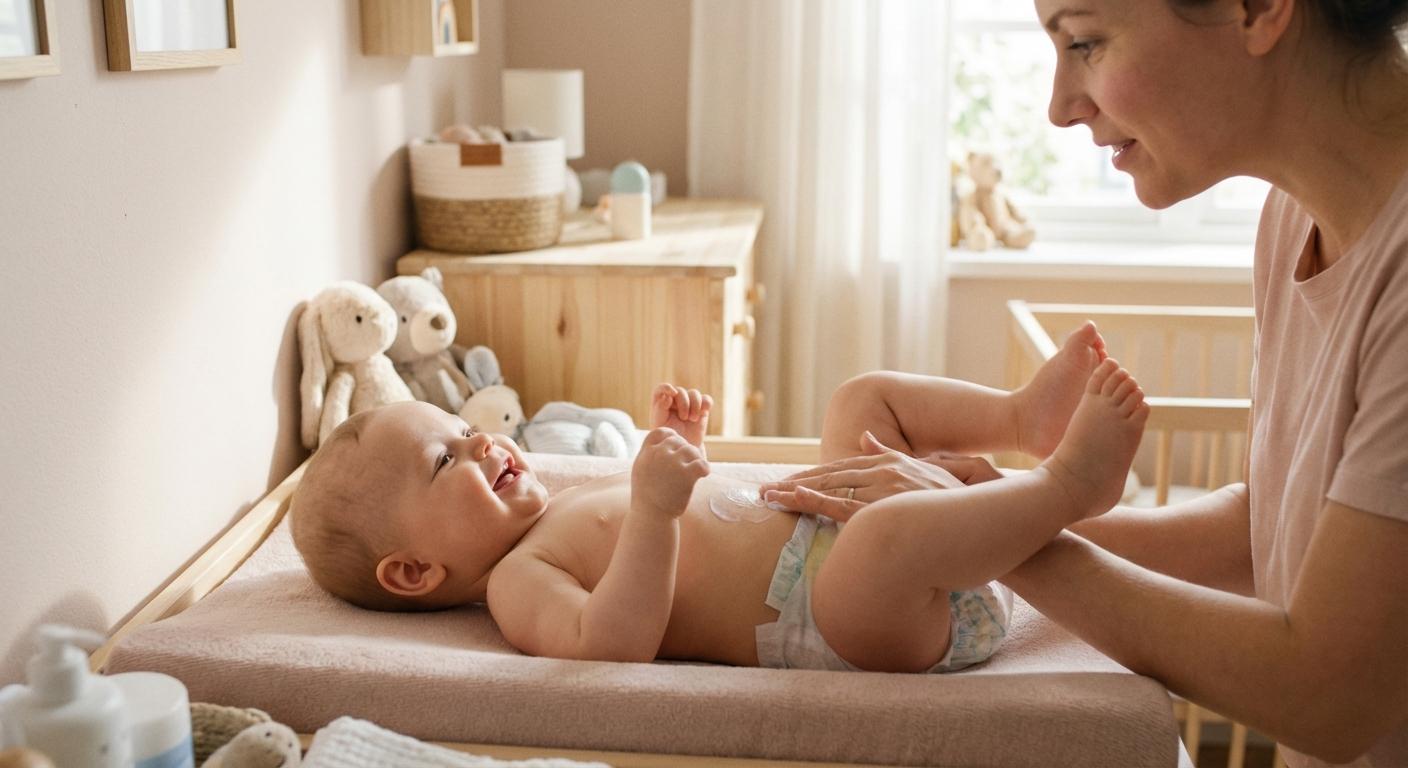
Start simple: gentle cleaning, careful drying, then barrier protection.
More frequent diaper changes
Increase change frequency for a few days, including after small stools.
Gentle cleaning options
- Lukewarm water and a soft cloth
- A peri/squirt bottle to rinse away stool with less friction
If you use soap, keep it mild, fragrance-free, and occasional.
Drying strategies: air drying and diaper-free breaks (including folds)
Pat dry, then allow brief air drying. Drying creases gently matters because folds trap moisture.
Barrier cream basics: zinc oxide “thick layer”
Apply a thick layer (like frosting) so the diaper rubs on the cream, not the skin. Zinc oxide paste is helpful when stools are frequent or the rash is very red.
Keeping the barrier working: do not scrub it off each change
If the barrier layer is clean, you do not need to remove it fully every time. Clean only the soiled part and reapply on top.
What to skip while skin heals
Avoid scrubbing, heavily fragranced products, and repeated antiseptics on irritated skin unless prescribed. Skip powders.
Barrier creams and products: choosing and using them well
Zinc oxide strengths: daily protection vs flare-ups
Lower-strength zinc oxide creams can work for prevention and mild redness. Higher-strength pastes are thicker and more protective during flare-ups, diarrhoea, or overnight.
Petrolatum, lanolin, and dimethicone
- Petrolatum ointments reduce friction and are often well tolerated.
- Dimethicone forms a smooth protective film.
- Lanolin can soothe some babies, but a few react, stop if redness worsens.
Layering when needed
If using an antifungal for yeast, apply antifungal first to clean, dry skin, then apply barrier on top.
Yeast diaper rash: signs and care options
How to recognise yeast
Yeast diaper rash often looks shiny, bright red, and prominent in folds (groin creases, between buttocks), with satellite bumps/pustules.
Why it happens
Candida thrives in warm, moist environments. An irritant rash can disrupt the barrier and allow yeast to take over. Antibiotics can increase risk by shifting normal microbes.
At-home options: OTC antifungals + barrier
OTC antifungals like clotrimazole or miconazole are commonly used (follow label directions, ask your paediatrician if unsure). Apply to clean, dry skin, especially folds, then use a barrier over it.
If there is no improvement within 48 to 72 hours of correct use, or it worsens, reassessment is needed.
When diaper rash may be infected (needs extra attention)
Signs suggesting bacterial involvement
Honey-coloured crusts, pus, increasing warmth/swelling, redness spreading beyond the diaper area, fever, or a baby who seems unwell.
Perianal strep warning signs
A sharply demarcated, bright-red ring around the anus with significant pain during diaper changes or stools can suggest perianal streptococcal dermatitis. Prompt medical care is needed.
When to contact a doctor for diaper rash
Urgent red flags
Fever, rapidly spreading redness, swelling, marked warmth, severe pain, poor feeding, unusual sleepiness.
Skin breakdown concerns
Open sores, bleeding, pus, or foul odour.
If it is not improving
Irritant diaper rash often starts improving within 24 to 48 hours of consistent care. If there is no clear improvement by 48 to 72 hours, or it worsens, call.
Diaper rash care routine: putting it all together day to day
Quick routine during a flare
- Change promptly, especially after stools
- Rinse/wipe gently, then pat dry
- Give a minute of air time if possible
- Apply thick barrier at every change
Key takeaways
- Diaper rash is common and usually improves in a few days with gentle cleaning, more frequent changes, and a thick barrier layer.
- Moisture and friction drive most episodes, diarrhoea, heat, new foods, antibiotics, and certain wipes/soaps can trigger flares.
- Fold involvement with satellite bumps suggests yeast, crusts, pus, spreading redness, fever, or intense pain suggests infection.
- Seek medical advice for fever, open sores, bleeding, pus, rapidly spreading redness, severe pain, a baby who seems unwell, or no improvement after 48 to 72 hours.
Key points to remember
If diaper rash is frequent or severe, support is available. Your paediatrician or dermatologist can check if yeast or bacteria is involved and suggest targeted treatment.
You can also download the Heloa app for personalised tips and free child health questionnaires.

Further reading:
- Diaper rash – Symptoms & causes: https://www.mayoclinic.org/diseases-conditions/diaper-rash/symptoms-causes/syc-20371636
- Diaper rash: MedlinePlus Medical Encyclopedia: https://medlineplus.gov/ency/article/000964.htm
- Common Diaper Rashes & Treatments: https://www.healthychildren.org/English/ages-stages/baby/diapers-clothing/Pages/Diaper-Rash.aspx