Baby’s first Christmas can feel surprisingly intense. One moment you are imagining soft carols, a family selfie, and a tiny stocking, the next, you are counting nap minutes, warming bottles, and politely blocking that “just one kiss” from a well-meaning relative. In many Indian homes, celebrations may stretch across church service, family lunches, society events, and late-night get-togethers (lovely, but a lot for an infant). The aim is simple: protect your baby’s comfort, keep health and safety front and centre, and still enjoy a few beautiful moments.
Why baby’s first Christmas feels different
A baby’s biology sets the pace
From a paediatric viewpoint, baby’s first Christmas is different because the nervous system is immature. Infants are still developing self-regulation, their ability to handle stimulation (voices, lights, being passed around, camera flashes) without tipping into distress. Add winter’s higher circulation of respiratory viruses, and parents often feel extra watchful. That protectiveness is not overthinking, it is a normal caregiving response.
You may also notice an emotional tug: missing the old style of Christmas, while wanting to build a new one around your baby. Both feelings can sit together.
If baby won’t remember, does it matter?
You may wonder if it is “worth it” because your baby will not remember the day the way adults do. Yet babies store implicit memory (body-based memory): warmth, safety, predictable routine, familiar smell, soothing voices. During baby’s first Christmas, these cues shape a sense of security, quietly but powerfully.

Baby-led expectations: simple, meaningful, flexible
Baby-led does not mean no plans. It means plans that your baby can tolerate.
- Keep gatherings short, or split them (one visit one day, another visit another day).
- Pick one anchor moment: a quick family photo, opening one gift, a short walk to see lights.
- Watch for early overload: looking away, rubbing eyes, yawning, stiffening, back arching, sudden fussiness, refusing breast or bottle.
When your baby is overwhelmed, the reset is often basic: a feed, dim room, skin-to-skin, babywearing, or a nap. Flexibility is good regulation.
Spot tiredness before the crying starts
Babies usually give warnings.
- yawning, eye rubbing, ear tugging (often tiredness rather than ear infection)
- turning face away, becoming rigid in arms, arching back
- restless kicking, escalating agitation, harder to soothe
A helpful question: “Can we slow down right now?” Even a 10-minute quiet break can change the evening.
What babies notice by age (0–12 months)
- 0–3 months: faces, high-contrast shapes, gentle voices, soft textures. Short awake windows.
- 4–6 months: stronger head control, curiosity, reaching and mouthing.
- 7–9 months: sitting and often crawling, cause-and-effect play, higher choking risk.
- 10–12 months: cruising/standing, more separation anxiety, they may enjoy ripping wrapping paper but tire quickly.
Rhythm, sleep, and planning that stays realistic
Build the day around naps and feeds (plus a Plan B)
With a baby, celebrations happen at nap level. Too much sensory input can lead to overstimulation: crying, difficulty settling, night waking, agitation.
Practical anchors for baby’s first Christmas:
- Keep naps and feeds close to routine.
- Keep big moments short: photos, greetings, gift opening.
- Create a calm corner even in someone else’s home (a bedroom with dim light works).
- Keep Plan B ready: leave early, skip a stop, or celebrate in two parts.
If the evening feels long, opening a gift in the morning, when your baby is rested, often works beautifully.
Gifts for baby’s first Christmas: safe, useful, and not too noisy
How to choose (safety first)
A good baby’s first Christmas gift is:
- safe (size-appropriate, sturdy)
- interesting for development (sensory + motor)
- simple (no need for loud electronics)
Babies explore with their mouth, so durability and non-toxic materials matter. Prefer BPA-free and phthalate-free items. Check that battery compartments are screw-secured.
Gift ideas by age
0–3 months
- High-contrast cards or soft books
- Playmat/activity gym with secure attachments
- Large-handled rattle (no loose beads)
- One-piece teether (silicone or natural rubber)
- Soft, machine-washable comfort item for supervised play
4–6 months
- Textured fabric books (no ribbons/detachable parts)
- Shatterproof baby mirror
- Easy-grip rattles and sensory balls
- Simple musical toy with safe volume and screw-secured batteries
- Teethers and grasping rings easy to clean
7–9 months
- Stackable cups, large soft blocks
- Bath toys that dry easily (helps reduce mould)
- Cause-and-effect toys with big buttons
- Chunky board books
10–12 months
- Stable push toys
- Chunky shape sorter (large pieces only)
- Oversized stacking rings
- Easy-grip textured balls
- Thick-page picture books
“Less but better”: a calm formula
For many families, 2–3 gifts are enough:
- one developmental toy
- one practical item
- one symbolic keepsake
This keeps baby’s first Christmas meaningful without clutter or overstimulation.
Practical gifts that still feel special
- Sleep sacks in the correct size (wearable blanket, no loose bedding)
- Extra fitted crib sheets
- Bibs, burp cloths, bath towels
- A good baby carrier (helps many babies stay regulated at gatherings)
- Diapers and wipes with a small handwritten note
Toy and gift safety checks
- Avoid accessible button batteries and loose magnets.
- Skip tinsel, shedding glitter, and fragile decorations.
- Check for wear: cracks, peeling parts, loose seams.
Outfits: comfort, warmth, and picture-ready
Baby skin is sensitive
Baby skin is thinner and more reactive. Choose soft cotton, stretchy knit, smooth seams, and non-scratchy tags. Avoid cords, jewellery, and detachable embellishments.
Overheating is a real risk
In Indian winters, families often over-layer babies indoors. Infants can overheat because thermoregulation is still maturing.
Signs:
- sweaty neck or damp hair
- very flushed cheeks
- unusual restlessness
Check the back of the neck (hands may be cool even when baby is warm). If the neck is hot and damp, remove a layer.
Car seat winter rule
No thick jackets or puffy suits under the harness. Use thin layers, buckle snugly, then place a blanket over the straps.
Traditions to start (or simplify) for baby’s first Christmas
Simple traditions are easier to repeat
- One holiday book at bedtime
- A short evening walk to see lights in your lane or society
- A “first Christmas” photo in the same spot each year
Christmas Eve and morning that respect routine
Warm bath, pyjamas, milk feed, one book. Dim lights after dinner. Keep bedtime close to usual, overtired babies often wake more.
If relatives are around, consider doing adult gift exchange while your baby naps so the awake time stays calmer.
Baby-friendly advent ideas
- Storybook countdown
- One daily photo detail (tiny hands, toes, fairy lights)
- Activity prompts: one song, one cuddle, a short walk
Décor and home safety: keep it festive, keep it safe
Tree stability comes first
Treat the tree like furniture: it must be stable.
- Anchor to a wall or sturdy furniture.
- Use shatterproof ornaments on lower branches.
- Keep hooks, small ornaments, and tinsel out of reach.
- Use cool LED lights, check wires.
- If using a real tree, keep the water stand inaccessible.
Wrapping and cords are hazards at baby level
- Secure cords along walls, avoid dangling light strings.
- Keep glass ornaments away from little hands.
- Remove ribbons, plastic films, and small packaging quickly (choking/suffocation risk).
Candles, fragrance, and glitter
Baby airways are delicate. Smoke and heavy fragrance can irritate, especially if your baby has a cold or wheeze.
- Prefer flameless LED candles.
- Ventilate well.
- Avoid fine glitter and artificial snow that can be inhaled or ingested.
Photos you’ll actually like (without a meltdown)
Timing matters more than props
A 15–20 minute mini session is plenty. The best time is often after a nap and a feed. Natural window light works beautifully.
Simple set-ups:
- Baby on a blanket near a window
- Baby in arms with the tree softly blurred behind
- Close-ups: lashes, hands, feet (adult-held props only)
Safety: never leave baby unattended on a bed, sofa, basket, or raised surface.
Mini shot list
- Baby + caregivers
- Baby by the tree (held or on the floor)
- Hands/feet detail
- Stocking or ornament with the year
- One candid yawn, cuddle, or giggle
Short video ideas
- 5–10 seconds of cuddling
- 5–10 seconds of wrapping-paper crinkle
- 5–10 seconds of a wide-eyed look at lights
Keepsakes for baby’s first Christmas (easy now, meaningful later)
Simple keepsake ideas
- Shatterproof dated ornament hung high
- Salt-dough handprint/footprint (fully dried before storing)
- A memory box: a card, a small paper scrap, one printed photo, and a short note
Handprint/footprint: safe materials
- Salt dough (flour, salt, water), bake low and slow, decorate with non-toxic paint once cool
- Air-dry clay labelled non-toxic
- Baby-safe washable ink, cleaned off immediately
Do it when your baby is relaxed, often after a feed.
A gentle Santa photo alternative
Some families want a Santa picture, but many babies cry with a new face, bright lights, and crowd noise. If you try it, go after a nap and feed, keep baby on your lap, and keep it to minutes. If your baby is not settling, skip it and take a calm home photo near a window. Baby’s first Christmas photos can be sweet without pushing through tears.
Holiday scents and baby breathing
For newborns and young infants, strong fragrance can irritate the airway and trigger coughing, especially during a cold. Prefer good ventilation and subtle choices, keep scent away from the sleep area, and avoid diffusers where oils can spill or be ingested. Flameless candles give a safer festive feel.
Food and mealtimes: familiar, soft, and choking-safe
Milk first, solids second
If solids are not established, milk remains the main nutrition. If your baby eats solids, keep holiday foods familiar.
Safety points for baby’s first Christmas:
- No honey under 12 months (risk of infant botulism).
- High-risk choking foods: whole grapes, nuts, popcorn, hard candy, sausage rounds.
- Offer soft textures that mash easily, seat baby upright and supervise.
Food storage: refrigerate leftovers within 2 hours, reheat well and cool before serving.
Family celebrations: boundaries that protect sleep and health
Respiratory virus reality in winter
RSV, influenza, and COVID-19 circulate more in winter. Babies can develop bronchiolitis (lower airway infection) with fast breathing, wheeze, and poor feeding.
Simple protective steps:
- handwashing before holding baby
- avoid face kisses
- keep distance from anyone unwell
- step into a quieter, better-ventilated room when needed
When to get medical advice
Seek prompt guidance if your baby has:
- breathing effort (ribs pulling in, grunting, very fast breathing)
- poor feeding or fewer wet diapers
- fever (especially in infants under 3 months)
- unusual sleepiness, persistent vomiting, or worrying colour change
Parties, relatives, and “pass the baby” pressure
Arrive early, leave early, or attend only the calm part. Babywearing often helps.
Useful phrases:
- “We’ll do a quick hello, then it’s nap time.”
- “Please hand him back if he turns away or rubs his eyes.”
- “No face kisses today.”
Planning made simple: timeline and checklist
A light timeline
- Week 1: pick one ritual (photo, dated ornament).
- Week 2: identify your baby’s best time of day.
- Week 3: buy fewer, durable items.
- Week 4: finalise the day plan (travel, people, quiet sleep space).
Essentials checklist
- Feeding: breastmilk/formula, bottles if used, bibs
- Outings: car seat, stroller or carrier, blanket
- Calm corner: mat, comfort item
- Diaper bag: diapers, wipes, saline, spare outfit, laundry bags, muslin cloth, pacifier if used
Travel during baby’s first Christmas
Pack by category
- Sleep: portable crib, fitted sheet, sleep sack
- Feeding: bottles, formula or pump supplies
- Health: thermometer, saline, nasal aspirator, prescribed medicines
- Comfort: one small toy, one book
Car travel safety
Harness snug, chest clip at armpit level. No bulky coat under straps. Plan stops for feeds and changes.
Staying with family
Scan for cords, breakables, small objects on the floor, unstable furniture. Keep sleep space firm, flat, and free of loose bedding.
To remember
- baby’s first Christmas works best when it is baby-led: comfort, connection, flexibility.
- Protect naps and feeds, overstimulation is common and preventable.
- Choose a few safe, age-appropriate gifts, simple, sturdy, easy-to-clean wins.
- Dress in breathable layers and watch for overheating.
- Secure décor: anchored tree, hidden cords, wrapping cleared quickly.
- Keep foods familiar and choking-safe, no honey under 12 months.
- If you are worried about breathing, feeding, fever, or dehydration, contact your clinician.
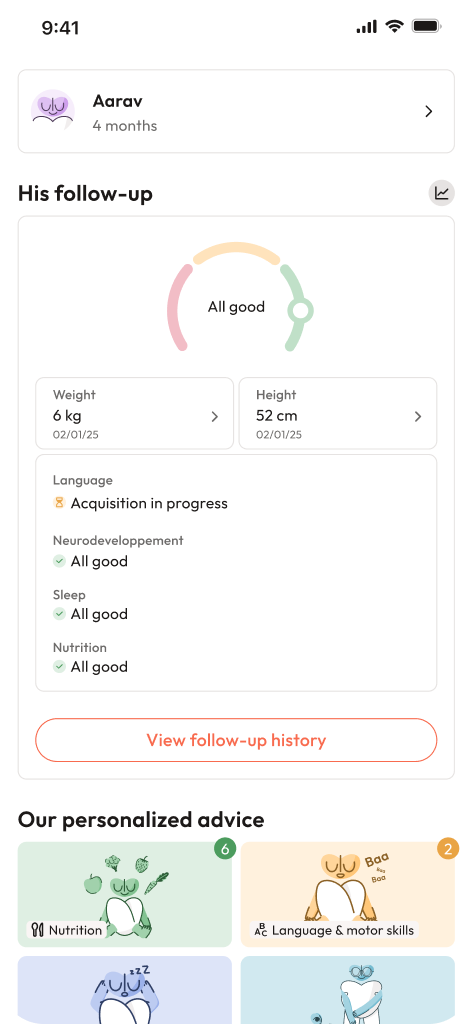
- For personalised tips and free child health questionnaires, you can also download the Heloa app.