Drooling, red cheeks, a baby who wants to chew everything… and suddenly you are thinking about baby teeth. When will they come? Is the fever really only teething? Do you need to worry if a tooth looks grey after a fall? These doubts are common, especially when night feeds, bottle habits, and sweetened drinks quietly become part of the routine.
Baby teeth may be temporary, but pain, infection, early tooth loss, and spacing issues can have long effects. The aim is simple: clear timelines, day-to-day care, cavity prevention, and knowing when a dentist or paediatrician should be involved.
Understanding baby teeth and why they matter
Baby teeth are the first set of teeth your child gets. Dentists also call them primary teeth, deciduous teeth, or milk teeth. “Deciduous” means they are meant to fall out later, making space for permanent teeth.
Most children develop 20 baby teeth: 10 in the upper jaw and 10 in the lower jaw. Tooth buds start forming during pregnancy and then mineralise after birth. That is why early nutrition and general health can influence enamel quality.

Primary enamel and dentin are thinner than in adult teeth. So cavities can spread faster, and some children show sensitivity earlier. The roots are meant to change too: as the permanent tooth grows under the gum, the baby tooth root slowly resorbs (dissolves), the tooth becomes wobbly, and it falls out.
Healthy baby teeth help your child chew comfortably, speak clearly, and stay pain-free through the day. They also hold space for adult teeth. If a baby tooth is lost too early due to decay or injury, nearby teeth can drift into the gap and reduce space for the permanent tooth, increasing crowding or misalignment.
You may wonder, “They will fall anyway, na?” Treatment still matters. Untreated cavities can disturb sleep, reduce eating, and spread infection to the tissues near the developing permanent tooth.
Baby teeth timeline: eruption, double rows, and shedding
Many babies get the first tooth around 6 months, but 4 to 12 months can be normal. What matters more is steady progress and a reasonably symmetrical pattern.
Typical eruption order:
- lower central incisors
- upper central incisors
- other incisors
- first molars
- canines
- second molars
Average age ranges (approximate):
- Central incisors: 6–12 months
- Lateral incisors: 9–16 months
- First molars: 13–19 months
- Canines: 16–23 months
- Second molars: 23–33 months
Most children have all 20 baby teeth by around 3 years.
Shedding often starts at 6–7 years and usually finishes around 10–12 years. Front teeth commonly loosen first, then molars and canines later.
“Double row” teeth
Sometimes a permanent tooth erupts behind a baby tooth that is still present, commonly with the lower front teeth. Often the baby tooth loosens and comes out on its own.
A dental check is sensible if:
- nothing changes after several weeks to a few months,
- the gum looks swollen or painful,
- crowding is clearly increasing.
When timing is worth a dentist call
Consider a check-up if you notice:
- no tooth by around 18 months,
- a persistent left–right difference,
- early loss due to a fall or cavity,
- pain, swelling, or a pimple-like bump on the gum.
Natal and neonatal teeth
- Natal teeth are present at birth.
- Neonatal teeth erupt in the first 30 days.
They can be loose because roots may be underdeveloped. Concerns include feeding difficulty, tongue sores (including Riga-Fede ulcer), and the risk of the tooth dislodging.
A dentist should assess early if the tooth is mobile, causing sores, or disturbing feeding. Management may include monitoring, smoothing sharp edges, or extraction if aspiration risk is felt to be high (with attention to newborn bleeding risk and vitamin K status).
Teething: real signs, safe relief, and red flags
Common teething signs:
- drooling
- chewing on fingers or toys
- tender, swollen gums
- irritability, shorter naps
- mild appetite changes
A small bluish swelling may be an eruption cyst, it often settles once the tooth breaks through.
Teething can overlap with viral illness, so symptoms get mixed up. A mild temperature rise can happen, but a clear fever, vomiting, significant diarrhoea, rash, or a baby who seems unwell should not be blamed on teeth.
Safe soothing options:
- gentle gum massage with a clean finger
- a clean cool (not frozen) rubber teether
- a chilled spoon or moist gauze
- if solids have started: cooler, softer foods
Discuss pain medicines with a paediatric professional, because dosing depends on age and weight.
Avoid unsafe products: numbing gels with risky anaesthetics in small children, amber necklaces, and tablets that may hide illness.
Seek medical or dental advice if there is:
- fever over 38°C that persists
- refusal to drink or dehydration signs
- pus, foul smell, or intense pain
- a gum swelling that looks infected
Daily baby teeth care from birth
Before teeth, wipe gums with a clean damp cloth, especially after the last feed at night.
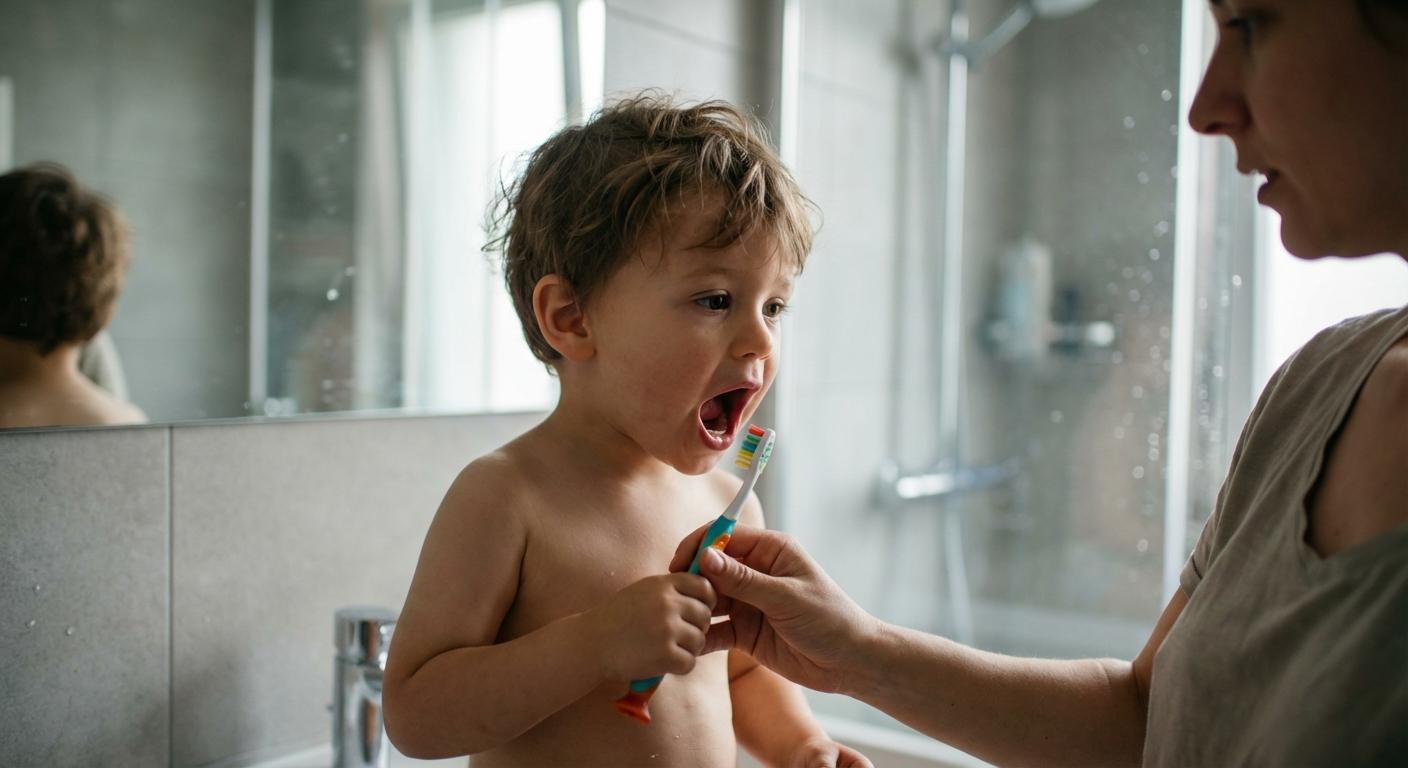
Start brushing as soon as the first baby tooth erupts. Aim for twice daily, with the bedtime brush being the most important.
Choose a small, soft brush. Helpful positions:
- child on your lap facing outward, head resting back on your chest
- stand behind your child in front of a mirror
Fluoride toothpaste:
- under 3 years: smear (rice-grain amount)
- 3–6 years: pea-sized amount
If your child tends to swallow toothpaste, keep the amount tiny and supervise closely.
Fluoridated water supports enamel strength over time. In the dental clinic, fluoride varnish can be applied quickly and can help children at higher risk of early childhood caries.
Start flossing when two teeth touch.
If brushing is hard:
- use a smaller brush head if gagging happens
- keep it short but consistent
- let your child try, then you finish
Preventing cavities in baby teeth (early childhood caries)
Cavities happen when plaque bacteria convert sugars into acids that dissolve enamel. Because baby teeth have thinner enamel, decay can reach the pulp sooner, leading to pain or infection.
Night bottles and sugary exposure
Letting a child sleep with milk, formula, or juice pooling around the teeth is a strong risk factor. At night, saliva flow reduces, so sugars sit longer on enamel.
To lower risk:
- avoid a sleep bottle
- if night feeds continue, wipe/brush afterwards when possible
- keep bedtime brushing as a fixed habit
Between meals, water is best. Milk is nutritious but better at meals or planned snack times, not constant sipping. Juice should be limited.
Snack habits that protect baby teeth:
- planned snack times rather than grazing
- fewer sticky foods
- less “sipping all day” of sweet drinks
Breastfeeding can fit with good oral care. Once baby teeth erupt, very frequent night feeds without cleaning can raise cavity risk in some children. Watch for chalky white patches near the gumline.
Fluoride varnish may be suggested if there are white spots, enamel defects, previous cavities, or high sugar exposure. Sealants can protect deep grooves on molars.
Also remember: cavity-causing bacteria can spread via saliva. Avoid sharing spoons, cups, and don’t clean a pacifier with your mouth.
Diet and everyday habits that support healthy baby teeth
Many babies start practising with a cup around 6 months, a gradual bottle-to-cup transition is practical.
Tooth-friendlier snack ideas (Indian context):
- curd/yoghurt with fruit
- paneer or cheese with crackers or small roti pieces
- boiled egg for older toddlers
- vegetables with hummus
Sweets can be part of family life, but keeping them with meals (instead of frequent small treats) is kinder to baby teeth.
Sugar timing matters. Teeth recover between eating times as saliva neutralises acids, frequent exposures keep the acid attacks going.
Sippy cups can become portable bottles if used all day. Prefer water between meals and keep moving towards open cups.
Common baby teeth concerns: spots, stains, and injury
A cavity may start as a chalky white spot near the gumline, later turning brown or rough. Early checks often mean simpler care.
Enamel defects:
- hypoplasia: enamel is thin or missing in patches
- hypomineralisation: enamel is softer and porous
Stains can also happen. Iron drops may cause dark surface staining (often cosmetic). But a tooth turning grey after a bump can mean nerve irritation. If colour change persists, there is swelling, a gum bump, or chewing avoidance, book a dental visit.
A small chip may only need smoothing. Seek prompt care if there is pain, swelling, persistent bleeding, or the tooth looks displaced.
Gaps in baby teeth are often normal and helpful, crowding can be monitored, especially if brushing becomes difficult.
Treating baby teeth problems: what to expect
Depending on the stage, treatment may include fluoride for early lesions, SDF (silver diamine fluoride) to arrest decay (it can darken the decayed area), or fillings.
Because decay can reach the pulp quickly in baby teeth, dentists may suggest pulp therapy (like pulpotomy) and paediatric crowns for badly broken-down molars. If extraction is needed, a space maintainer may be discussed.
Clinics usually use child-friendly behaviour methods (tell–show–do). Nitrous oxide can help some children with anxiety, sedation is reserved for selected situations with proper screening.
Injuries and dental emergencies involving baby teeth
If your child falls and chips a tooth:
- rinse the mouth with water
- press clean gauze if bleeding
- cold compress for swelling
If a tooth looks pushed in, pulled out, or angled, get urgent dental assessment.
A knocked-out primary tooth is usually not replanted, because it can harm the permanent tooth bud.
Go to emergency care for breathing difficulty, uncontrolled bleeding, suspected jaw fracture, or worrying head injury symptoms.
Oral habits and jaw development
Pacifiers and thumb sucking are common. The main dental concern is how long and how intense the habit is. If it continues beyond 3–4 years, bite changes can appear.
If your child snores, sleeps with an open mouth, or breathes through the mouth in daytime, mention it to a paediatrician or dentist.
Around age 6, the first permanent molars erupt behind the last baby teeth. They do not replace any tooth, so they can be missed during brushing.
When to see a dentist for baby teeth
Plan the first dental visit when the first tooth erupts, or by the first birthday. Many children do well with 6-monthly check-ups, but frequency depends on cavity risk.
Book sooner for pain, swelling, white or brown spots, persistent bad breath, trauma, double-row teeth that don’t resolve, or eruption timing concerns.
Key takeaways
- Baby teeth support chewing, speech, comfort, facial growth, and spacing for adult teeth.
- A wide eruption range can be normal, steady progress matters.
- Teething causes drool and gum tenderness, but persistent fever or significant illness symptoms need medical attention.
- Brush baby teeth twice daily from the first tooth with fluoride toothpaste (smear under 3, pea-sized from 3–6).
- White spots, pain, swelling, injuries, or a grey tooth after trauma should be assessed.
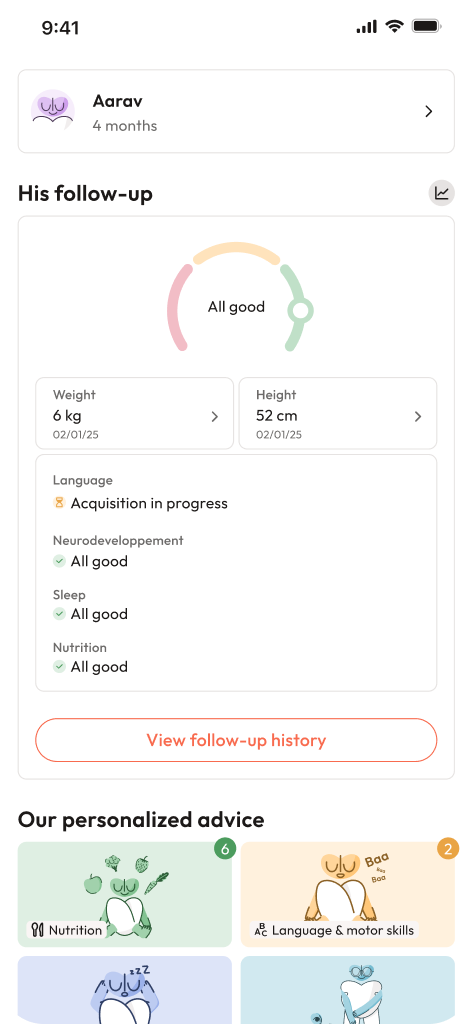
- Support is available: your paediatrician and dentist can guide you, and you can also download the Heloa app for personalised advice and free child health questionnaires.
Further reading: