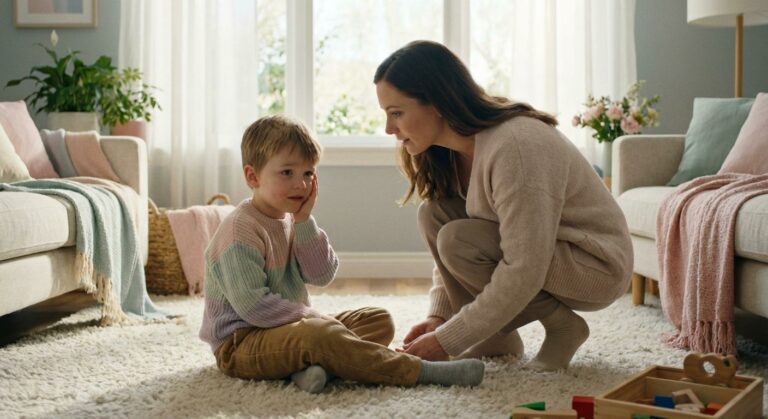
If your baby startles at the pressure cooker whistle, if your toddler refuses socks because they feel “too pokey,” or if your school-going child comes home from a noisy classroom and suddenly bursts into tears—your mind may jump to one question: is this normal? Child sensory development helps make sense of these everyday moments. It is how the brain and nerves learn to take in sensations, sort them, and use them for movement, feeding, sleep, learning, and emotional balance.
Some days are easy. Other days, everything feels “too much.” Sleep debt, a crowded function, harsh tube lights, a long car ride, even constipation—small triggers can change the nervous system’s tolerance.
Child sensory development: what it is and why it matters
What “sensory development” means for everyday life
Child sensory development includes the five outer senses (sight, hearing, touch, smell, taste) and three body senses:
- Proprioception: body position and how much force muscles use
- Vestibular system: movement, balance, gravity (inner ear)
- Interoception: inside signals like hunger, thirst, toileting, pain
In early childhood, brain pathways speed up through maturation and repetition (myelination is the biological “insulation” around nerves). That is why ordinary experiences—rocking, safe mouthing of teethers, crawling, climbing, jumping—can shape coordination, attention, and mood.

Sensory skills are also tied to felt safety. Familiar cues (your voice, smell, routine) help children explore. When the day is noisy or rushed, reactions can look much bigger than the situation.
Sensory development vs sensory processing vs sensory integration
- Child sensory development: growth of the sensory systems and supporting brain networks.
- Sensory processing: detecting, filtering, prioritising, interpreting input.
- Sensory integration: combining senses to act smoothly (eyes + body shift + timing).
Neuroplasticity matters: young brains change readily with repeated, predictable experiences.
Learning, behaviour, and self-regulation
A child who feels stable in their body can sit, listen, and use hands with less effort. A child overwhelmed by noise, touch, or visual clutter may spend energy on protection.
Think “nervous system state”:
- Too much input: avoidance, irritability, tears, shutdown
- Too little input: constant movement, crashing, chewing, loudness
With co-regulation (an adult’s calm structure), children gradually build self-regulation.
Sensory systems your child uses every day
Touch (tactile)
Touch includes light touch, deep pressure, texture, temperature, and pain. It affects clothing comfort, grooming, messy play, and cuddling. Deep pressure (when welcomed) can be calming.
Some children react strongly to seams/tags or hair washing, others seek firm pressure and rough play.
Balance and movement (vestibular)
The vestibular system supports posture, balance, and confidence on stairs, swings, cycles. Some children avoid movement due to dizziness, others seek jumping or spinning. Stop if there is nausea or distress.
Body awareness (proprioception)
Proprioception tells the brain where the body is and how much force to use. If feedback is unclear, children may look clumsy, crash into furniture, press too hard with pencil, or struggle with zips.
“Heavy work” (push, pull, carry, squeeze) often helps children feel grounded.
Sight and hearing
Vision includes tracking and visual attention. Hearing includes filtering background noise—harder in busy Indian settings.
If your child often doesn’t respond, do not assume it is sensory only. Consider a hearing check, especially with recurrent ear infections or speech delay.
Smell, taste, interoception
Smell and taste influence food acceptance, strong odours can be tough. Interoception supports hunger/fullness, thirst, toileting, and early emotion signals, when it is unclear, meltdowns can appear “out of nowhere.”
Child sensory development milestones by age
Before birth and early days
Child sensory development begins before birth (pressure, movement, muffled sounds). In the early newborn period, regulation comes first: warmth, closeness, moderate light, low noise.
0–6 months
Babies link voice, touch, and rhythm. They calm with rocking and sucking, track faces, startle to loud sound, explore with hands and mouth.
Try: soft singing, simple textures (cotton cloth), supervised tummy time, slow position changes.
6–12 months
Mobility (rolling, sitting, crawling, pulling to stand) boosts vestibular and proprioceptive learning. At meals, introduce one new texture or smell at a time.
1–3 years
Toddlers seek input through climbing, pushing, carrying, crashing. Preferences around clothing, grooming, and food textures often appear. Thresholds shift with sleep, teething, illness, constipation.
3–6 years
Coordination and fine-motor skills grow (jumping, catching, drawing, scissors). Listening discrimination supports speech sounds and early learning.
5–12 years
School increases sensory load: sitting, handwriting stamina, crowded corridors, noise. Many children benefit from planned movement breaks and predictable transitions. Older children may start self-advocating (“I need a quiet break”).
What changes sensory tolerance day to day
Health and comfort factors
Sleep loss, fever, pain, reflux, skin inflammation (eczema/dermatitis), constipation can sharply reduce tolerance. Sudden behaviour change is a reason to check physical comfort first.
Environment: quality over quantity
Overload often builds up from background TV, screens always on, rapid transitions, visual clutter. Signs may include gaze avoidance, stiffening, agitation, crying.
Adults as translators
Naming sensations helps children link sensation + words + emotion: “That was loud,” “Sticky feels yucky,” “Your tummy is empty/full.” This supports self-regulation over time.
Common sensory profiles you may notice
- Over-responsivity: ordinary sensations feel intense (seams, haircuts, noisy markets).
- Under-responsivity: sensations are missed (doesn’t notice mess, bumps, needs strong movement).
- Seeking: jumping, chewing, pressing hard, craving tight hugs.
- Avoiding: refusing clothes, resisting messy play, withdrawing in crowds.
Behaviour can change by setting: a calm home differs from a supermarket with bright lights, smells, noise, and social demands stacked together.
Easy sensory activities (home and outside)
Principles: change one factor at a time, repeat to build familiarity, respect stop signals, keep it safe (water supervision, choking hazards under 3).
Ideas:
- 0–6 months: skin-to-skin, gentle rocking, high-contrast tracking, soft songs
- 6–12 months: floor play with cushions, simple sound games (pause/again), textured fabrics
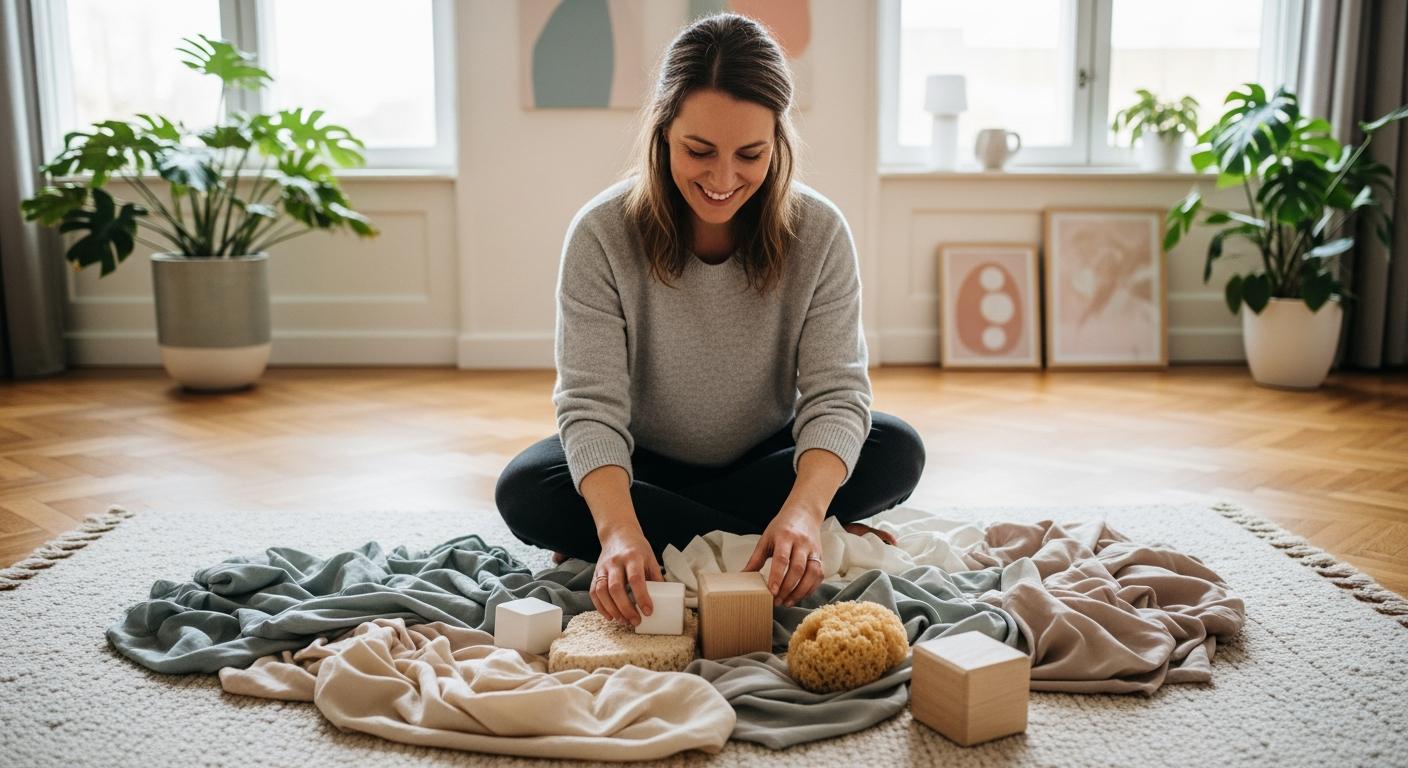
- 1–3 years: pouring/scooping, playdough, mini obstacle course, outdoor texture walk then wash hands
- 3–6 years: throw/catch, rhythm copying, lacing, simple cooking/gardening
Everyday routines are hidden sensory practice: bath warmth, toothbrushing, clothing textures, wind/cold outdoors, mealtime smells.
Supporting regulation at home
Routines that help
Predictability reduces stress. A short morning heavy-work activity can organise the body before dressing. After school, many children need 15–30 minutes of decompression. Bedtime often improves with dim light, a consistent order (wash, pyjamas, story, breathing), and fewer screens before sleep.
Calm corner and short sensory breaks
A calm corner can be a cushion, softer light, and a small box of quiet tools. Short breaks (1–3 minutes) often prevent meltdowns: animal walks, chair push-ups, squeezing putty. If movement causes dizziness, prefer slow rocking or deep pressure.
Sensory diet
A sensory diet is a planned set of activities across the day to support regulation. Start small and adjust with sleep and stress. Weighted or compression items need professional guidance, correct fit, and time limits.
Practical strategies for common challenges
Clothing and grooming
Comfort first: soft fabrics, tag removal, seamless socks, predictable choices. For hair wash/brush: warm water, gentle pressure, short sessions, let the child hold the brush.
If scalp rash/itching exists, rule out eczema or dermatitis, treating the skin can reduce distress.
Noise sensitivity
Plan ahead for loud places (functions, assemblies, malls). Headphones can help, plus an exit plan: quieter spot, short break, predictable return.
If responses to sound are delayed or ear infections are frequent, arrange a hearing assessment.
Transitions
Use “first/then,” visual schedules, and timers. Break transitions into small steps and offer one small choice.
Feeding and oral sensory needs
Avoid pressure. Encourage smell → touch → lick → taste. Pair new textures with familiar foods. Seek specialised help if growth/hydration are affected or gagging/choking fears are frequent.
When to seek extra support
Consider support when sensory patterns repeatedly affect sleep, feeding, toileting, safety, or school participation, or when meltdowns are frequent with long recovery.
Start with your paediatrician and bring examples (triggers, what helps, recovery time). An occupational therapist can assess sensory processing using questionnaires and observation, and support may also involve an SLP, physiotherapist, and school team.
Safety and respect
Keep movement child-led and supervised, stop with nausea or distress. Use non-toxic materials, avoid choking hazards under 3, check allergies. Ask before touch, offer choices, honour “stop.”
To remember
- Child sensory development shapes how your child receives, filters, and organises sensations.
- Proprioception, vestibular input, and interoception strongly influence balance, feeding, toileting, and emotions.
- Sleep and health issues (constipation, reflux, skin inflammation) can worsen sensory tolerance.
- Simple routines and short sensory breaks often reduce overload.
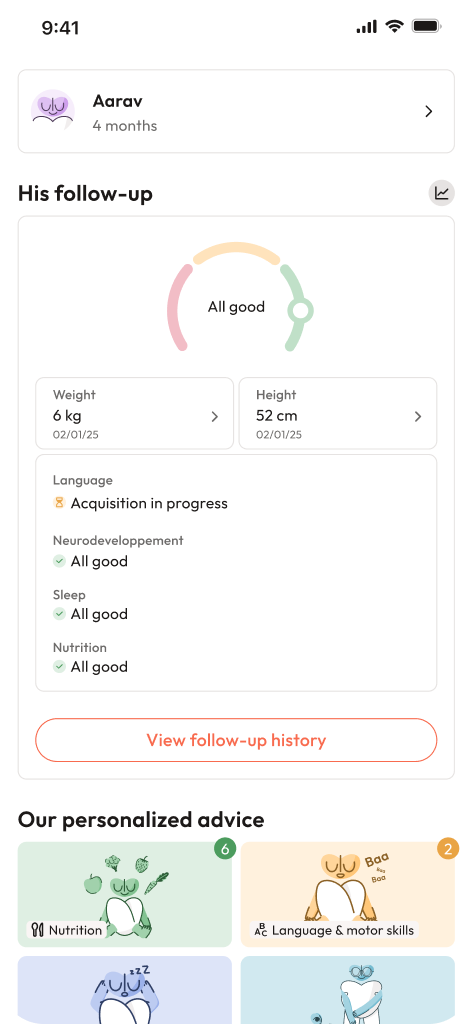
- Professionals can help, you can also download the Heloa app for personalised guidance and free child health questionnaires.
Further reading:
- Sensory Development Infants and Toddlers: https://www.nhsborders.scot.nhs.uk/media/1011118/Sensory-development-in-infants-and-toddlers.pdf
- Sensory processing in early years: https://connect.humber.nhs.uk/service/humber-sensory-processing-hub/sensory-processing-in-early-years/