In many Indian homes, laundry is a daily juggle: a quick rinse of spit-up cloths, a small newborn load, a bigger family wash when the bucket fills up. If your baby’s skin suddenly looks angry—red marks at the neckline, rough patches on the tummy, itching where elastic sits—you may start looking at one quiet suspect: baby laundry detergent.
This is rarely about dramatic “toxins”. More often it is simple physiology (a still-maturing skin barrier) plus long fabric contact, and sometimes detergent residue left behind in fibres, especially with hard water or low-water washes. The goal is practical: clean clothes, fewer add-ons, better rinsing.
What baby laundry detergent is and why it can matter
Baby laundry detergent is made and marketed for baby textiles: onesies, nappies covers, blankets, towels, bedsheets. Typically, it contains fewer perfumes and dyes, and is meant to rinse off well.
Baby skin is thinner than adult skin. The outer layer, called the stratum corneum (your skin’s “brick-and-mortar” shield), keeps developing after birth. That can lead to:

- Higher transepidermal water loss (skin dries faster)
- Easier irritation from friction (seams, cuffs, elastic)
- Less tolerance for substances sitting on fabric for hours
From a paediatric dermatology point of view, irritation is often driven by residue plus triggers like fragrance, dyes, or certain preservatives. So, a well-formulated baby laundry detergent used at the right dose, and rinsed properly, can reduce stinging, dryness, and eczema flares.
Baby detergent vs regular detergent vs “Free & Clear”
Regular detergents can be fine, but many include perfume, optical brighteners, and scent boosters that cling to fabric. That lingering “fresh” smell may be pleasant to adults, for some babies it is a repeated exposure.
“Free & Clear” products are often close to baby laundry detergent because they usually avoid added fragrance and dyes. Some baby-labelled options are also non-bio (enzyme-free), which can be helpful when skin is very reactive.
One label trap: “unscented” is not the same as fragrance-free. “Unscented” can still contain masking perfume ingredients.
When baby laundry detergent helps (and when it may not)
A switch to baby laundry detergent (or any truly fragrance-free, dye-free detergent) tends to help most when:
- Your baby is a newborn
- There is atopic dermatitis (eczema), recurrent dryness, or suspected irritant contact dermatitis
- Baby clothes are washed with strongly scented adult laundry
- You want to cut extra layers: fabric softener, dryer sheets, scent beads, textile sprays
It may be unnecessary if your current detergent is already fragrance-free and dye-free, and your baby’s skin is comfortable.
If you are unsure, starting fragrance-free for the first few weeks is a sensible trial, then reassess.
Why baby skin reacts: immature barrier + long contact time
Clothes behave like a daily wrap: bodysuits, mittens, socks, sleep sacks, fitted sheets. If surfactants (washing agents) or perfume components remain trapped in fibres, they can trigger redness or itching, or keep eczema simmering.
This is why baby laundry detergent is only one part of the equation, dosing and rinsing are equally important.
Choosing baby laundry detergent for age and skin
Newborns
Newborn laundry is usually lightly soiled, but loads are small. That combination leads to overdosing.
- Wash new clothes before first wear (to remove finishing agents)
- Use less detergent than you think for small loads
- Consider an extra rinse for items that touch skin a lot (sleepwear, sheets)
Older babies and toddlers
Stains become complex: fruit pigments, dal or curry splashes, oily snacks, outdoor mud. Enzymes can help remove stains at 30–40°C, but a few children with very reactive skin may do better with a non-bio baby laundry detergent.
Eczema and very sensitive skin
For eczema-prone skin, aim for fewer variables:
- Baseline: fragrance-free, dye-free baby laundry detergent
- Skip fabric softeners and dryer sheets (they leave a coating)
- Add an extra rinse when skin is flaring, loads are small, or water is hard
Laundry is rarely the only eczema trigger (heat, sweating, dry winter air matter), but it is one of the easiest routines to simplify.
Preterm babies
Preterm babies may have an even more fragile barrier. Prioritise a simple fragrance-free baby laundry detergent, accurate dosing, thorough rinsing, and follow any NICU/paediatric advice for home care.
Labels and claims: what they mean in real life
“Hypoallergenic” and “dermatologist-tested”
These are signals, not guarantees. Babies can still react.
Also, not every rash is an allergy. Irritant contact dermatitis can occur without an immune reaction, simply from repeated exposure to residue, perfume, or harsh additives.
Look for concrete basics: fragrance-free, dye-free, simple formula, and clear ingredient information.
Ingredient disclosure: why “Fragrance/Parfum” matters
“Fragrance/Parfum” is often listed as a single line even though it can include many components. If your baby is sensitive, it is easier when brands share fuller ingredient details (or an SDS).
Ingredients in baby laundry detergent: a quick map
- Surfactants: lift oils and dirt. “Plant-based” means the raw material source, not automatically gentler.
- Enzymes (protease, amylase, lipase): excellent stain removal, in rare cases, can bother reactive skin if traces remain.
- Preservatives in liquids: needed to stop microbial growth. Some isothiazolinones are well-known triggers for contact dermatitis (MIT, MCIT, BIT).
- Added fragrance/essential oils/dyes/brighteners: common avoidable triggers, not needed for cleaning.
Formats: liquid, powder, pods, strips
- Liquid: easy dosing and pretreating, easy to overdose.
- Powder: often strong in hard water, can leave residue if not dissolved.
- Pods: fixed dose and higher child-safety risk, not ideal for tiny baby loads.
- Strips/sheets and concentrates: less packaging, performance can vary in very hard water.
Whatever you choose, the best baby laundry detergent is the one you can dose accurately and rinse out well.
How to wash baby clothes well (Indian home friendly)
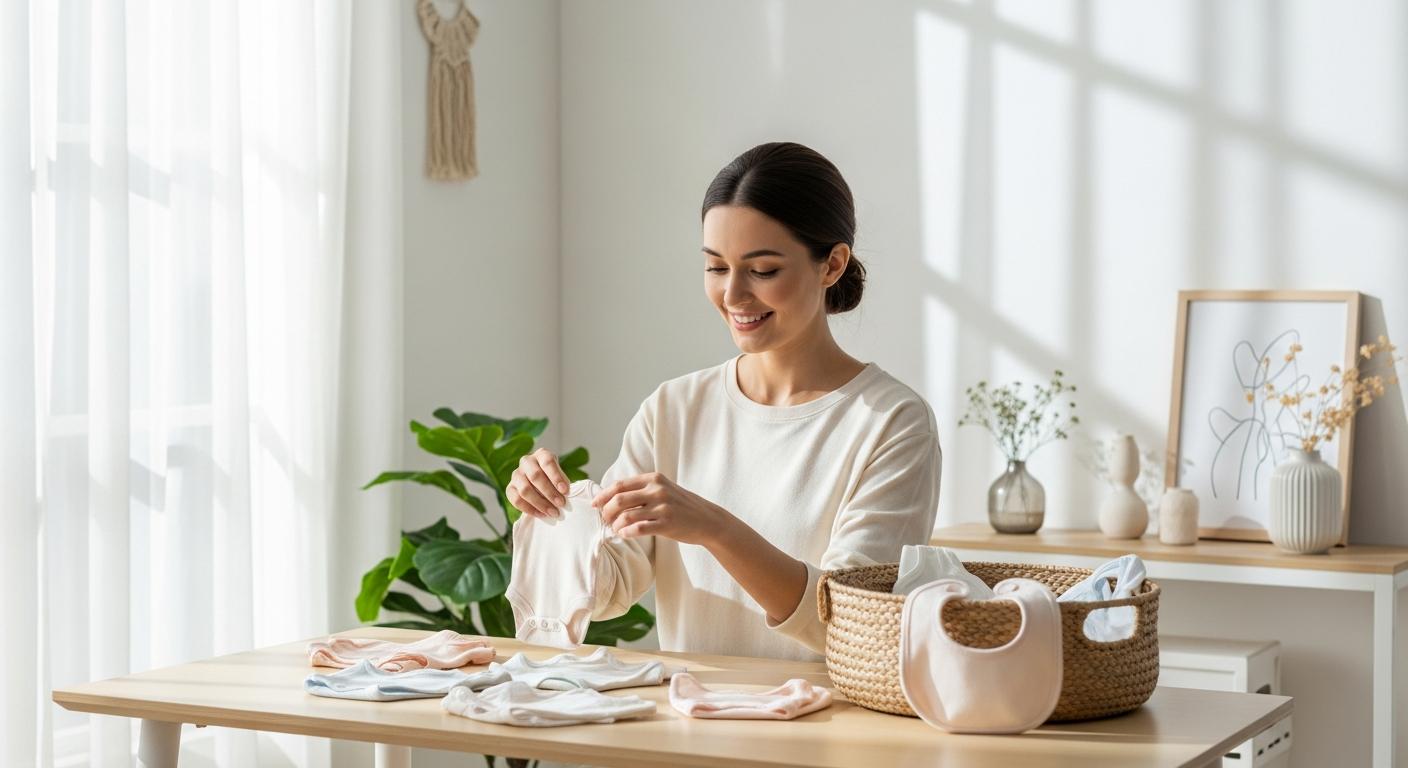
Wash before first wear
Wash clothes, bedsheets, towels, blankets before first use to reduce finishing agents and storage dust.
Sorting that actually helps
Sort by soil level:
- Light wear (onesies, sleepers)
- Heavy soil (bibs, burp cloths)
- Delicates (knits)
If adult laundry is scented, keeping baby loads separate can reduce transfer.
Temperature and cycle choice
Most baby laundry cleans well in cold or around 30°C. Warm (30–40°C) helps oily stains. Hot water is rarely needed for routine baby clothes and can wear fabric faster.
How much baby laundry detergent to use
More detergent increases residue. Too little can leave milk, sweat, and stool traces.
- Small baby load: start low (often about half-dose)
- Heavy soil: use the full recommended amount
- Low-water front-load/HE: dose carefully, avoid overfilling
Extra rinse: when it is worth it
Add an extra rinse when:
- Your baby has eczema or recurrent irritation
- Clothes feel slick/stiff or strongly scented
- Water is hard
- Items have large skin contact (sleepwear, sheets)
Drying without softeners
Skip softeners and dryer sheets when skin is reactive. For softness: don’t overload the washer, dry fully, and remove promptly. Sun-drying is fine, but ensure clothes are thoroughly dry before storing.
Washer hygiene
Clean the detergent drawer and door seal, keep the door slightly open between washes, and run an occasional hot empty cycle as per the manufacturer.
Stains and odour: simple, effective steps
- Pretreat quickly: cold rinse, blot, then a small amount of baby laundry detergent for 5–15 minutes.
- Milk/formula: pretreat + 30–40°C wash usually works.
- Poop stains: remove solids, cold rinse, pretreat, wash, oxygen bleach (as per label) may help.
- Smell: often trapped residue or damp-drying. Reduce dose, add an extra rinse, dry fully, clean seal/drawer.
Never mix bleach with acids (including vinegar) or ammonia.
Baby laundry detergent and rashes: first actions that often help
If skin flares, try high-impact basics before changing everything:
- Stop fabric softener and dryer sheets
- Reduce baby laundry detergent dose
- Add an extra rinse
- Rewash high-contact items (sleepwear, sheets)
Seek medical advice if rash spreads quickly, oozes, forms crusts, or if hives appear.
Cloth nappies and reusable items
Some baby laundry detergent formulas may be too mild for cloth nappies (heavy soil and oils). Too little detergent leaves residues, too much leaves film and can reduce absorbency. Avoid fabric softeners.
Hard water can cause mineral buildup and stronger smells. If you notice a sharp ammonia smell, it often suggests trapped urine residues and a need to adjust your routine.
Safety and storage at home
Store detergents high up or locked. Pods need extra caution as they can cause serious eye and mouth injury.
- Skin exposure: rinse with water.
- Eye exposure: rinse immediately with plenty of lukewarm water for several minutes and seek urgent medical advice if symptoms persist.
- Ingestion: contact poison control promptly, seek urgent care for breathing trouble, repeated vomiting, drooling, unusual sleepiness, or any pod exposure.
To remember
- Baby laundry detergent helps mainly by reducing fragrance, dyes, and leftover residue on fabrics that touch delicate skin for long hours.
- Baby skin barrier maturation takes time, rinsing well (often with an extra rinse) can make a visible difference.
- “Hypoallergenic” and “dermatologist-tested” are helpful signals, but dosing and rinsing matter more.
- Pods are convenient but riskier for children and give a fixed dose, store locked away.
- If skin reacts, start simple: remove fragrance layers, stop softeners, reduce detergent, add an extra rinse.
- Support is available through your paediatrician or dermatologist. You can also download the Heloa app for personalised tips and free child health questionnaires.