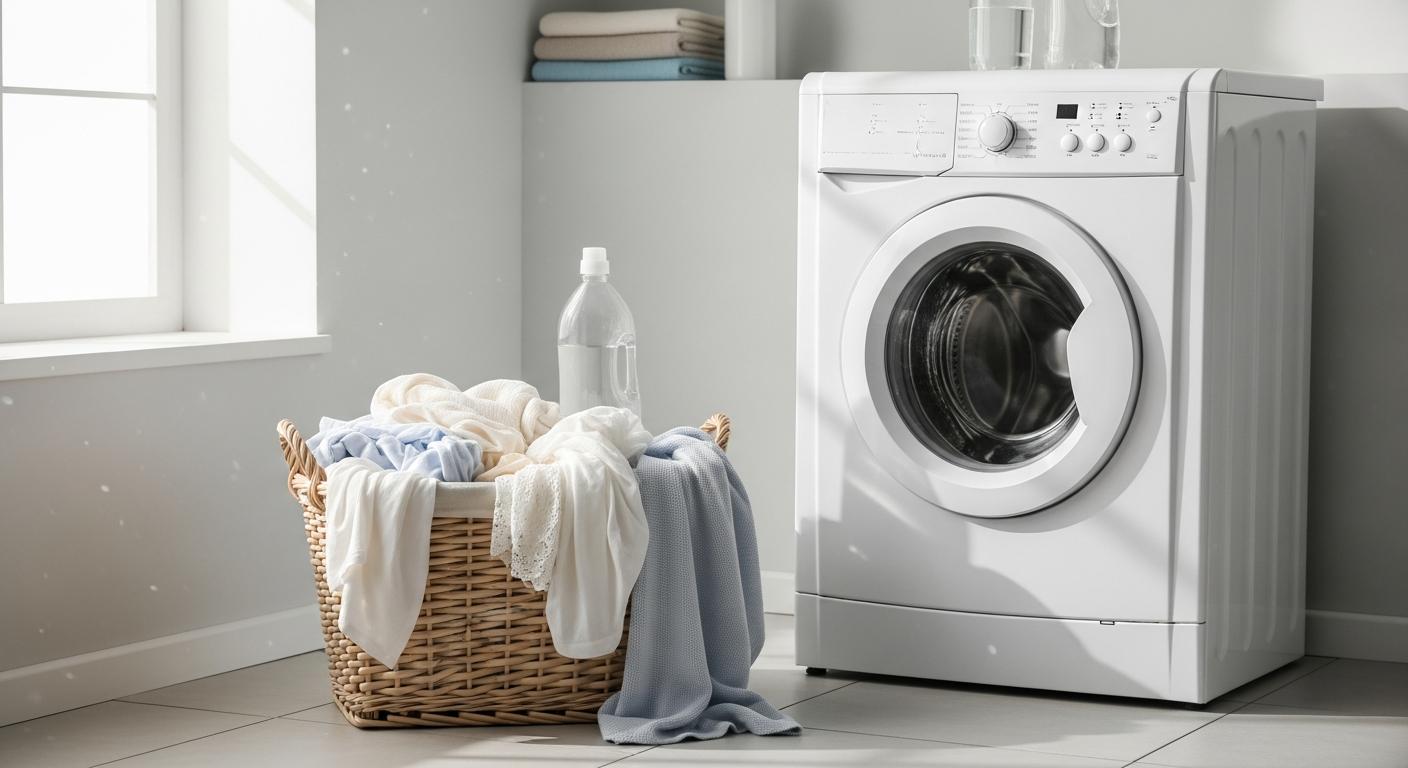
Baby clothes look tiny, but they do a big job: they sit against the neck, wrists, ankles, cheeks, and belly for hours. If your baby’s skin turns red after sleep, if eczema keeps flaring, or if that “clean laundry” smell clings forever, you may be wondering whether baby laundry detergent really changes anything. Often, it’s not about scary “chemicals”, it’s about skin physiology (a still-maturing barrier), detergent residue trapped in fibers, and additives such as fragrance or dyes.
Clean, well-rinsed fabrics. A routine you can keep. That’s the target.
What baby laundry detergent is (and why it can matter)
Baby laundry detergent is a detergent marketed for infant textiles—onesies, sleep sacks, sheets, towels—usually with fewer perfumes and colorants and an emphasis on rinsing clean.
From a pediatric dermatology perspective, irritation is frequently linked to:


- Residue (too much detergent, short rinses, low-water cycles)
- Fragrance (including essential oils)
- Dyes and scent systems that linger on fabric
- Some preservatives used in liquids
So yes, baby laundry detergent can help—but mainly because it makes it easier to avoid common triggers and to dose simply.
Baby detergent vs regular detergent vs “Free & Clear”
Do you need a special product, or just a better match?
- Regular detergents often contain perfume, optical brighteners, and “laundry enhancers.” They can be fine, but they add exposures that sensitive skin may dislike.
- Free & Clear products are often very close to baby laundry detergent (typically dye-free and without added perfume).
- “Baby” lines sometimes also offer enzyme-free (“non-bio”) options.
One label nuance: unscented is not always fragrance-free. “Unscented” may still include masking scent ingredients.
Why baby skin reacts: barrier immaturity + long fabric contact
Baby skin is not “adult skin, just smaller.” The outer barrier (the stratum corneum) continues to mature after birth. That can mean:
- Higher transepidermal water loss (skin dries faster)
- More sensitivity to friction (seams, cuffs, tags)
- Less tolerance for substances that sit on fabric for hours
If surfactants (washing agents) or fragrance components remain in the textile, they may sting, dry, or sustain inflammation—especially in babies with atopic dermatitis (eczema).
When baby laundry detergent is worth it (and when it may not)
A switch to baby laundry detergent (or any truly fragrance-free, dye-free detergent) tends to help when:
- Your baby is a newborn
- There is eczema, recurrent dryness, or suspected irritant contact dermatitis
- Adult laundry is heavily scented (transfer happens)
- You want to drop extras: softeners, scent beads, textile sprays
It may be less necessary when your current detergent is already fragrance-free and dye-free, and your baby’s skin is calm.
Choosing baby laundry detergent by age and skin profile
Newborns: gentle, consistent, low-residue
Wash new clothes, sheets, blankets, and towels before first wear (finishing agents can irritate). Newborn loads are often small and lightly soiled, so overdosing is common. A well-rinsing baby laundry detergent used at the right dose usually beats any “ultra-gentle” formula used too generously.
Older babies and toddlers: stains get tougher
Food stains are a mix of proteins, fats, and pigments. Enzymes (like protease, amylase, lipase) can clean well at 30–40°C, but some very reactive children seem to flare when enzyme detergents leave traces. If you suspect a link, trial a non-bio baby laundry detergent for 2–3 weeks and compare skin comfort.
Eczema and sensitive skin: the “boring” routine that often works
Aim for fewer variables:
- Choose fragrance-free and dye-free
- Avoid fabric softeners and dryer sheets (they leave a coating)
- Add an extra rinse when skin is flaring, loads are small, or water is hard
Laundry is rarely the only trigger for eczema, but it’s one of the easiest routines to simplify.
Preterm babies
Preterm infants can have an even more fragile barrier. Prioritize a simple fragrance-free detergent, accurate dosing, and thorough rinsing. If your neonatal team gave specific washing guidance, follow that first.
Labels and claims: what helps, what misleads
“Hypoallergenic”
“Hypoallergenic” suggests a lower risk of allergy, but it is not a personal guarantee. Also, many rashes are irritation rather than allergy:
- Irritant contact dermatitis: repeated barrier disruption (residue, friction, perfume)
- Allergic contact dermatitis: immune reaction to a specific ingredient
When choosing baby laundry detergent, concrete cues often matter more: fragrance-free, dye-free, and transparent ingredients.
“Dermatologist-tested”
Reassuring, but details are rarely shown on-pack and testing may be done in adults. Still use the basics: correct dosing, good rinsing, no softener.
“Free & Clear,” “non-toxic,” “eco-friendly”
“Free & Clear” often means no added perfume or dyes, but enzymes and preservatives may remain. “Non-toxic” and “eco-friendly” can be vague unless supported by clear criteria.
Ingredients in baby laundry detergent: a simple map
Surfactants
Surfactants lift oils and dirt. “Plant-based” means derived from plant feedstocks, not automatically gentler. Even mild surfactants can irritate if left behind—so rinsing stays central.
Enzymes
Great for milk, food, and stool stains. If skin is extremely reactive, an enzyme-free baby laundry detergent trial can be reasonable.
Preservatives in liquids
Some preservatives—especially isothiazolinones—can trigger contact dermatitis (MIT, MCIT, BIT). If eczema worsens suddenly, checking for these (and removing fragrance) can be a useful step to discuss with your clinician.
Fragrance, essential oils, dyes, optical brighteners
Common, avoidable triggers. Optical brighteners change appearance, not hygiene.
Formats: liquid, powder, pods, strips
- Liquid: easy for pretreating, easy to overdose.
- Powder: often strong in hard water, may leave residue if not fully dissolved.
- Pods: convenient, fixed dose, higher child-safety risk, not ideal for tiny loads.
- Strips/concentrates: less packaging, can be less forgiving for hard water or heavy stains.
Whatever the format, the goal is the same: effective cleaning with minimal residue—exactly what many parents seek from baby laundry detergent.
How to wash baby clothes well (without overcomplicating)
Temperature and cycles
Most baby loads wash well at cold or around 30°C. Warm (30–40°C) helps with oily stains. Hot water is rarely needed for routine baby clothing and can wear fibers.
How much baby laundry detergent to use
More is not better. Overdosing increases residue, underdosing can leave soils behind.
- Small load: start low (often about half dose), especially in soft water
- Heavy soil: use the full recommended amount
- HE/low-water machines: dose accurately and avoid overfilling the drum
Extra rinse: when it pays off
Add it when eczema is flaring, fabrics feel “soapy,” water is hard, or items have large skin contact (sleepwear, sheets). It’s also common for cloth diapers.
Drying without softeners
Skip softeners and dryer sheets when skin is reactive. For softness: don’t overload, tumble dry low and remove promptly, or air-dry then briefly tumble on low.
Washer hygiene
A washer can hold residue and biofilm. Clean the drawer and door seal, leave the door ajar between cycles, and run an occasional hot empty cycle per manufacturer guidance.
Stains and odors: realistic fixes
- Pretreat quickly: cold rinse, blot, then a small amount of baby laundry detergent for 5–15 minutes.
- Milk/formula: often responds to pretreat + 30–40°C wash.
- Stool stains: remove solids, cold rinse, pretreat, wash, oxygen bleach (sodium percarbonate) can help as directed.
- Odor: often trapped residue or damp-drying—reduce dose, add an extra rinse, dry fully, clean the washer seal.
Never mix bleach with acids (including vinegar) or ammonia.
Baby laundry detergent and skin reactions: first steps
Clues include redness where clothes touch (neckline, cuffs), flares after laundry day, or fabrics that feel stiff/strongly scented.
Try a quick reset:
- Stop softeners/dryer sheets
- Reduce detergent dose
- Add an extra rinse
- Rewash high-contact items (bodysuits, pajamas, sheets)
If a rash spreads fast, oozes, crusts, or hives appear, seek medical advice.
Baby laundry separately or with the family?
Separate loads reduce scent transfer and help dosing for small loads. Combined loads work well if the household uses the same fragrance-free detergent and avoids softeners. Some families simply switch everyone to baby laundry detergent (or a Free & Clear equivalent) to keep one routine.
Cloth diapers and reusable items
Cloth diapers may need stronger cleaning than some baby laundry detergent formulas provide. Too little detergent leaves soils, too much leaves film and reduces absorbency. Avoid fabric softeners. If hard water is an issue, mineral buildup can worsen odors and irritation—your pediatrician or a diaper-laundry specialist can help tailor the routine.
Safety and storage
Store detergents high up or locked away, pods carry a higher risk because they can cause serious eye and mouth injury.
- Skin exposure: rinse with water.
- Eye exposure: rinse immediately with plenty of lukewarm water for several minutes, seek urgent medical advice if symptoms persist.
- Ingestion: contact poison control promptly, seek urgent care for breathing trouble, repeated vomiting, drooling, unusual sleepiness, or any pod exposure.
Eco-conscious choices and DIY cautions
Refills and concentrates can reduce packaging, but “natural” is not always gentler. Soap-based DIY mixes can leave buildup, especially in hard water, which traps odor and irritants. When skin is sensitive, simplicity usually wins: fragrance-free baby laundry detergent, correct dosing, thorough rinsing, complete drying.
Key takeaways
- Baby laundry detergent is mainly helpful for reducing fragrance, dyes, brighteners, and detergent residue on fabrics that touch delicate skin for hours.
- Baby skin has a developing barrier, so thorough rinsing—often with an extra rinse—can reduce irritation.
- Marketing claims can guide you, but ingredient choices, dosing accuracy, and good rinsing matter more.
- Pods are convenient but bring higher child-safety risk and a fixed dose, store them locked away.
- If skin flares, start with basics: stop softeners, lower the dose, add an extra rinse, and remove fragrance first.
- Professionals can help you sort eczema, irritation, and allergy questions. You can also download the Heloa app for personalized tips and free child health questionnaires.
Questions Parents Ask
Can I use regular laundry detergent for a newborn?
Yes, many families do—especially if the detergent is truly fragrance-free and dye-free and rinses well. If you’re unsure, a simple approach is to use the same gentle “Free & Clear” type detergent for the whole household so scents and residues don’t transfer onto baby clothes. If skin looks irritated (red marks where fabric touches), it can be reassuring to trial a plainer detergent and add an extra rinse for a couple of weeks.
What’s the best detergent for baby clothes if my baby has very sensitive skin?
Often, the “best” option is the one with the fewest potential irritants: fragrance-free, dye-free, and low-residue when dosed correctly. If flare-ups seem linked to laundry, some parents also prefer a non-bio (enzyme-free) formula for a short trial, as enzymes can occasionally bother very reactive skin when traces remain on fabric. If symptoms persist, it may be worth discussing possible contact allergy triggers with a clinician.
Do I really need to wash baby clothes before first wear?
It’s a good idea, and it can make a noticeable difference. New items may carry finishing agents, dust, or fragrances from manufacturing and storage. A first wash with a gentle detergent (and thorough drying) helps clothes feel softer and more comfortable against baby skin—no need to overcomplicate it.