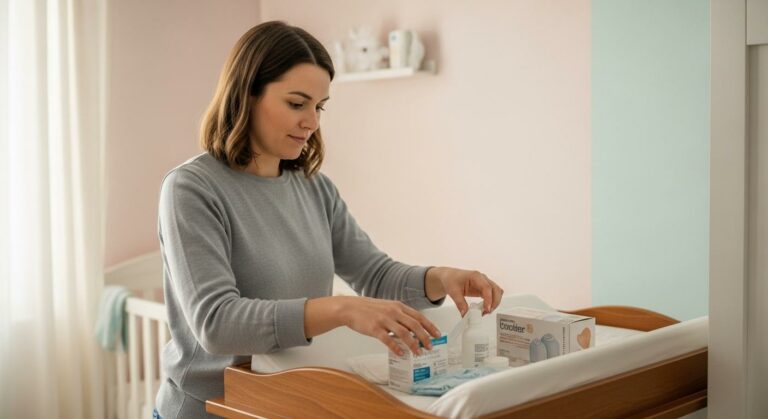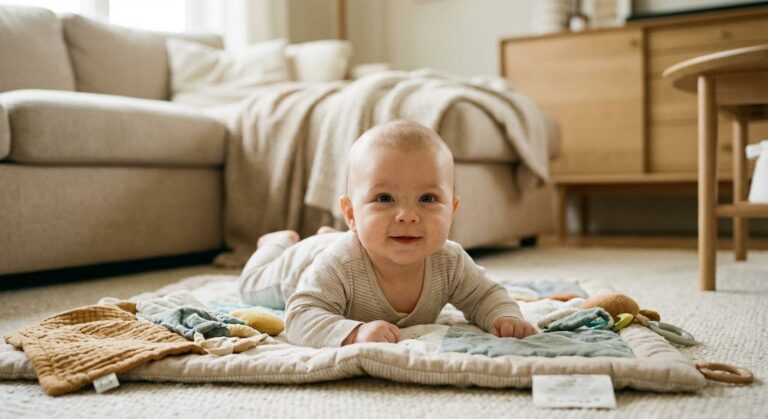
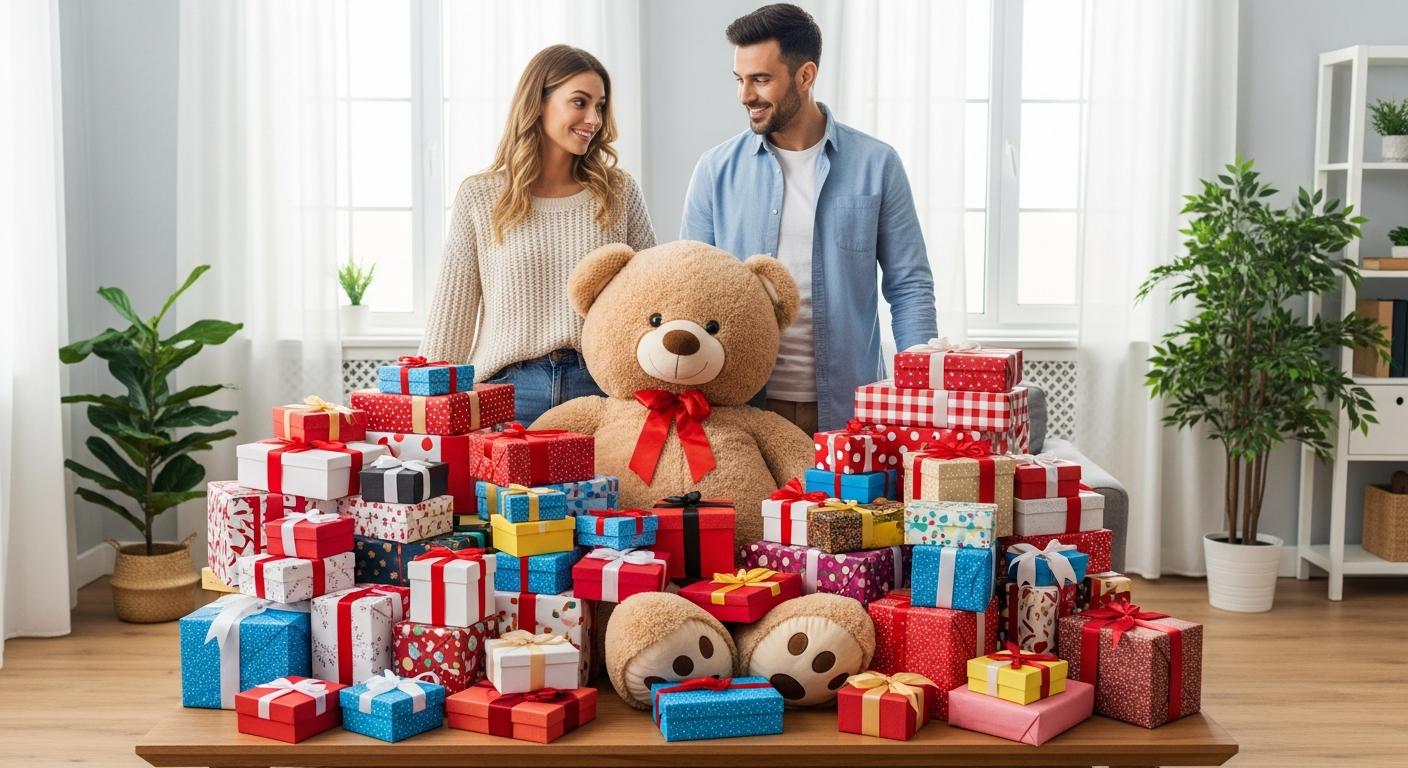
Gifting for a newborn is meant to feel joyful. Yet many Indian families know the other side of it too: a cramped cupboard in a 2BHK, a mountain of blankets from well-wishers, and parents who are already running on half-sleep. So yes—choosing baby gifts to avoid can be as helpful as choosing the “perfect” present.
What tends to go wrong? Gifts that don’t suit a newborn’s real routine, items a baby outgrows before the first wash cycle, products that don’t match current infant safety guidance (especially for sleep), and gear that quietly introduces risks—small parts, cords, falls, or skin irritation. Add personal preferences (feeding, diapers, babywearing, fragrance tolerance), and even a well-meant gift can become a return headache.
Baby gifts to avoid that look cute but miss daily newborn needs
In the early weeks, parents value anything that reduces steps: fast diaper changes, easy burping clean-ups, and simple sleep arrangements. Decorative pieces and novelty gadgets can look adorable on Instagram, but at 3 a.m. they often stay untouched.
A quick filter many parents use: Does this gift remove a task—or create one? If it needs long assembly, frequent charging, complicated cleaning, or extra storage, it frequently joins the list of baby gifts to avoid.

Common pain points in India: duplicates, space, safety doubts, and return stress
- Duplicates are extremely common: blankets, mittens, tiny outfits, soft toys.
- Limited space matters. In many urban homes, storing bulky gear is a genuine issue.
- Safety worries show up most around sleep and toys.
- Returns can feel like a full-time project when the mother is recovering and the family is adjusting.
If you are gifting, a gift receipt (or buying from a platform with easy pickups) is not a luxury. It is practical support.
When preferences matter most (and how to stay supportive)
Some choices are personal and sometimes cultural: bottle brand, diaper type, pacifier style, babywearing (wrap vs structured carrier), skincare ingredients, secondhand comfort, and even family traditions.
When you are unsure, neutral is kind:
- follow the registry if it exists,
- add a gift receipt,
- choose store credit or a contribution,
- give practical consumables.
Neutral does not mean impersonal. It means you are respecting the family’s decisions.
Baby gifts to avoid because babies outgrow them very fast
Newborn-size clothes: often unworn
Many babies outgrow newborn sizes in days. Some never fit them at all. Families also receive many “newborn sets”, but babies spend most time in simple sleepers for warmth and quick diaper access.
Smarter picks:
- 3–6 months basics
- 6–12 months basics
- zip-up sleepers or easy two-piece cotton sets
This is one of the most common baby gifts to avoid, even though it feels “safe” to buy.
Season mismatch: buying for today instead of the next stage
In India, climate varies widely—humid coastal cities, dry heat, winter chills in the North. Buying a thick winter suit in the wrong size can mean it never gets used.
More flexible options:
- breathable cotton layers
- a light jacket in a future size
- socks and caps suited to the local season
Fancy outfits that add pressure
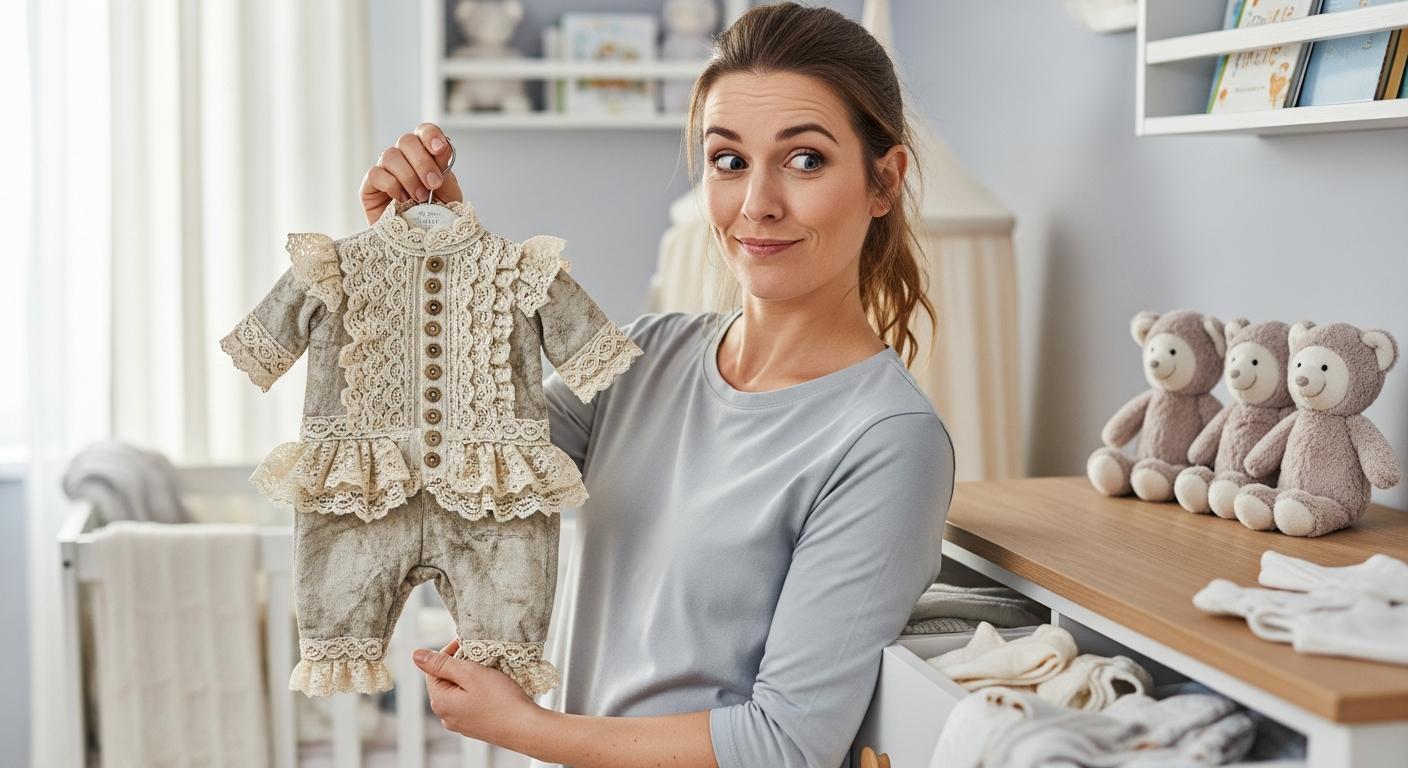
Special-occasion outfits can be stiff, hard to wash, and stressful (“don’t stain it!”). If diaper access is difficult, parents avoid it.
Clothing safety and comfort: cords, loose decorations, scratchy seams
Skip:
- long cords or ties
- decorative pieces that can detach (choking hazard)
- rough tags and thick seams that can irritate skin folds (neck, armpit, thigh creases)
Baby gifts to avoid for safer sleep and peace of mind
Sleep advice has changed over the years. Many items sold for nurseries are still baby gifts to avoid because they don’t fit modern safe sleep recommendations.
Sleep products that are not advised for infant sleep
Common examples:
- crib bumpers
- pillows, quilts, comforters
- thick padding
- plush toys kept in the sleep area
- “positioning” products marketed to keep baby in one posture
Why soft bedding and positioning add-ons can be risky
Soft items can obstruct a baby’s airway or allow the face to press into a soft surface, increasing suffocation risk. Positioning products can create gaps where a baby may become trapped.
A simple sleep surface lowers avoidable risk in the place baby spends the most unsupervised time.
Safer alternatives parents actually use
A safer setup is intentionally plain:
- firm, flat mattress
- fitted sheet that fits tightly
- nothing else on the sleep surface
For warmth, parents often prefer a sleep sack (wearable blanket) rather than loose blankets.
Gifts that usually work well:
- fitted sheets in the correct size
- a season-appropriate sleep sack
- a dimmable night light for parents (kept away from the baby’s sleep surface)
Baby gifts to avoid that can create choking, cord, or injury hazards
Small parts, button batteries, and magnets
Anything with detachable small parts can become a choking hazard, even if it looks “baby-friendly”. The highest-risk items include:
- button batteries (can cause severe internal burns if swallowed)
- small high-powered magnets (can cause dangerous internal injury)
Prefer sturdy toys with clear age labels and battery compartments that need a tool to open.
Corded items and long ties
Long cords, strings, and dangling attachments can wrap around a baby’s neck or cause entanglement, especially once babies start rolling and grabbing.
Cord-free designs are safer and are less likely to become baby gifts to avoid later.
Walkers and certain “support seats”: why families are cautious
Infant walkers are linked with injuries (falls, tip-overs, quick access to hazards). They also don’t teach walking faster—walking skills develop through floor time.
Some jumpers and seats can stress posture if used too early or too long. Parents often prefer play mats and supervised tummy time instead.
Bath “helper” accessories that give false confidence
Bath seats and rings may look secure, but drowning is fast and silent. No accessory replaces close adult supervision with hands-on support.
Amber teething necklaces
Often gifted for teething, amber necklaces have unproven benefit and real risk: strangulation or choking if beads detach. They are clear baby gifts to avoid.
Baby gifts to avoid that add noise, clutter, and stress
Noisy toys
Newborns can get overstimulated. So can adults who are already sleep-deprived. Loud electronic toys can raise stress levels at home.
“Right toy, wrong time” clutter
Toys that require sitting balance or coordinated grasping may not be used for months, yet they occupy space.
Quieter, age-right alternatives
- high-contrast board books
- simple rattles with secure parts
- soft sensory toys (crinkle cloths)
These support bonding and early visual tracking without turning the living room into a concert.
Baby gifts to avoid because they take up too much space
Giant soft toys
Oversized plush toys are hard to store, difficult to wash well, and can collect dust. They also do not belong in the sleep space.
Too many blankets and loveys
Blankets are one of the most duplicated gifts in Indian families. They are useful for supervised floor play or stroller time, but not advised as loose bedding for infant sleep.
Space-smart swaps:
- one compact memory box
- a small nursery print
- one well-made comfort item meant for supervised time
Baby gifts to avoid that are too personal or hard to return
Scented skincare and wipes
Newborn skin has an immature skin barrier (the outer protective layer). Fragranced lotions, soaps, and wipes can trigger irritation or dryness.
If you are gifting skincare:
- choose fragrance-free
- prefer short ingredient lists
Essential oils and “random” cosmetics
Essential oils and heavily fragranced products can irritate skin and airways. Unless parents asked for a specific product, these often become baby gifts to avoid.
Gifts that assume feeding or parenting choices
Some gifts imply a plan—breastfeeding-only items, a specific bottle system, or gear linked to one routine. Families may breastfeed, formula feed, or mix feed. Supportive gifting respects that.
Postpartum care gifts when not requested
Some parents appreciate them, others find them too personal. When in doubt, practical help works better: meals, grocery runs, laundry, or a cleaning session.
Personalised items ordered too early
Names, spellings, and nursery themes can change. Personalised items are often non-returnable, so confirm details first.
Baby gifts to avoid for chemical and fragrance concerns
Talc-based powders and heavy fragrance
Powders can be inhaled easily by babies. Many families also prefer to avoid talc. Heavy fragrance adds exposure with little benefit.
Plastics and finishes families may avoid
For teethers and feeding gear, many parents look for BPA-free and phthalate-free materials. Strong chemical odours, unclear paints, or poor-quality finishes are good reasons to skip.
Helpful buying cues
- clear age recommendations
- safety compliance markings
- textile labels like Oeko-Tex Standard 100 or GOTS
Baby gifts to avoid when buying secondhand
Used gear that is hard to verify
Secondhand can be great, but some categories are high risk if history is unknown:
- car seats (unknown crash exposure, expiry)
- old cribs that may not meet standards
- used mattresses (too soft, damaged, contaminated)
- recalled products
Hygiene-sensitive items are better new
Bottle nipples, pacifiers, pump parts, and some teethers are difficult to sanitise perfectly. Micro-wear can harbour bacteria.
Safer secondhand approach
- verify labels and manuals
- check recalls
- replace wear parts (straps, valves, nipples)
Baby gifts to avoid in the “smart baby” tech category
Connected cameras and smart toys: privacy concerns
Connected devices can collect sensitive household data. Some families prefer to avoid them due to security concerns.
Consumer “medical-style” monitors
For healthy infants, these can increase anxiety through false alarms and confusing readings. They do not replace safe sleep practices.
Lower-stress alternatives
- non-connected audio monitor (if parents want it)
- meal delivery, groceries, laundry help, or contributions to essentials
Better options families usually welcome instead
If you want your gift to be used (and thanked for later), go simple:
- size-up clothing basics
- diapers and wipes (if brand preference is known)
- burp cloths and bibs
- calm books and age-right toys
- one compact keepsake
- gift cards or registry contributions
- services: meals, errands, cleaning
Baby gifts to avoid: a quick checklist before you buy
- Verify the real need: registry first, or ask what would be useful right now.
- Fit real life: season, storage, home layout.
- Check safety: age label, avoid small detachable parts, skip cords/ties, be extra careful with sleep products.
- Make returns easy: gift receipt, simple exchanges, home pickup if possible.
Key takeaways
- Baby gifts to avoid often include unsafe sleep add-ons, noisy toys, oversized clutter, and items that are too personal.
- Newborn-size clothes and fancy outfits are frequently unused, size-up basics are more practical.
- Safer sleep gifting stays simple: firm, flat surface, fitted sheet, wearable warmth like a sleep sack.
- Avoid button batteries, magnets, and small detachable parts, choose sturdy, age-labelled items.
- Be cautious with walkers, amber teething necklaces, and bath “helper” gear.
- Skincare is personal, fragrance-free, minimal-ingredient options fit more families.
- Secondhand can be smart, but avoid car seats with unknown history, old cribs, used mattresses, and hygiene-sensitive feeding parts.
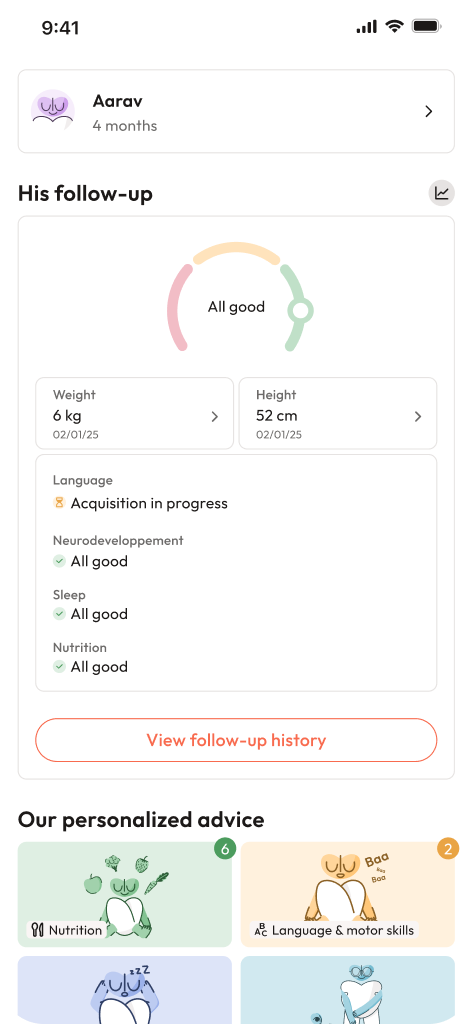
- Professionals like paediatricians, lactation consultants, and pharmacists can support families, and parents can download the Heloa app for personalised advice and free child health questionnaires.
Further reading :