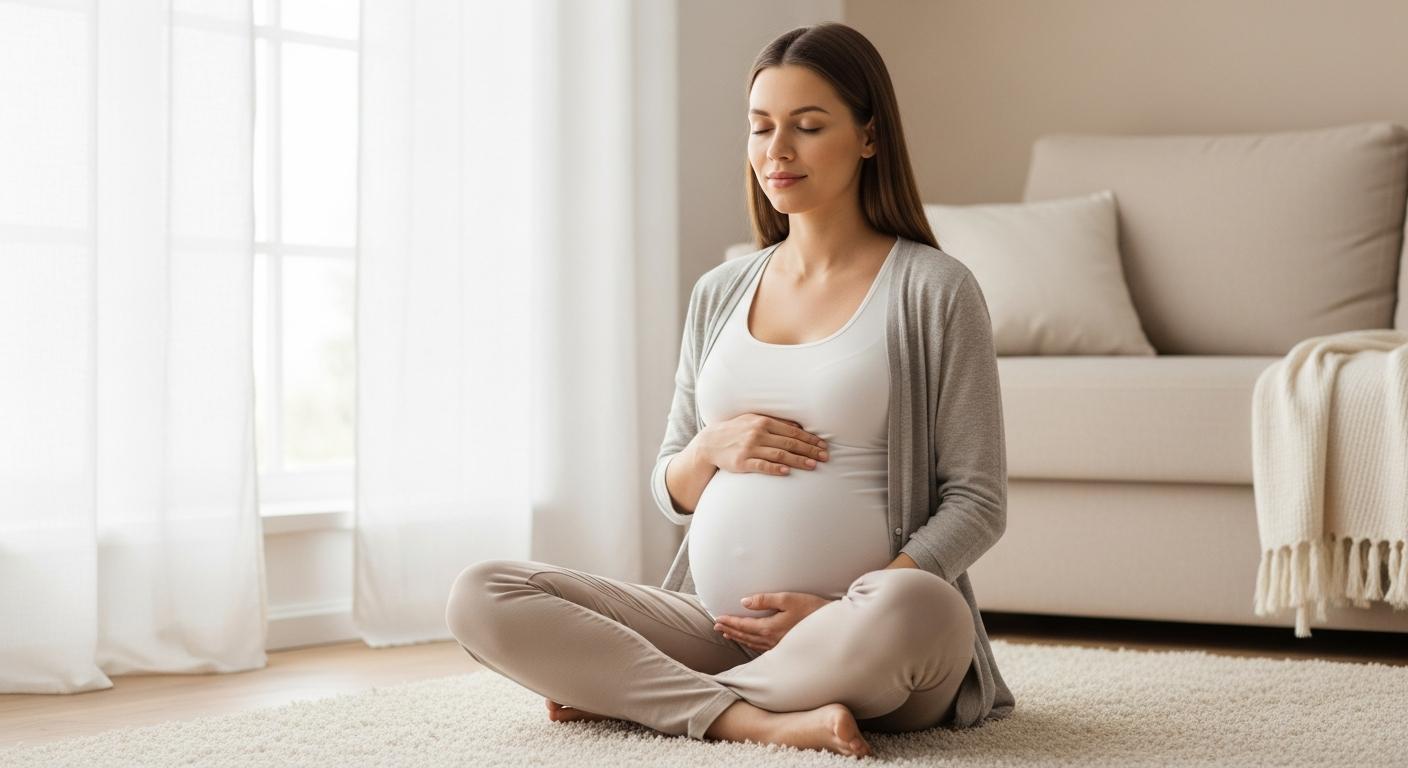
Pregnancy moves fast. Your body changes week by week, your mind keeps doing its “what next?”, family messages keep coming, and clinic visits also pile up. How do you stay calm when hormones shift your mood, sleep becomes light, and birth feels closer every day? pregnancy meditation gives a simple, doable pause – sometimes for 2 minutes, sometimes for 15 – to breathe, settle the mind, and create a calmer inner space for you and your baby.
The aim is not to “control everything”. It is to work with stress, read your body’s signals with more clarity, and build practical tools for those sensitive moments in pregnancy and after delivery.
Pregnancy meditation: what it is and who it helps
What pregnancy meditation is (and what it is not)
pregnancy meditation includes gentle mind-body practices meant to calm the nervous system, regulate emotions, and support a sense of connection with your baby. Many sessions are guided (audio or face-to-face) and may include relaxation, a body scan, soothing imagery, or compassion-based phrases.
It is not medical treatment, and it cannot replace antenatal check-ups, therapy, or medicines when those are needed. It is also not a performance. If your mind wanders (it will), the practice is simply noticing it and returning to your anchor (breath, body sensations, or a short phrase).

Pregnancy meditation vs prenatal mindfulness
Meditation is the broad umbrella (focused attention, body scan, loving-kindness, mantra). Mindfulness is a specific skill within it: paying attention on purpose, in the present moment, without judging yourself.
In real life, many prenatal tracks are mindfulness-based because they build the same key abilities: noticing tension earlier, responding to worry more gently, and returning to the body when the mind starts running ahead.
The stress response in pregnancy: why meditation feels helpful
Physiologically, pregnancy can increase activation of the sympathetic nervous system (your “alert” system). Muscle tension, faster heart rate, and shorter breathing are common. pregnancy meditation, especially practices focused on stress regulation, can support the parasympathetic nervous system, often described as the body’s “brake” (rest, digestion, recovery). Many women notice easier breathing, less shoulder/neck tightness, and a reduced “always on” feeling.
Who can benefit and when to start (any trimester)
pregnancy meditation can help if you feel stressed, sleep poorly, worry often, or simply want a steadier emotional baseline. Research most consistently finds benefits for stress, anxiety symptoms, mood, and sleep quality. Effects on birth outcomes (like preterm birth or birth weight) are less consistent, so it helps to see meditation as support for wellbeing and coping.
You can start in any trimester. Early practice gives more time to build a habit, but benefits can show up even if you begin later. If you have significant anxiety or depression symptoms, a trauma history, or a high-risk pregnancy, it is wise to discuss your plan with your gynaecologist or midwife and choose gentle, pregnancy-adapted practices.
Benefits of pregnancy meditation for body and mind
Stress relief and lower pregnancy anxiety
Regular pregnancy meditation helps many pregnant women feel less “on edge”. Calming practices can reduce stress-system activation (the HPA axis) and lower physiological arousal. Over time, you may notice fewer worry spirals and a quicker return to baseline after a stressful day.
Physical effects: breathing, muscle tension, and recovery
pregnancy meditation mainly works through the autonomic nervous system (your body’s “autopilot”). When stress reduces, a few physical shifts are commonly reported:
- heart rate may feel steadier
- muscle tension can reduce, especially in the back, neck, and shoulders
- breathing often becomes deeper, supporting better oxygenation
Diaphragmatic breathing (letting your belly expand on the inhale and exhaling slowly) uses the diaphragm and supports regulation through the vagus nerve, a key pathway involved in stress responses and heart-rate regulation. With regular practice, many women describe less overall tension and an easier “switching off” by evening.
Better sleep and easier bedtime routines
Sleep in pregnancy is often disrupted by hormones, frequent urination, reflux, and physical discomfort. pregnancy meditation can support sleep by reducing hyperarousal and helping your nervous system shift towards recovery. Relaxation practices (including guided relaxation and yoga nidra-style sessions) may improve sleep quality, reduce difficulty falling asleep, and help interrupt the loop of “night waking -> rumination -> cannot fall back asleep”, even if total sleep time does not increase.
Emotional balance, mood support, and self-compassion
Pregnancy can amplify emotions. Mindfulness-based programmes often show modest improvements in anxiety, rumination, and mild-to-moderate depressive symptoms. Practically, pregnancy meditation teaches you to notice early signs of overwhelm (tight chest, clenched jaw, racing thoughts) and meet them with softer attention rather than self-criticism.
Over time, anger, sadness, or fear may start to feel more like temporary experiences rather than definitions of who you are. That little bit of distance often supports emotional steadiness and more confidence about coping with birth and postpartum changes.
Bonding with your baby and partner connection
Many parents experience pregnancy meditation as a meaningful ritual: hands on the belly, shared breathing, and a few quiet words to the baby. Some women describe it as a “silent dialogue” – centring, noticing a fetal movement, then responding with a slower, more spacious breath.
Sharing short practices with a partner can also support co-regulation: two nervous systems settling together through breath, voice, and presence.
Body awareness for discomfort and pain coping
Meditation does not remove discomfort, but it can change your relationship to it. By improving interoception (awareness of internal sensations) and reducing catastrophising, many women feel more capable of coping with back pain, pelvic pressure, or Braxton Hicks sensations, especially when paired with posture changes and clinical guidance.
Approaches you can use during pregnancy
Mindfulness meditation (breath and present-moment attention)
Mindfulness rests on three pillars: present-moment attention, curiosity, and non-judgement. The goal is not an “empty mind”. It is noticing what is here and returning gently to the breath.
A simple practice:
- Sit with back support, feet on the floor.
- Close your eyes or lower your gaze.
- Feel air entering through the nose, moving into chest and belly.
- Let the exhale be slightly longer, without forcing it, like a quiet sigh.
- When a thought appears (“I forgot…” or “What if…”), notice it and return to the breath.
A pregnancy-adapted body scan then invites you to check in from feet to face, noticing tension, neutral areas, and pleasant sensations. Over time, this can help you spot fatigue earlier or respond to pain before it builds up.
Prenatal sophrology-style practices: breath, gentle release, and positive imagery
Some prenatal relaxation approaches combine rhythmic breathing, gentle muscular release, and positive visualisations focused on the body and birth. The aim is to build new relaxation reflexes (for example, relaxing jaw and shoulders when intensity rises) and strengthen supportive mental images of birth.
Guided relaxation and yoga nidra-style practice
Yoga nidra-style relaxation is a deep, guided relaxation state between wakefulness and sleep. Side-lying or semi-reclined, you follow a voice through body awareness, breath, and calming imagery. Many women find this especially helpful when the mind feels most active in the evening.
Guided relaxation may be offered by trained perinatal professionals, and human support can be especially valuable when you are working with intense fear, a prior traumatic birth, or a complex medical history.
Breathwork, visualisation, and compassion-based meditation
Diaphragmatic breathing can be used as a practical tool throughout the day:
- inhale through the nose, letting the belly expand gently
- exhale longer, imagining tension draining downward into the ground
- repeat 5-10 cycles, especially during stressful moments
Positive visualisations can pair well with breathing: imagining the cervix softening, the baby descending gradually, or a wave rising (a contraction), peaking, and passing. Some women add short supportive phrases such as “one contraction at a time”, or “my body can cooperate with my baby”.
Compassion-based pregnancy meditation can be especially supportive when you feel guilt, fear of “not doing it right”, or deep fatigue. It often includes placing a hand on the heart or belly and repeating kind phrases like:
- “May I move through this pregnancy with as much gentleness as possible.”
- “May my baby feel my presence, even if it’s imperfect.”
- “I am allowed to be tired, and I can take care of myself.”
Is pregnancy meditation safe?
Gentle foundations: comfort, hydration, and a calm environment
For most pregnancies, gentle pregnancy meditation is safe. Priorities are simple: comfort, steady temperature, and hydration. Practice in a well-ventilated room, dress lightly, and keep water nearby. If you are hungry or prone to feeling faint, a small snack before practice can help.
Best positions for meditation by trimester (seated, side-lying, supported recline)
- First trimester: supported seated or side-lying are both fine. If you lie on your back briefly and feel okay, keep it short.
- Second trimester: prefer supported seated or side-lying (often left side). Avoid spending long periods flat on your back.
- Third trimester: side-lying (often left) with pillows between knees and under the belly is usually most comfortable. If seated, use strong back support or a supported recline.
Breathwork safety: gentle breathing, avoiding long breath holds and forceful practices
Choose breath awareness that feels easy: slow, comfortable nasal breathing or a slightly longer exhale. Avoid forceful breathwork, rapid breathing, or long breath holds, which can trigger dizziness, tingling, or anxiety. If you feel lightheaded, return to natural breathing, change position, and pause.
When to check with your healthcare provider (including high-risk pregnancy)
Meditation can remain helpful in a high-risk pregnancy, but it should be used alongside medical follow-up, never instead of it. Ask your doctor for guidance before starting (or if you are unsure) if you have:
- high blood pressure or preeclampsia concerns
- gestational diabetes
- risk of preterm labour
- fetal growth restriction
- significant prior obstetric complications
- significant psychiatric conditions (including severe depression, severe anxiety disorders, bipolar disorder, or psychosis)
When to stop a session and seek help (dizziness, pain, bleeding, severe symptoms)
Stop immediately and seek medical advice promptly if you develop:
- dizziness, fainting, palpitations
- unusual or persistent abdominal/pelvic pain
- regular, painful contractions before term
- vaginal bleeding or leaking fluid
- a marked decrease in fetal movement
- severe headache with vision changes, or sudden swelling of face/hands
pregnancy meditation should never delay medical evaluation when a symptom worries you.
How to start a simple prenatal meditation routine
Setting an intention that feels realistic
A good intention is short and kind. Examples:
- “I am practising calm for me and my baby.”
- “I am learning to soften.”
- “I am building confidence for birth.”
Intentions work best when they are doable on tired days.
How long to meditate while pregnant (from 1-3 minutes to 20 minutes)
Start with 1-3 minutes if that is what your energy allows. Many women build to 5-10 minutes, then 10-20 minutes when comfortable. Regularity usually matters more than duration.
Best times of day (and why flexibility matters)
- Morning: sets a steadier tone for the day
- Midday: short reset to reduce accumulated stress
- Bedtime: supports winding down and sleep
If nausea is prominent, shorter sessions timed to your “least nauseous” window often work better than pushing through a long practice.
Posture, environment, and comfort tips
Choose comfort-first positioning:
- a sturdy chair, feet grounded, back supported
- seated on a cushion with support behind you
- semi-reclined with pillows behind your back and under knees
- side-lying, especially later in pregnancy
Silence can help, but it is not required. Soft light, a thin blanket, and calm audio can be enough.
Staying consistent without turning it into another task
Anchor practice to a daily cue (after brushing teeth, after lunch, or when you get into bed). Keep a “minimum version” for hard days: one minute of breathing or a brief body check-in. If you miss a day, resume gently rather than trying to make up for it.
Pregnancy meditation techniques to try
Breath awareness and “belly-to-baby” breathing
Place one hand on your chest and one on your belly. Notice the breath moving. If it feels soothing, imagine each exhale softening shoulders and jaw, and each inhale creating gentle space for you and your baby.
Coherent breathing without strain
Some women like a simple rhythm such as inhale 4, exhale 6 (no holds). If counting feels stressful, drop the numbers and simply lengthen the exhale slightly.
Body scan (head-to-toe relaxation)
A body scan guides attention from head to toe (or toe to head), noticing sensations and releasing tension with each exhale. If a body area feels uncomfortable, you can skip it and return to a neutral anchor like hands or feet.
Progressive muscle relaxation (gentle tension and release)
Gently tense a small muscle group for 3-5 seconds (hands or shoulders), then release on the exhale. Keep the effort light. Skip abdominal or pelvic tensing if it feels uncomfortable.
Guided imagery: safety, space, and “wave” imagery
Choose calming images: warmth, a peaceful room, slow ocean waves. Wave imagery can be especially useful for birth preparation: the wave rises, peaks, and passes. If imagery triggers worry, switch to sensory grounding instead.
Loving-kindness (metta) for self and baby
Repeat kind phrases such as:
- “May I be safe. May I be healthy. May I be calm.”
- “May my baby be safe. May my baby be healthy. May my baby grow in peace.”
This can be particularly helpful when you notice harsh self-talk.
Grounding and 5-senses mindfulness for anxious moments
Name five things you see, four you feel, three you hear, two you smell, one you taste. This shifts attention from spiralling thoughts into the present moment.
Trimester-specific pregnancy meditation
First trimester: nausea, fatigue, and early-pregnancy worry
Keep practice short and practical (often 3-5 minutes). Supported seated, side-lying, or semi-reclined tends to be most comfortable. A cool room and a gentle longer exhale can help when nausea is prominent. Emotionally, reassurance helps: “one breath at a time”. If exhaustion is intense, choose a very short practice and let rest be the outcome.
Second trimester: steadier energy and building a routine
Many women feel more stable physically. This can be a good time to build a daily rhythm: 5-10 minutes (or more if it feels good), combining breath awareness and body scan. If connection-focused practice feels meaningful, place a hand on the belly and spend a few breaths noticing movement or sending warmth.
Third trimester: comfort, sleep support, and birth preparation
Prioritise comfort and sleep. Side-lying with pillows often becomes essential. Shorter but more frequent pregnancy meditation sessions can reduce tension. Add birth-prep elements: a slow exhale you can use during contractions, and simple imagery such as waves that rise and pass.
Guided pregnancy meditation scripts (ready to use)
3-minute script for immediate calm
Settle in supported seated or left side-lying. Let your eyes close or soften.
Breathe in through your nose for 4, breathe out for 6, no breath holds.
Place one hand on your heart and one on your belly. On each exhale, soften your jaw and shoulders.
Notice three points of contact supporting you (feet on the floor, your back on the chair, your body on the mattress). Let your weight be held.
If a thought pulls you away, label it “thinking”, and come back to the exhale.
Take three more slow breaths. Open your eyes when you are ready.
5-10 minute script for daily stress relief
Choose a comfortable position with support.
Inhale for 4, exhale for 6, gently.
Scan: forehead, jaw, shoulders, hands. Soften each area on the exhale.
Now silently repeat: “Inhaling, I invite calm. Exhaling, I let go.”
If worry appears, acknowledge it: “Worry is here.” Then return to breath.
Finish by placing a hand on your belly and offering one kind sentence to yourself.
15-20 minute sleep script for bedtime
Lie on your left side with pillows under your head, between your knees, and under your belly if needed.
Let your breath be slow and natural. If you like counting: inhale 4, exhale 6.
Body scan from toes upward. On each exhale, release: feet, calves, thighs, hips, lower back, belly, chest, shoulders, arms, neck, jaw, eyes.
If thoughts arrive, imagine placing them on a leaf and letting the leaf float downstream.
End with: “My body can rest. My baby is growing. I can let go for tonight.” If you drift into sleep, that is a good sign.
Visualisation script for a calmer birth
Sit supported or lie on your side.
Inhale for 4, exhale for 6.
Picture your birth space: dim light, steady voices, supportive hands nearby. Imagine each contraction as a wave. The wave rises, peaks, then passes.
With each exhale, relax your face, jaw, shoulders, and hands. Imagine your body making space, one breath at a time.
Repeat: “I breathe. I soften. My body knows what to do.”
Loving-kindness script for self and baby
Settle into a comfortable posture.
Breathe gently.
Offer yourself: “May I be safe. May I be healthy. May I be calm.”
Offer your baby: “May you be safe. May you be healthy. May you grow in peace.”
Return to yourself: “May I meet this pregnancy with kindness.”
Stay with these phrases for a few breaths and finish when you are ready.
Pregnancy meditation for sleep
Bedtime wind-down: step-by-step prenatal practice
Dim lights 60-90 minutes before bed. Reduce screens for 30-60 minutes. Keep the room cool and comfortable. Try a warm (not hot) shower, then settle into side-lying with pillows supporting belly, back, and knees. Do 3-5 minutes of gentle breathing, then a body scan. If you wake at night, repeat a short version rather than checking the clock.
If you fall asleep during meditation: what it means and what to do
Falling asleep is common in pregnancy and usually means your nervous system needed rest. You still benefit from the relaxation response. If your goal was practice rather than sleep, try meditating a little earlier in the evening or use a supported seated position.
Pregnancy meditation for labour and birth preparation
Managing contractions, pain, and fear: what meditation changes
Labour pain depends both on bodily signals and on how the brain interprets them. The same contraction can feel “unbearable” or “very intense but temporary”, influenced by fear, perceived control, and available tools.
pregnancy meditation mainly supports the cognitive and emotional side of that experience. During labour, skills practised in pregnancy (rhythmic breathing, wave visualisation, quick body scanning of jaw/shoulders/pelvis) can help you:
- release muscles that tighten reflexively (jaw, shoulders, glutes)
- stay anchored to a reference point (a spot on the wall, a partner’s voice)
- move through one contraction at a time rather than projecting into the next
The goal is never to “succeed” without pain relief. pregnancy meditation is meant to give you usable tools alongside whatever options you choose or need, including medical pain relief.
Breathwork for contractions and staying present
In early labour, many women do well with slow breathing: inhale about 4, exhale 6-8, keeping shoulders relaxed. As contractions intensify, a patterned breath can help you stay oriented. Avoid rapid, shallow breathing that can lead to hyperventilation. If tingling or dizziness appears, slow down and return to a longer exhale.
Visualisation and guided imagery for childbirth
Simple images work best under stress: waves, a widening circle, warmth flowing through the pelvis, or a safe place you can “visit” between contractions. Pair imagery with a cue phrase you can repeat.
Partner or doula support: practising together and co-regulation breathing
Practising with a partner can strengthen the feeling of being a team on birth day. Learning the same breaths, cue phrases, and calming images allows your partner to support you actively: reminding you of the exhale, offering a hand as an anchor, or guiding a short visualisation. Co-regulation is practical: your calm breathing helps your partner stay calm, and their steadiness helps you feel safer.
Managing common pregnancy symptoms with meditation
Nausea: steady exhale and a cool setup
Use a supported seat or side-lying position. Try a gentle longer exhale (inhale 4, exhale 6). A cooler room can help. Avoid strong scents during practice.
Seek medical advice if vomiting leads to dehydration, you cannot keep fluids down, you lose weight, or you feel faint.
Back or pelvic tension: breath-led release and body scan
Side-lying with a pillow between knees can reduce strain. Use a slow exhale to soften hips and lower back. A brief body scan helps unclench jaw and shoulders, which can reduce overall pain intensity.
Contact a clinician if pain is sharp, worsening, associated with fever, numbness/weakness, contractions, bleeding, or leaking fluid.
Headaches and jaw tension: softening and hydration
Hydrate, dim lights, and release the jaw (lips soft, teeth slightly apart, tongue relaxed). Breathe gently. A short progressive relaxation of face and shoulders can help.
Seek prompt care for sudden severe headache, headache with vision changes, swelling of face/hands, or symptoms suggesting high blood pressure.
Mental health and trauma-informed practice
Meditation as support for prenatal anxiety and depression (alongside care)
pregnancy meditation can reduce rumination and physiological arousal and support sleep and coping, but it works best alongside appropriate care. If symptoms are moderate to severe, therapy and sometimes medication are important options in pregnancy.
Trauma-informed options: choice, consent, pacing, eyes-open, orienting
You stay in control: choose the practice, the length, and whether your eyes are open or closed. If closing your eyes feels unsafe, keep a soft gaze and use the room as an anchor. Orienting practices (naming what you see, feel, hear) are often more stabilising than deep inward focus.
When to pause
Pause if you feel panicky, detached, or emotionally flooded. Switch to grounding, shorten the session, or stop for the day. Gentle walking, a warm drink, or talking to someone supportive may be better than pushing through.
Seek professional support if anxiety or low mood persists beyond two weeks, interferes with sleep or daily functioning, you have recurrent panic attacks, or you feel emotionally unsafe. Urgent help is needed for thoughts of self-harm.
Pregnancy meditation beyond pregnancy: gentle postpartum continuity
Using prenatal skills for postpartum mood and recovery
Skills built during pregnancy (attention control, self-compassion, and downshifting the nervous system) often help after birth when sleep is fragmented and emotions can feel intense. Mindfulness-based practice during pregnancy may reduce stress and mood symptoms into the postpartum period, though results vary.
Micro-meditations (60-120 seconds) for new parents
Postpartum meditation is not about creating perfect silence at home. It is about adding micro-pauses inside a demanding rhythm:
- three slow breaths before picking up your baby at night
- one minute of grounding: name 3 sounds, 2 sensations, 1 thing you can see
- a 2-minute body scan while your baby sleeps on your chest
If sadness becomes persistent, anxiety takes over, sleep remains severely disrupted despite exhaustion, or dark thoughts appear, reach out promptly to a doctor, psychologist, or psychiatrist. pregnancy meditation can support you, but it does not replace treatment when postpartum depression is present.
A quick note on common questions parents ask in India
Many parents wonder if pregnancy meditation can support nausea or “morning sickness”. It can help some women by reducing the stress layer that makes nausea feel worse. If focusing inward increases nausea, try an external anchor: a voice-guided track, sounds in the room, or sitting upright near a window for fresh air.
Another common query: “Which app is best?” The best one is the one you can repeat easily, without pressure. Look for pregnancy-specific tracks, shorter options, and a voice that feels soothing (you should genuinely like it).
And yes, even with a high-risk pregnancy, pregnancy meditation is often still possible, but your doctor should guide what is safe for your situation.
To remember
- pregnancy meditation supports stress regulation, sleep quality, emotional balance, and coping.
- Short daily practice often helps more than occasional long sessions.
- Keep it pregnancy-safe: comfortable positions, gentle breathing, no forceful breathwork or long holds.
- Stop if you feel unwell (dizziness, palpitations, unusual pain, bleeding, leaking fluid, or reduced fetal movement) and contact a healthcare professional.
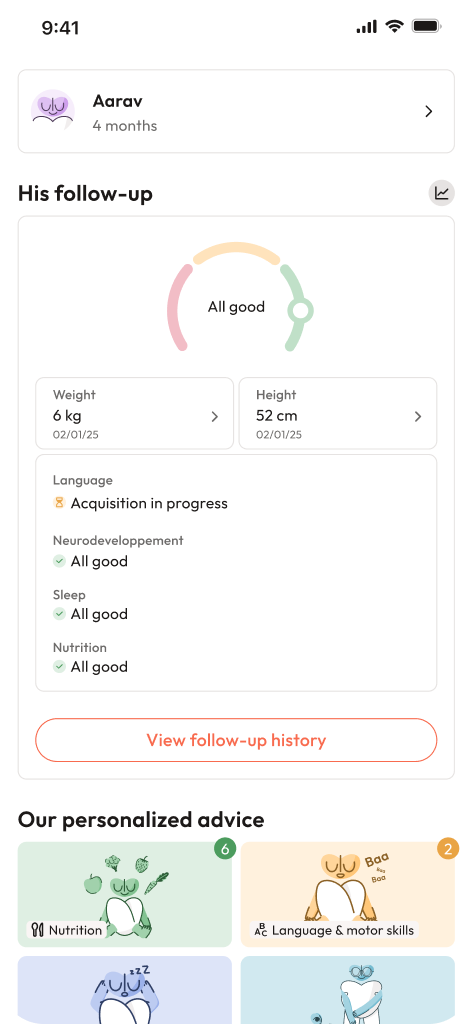
- There are professionals who can support you, and parents can also download the Heloa app for personalised guidance and free child health questionnaires.