A pregnancy pillow can feel like the missing piece when nights turn restless—hips aching, heartburn acting up, and that constant thought: “How do I get comfortable now?” As pregnancy progresses, posture shifts, ligaments soften, circulation changes, and the sleep position you used to love may suddenly feel wrong.
In Indian homes, there is one more reality: warm, humid nights and limited bed space. So the right pregnancy pillow is the one that supports your belly, back, knees, and pelvis without making you feel overheated or crowding your partner.
Pregnancy pillow basics: what it is and what it supports
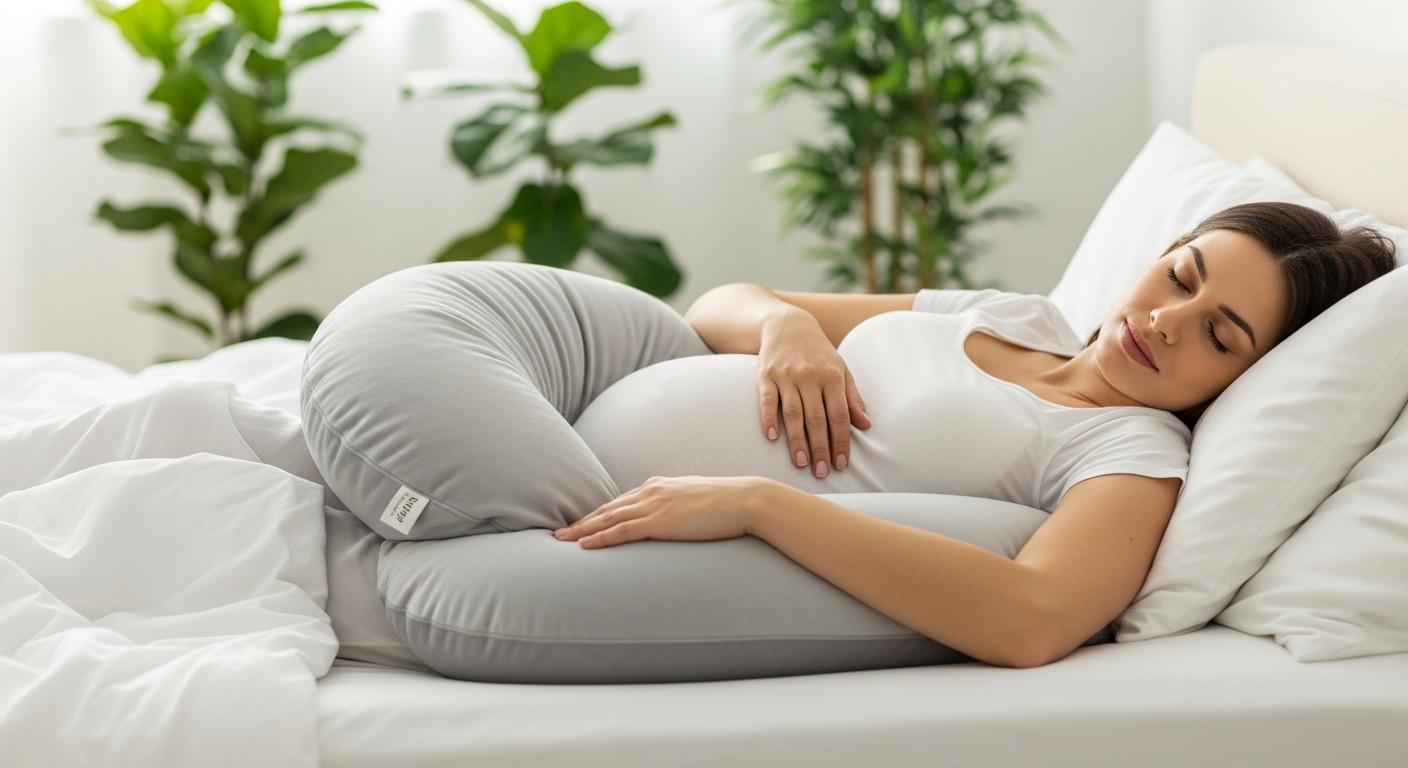
A pregnancy pillow is a supportive cushion that helps you settle into side-lying with less twisting and fewer pressure points.
Depending on the shape, a pregnancy pillow can support:

- Belly support, so the bump does not tug on your lower back
- Back support, so you feel steadier and roll less onto your back
- Hips and pelvis, by keeping the legs stacked and reducing rotation
- Knees and ankles, limiting rubbing and pressure
- Neck and shoulders, keeping the head closer to a neutral spine line
Pregnancy pillow vs maternity pillow vs body pillow
“Pregnancy pillow” and “maternity pillow” usually mean the same product. A body pillow is a general long pillow that can work well, but pregnancy-specific designs often add belly-and-back stability for side sleeping.
Pregnancy pillow vs nursing pillow
A nursing pillow is meant mainly after delivery: it supports the baby during breastfeeding or bottle-feeding and helps reduce strain on your arms, shoulders, and neck.
Some brands sell multi-use pillows. That can be convenient, but a pregnancy pillow is not a baby sleep surface.
What pregnancy does to the body, and why nights get harder
If sleep becomes lighter, or you keep changing sides repeatedly, it is often physiology.
Low back and pelvic discomfort: posture plus ligament laxity
Relaxin and progesterone increase ligament laxity. Add a changing centre of gravity, and the lumbar curve often increases.
Sensitive areas may include:
- Sacroiliac joints (where the spine meets the pelvis)
- Pubic symphysis (front joint of the pelvis)
When the top knee drops forward in side sleep, the pelvis rotates and pain can flare. A pregnancy pillow cannot change the hormonal cause, but it can reduce strain by stabilising the pelvis.
Lying flat on the back: inferior vena cava compression
In later pregnancy, the uterus may compress the inferior vena cava, a large vein returning blood to the heart. Some people then feel dizziness, nausea, palpitations, or faintness.
Side-lying, often supported by a pregnancy pillow, can feel steadier.
Circulation changes: swelling and heavy legs
Blood volume rises in pregnancy, and venous return from the legs may slow due to uterine pressure. Oedema and varicose vein discomfort may worsen by evening.
Gentle leg support can help, as long as hips and knees stay comfortable.
Reflux and heartburn at night
Progesterone can relax the lower oesophageal sphincter, and abdominal pressure increases. Lying down makes acid rise more easily.
Mild, stable upper-body elevation plus side support may reduce symptoms.
Why a pregnancy pillow can make nights more comfortable
A pregnancy pillow helps with positioning. That alone can change how you feel.
- Less spinal twisting when you lie on your side
- Better pelvic stability (often helpful in pelvic girdle pain sensations)
- Knee-to-ankle support that may ease sciatica symptoms
- A gentle “back stop” that helps you avoid ending up flat on your back
- Reflux comfort if you combine side support with mild elevation
Pregnancy pillow shapes: pick what suits your body and bed
Shape matters more than price.
Wedge pregnancy pillow
Compact and targeted:
- Under the belly for a light lift
- Behind the back as a small barrier
- Under the upper torso for reflux support
Full-length straight body pillow
Simple and flexible. Easy to hug, place between knees, or use along the back. Often the easiest choice for smaller beds.
Banana-shaped pregnancy pillow
Curved and easy to reposition. It can support belly and knees without taking over the mattress.
U-shaped pregnancy pillow
Wraparound support on both sides: head/neck, belly, back, legs. Helpful if you flip sides often. It needs space.
C-shaped pregnancy pillow
A wraparound feel with one more open side. Many parents find it supportive without the full footprint of a U.
J- or L-shaped pregnancy pillow
Long section to hug with a shorter section for back or belly support. A good compromise when bed space is tight.
Smaller targeted supports
Two small supports can be enough:
- A firm knee pillow
- A small under-belly cushion
- A lumbar cushion for sitting
How to choose the best pregnancy pillow
Start with your sleep pattern, then match support to symptoms.
Choose by sleep position
- Mostly side sleeper: straight, C, banana-shaped
- You flip often: U-shaped may reduce readjusting
- You dislike bulky pillows: wedge plus a knee pillow
Choose by symptoms
- Back or SI discomfort: back support plus between-knees support
- Sciatica: support knee-to-ankle, usually medium-firm
- Pelvic discomfort: firmer support between knees, sometimes add ankles
- Heartburn: mild torso elevation with stable side support
- Swelling: gentle calf/ankle support without hip strain
Choose by heat, washing, and sensitivity
If you sleep warm, breathable covers matter. Cotton, bamboo-derived viscose, and Tencel/lyocell often feel cooler. A removable washable cover makes routine hygiene easier.
If you are sensitive to odour, air out foam pillows in a ventilated room for 24 to 72 hours.
Materials and covers: what matters in real life
Fill affects firmness, heat, and how long support lasts.
- Memory foam: supportive, may feel warmer, often spot-clean only
- Shredded foam: adjustable, may need fluffing
- Polyfill/microfiber: soft and washable, may flatten faster
- Microbeads: mouldable and light, can shift
If your pregnancy pillow becomes permanently compressed, hip and knee alignment can worsen.
How to use a pregnancy pillow: simple setups
You may hear “sleep on the left.” Left-side lying may reduce pressure on major blood vessels and support uteroplacental blood flow. Still, the best side is the one you can maintain comfortably.
Try this order:
- Lie on your side.
- Place the pregnancy pillow between your knees.
- Add ankle support if hips still ache.
- Add gentle under-belly support.
- Keep a small pillow behind your back to reduce rolling.
For reflux, use mild, stable elevation under shoulders and upper back. Avoid steep stacking that makes you bend sharply at the waist.
For heavy legs, a small lift under calves or ankles can help, as long as it does not strain hips.
When to start using a pregnancy pillow
There is no fixed week. Many start when sleep stops feeling restorative.
- First trimester: wedge or knee pillow may be enough
- Second trimester: fuller belly support often helps
- Third trimester: prioritise stability and roll prevention
Speak to your clinician if you have severe pain, persistent tingling or numbness, dizziness, breathing discomfort when lying down, or sudden one-sided swelling.
Safety and after-birth use
For adults, a pregnancy pillow is generally safe as a positioning aid. Focus on breathability and stable positioning.
After delivery, it can still help: behind your back while sitting, between knees for side-lying rest, or under arms during feeding to reduce shoulder strain.
Baby safety boundaries are strict:
- A pregnancy pillow is not a baby sleep surface
- Do not leave baby unattended in a pillow curve
- Keep pillow material away from baby’s face and airway
- Watch overheating in warm rooms
Key takeaways
- A pregnancy pillow supports belly, back, hips, knees, and neck to reduce pressure and improve alignment.
- Pregnancy can affect ligament tension, pelvic stability, circulation, and reflux, side-lying support often makes nights smoother.
- Shape matters most: wedge for targeted relief, straight/banana/J/L for tighter spaces, U/C for wraparound support.
- Breathable covers and washable fabrics are especially helpful in hot or humid weather.
- If concerning symptoms appear, consult a clinician.
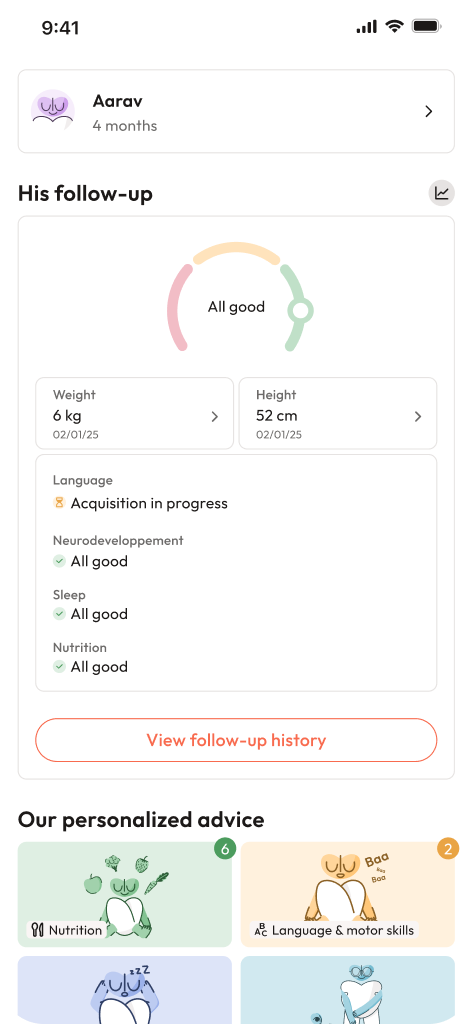
- For tailored tips and free child health questionnaires, you can download the Heloa app.