Hearing it during a routine antenatal visit can feel sudden: “Haemoglobin is a bit low.” You may immediately think of your baby’s growth, your own stamina, and that constant tiredness that everyone calls “normal pregnancy”. But is it normal… or is it Iron deficiency anemia during pregnancy?
In India, low iron stores are common even before conception (dietary gaps, menstrual losses, short intervals between pregnancies). Add the rapid expansion of blood volume in pregnancy, and the situation can tip quickly. The good news: most causes are identifiable on blood tests, and Iron deficiency anemia during pregnancy responds very well to the right treatment.
What exactly is Iron deficiency anemia during pregnancy?
Anaemia in pregnancy means there is less haemoglobin than expected. Haemoglobin is the oxygen-carrying protein inside red blood cells. Lower haemoglobin can make you feel drained, breathless, and “not yourself”.
However, not every low haemoglobin number is the same issue.

Iron deficiency vs iron deficiency anaemia (two related, different states)
- Iron deficiency: your iron stores are running low. Ferritin (the storage marker) is often low, but haemoglobin may still look “okay”. Think of it as the tank getting empty.
- Iron deficiency anaemia: there is not enough iron to make haemoglobin properly, so oxygen delivery drops. This is Iron deficiency anemia during pregnancy in the strict sense.
Many maternity teams use a haemoglobin of around 11 g/dL as a reference point for anaemia in pregnancy, with slightly different cut-offs by trimester.
Haemodilution: the pregnancy “dilution” that can mimic anaemia
Pregnancy changes the blood volume dramatically:
- Plasma volume (fluid part) increases roughly 40-50%.
- Red blood cell mass increases too, but less – around 15-25%.
So haemoglobin may fall even when you are not truly deficient. This is called physiologic haemodilution, and it supports placental circulation and helps the body cope with blood loss during delivery.
Clues that point more towards Iron deficiency anemia during pregnancy rather than dilution alone:
- Haemoglobin below trimester thresholds
- Low ferritin
- Abnormal CBC indices such as MCV (mean corpuscular volume)
- Symptoms that are strong or worsening
Why iron needs rise so much in pregnancy
You are not only “sharing nutrition”. Your body is rebuilding its own system.
- Blood volume expands.
- Red blood cell production ramps up.
- The placenta and baby pull iron for growth, including brain processes like myelination and enzyme function.
To cope, your body reduces hepcidin (a hormone that usually blocks absorption), so the gut absorbs more iron. Even then, intake and absorption often fall short – especially if reserves were low to begin with. That is why Iron deficiency anemia during pregnancy becomes more common as weeks pass.
How common is Iron deficiency anemia during pregnancy in India?
Anaemia in pregnancy is very frequent in the Indian context, and it tends to increase in the second and third trimester. Many clinicians use a practical rule of thumb: by late pregnancy, a significant proportion of women will show low haemoglobin.
Early detection can make daily life easier: better energy, fewer palpitations, improved exercise tolerance. It also gives more time to correct Iron deficiency anemia during pregnancy before delivery.
Causes and risk factors (iron is common, but it is not the only explanation)
Starting pregnancy with low iron stores
Common reasons include:
- Heavy menstrual bleeding before pregnancy
- Past history of anaemia
- Poor dietary intake of iron-rich foods
- Short interval between pregnancies (less time to rebuild iron)
Dietary patterns: vegetarian diets and low heme iron intake
Many Indian families follow vegetarian diets. Vegetarian pregnancy can be healthy, but remember:
- Heme iron (from meat/fish) is absorbed more easily.
- Non-heme iron (from plant sources) is absorbed less efficiently and is affected by inhibitors.
Plant sources that help (very “Indian kitchen” friendly):
- Rajma, chana, whole dals
- Soy, tofu, sprouts
- Ragi, bajra, iron-fortified cereals
- Dates, raisins, dried apricots
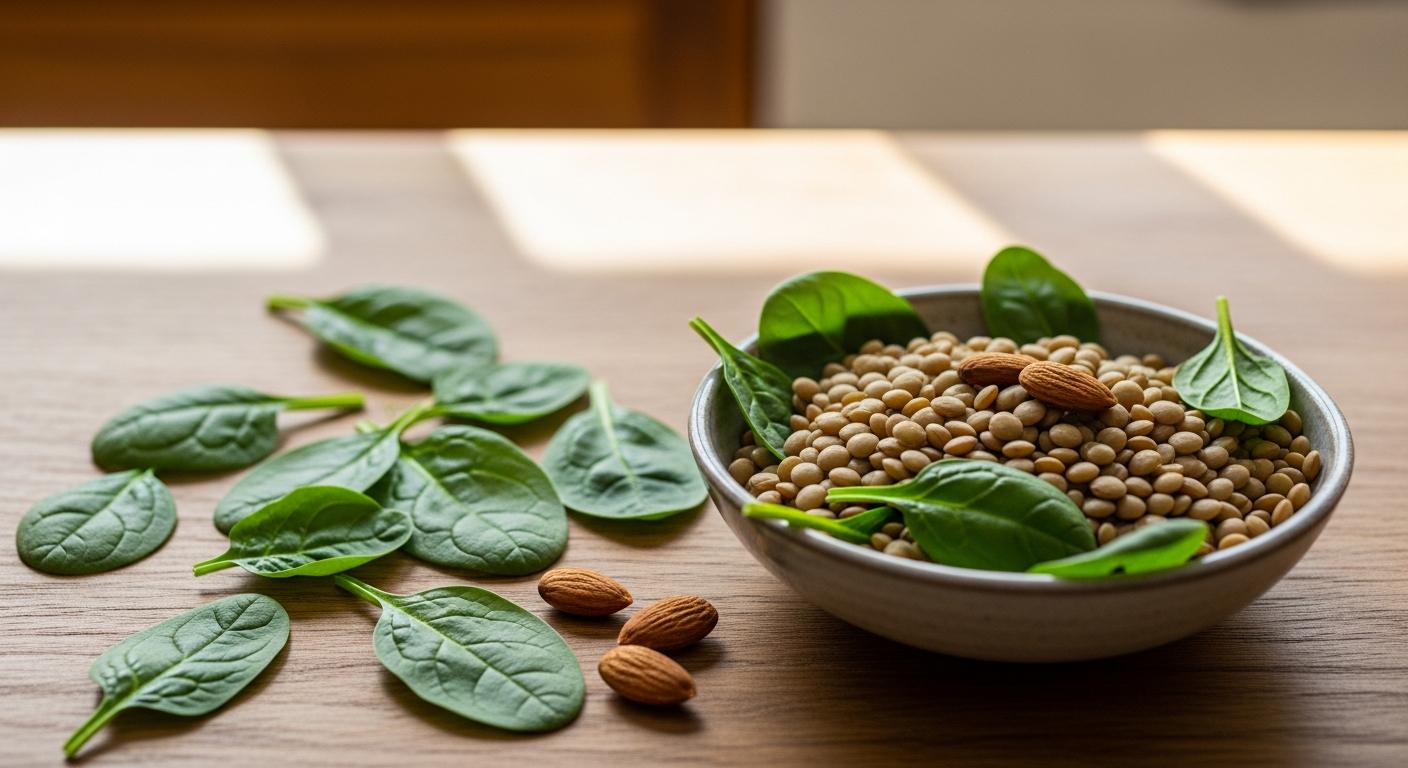
- Leafy greens (palak, methi), though absorption varies
A small trick with a big payoff: pair iron foods with vitamin C.
- Dal + squeeze of lemon
- Chana chaat + amla or lemon
- Palak dishes + tomatoes
Increased need or losses
Risk rises with:
- Twin pregnancy
- Bleeding in pregnancy
- Frequent pregnancies
- Past postpartum haemorrhage
Reduced absorption (when tablets do not seem to work)
Iron may not absorb well with:
- Coeliac disease
- Inflammatory bowel disease
- Prior bariatric surgery
Also, timing matters. Iron taken close to these may not absorb well:
- Milk, curd, paneer, or calcium tablets
- Tea or coffee (tannins)
- Antacids
Often, you do not need to stop them – just separate them by around 2 hours.
Folate (B9) and vitamin B12 deficiency
Not all anaemia is iron-related.
- Folate deficiency can cause macrocytic anaemia (large red cells). Folate is also used to reduce the chance of neural tube defects.
- Vitamin B12 deficiency is more likely with strict vegetarian diets without supplementation, malabsorption, or after bariatric surgery.
B12 deficiency may come with tingling, numbness, or balance changes – report these promptly.
Haemoglobinopathies (like thalassemia trait)
In India, thalassemia trait is not rare. It can cause microcytosis (small red cells) that looks like iron deficiency. This is why doctors may order haemoglobin electrophoresis if the CBC pattern does not match ferritin.
Symptoms: what you might notice (and what gets dismissed as “just pregnancy”)
You may wonder: “Is this tiredness normal?” Sometimes yes. Sometimes it is Iron deficiency anemia during pregnancy.
Common symptoms
- Persistent fatigue that does not improve with rest
- Breathlessness while climbing stairs
- Dizziness, light-headedness
- Headaches
- Pallor (inner eyelids look pale)
Subtle signs
- Palpitations or fast pulse (tachycardia)
- Low concentration, “foggy” feeling
- Brittle nails, hair changes
- Restless legs syndrome (sometimes linked with low iron)
- Pica (craving ice, mud, chalk – needs medical attention)
Seek care quickly if you have
- Breathlessness at rest
- Fainting spells
- Chest pain
- Persistent, worsening palpitations
Screening and diagnosis: the blood tests that clarify the cause
A CBC (Complete Blood Count) is commonly checked early in pregnancy and again later (often around 24-28 weeks). Extra checks may be done if risk is higher or symptoms appear.
Haemoglobin thresholds by trimester (common reference points)
Commonly used cut-offs include:
- First trimester: Hb < 11 g/dL
- Second trimester: Hb < 10.5 g/dL
- Third trimester: Hb < 11 g/dL
CBC details: more than haemoglobin
CBC often includes:
- Haemoglobin and haematocrit
- MCV (cell size)
- MCH (haemoglobin per cell)
Patterns:
- Microcytic (MCV low): often iron deficiency, sometimes thalassemia
- Macrocytic (MCV high): folate or B12 deficiency
- Normocytic: dilution, early deficiency, inflammation, mixed causes
Ferritin and iron studies
Ferritin reflects stored iron. In pregnancy, ferritin below roughly 30 microg/L (ng/mL) often suggests depleted stores.
Important point: ferritin rises in inflammation. If CRP is high, ferritin may look normal even when iron is low. Doctors may then add:
- Serum iron
- Transferrin or TIBC
- TSAT (transferrin saturation)
If results do not fit: targeted tests
Depending on your history:
- Folate and B12 levels
- CRP
- Haemoglobin electrophoresis
- Peripheral smear
Severity and treatment goals
Doctors often describe severity like this:
- Mild: 10.0-10.9 g/dL
- Moderate: 7.0-9.9 g/dL
- Severe: < 7.0 g/dL
The number is not everything. Symptoms, heart rate, and how close you are to delivery also matter.
Treatment aims:
- Improve haemoglobin before birth where possible
- Refill iron stores (ferritin recovery)
- Reduce need for emergency interventions around delivery
Risks if Iron deficiency anemia during pregnancy is not corrected
For the mother
- More fatigue and breathlessness
- Increased palpitations
- Lower tolerance of blood loss during delivery
- Higher chance of needing IV iron or blood transfusion if levels are very low
- Slower postpartum recovery
For the baby
Severe, prolonged maternal anaemia is linked with:
- Preterm birth
- Low birth weight
- Low newborn iron stores in some situations
Many factors influence outcomes, but treating Iron deficiency anemia during pregnancy is a practical step that supports both mother and baby.
Treatment with oral iron (tablets or syrup)
When oral iron is a good first step
For most people, oral iron is the first choice. Prenatal vitamins may contain iron, but often not enough to correct established deficiency.
Elemental iron dose: prevention vs treatment
Common clinical ranges:
- Prevention in higher-risk situations: 30-40 mg elemental iron/day
- Treatment of confirmed Iron deficiency anemia during pregnancy: often 60-100 mg elemental iron/day, adjusted to tolerance and response
Your doctor will decide based on haemoglobin, ferritin, and trimester.
Forms and side effects (and how to improve tolerance)
Common forms include ferrous sulphate, ferrous fumarate, and ferrous gluconate.
Possible side effects:
- Nausea, acidity
- Constipation or loose stools
- Dark stools (expected)
If side effects are tough:
- Changing the salt or formulation may help
- Taking it after a small snack may reduce nausea
- Ask whether alternate-day dosing suits your situation
How to take iron for better absorption
- Take with vitamin C (lemon water, orange, amla)
- Keep a 2-hour gap from tea or coffee and calcium-rich foods or supplements
A very Indian reality check: morning chai is beloved. If you cannot skip it, just separate it from the iron tablet.
Monitoring response
Reticulocytes may rise within about a week. Haemoglobin typically rises over the next few weeks.
A common approach is repeating CBC (and sometimes ferritin) after 4-6 weeks.
If haemoglobin does not improve, doctors reassess:
- How regularly iron is taken
- Timing with milk, tea, or antacids
- Malabsorption or ongoing bleeding
- Another diagnosis (B12 or folate deficiency, thalassemia trait, inflammation)
Intravenous (IV) iron in pregnancy
IV iron may be discussed when:
- Oral iron is not tolerated
- Absorption is poor
- Response is inadequate
- Rapid correction is needed late in pregnancy
It is given in a clinic or hospital setting with monitoring.
Blood transfusion considerations
Blood transfusion is not a routine treatment for iron deficiency. It may be considered if anaemia is severe and symptomatic, or if there is active bleeding. The decision depends on gestational age, haemoglobin level, symptoms, and clinical stability.
Food strategies that support iron levels (Indian-friendly)
Heme and non-heme iron
- Heme iron: meat, fish, chicken (better absorbed)
- Non-heme iron: dals, legumes, soy, ragi, bajra, leafy greens, small amounts of jaggery, fortified foods
Pairing ideas:
- Rajma + salad with lemon
- Idli or dosa with sambar (lentils) + tomato chutney
- Palak paneer + squeeze of lemon on the side
Managing nausea and aversions
Small, frequent options may be easier:
- Moong dal soup
- Sprouts chaat with lemon
- Fortified cereal with fruit
If tablets worsen nausea, talk to your doctor about timing, dose, or formulation rather than stopping.
Postpartum follow-up: recovery and rebuilding iron stores
After delivery, especially after significant blood loss, anaemia can continue. Symptoms like extreme fatigue or breathlessness may persist.
Many clinicians advise continuing iron for several weeks postpartum and rechecking haemoglobin (and sometimes ferritin) to confirm stores are replenished.
To remember
- Iron deficiency anemia during pregnancy is common in India and often begins with low ferritin even before conception.
- Not every low haemoglobin is due to iron, haemodilution, B12 or folate deficiency, and thalassemia trait can also play a part.
- CBC + ferritin (and sometimes CRP and TSAT) help confirm the cause.
- Oral iron is usually first-line, IV iron is an option when tablets fail or time is short.
- Postpartum follow-up supports recovery and helps restore iron stores.
If you feel uncertain about symptoms or test results, your obstetrician, midwife, or physician can tailor care to your trimester and medical history. You can also download the Heloa app for personalised advice and free child health questionnaires.
Further reading: