Hearing “your hemoglobin is low” can land like a small shock. Is the baby getting enough oxygen? Is this why you feel breathless on the stairs, or why your heart seems to race at night? And why do some pregnant people feel absolutely fine—even with the same lab result?
Iron deficiency anemia during pregnancy is common, often treatable, and rarely a reason to panic. The trick is to name what’s happening: normal pregnancy blood dilution, low iron stores, a true anemia from iron shortage, or—less often—another nutrient deficiency or a genetic red blood cell condition. Once the cause is clear, the plan becomes concrete: restore oxygen-carrying capacity, rebuild iron reserves, and make late pregnancy and postpartum recovery smoother.
Iron deficiency vs “pregnancy dilution”: what’s normal, what’s not
Pregnancy remodels the blood.
- Plasma volume (the liquid part) rises a lot—roughly 40–50%.
- Red blood cell mass rises too, but less—roughly 15–25%.
That mismatch creates physiologic hemodilution (sometimes called “physiologic anemia of pregnancy”). Hemoglobin can drop a bit even when everything is going as it should.


So when does it become Iron deficiency anemia during pregnancy?
Iron deficiency (low stores) vs iron deficiency anemia (low hemoglobin)
- Iron deficiency: iron “stash” is running down. Lab clue: low ferritin. Hemoglobin may still be normal.
- Iron deficiency anemia: iron is too low to make enough hemoglobin (the protein that carries oxygen). Oxygen delivery dips, and symptoms may appear.
You may wonder: “But I take a prenatal vitamin—how can I be low?” Prenatals often maintain, but they don’t always replenish when stores were already modest before pregnancy.
Why iron needs rise so sharply in pregnancy
Iron demand climbs for three big reasons:
- Your blood volume expands, and you produce more red blood cells.
- The placenta and baby take iron for growth (including brain development: myelination, mitochondrial enzymes, and neurotransmitter pathways).
- Your body lowers hepcidin (a hormone that usually blocks iron absorption), so the intestine can absorb more.
Even with lower hepcidin, many people can’t keep up—especially if ferritin started low.
Causes and risk factors: iron is common, but it’s not the only story
Iron deficiency anemia during pregnancy often has a straightforward explanation: not enough stored iron for the pregnancy “surge.” Still, clinicians look for context.
Starting pregnancy with low ferritin
Common reasons include menstrual blood loss, prior iron deficiency, or past pregnancies. A short interval between pregnancies can leave little time to rebuild reserves.
Diet patterns (vegetarian/vegan included)
A vegetarian or vegan pregnancy can be perfectly healthy, but it changes the math:
- Heme iron (meat/fish) is absorbed more efficiently.
- Non-heme iron (plants) is less well absorbed and is more sensitive to inhibitors.
Helpful pairings:
- Lentils + bell peppers
- Chickpeas + lemon
- Tofu + broccoli
Increased needs or losses
Risk rises with:
- Twin/multiple pregnancy
- Bleeding during pregnancy
- Past anemia
- Heavy menstrual bleeding before conception
Reduced absorption (the “I’m taking iron but it’s not working” scenario)
Iron absorption can be limited by:
- Celiac disease
- Inflammatory bowel disease
- Prior bariatric surgery
And timing matters. Calcium, tea/coffee (tannins), and antacids can reduce absorption if taken close to iron.
Folate (B9) and vitamin B12 deficiency
Not every low hemoglobin is iron-related.
- Folate deficiency can cause macrocytic (large-cell) anemia.
- Vitamin B12 deficiency is more likely with an unsupplemented vegan diet, malabsorption, or post-bariatric surgery.
If there are neurological signs (tingling, numbness, balance changes), contact your maternity team promptly.
Hemoglobinopathies (thalassemia, sickle cell disease)
Some genetic conditions create microcytosis (small red cells) that can look like iron deficiency. That’s why ferritin and sometimes hemoglobin electrophoresis are used—to avoid unnecessary iron when stores are adequate.
Symptoms: when “normal pregnancy” overlaps with anemia
Pregnancy already brings fatigue and breathlessness, which can blur the picture. Still, Iron deficiency anemia during pregnancy has patterns worth noticing.
Common symptoms
- Persistent, disproportionate fatigue
- Pallor (paler eyelids, lips, nail beds)
- Shortness of breath on exertion
- Dizziness, headaches
Subtle clues
- Palpitations or tachycardia (fast heart rate)
- Reduced concentration (“brain fog”)
- Lower exercise tolerance
- Brittle nails, hair changes
- Restless legs syndrome (sometimes associated with low iron)
- Pica (unusual cravings like ice)
Seek care quickly if…
- Breathlessness at rest or with minimal activity
- Fainting or near-fainting
- Chest pain
- Rapidly worsening palpitations
These symptoms can have several causes in pregnancy, and they deserve prompt assessment.
Screening and diagnosis: the tests that clarify the cause
Most maternity teams screen with a complete blood count (CBC) early in pregnancy and again later (often around 24–28 weeks). Extra checks may be done if risk is higher or symptoms appear.
Hemoglobin thresholds by trimester (common reference points)
Cutoffs vary slightly, but many clinicians use:
- 1st trimester: Hb < 11 g/dL
- 2nd trimester: Hb < 10.5 g/dL
- 3rd trimester: Hb < 11 g/dL
CBC details: hemoglobin is not the only clue
A CBC includes:
- Hemoglobin, hematocrit
- MCV (mean corpuscular volume: red cell size)
- MCH (mean corpuscular hemoglobin)
Typical patterns:
- Microcytic anemia (MCV < ~80 fL): often iron deficiency, sometimes thalassemia
- Macrocytic anemia (MCV > ~100 fL): suggests folate/B12 deficiency
- Normocytic: can reflect hemodilution, early deficiency, inflammation, or mixed causes
Ferritin and iron studies
Ferritin is the storage marker—think “iron savings account.” In pregnancy, ferritin below about 30 µg/L (ng/mL) often signals depleted stores.
One nuance: ferritin rises with inflammation. If CRP is elevated, clinicians may add:
- Serum iron
- Transferrin (or TIBC)
- Transferrin saturation (TSAT)
Severity and goals: what care teams aim for
Severity ranges are often:
- Mild: 10.0–10.9 g/dL
- Moderate: 7.0–9.9 g/dL
- Severe: < 7.0 g/dL
Numbers matter, but so do symptoms and how close delivery is.
Treatment goals typically include:
- Raising hemoglobin before birth when possible
- Rebuilding iron stores (ferritin recovery)
- Improving daily functioning and postpartum resilience
Why treatment matters: risks when anemia persists
For the pregnant parent
Iron deficiency anemia during pregnancy can lead to:
- More intense fatigue and breathlessness
- Compensatory tachycardia
- Reduced tolerance to expected blood loss at birth
- Higher likelihood of needing urgent interventions (including transfusion)
- Harder postpartum recovery
For the baby
When anemia is significant and prolonged, studies show associations with:
- Preterm birth
- Low birth weight or fetal growth restriction
- Lower newborn iron stores in some cases
Research also explores links with later neurodevelopment, many factors influence these outcomes, but correcting iron deficiency remains a practical and safe lever.
Oral iron: the usual first step
For most people, oral iron is first-line for Iron deficiency anemia during pregnancy.
Prenatal vitamins: why they may not be enough
Prenatals often contain iron, but the dose may be too low to correct an established deficit—especially when ferritin is already depleted.
Typical elemental iron dosing (prevention vs treatment)
Plans vary by country and individual profile, but common ranges are:
- Prevention in higher-risk situations: 30–40 mg elemental iron/day
- Treatment of confirmed iron deficiency anemia: 60–100 mg elemental iron/day
Your clinician may adjust dose, frequency, or formulation to match tolerance and lab response.
Forms and side effects
Common salts:
- Ferrous sulfate
- Ferrous fumarate
- Ferrous gluconate
Common side effects:
- Nausea, stomach discomfort
- Constipation or diarrhea
- Dark stools (expected)
If side effects are strong, options include switching salt, changing timing, or taking with a small snack (if fasting worsens nausea).
Absorption: one timing rule that often fixes the problem
To absorb iron better:
- Pair with vitamin C (citrus, berries, peppers)
- Keep iron away from calcium, tea/coffee, and antacids
A practical rhythm: aim for about 2 hours between iron and calcium/tea/coffee.
Monitoring response: what “working” looks like
Many clinicians recheck blood tests after 4–6 weeks.
- Reticulocytes (young red blood cells) can rise within about a week.
- Hemoglobin typically rises over the following weeks.
If hemoglobin doesn’t rise as expected, the team usually revisits:
- Adherence (side effects often interrupt dosing)
- Timing with calcium/tea/coffee/antacids
- Malabsorption conditions
- Ongoing blood loss
- Another diagnosis (inflammation, folate/B12 deficiency, hemoglobinopathy)
IV iron: when faster or better-tolerated replacement is needed
IV iron may be offered when:
- Oral iron isn’t tolerated despite adjustments
- Malabsorption is likely
- Response is insufficient
- There’s little time before birth and anemia is significant
It’s given in a healthcare setting with monitoring, the hemoglobin response is often faster than oral therapy.
Blood transfusion: when it enters the conversation
Transfusion is not a routine treatment for iron deficiency. It may be discussed if anemia is severe and symptoms are poorly tolerated, or if there is active bleeding. Decisions depend on gestational age, hemoglobin level, and clinical stability.
Food strategies: supporting iron day to day
Food won’t always correct established Iron deficiency anemia during pregnancy on its own, but it can support treatment and help maintain stores.
Heme vs non-heme iron (simple examples)
- Heme iron: red meat, poultry, fish (better absorbed)
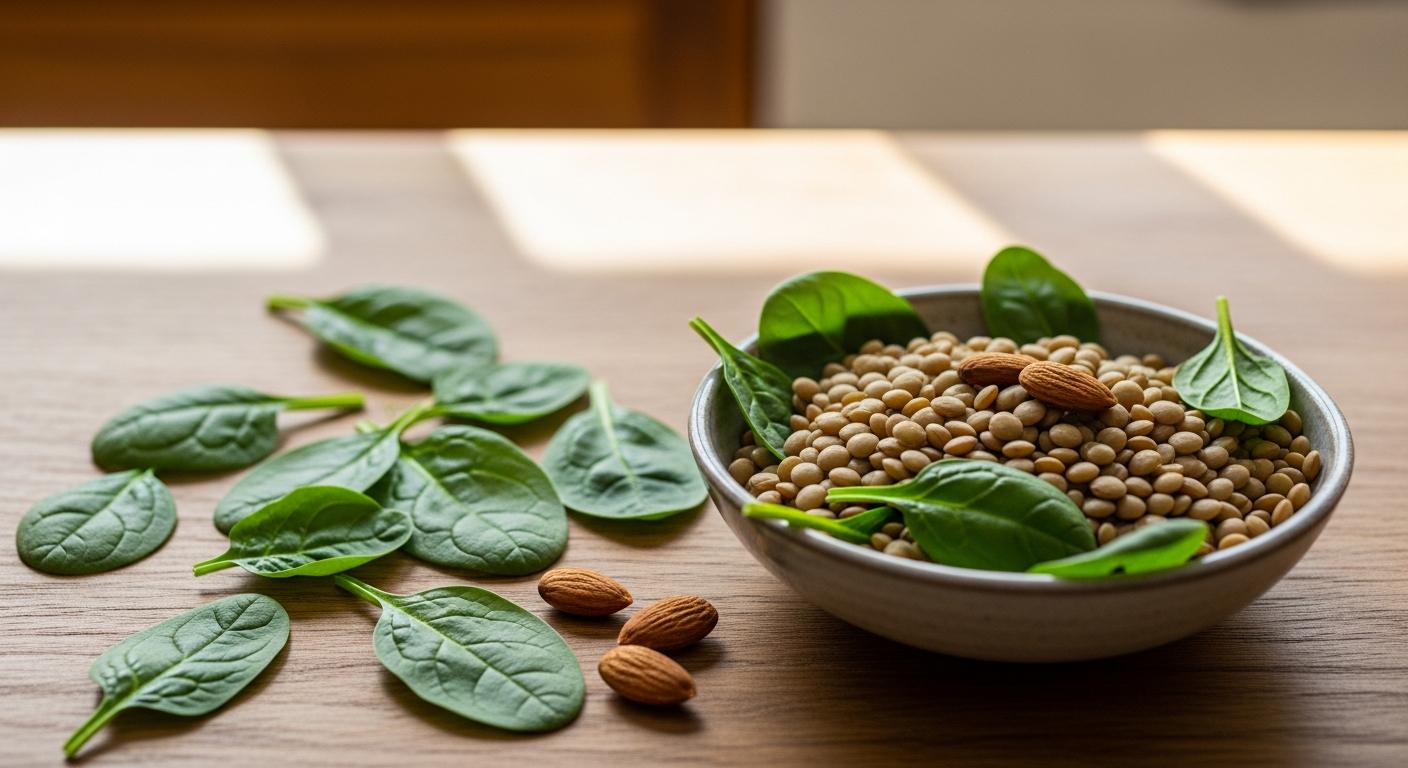
- Non-heme iron: lentils, beans, chickpeas, tofu, spinach, quinoa, dried apricots, fortified cereals
Helpful combos:
- Fortified cereal + strawberries
- Hummus + lemon + peppers
- Fish or meat + broccoli
If nausea or aversions get in the way
Smaller, frequent options may sit better than large meals:
- A small bowl of lentil soup
- A smoothie with greens plus an orange
- Fortified cereal with a vitamin C fruit
If supplements worsen nausea, ask about changing schedule or formulation rather than stopping.
Postpartum follow-up: rebuilding after birth
Blood loss at delivery can leave iron stores even lower. Postpartum anemia can feel like a heavy fog: fatigue, breathlessness, slower recovery.
Many care teams advise continuing iron for several weeks after birth, then checking hemoglobin (and sometimes ferritin) to confirm stores are truly rebuilt—especially after hemorrhage, cesarean birth, or if symptoms persist.
Key takeaways
- Iron deficiency anemia during pregnancy is common and often improves significantly with the right plan.
- Pregnancy “blood dilution” is normal, ferritin and CBC indices help distinguish dilution from true deficiency.
- Symptoms can be subtle (fatigue, palpitations, restless legs, pica) and deserve discussion if persistent.
- Oral iron is usually first-line, timing with calcium/tea/coffee can change results dramatically.
- IV iron may be an option when oral iron fails or time is short before birth.
- Postpartum follow-up matters—rebuilding iron stores supports recovery.
If questions linger or symptoms escalate, your midwife, obstetrician, or GP can tailor testing and treatment. You can also download the Heloa app for personalized guidance and free child health questionnaires.
Questions Parents Ask
Can iron deficiency anemia harm my baby’s brain development?
Rassurez-vous: in most pregnancies, once iron deficiency is identified and treated, outcomes are reassuring. Iron supports fetal brain development, so a long-lasting, significant deficiency may be linked with lower newborn iron stores and, in some studies, later developmental differences. The positive part: treatment during pregnancy (and follow-up after birth if needed) is a practical way to support both you and your baby. If you’re worried, you can ask your care team whether ferritin and hemoglobin are improving as expected.
Why is my hemoglobin low if my ferritin is normal?
This situation can feel confusing, and it’s a very common question. A “normal” ferritin can point toward physiologic hemodilution (blood dilution), inflammation (ferritin can rise when the body is inflamed), or a non-iron cause such as folate/B12 deficiency or a hemoglobin variant like thalassemia trait. It may be helpful to discuss the full CBC (MCV/MCH), CRP, and sometimes additional iron studies or hemoglobin electrophoresis, so the plan matches the true cause.
Can I take iron every other day instead of daily?
For some parents, yes—especially when nausea or constipation makes daily dosing hard. Alternate-day iron can be easier to tolerate and may still work well for absorption in certain situations. Your maternity team can help choose the rhythm and dose that fits your labs, your symptoms, and how close you are to delivery.
Further reading: