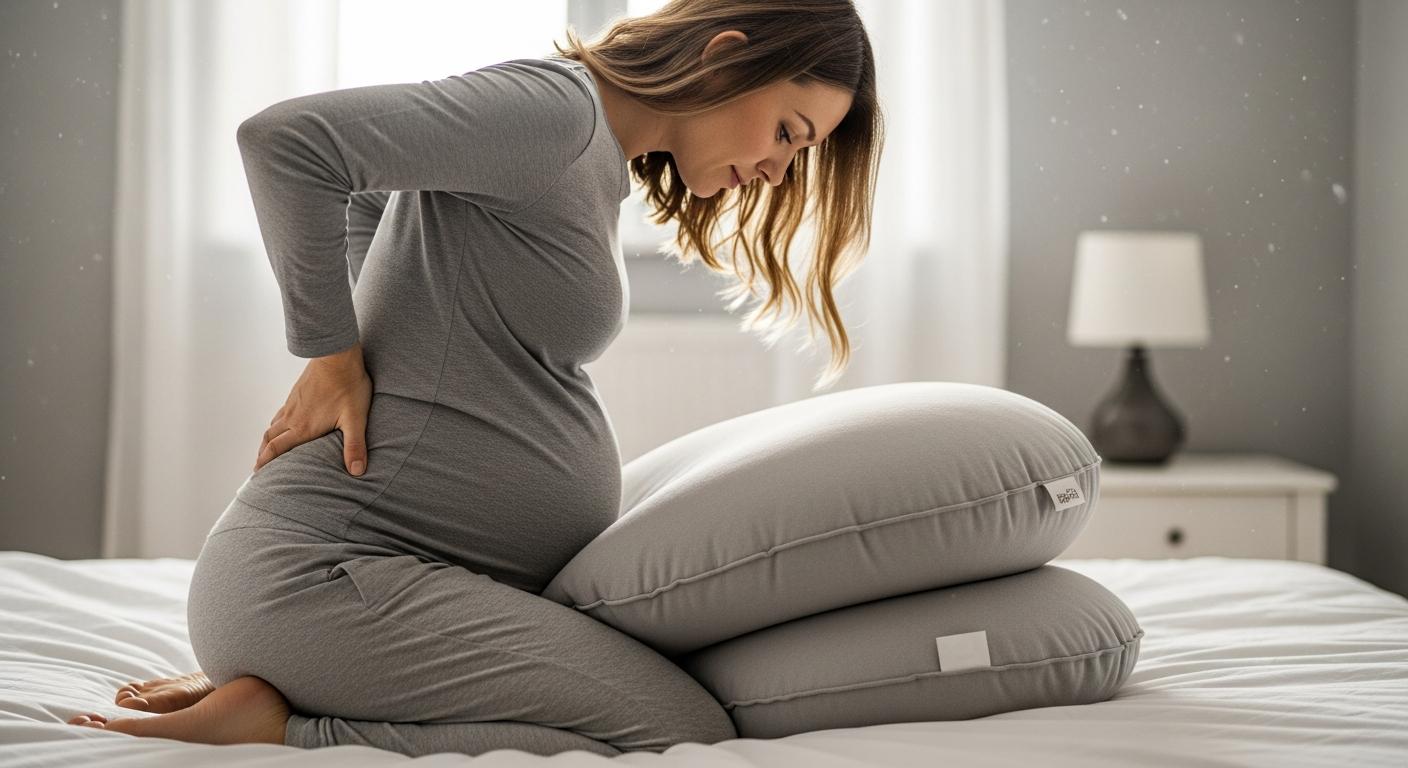
Sex during pregnancy can bring up very real questions—especially when your body is changing week by week. Will there be pressure on the bump? Why does a familiar angle suddenly feel uncomfortable? If doggy style pregnant is something you and your partner are considering, the aim is simple: comfort first, gentle pacing, and medical safety based on your own pregnancy.
Doggy style pregnant: what it means during pregnancy
What “doggy style pregnant” typically involves (non-graphic)
In everyday terms, doggy style pregnant usually means rear-entry sex where the pregnant partner is on hands-and-knees, on forearms, or leaning forward with support (bed, pillows, a sturdy chair, or a firm surface). Many couples like it because it can avoid direct pressure on the abdomen and makes it easier to control depth and angle.
Think of it as a supported arrangement—your body can soften, your breathing can stay steady, and you can pause any time.
Why it can feel different than before (belly, posture, joints, circulation, cervix)
Pregnancy changes mechanics and tissues.

- The growing belly shifts your centre of gravity, so balance may feel off.
- Hormones (especially relaxin) increase joint laxity—the hips, pelvis, and lower back can feel more sensitive.
- The pelvis may tilt differently, too much lower-back arch can increase strain.
- Blood volume rises, some women notice vulvar heaviness or vulvar varicosities (varicose veins around the vulva).
- The cervix becomes more vascular, so deep contact can cause brief pain and sometimes light spotting.
- Fatigue, nausea, reflux, and nasal congestion can make exertion feel tougher.
- Vaginal dryness can happen too, increasing friction.
If something feels “not right” (sharp pain, strong pressure, dizziness), pause and adjust.
Reassuring facts: baby, cervix, mucus plug, and waters
Penetration cannot “reach” the baby in an uncomplicated pregnancy. The baby is protected by the uterine muscle, the amniotic sac, and fluid. The cervix stays closed and is sealed by the mucus plug, helping reduce upward spread of germs.
Sex does not cause miscarriage in a normally progressing pregnancy. If there are specific risks—placenta problems, preterm labour risk, ruptured membranes—your clinician may advise restrictions.
How to keep belly pressure off while maintaining comfort
With doggy style pregnant, comfort often improves with support and alignment.
- Use pillows/rolled towels to support the lower belly and hips.
- Keep a neutral spine, a small pillow under the chest can help.
- Choose a stable base (a firm mattress usually feels better).
- Add support under knees and forearms.
A simple check: if you can breathe calmly and speak normally, the setup is usually reasonable.
Is doggy style safe while pregnant?
When it’s generally considered okay in a low-risk pregnancy
In an uncomplicated pregnancy, sex is usually possible in any trimester if it remains comfortable and you haven’t been advised to avoid penetration.
With doggy style pregnant, many couples prefer a gentler rhythm and shallower depth.
When extra medical clearance can be helpful
Check with your obstetrician or midwife if you have complications or prior advice to limit activity. Clearance is especially helpful if there is:
- A history of preterm birth or symptoms suggesting early labour
- A known short cervix or cervical changes
- A cerclage (often, penetration is discouraged)
- Low-lying placenta or placenta previa
- Any unexplained bleeding
- Pain that happens consistently with penetration
If your provider says “pelvic rest”, clarify what that means.
When it may be avoided
Penetrative sex is commonly avoided with:
- Placenta previa/low-lying placenta, especially with bleeding
- High risk of preterm labour or regular contractions
- Cervical insufficiency and/or cerclage
- Ruptured membranes or PPROM
- Active vaginal bleeding
- Untreated STIs or active genital infections/lesions
- Severe pelvic girdle pain (including SPD)
Doggy style pregnant by trimester
First trimester: nausea, fatigue, cramps, and gentle pacing
Early pregnancy can bring nausea, breast tenderness, fatigue, and occasional crampy sensations.
If you try doggy style pregnant in the first trimester:
- Keep it shorter and slower
- Prefer forearm support
- Start with shallow depth
- Use extra lubrication if needed
Mild uterine tightening can happen with arousal or orgasm. Pain, bleeding, or persistent cramps deserve a call.
Second trimester: belly growth, balance changes, and adding support
Many find the second trimester easier physically.
Helpful adjustments for doggy style pregnant:
- Belly/chest pillows for alignment
- A stable surface to lean on
- Smaller movements and shallow depth
If you feel sacroiliac pain, keep hips level.
Third trimester: breathing space, softer depth, shorter sessions
By the third trimester, reflux, breathlessness, and pelvic heaviness may make hands-and-knees uncomfortable.
If you attempt doggy style pregnant late in pregnancy:
- Prioritise stability and softness
- Use multiple pillows (belly, chest, knees)
- Keep sessions shorter
- Choose more superficial penetration
Safety checks for a calmer, more comfortable experience
Managing depth and angle to stay gentle
- Start shallow and stay there unless you truly want more.
- Use smaller, slower movements, avoid deep thrusting.
- Adjust angle by changing hip height (pillow under hips).
If it feels “too deep”, stop and reset.
Pace, exertion, overheating, and taking breaks
- Keep the room cool, take water breaks.
- Pause if you feel flushed, dizzy, or out of breath.
- If heartburn is an issue, avoid a heavy meal beforehand.
Communication and consent: simple check-ins
- Agree on words like “slow”, “stop”, “shallower”, “softer”, “pause”.
- Check in more often when trying a new angle.
Comfort modifications that keep the same feel with less strain
Pillow and wedge setups (belly, knees, hips, chest/shoulders)
- Belly/hips: firm pillow reduces downward pull.
- Chest: small pillow helps avoid collapsing into the lower back.
- Knees: pillow under/between knees supports alignment.
- Hips: wedge can fine-tune angle.
Supported hands-and-knees options to reduce low-back and wrist load
- Folded towels under wrists
- Switch to forearms
- Lean forward onto a stable surface
Side-lying “modified doggy”
Side-lying rear-entry can reduce strain.
- Lie on your side with a pillow between thighs
- Keep hips stacked
- Ask for shallow depth and slower movement
Common discomforts and how to adjust
Low back pain
- Lift the chest slightly with a pillow
- Think “long spine”
- Reduce movement size
Hip and pelvic discomfort (including pelvic girdle pain/SPD)
- Keep knees and hips aligned
- Pillow between knees
- Avoid twisting and wide knee spacing
Feeling “too deep” or cervix-sensitive pain, and spotting
- Change angle by raising/lowering hips
- Limit depth and shorten movements
Light spotting can occur because the cervix is more vascular. If spotting repeats, becomes heavier, or comes with pain, contact your clinician.
Dizziness, shortness of breath, heartburn, overheating
Stop, sit up or switch to side-lying, slow breathing, cool down, sip water. If symptoms don’t improve quickly, stop for the day and discuss with your care team.
Haemorrhoids or rectal pressure
Prefer side-lying or a more upright lean, keep movements gentle.
Vaginal dryness or irritation
Use a simple water-based lubricant (avoid fragrance and alcohol). If burning, itching, unusual discharge, or strong odour appears, pause and get checked.
Hygiene, infection prevention, and practical boundaries
- Use condoms if there is any STI risk.
- Avoid sex with active infections/lesions until treated.
- Don’t move from anal to vaginal penetration without washing and changing condoms.
- Avoid practices that could push air into the vagina.
Contraindications and warning signs to take seriously
Symptoms that mean stop immediately
Stop and contact a healthcare provider promptly if you have:
- Vaginal bleeding
- A gush or steady leak of fluid
- Severe pelvic/abdominal/back pain
- Fever or chills
- Faintness or near-fainting
Contractions after sex or orgasm
Short, irregular tightenings can be Braxton Hicks. Call if contractions are regular, painful, increasing, don’t settle with rest, or occur before 37 weeks—especially with bleeding or fluid leak.
Waters breaking, pelvic pressure after sex, and semen-related tightenings
Sex isn’t known to “make” waters break in a low-risk pregnancy, but if you notice a gush or steady trickle of clear fluid, contact your maternity team the same day.
Pelvic heaviness afterwards can happen due to increased blood flow and vulvar varicosities. Resting on your side and hydrating often helps.
Semen contains prostaglandins and orgasm can trigger uterine tightenings. If tightenings become regular or painful (particularly before 37 weeks), contact your care team.
Decreased fetal movement after sex
If there’s a sustained decrease versus your usual pattern, lie on your side for a kick count (often, 10 movements within 2 hours is reassuring). If you can’t reach your usual pattern, contact your maternity team the same day.
Best alternatives if doggy style isn’t comfortable
- Side-lying sex (spooning)
- Woman-on-top for depth control
- Seated rear-entry for support
- Non-penetrative intimacy (kissing, massage, skin-to-skin, mutual touch)
Pelvic floor and breathing tips for comfort
- Diaphragmatic breathing: slow inhale, longer exhale to soften belly and pelvic floor.
- If you notice guarding, try a gentle pelvic floor “release” on the exhale.
- Aftercare: hydrate, cool down, gentle stretches if they feel good.
Key takeaways
- Doggy style pregnant can be possible in a low-risk pregnancy if it remains comfortable and gentle.
- Stop and seek advice for bleeding, fluid leak, fever/chills, faintness, severe pain, or regular painful contractions.
- There are professionals to guide you. For personalised tips and free child health questionnaires, download the Heloa app.