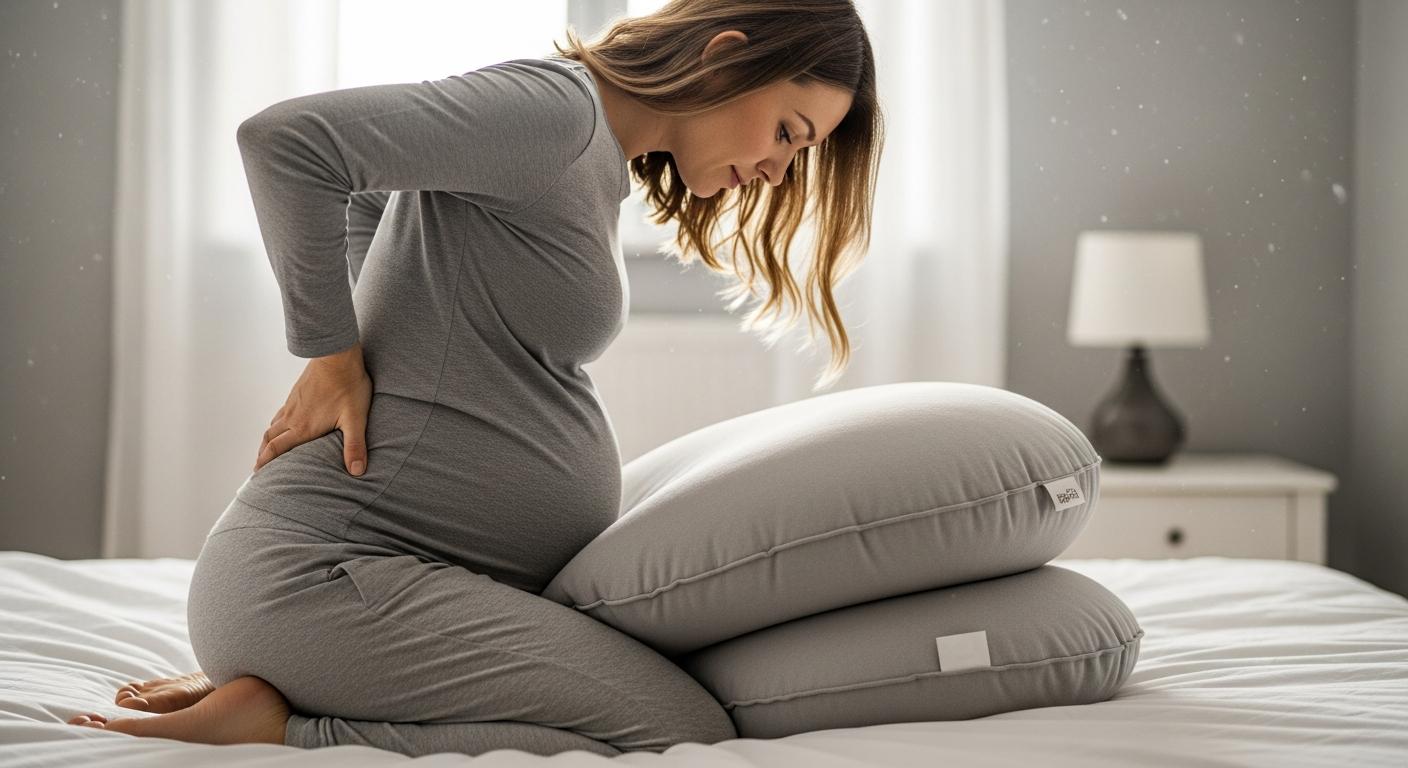
Sex during pregnancy can raise practical questions: Will it put pressure on the belly? Why does deep penetration suddenly feel “too much”? Is a little spotting dangerous? If doggy style pregnant is on your mind, the goal is simple: keep things comfortable, gentle, and medically appropriate for your situation. You’ll find anatomy-based reassurance, trimester adjustments, and warning signs that deserve a call.
Doggy style pregnant: what it means during pregnancy
What “doggy style pregnant” typically involves (non-graphic)
Doggy style pregnant usually refers to rear-entry sex where the pregnant partner is positioned on hands-and-knees, on forearms, or leaning forward onto support (pillows, the bed, the headboard, a sturdy chair). Many couples choose it because it can reduce direct belly pressure and make it easier to change depth and angle.
One useful reframe: this is not a pose you must “hold.” Think of it as a supported setup: your torso rests, your hips settle, and you stay able to pause, breathe, and adjust.
Why it can feel different than before
Pregnancy reshapes biomechanics and blood flow, so a familiar position can suddenly feel unfamiliar.


- Belly growth shifts your center of gravity. Balance may feel less steady, especially later on.
- Relaxin (a pregnancy hormone) increases ligament laxity. Translation: hips, sacroiliac joints, and the lower back may feel more tender or “wobbly.”
- Pelvic tilt changes. Many people naturally arch the lumbar spine, too much arch can trigger back pain.
- Circulation changes can cause vulvar heaviness, vulvar varicosities (varicose veins around the vulva), or a “full” pelvic feeling.
- The cervix becomes more vascular (more blood vessels). Deep contact may cause a sharp, brief pain or a tugging sensation, and sometimes light spotting.
- Fatigue, nausea, reflux, and nasal congestion can make exertion feel harder.
- Vaginal dryness can happen too (hormonal shifts, stress, lower desire), increasing friction.
If something feels “off” (sharp pain, strong pressure, dizziness), treat it as data: stop, change the angle, add support, slow down.
Reassuring facts: baby, cervix, mucus plug, and waters
A common fear with doggy style pregnant is “Can penetration reach the baby?” In an uncomplicated pregnancy, no. The baby is in the uterus, protected by the uterine muscle, the amniotic sac, and amniotic fluid. The cervix is typically closed and sealed by the mucus plug, which acts as a barrier against germs traveling upward.
Sex does not cause miscarriage when a pregnancy is developing normally. That said, certain medical situations change the safety rules, your clinician may ask for pelvic rest.
How to keep belly pressure off while staying comfortable
Support and alignment matter more than any “perfect” angle.
- Place a pillow or rolled towel under the lower belly/hips to reduce downward pull.
- Keep a neutral spine (avoid exaggerated arching). A small pillow under the chest can help.
- Choose a stable base: a firm mattress often feels better than a surface that shifts.
- Cushion knees and forearms to reduce joint strain.
A practical check: if you can breathe calmly and speak a full sentence, the effort level is usually reasonable.
Is doggy style safe while pregnant?
When it’s generally OK in a low-risk pregnancy
In a low-risk pregnancy, sex is commonly safe in any trimester if it remains comfortable and your maternity team has not advised avoiding penetration. With doggy style pregnant, many couples naturally shift toward a gentler pace and shallower depth.
Comfort and consent are the real safety rails.
When extra medical clearance can help
Ask your obstetrician or midwife for guidance if you have complications, new symptoms, or prior restrictions. Clearance is especially useful with:
- History of preterm birth or signs of early labor
- A known short cervix or cervical changes
- A cerclage (a stitch placed to support the cervix, many clinicians advise avoiding penetration)
- Low-lying placenta or placenta previa
- Unexplained bleeding
- Pain that happens consistently with penetration
If you’ve been told pelvic rest, ask what it means for you.
When it may be avoided
Some situations call for avoiding penetrative sex or following strict instructions from your clinician:
- Placenta previa or low-lying placenta, especially if bleeding has occurred
- High risk of preterm labor or regular contractions
- Cervical insufficiency and/or cerclage
- Ruptured membranes or PPROM (preterm premature rupture of membranes) due to infection risk
- Active vaginal bleeding
- Untreated STIs or active genital lesions
- Severe pelvic girdle pain (including SPD) that flares with movement
Doggy style pregnant by trimester
First trimester: nausea, fatigue, cramps, and gentle pacing
In early pregnancy, nausea, breast tenderness, and exhaustion can change libido and tolerance quickly.
With doggy style pregnant, many people do better with:
- Shorter sessions and more pauses
- Forearm support rather than weight on hands
- Shallow depth at the start
- Extra lubricant if sensitivity is high
Mild uterine tightening can happen with arousal or orgasm. In low-risk pregnancies it’s often benign, but persistent cramps, pain, or bleeding should prompt a call.
Second trimester: belly growth, balance shifts, and adding support
The second trimester is often the sweet spot for energy, but the belly begins to change posture.
Helpful tweaks for doggy style pregnant:
- Belly and chest pillows to keep alignment comfortable
- Leaning onto a stable surface so wrists and shoulders aren’t overloaded
- Smaller movements to reduce cervix contact
If you feel sacroiliac pain, keep hips level.
Third trimester: breathing room, softer depth, shorter sessions
Later pregnancy brings pelvic heaviness, reflux, and shortness of breath. Classic hands-and-knees can become impractical.
If you try doggy style pregnant in the third trimester:
- Add more pillows (belly, chest, knees)
- Keep penetration more superficial
- Choose slower rhythm, shorter time
If your body says “not today,” side-lying or seated options often feel immediately better.
Safety checks for a calmer, more comfortable experience
Managing depth and angle (shallow entry, smaller movements)
Pregnancy-friendly often means gentler.
- Start shallow, stay shallow unless you truly want more.
- Use smaller, slower movements, avoid deep thrusting.
- Adjust angle by changing hip height (a pillow under hips can help).
If it suddenly feels “too deep,” stop and reset. Comfort should return quickly.
Pace, exertion, overheating, and taking breaks
Pregnancy increases basal body temperature and fatigue can arrive fast.
- Keep the room cool, sip water.
- Pause if you feel flushed, dizzy, or out of breath.
- Aim for a pace where your heart rate settles quickly when you stop.
If reflux is an issue, avoid a large meal beforehand.
Communication and consent: simple cues
Clear, simple cues reduce tension.
- Agree on words like “slow,” “stop,” “shallower,” “softer,” “pause.”
- Check in more often than usual, especially with a new angle.
That’s good teamwork.
Comfort modifications that keep the same feel with less strain
Pillow and wedge setups (belly, knees, hips, chest)
Target the usual pressure points:
- Lower belly/hips: pillow support reduces downward pull.
- Chest/shoulders: a small pillow can prevent collapsing into the lower back.
- Knees: cushioning helps alignment and reduces pelvic strain.
- Hips: a wedge fine-tunes angle and eases lumbar tension.
Supported hands-and-knees options to reduce low-back and wrist load
If wrists complain:
- Fold towels under the wrists.
- Switch from hands to forearms.
- Lean forward onto a stable surface and keep the spine long.
Edge-of-bed, chair, couch, and standing-with-support options
Leaning on the edge of a bed or a sturdy chair/couch can improve control and reduce effort:
- Forearms supported, shoulders relaxed
- Feet/knees positioned for stability
- Easy to pause and adjust depth
Standing with support is only for those who feel steady: choose a solid surface, move slowly, stop if dizzy.
Side-lying “modified doggy” and other low-pressure rear-entry variations
Side-lying rear-entry keeps a similar sensation while easing strain:
- Lie on your side with a pillow between thighs.
- Keep hips stacked (avoid twisting).
- Ask for shallow depth and slow movement.
This often helps with reflux, hemorrhoids, or pelvic discomfort.
Common discomforts and how to adjust
Low back pain: neutral spine and chest elevation
Back pain often means too much lumbar arch.
- Lift the chest slightly with a pillow.
- Think “long spine,” not “arched back.”
- Reduce motion size and slow down.
If pain lingers after stopping, switch positions and mention it at a prenatal visit.
Hip and pelvic discomfort (including pelvic girdle pain/SPD)
With pelvic girdle pain, symmetry helps.
- Keep knees and hips aligned, avoid one knee far forward.
- Add a pillow between knees to limit shearing forces.
- Avoid twisting, wide knee spacing, sudden rocking.
Stop if you feel sharp pain, grinding, or instability.
Feeling too deep or cervix-sensitive pain: and what spotting can mean
Because the cervix is more vascular, deep contact may sting and light spotting can occur.
- Change the angle by raising/lowering hips with a pillow.
- Limit depth, shorten movements.
- Pause, breathe, restart only if fully comfortable.
Call your clinician if spotting is recurrent, heavier than light spotting, or paired with pain.
Dizziness, shortness of breath, heartburn, overheating
If you feel unwell:
- Stop and sit up or switch to side-lying.
- Slow breathing until lightheadedness passes.
- Cool down (fan, cool cloth), sip water.
If symptoms don’t improve quickly with rest, stop for the day and discuss with your clinician.
Hemorrhoids or rectal pressure
Hemorrhoids are common in pregnancy and certain angles can increase pressure.
- Prefer side-lying or a more upright lean.
- Reduce friction with lubricant.
- Keep movements gentle, avoid straining.
Vaginal dryness or irritation
- Choose a simple water-based lubricant (avoid fragrances and alcohol).
- If burning, itching, unusual discharge, or strong odor appears, pause and get checked.
Hygiene, infection prevention, and practical boundaries
Condom use when there is any STI risk
If there is any STI risk, use condoms and consider screening. Avoid sex with active infections or lesions until treated.
Hand and toy hygiene, avoid switching anal to vaginal without cleaning
- Clean hands, keep nails short.
- Clean toys as instructed by the manufacturer.
- Do not move from anal to vaginal penetration without washing and changing condoms (reduces vaginal infection risk).
Avoiding air being forced into the vagina
Avoid practices that could force air into the vagina. Keep movements gentle and stop if anything feels unusual.
Contraindications and warning signs to take seriously
Symptoms that mean stop immediately
Stop and contact a healthcare professional promptly if you have:
- Vaginal bleeding
- A gush or steady leak of fluid (possible membrane rupture)
- Severe pelvic/abdominal/back pain
- Fever or chills
- Faintness or near-fainting
Contractions after sex or orgasm: what can be normal vs when to call
Orgasms can trigger uterine tightening or Braxton Hicks. Brief, irregular tightening that settles with rest is often normal.
Call if contractions are regular, painful, increasing, do not settle with rest, or occur before 37 weeks, especially with bleeding or fluid leak.
Decreased fetal movement after sex: what to do
If you notice a sustained decrease compared with your usual pattern:
- Lie on your side and do a kick count (often, 10 movements within 2 hours is reassuring).
- If you cannot reach your usual pattern, or you feel worried, contact your maternity team the same day.
Best alternatives if doggy style isn’t comfortable
Side-lying sex (spooning)
Often the easiest for breathing, reflux, pelvic pain, and hemorrhoids.
Woman-on-top
Gives control of depth, pace, and angle, useful with cervix sensitivity.
Seated rear-entry
Supported, slower, and often easier on wrists and back.
Non-penetrative intimacy
Kissing, massage, skin-to-skin contact, external stimulation, mutual touch, intimacy doesn’t have to equal penetration.
Pelvic floor and breathing tips for comfort
Diaphragmatic breathing
Inhale gently through the nose, exhale slowly and let the belly and pelvic floor soften. This can reduce guarding.
Pelvic floor release vs tightening
If you notice bracing, try a soft release on the exhale rather than holding tension.
Aftercare ideas
- Hydrate and cool down
- Gentle hip/back stretches if they feel good
- A brief emotional check-in: what felt good, what to change next time
Key takeaways
- Doggy style pregnant can be possible in a low-risk pregnancy if it stays comfortable, gentle, and pressure-free.
- Sensations can change due to relaxin-related laxity, circulation changes, cervix sensitivity, fatigue, and vaginal dryness, small adjustments are often enough.
- Comfort often improves with shallow depth, slower pacing, a neutral spine, and pillows supporting belly/hips, chest, knees, and forearms.
- Ask for medical guidance if you have placenta previa/low-lying placenta, preterm labor risk, short cervix, cerclage, ruptured membranes, bleeding, infection, or persistent pain with penetration.
- Stop and call if there is bleeding, fluid leak, fever/chills, faintness, severe pain, or regular painful contractions.
- If it doesn’t feel good, side-lying, woman-on-top, seated rear-entry, and non-penetrative intimacy can maintain closeness with less strain.
- For personalized guidance and free child health questionnaires, you can download the Heloa app.
Questions Parents Ask
Can doggy style cause the water to break?
In a typical low-risk pregnancy, sex isn’t known to “make” your waters break. Membranes usually rupture because they’re already under strain (for example, infection, late-pregnancy changes, or complications). Still, it’s completely understandable to worry. If you notice a sudden gush or a steady trickle of clear fluid, it’s important to pause intimacy and contact your maternity team the same day—especially if it’s paired with cramps, fever, or reduced baby movements.
Is it normal to feel pelvic pressure afterward?
Yes, it can be. Increased blood flow, a sensitive cervix, and pelvic “heaviness” (sometimes linked to vulvar varicosities) may leave you feeling more pressure or fullness after sex, particularly later in pregnancy. Often, resting on your side, hydrating, and using a pillow to support the belly helps the sensation settle. If the pressure is intense, comes with sharp pain, or doesn’t improve with rest, you can check in with your midwife or obstetrician for reassurance.
Can semen trigger contractions or soften the cervix?
Semen contains prostaglandins, and orgasm can also cause uterine tightening—so mild, short-lived cramps or Braxton Hicks can happen. For most low-risk pregnancies, that’s not alarming. If tightenings become regular, painful, or increase over time (especially before 37 weeks), it’s a good idea to contact your care team and describe the pattern.