Broken nights can make even calm parents feel edgy. At 2 a.m., when the ceiling fan is humming and WhatsApp is silent, the same question pops up: cry it out. Should you do it, avoid it, or wait?
Crying can mean hunger, wind (gas), reflux-like discomfort, a blocked nose during monsoon season, itchy eczema, or plain separation protest. Age, temperament, and your own fatigue shape the picture. There are safe boundaries and real choices, but no one-size formula.
What “cry it out” really means
Cry it out is a sleep-training approach where you put your baby down awake at bedtime after needs are met (feed, burp if needed, clean diaper), then you allow time for the baby to fall asleep without rocking, feeding, or carrying to sleep. Some crying is expected because your baby is learning a new way to settle.
“Let them cry” is a spectrum
Parents use cry it out to describe very different things. Waiting 30 seconds before responding is not the same as not returning until sleep happens.

Bedtime crying can be:
- a request for closeness
- a symptom (fever, reflux discomfort, itching from eczema)
- a fatigue reaction (overtired, sudden “second wind”)
- an emotional release after a stimulating day
Full extinction vs graduated checks
In paediatric sleep medicine, cry it out sits under behavioural sleep interventions.
- Full extinction: after goodnight, no planned check-ins. You return only for safety or health concerns.
- Graduated extinction: brief, timed check-ins at increasing intervals (also called controlled crying or check-and-console).
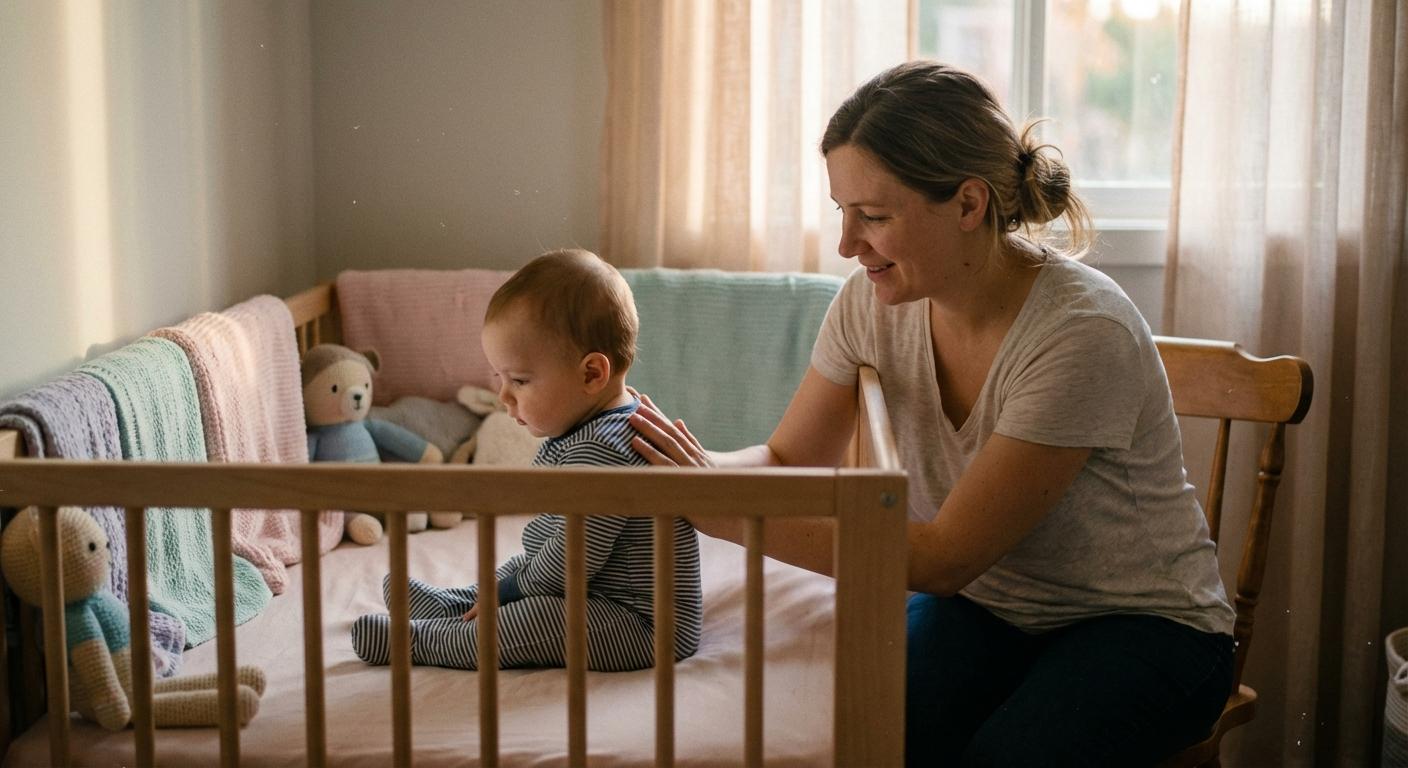
- Parental presence / gradual withdrawal (chair method): you stay nearby with minimal interaction and slowly reduce your presence over days.
All aim to support independent sleep onset and smoother resettling during normal night awakenings.
Crying and sleep: check the basics before you choose
Crying is communication, not manipulation
For infants, crying is a physiologic alarm system. Self-regulation pathways are still developing, so it is not “bad behaviour”.
Before starting cry it out, ask:
1) Have I checked the basics (feed, diaper, temperature, clothing)?
2) Could discomfort make waiting unfair or ineffective (blocked nose, reflux pain, ear pain, eczema flare)?
Quick clues that point to common causes
- Hunger: rooting, hand-to-mouth sucking, escalating agitation
- Fatigue: yawning, looking away, rubbing eyes, irritability
- Pain/discomfort: high-pitched crying, back-arching, grimacing, persistent distress
More than one factor can coexist. A baby can be hungry and overtired, which often increases crying whatever method you try.
Sleep by age: why nights look messy
Night awakenings are normal, even for adults. Babies differ because many need the same conditions they had at sleep onset (feeding, rocking, being held, parent nearby). When those conditions are missing during a normal micro-awakening, crying can follow.
Age anchors:
- 0–3 months: fragmented sleep, frequent feeds are typical
- 4–6 months: rhythms start consolidating
- 6–12 months: more ability to link cycles, with common disruptions (teething, infections, travel)
This is why cry it out does not fit the same way at every age.
Self-soothing: what it really is
Self-soothing is not simply stopping crying. It is the ability to downshift from high activation: slower breathing, less muscle tension, fewer frantic movements, then sliding towards sleep.
A key driver is sleep pressure (the build-up of sleepiness). If naps ran too long or too late, independent sleep onset becomes harder, even with cry it out.
How cry it out works
The learning mechanism is simple. Bedtime ends with being placed in the crib awake, and the usual extras (feeding to sleep, rocking to sleep, repeated soothing) are no longer part of falling asleep.
Consistency matters. If sometimes crying leads to being picked up and sometimes it does not, many babies escalate because “sometimes it works”.
What “safe” looks like
During cry it out, safety means basics are covered and you stay alert for red flags.
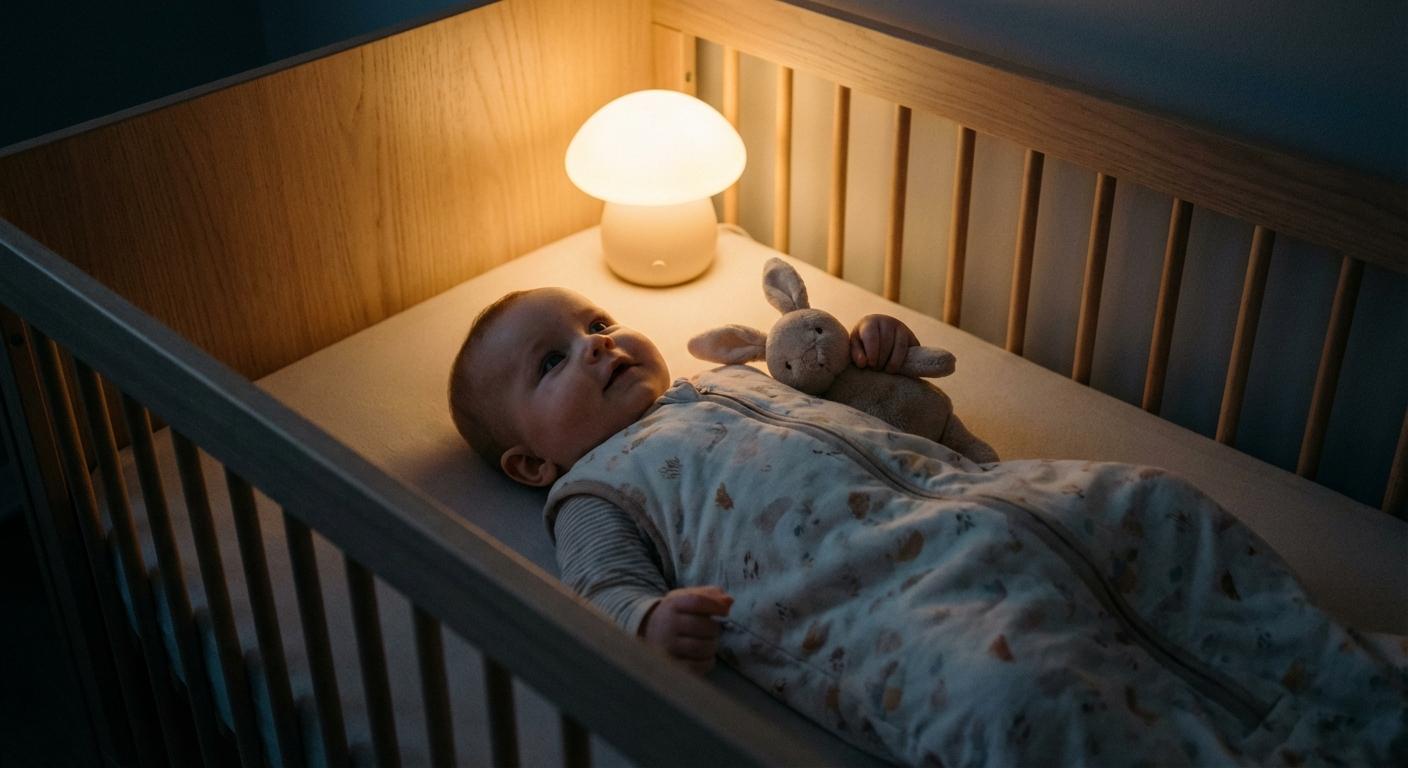
- Back sleeping on a firm, flat mattress, fitted sheet only
- No loose blankets, pillows, bumpers, or soft toys for infants
- Comfortable room temperature (often around 20–22°C, adjusted for season)
- Feed and diaper checked, clothing not too warm
- You pause for fever, repeated vomiting, breathing changes, lethargy, or pain signs
Some parents use a personal checkpoint time to reassess for vomit, leaking diaper, or sudden illness.
Full extinction vs graduated checks: which feels easier?
- Full extinction: emotionally hard for many caregivers, but straightforward.
- Graduated checks: often more manageable for parents, for some babies, check-ins stimulate and increase crying.
The best method is the one you can repeat calmly and consistently.
When to start cry it out: readiness and when to wait
Why 4–6 months is often discussed
Many clinicians mention 4–6 months because sleep becomes more rhythmic, and many healthy full-term babies can begin sleeping longer stretches without frequent night calories.
Some families hear “not before 12 weeks” or “around 5–6 kg”, but age or weight alone is not enough. Feeding, growth trend, and medical context matter.
0–3 months: regulation first
Before 3 months, the sleep-wake system is immature. Long periods of cry it out usually fit poorly with infant physiology. The focus is typically safe sleep, responsive feeding, and gentle routines.
If feeding is difficult (reflux-like discomfort, colic-like evenings, suspected intolerance), sleep often becomes tougher. That deserves support rather than stricter training.
4–6 months: supportive changes may be enough
Often, strengthening rhythm helps as much as any strict method:
- consistent wake time
- age-appropriate naps
- steady bedtime
- shorter, less stimulating soothing
- shifting the feed earlier in the routine, when it suits your feeding style
6–12 months: behavioural options are commonly considered
If growth, feeding, and health are reassuring, some families choose cry it out (full or graduated) or gradual withdrawal.
A simple rule: pick one approach and keep it for several nights unless medical red flags appear.
Around 9–12 months: separation anxiety and milestones
Separation anxiety can peak, and bedtime protest may rise. Some babies tolerate abrupt cry it out poorly at this stage, and brief, consistent check-ins can work better.
Motor milestones can also disrupt sleep. Babies may practise standing or crawling in the crib, then wake frustrated.
When to pause and speak to a clinician
Delay cry it out and seek guidance if:
- prematurity or concerns about weight gain
- night feeds still medically needed
- suspected reflux pain, ear infection, breathing problems, eczema flares
- current illness: fever, dehydration signs, poor feeding, unusual sleepiness
Who cry it out can suit (and when another approach may suit better)
Some babies adapt quickly. Others are sensitive and escalate. Cry it out fits best when caregivers can tolerate crying and keep responses consistent.
If hearing crying triggers intense anxiety or anger, a gradual approach can protect both baby sleep and caregiver wellbeing.
A practical check: “Is this doable at 3 a.m. with an exhausted adult?” If not, simplify.
Preparation that makes nights easier
Schedule and wake windows
Typical wake windows (adjust to cues):
- 4–6 months: ~1.25–2.5 hours
- 6–9 months: ~2–3 hours
- 9–12 months: ~2.5–3.5 hours
Overtired babies often cry longer. Undertired babies fight bedtime. Small timing changes (10–15 minutes) can make a big difference.
If evenings are melting down, try bedtime 15–30 minutes earlier for a few nights.
Sleep environment
A sleep-supportive room can reduce arousals:
- darker room (curtains help in cities)
- steady background sound if household noise is high
- comfortable temperature and breathable clothing
Bedtime routine (15–30 minutes)
Keep it short, predictable, and calm:
- dim lights
- diaper and sleepwear
- feed earlier in the routine when possible
- short book or lullaby
- into the crib awake
Align caregivers
Write down the plan: bedtime, wake time, which cry it out version, what check-ins look like, and how feeds are handled. Mixed responses often prolong crying.
Cry it out step-by-step
1) Choose the method and trial length
Pick full extinction or graduated checks. Give it 7–14 nights unless safety concerns arise.
2) Bedtime setup
- Full feed (as age-appropriate) and clean diaper
- Routine in the same order
- Place baby in the crib awake
- Brief goodnight and leave
3) If using graduated checks
A common starting pattern:
- first check at 3–5 minutes
- then 5–10 minutes
- then 10–15 minutes
Keep check-ins brief: low voice, minimal touch, no bright light, no long holding, no feeding.
If check-ins worsen crying, fewer checks or full extinction may reduce total crying.
4) Night wakings and feeds
Use the same approach for night wakings, except for planned feeds. If you keep night feeds, keep them predictable (set times can be easier than feeding at every cry). Put baby back down awake after the feed.
5) If crying leads to vomiting
Pause, clean up, comfort, and reassess overall condition. Repeated vomiting or suspected reflux pain deserves a paediatric review before continuing cry it out.
Pros, cons, and what research suggests
Behavioural sleep interventions often improve bedtime settling and reduce night waking for many families, especially when the plan is consistent.
Crying activates short-term stress responses, including cortisol. Evidence so far has not shown clear long-term harm to attachment or development when cry it out is used appropriately and caregiving remains warm and responsive in daily life. Still, it can feel emotionally heavy, and that matters.
If cry it out makes bedtime feel unbearable, gentler alternatives can be a better fit.
What to expect, and when to troubleshoot
Many babies cry most on nights 1–3, then settle faster on nights 4–7, with steadier sleep over weeks 2–4 (setbacks with illness and travel are normal).
If progress stalls, check:
- bedtime and wake time consistency
- overtired vs undertired timing
- room light, heat, and noise
- whether check-ins are overstimulating
Reassess if crying stays long with no improvement over 7–14 days, daytime mood worsens markedly, total sleep drops, or parental overwhelm rises.
Alternatives to cry it out
- Bedtime fading: match bedtime to natural sleep onset, then shift earlier gradually.
- Pick up/put down: brief comfort until calm, then back down awake.
- Gradual withdrawal (chair method): stay near, then increase distance over days.
These options often reduce crying but can take longer.
Safety stop rules
Pause cry it out and seek medical advice if you notice:
- fever, lethargy, poor feeding, fewer wet diapers
- repeated vomiting, green (bilious) vomit, blood in vomit
- breathing difficulty, bluish lips, unusual limpness
- crying that sounds painful or very unusual
- sudden significant behaviour change
If you feel overwhelmed, it is okay to place baby safely in the crib and take 1–2 minutes to reset.
Key takeaways
- Cry it out is a behavioural sleep-training option, with full extinction or graduated checks.
- Always check hunger and discomfort first, reflux-like pain, blocked nose, ear infection, and eczema can drive crying.
- Long waiting approaches generally fit poorly before 3 months, many families consider cry it out later depending on feeding and growth.
- Schedule, sleep pressure, safe sleep setup, and caregiver consistency often decide how smoothly sleep improves.
- If cry it out does not suit your family, bedtime fading and gradual methods can still build independent sleep.
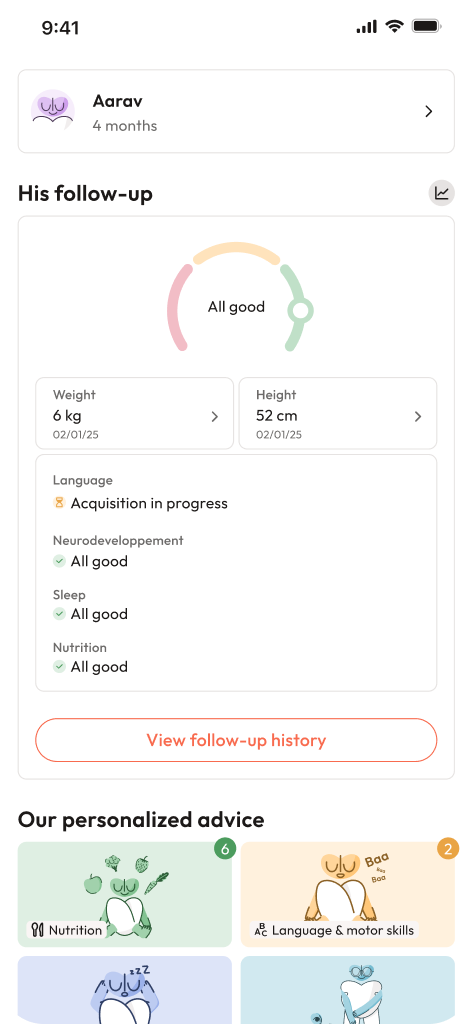
- If doubts persist, a paediatric clinician can help. For personalised tips and free child health questionnaires, you can also download the Heloa app.