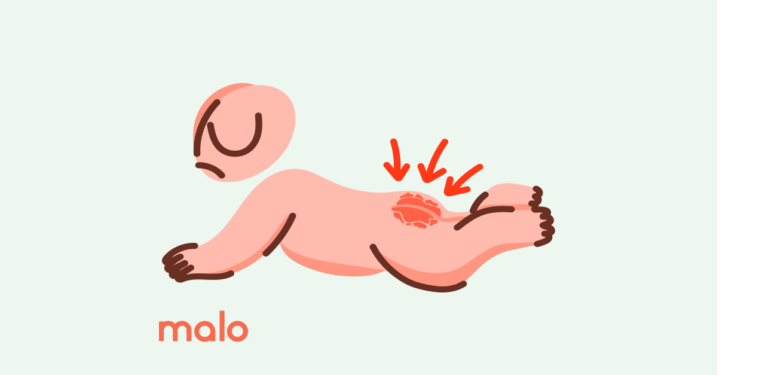
Few sounds wake a parent faster than the rough, seal-like cough of croup—often in the middle of the night, when the house is quiet and your child’s breathing suddenly turns noisy. A little one may wake up with a harsh “barking” cough, a hoarse voice, and a tight, squeaky sound while breathing in. Worry is natural. The reassuring part? Most croup episodes are viral, settle in a few days, and improve quickly with calm supportive care and, when needed, a single dose of a steroid prescribed by a doctor.
Understanding croup and why it can sound scary
Croup is an acute infection causing inflammation of the upper airway—mainly the larynx (voice box) and trachea (windpipe). In young children, the narrowest portion is just below the vocal cords (the subglottic region). When swelling (called edema, meaning fluid in the tissue) happens there, even a small amount can reduce the space available for air.
You may be thinking: why does it sound so dramatic?
- The classic barking cough happens because inflamed tissue and vocal cords vibrate differently.
- Hoarseness comes from swelling around the vocal cords.
- Inspiratory stridor (a high-pitched sound on breathing in) appears when air rushes through a narrowed upper airway and becomes turbulent.
Why symptoms often worsen at night
Night-time croup is common. Practical reasons include lying down, fatigue, nasal blockage from a cold, and dry indoor air (especially with heaters or AC). Crying can amplify stridor because faster airflow increases turbulence—so the first goal is often not a medicine, but calm.


What mild to severe croup can look like
- Mild croup: barking cough, little or no stridor when calm, minimal chest indrawing.
- Moderate croup: stridor even at rest, visible chest pulling (retractions), faster breathing, distress worsens with crying.
- Severe croup: marked retractions, poor air movement, exhaustion, colour change (pale or bluish).
Even if the first night looks intense, many children improve within 48 hours, with overall recovery typically in 3–7 days.
Who gets croup and what to expect
Typical ages
Croup is most common from 6 months to 3 years. As children grow, the airway widens, so swelling causes less blockage. It can still occur up to about 6 years, but classic croup becomes less common later.
Seasonal pattern (including Indian context)
Croup can happen anytime, but it is often seen more in cooler months and during viral surges—monsoon transitions, winter, and periods when common cold viruses spread quickly in schools and creches.
Timing and duration
Many children start with a simple cold—runny nose, mild fever, congestion—then within 1–2 days develop the barking cough. The first night is often the worst. The cough may linger after breathing becomes easy again.
Causes of croup and factors that can make episodes more likely
Viral causes (most common)
Most croup is caused by viruses, including:
- Parainfluenza virus
- Rhinovirus
- RSV (respiratory syncytial virus)
- Influenza
- Adenovirus
- Enteroviruses
How it spreads
The viruses behind croup spread through respiratory droplets and hands—shared toys, towels, cups, tissues, and close contact. In joint families and crowded settings, infections can pass quickly from older siblings to toddlers.
Bacterial causes (rare) and conditions that need urgent attention
Primary bacterial “croup” is uncommon. Doctors remain alert for:
- Epiglottitis (rare where Hib vaccination coverage is good): severe throat pain, drooling, trouble swallowing, muffled voice, refusal to lie down, very ill appearance.
- Bacterial tracheitis: can follow a viral illness, worsens rapidly, and may not respond as expected to standard croup medicines. This is an emergency.
If symptoms do not fit typical croup, same-day medical evaluation is important.
Irritants and triggers that can worsen croup
A viral infection can feel worse when the airway is irritated. Common contributors:
- Exposure to tobacco smoke (including residue on clothes and hair)
- Very dry, overheated rooms (heater use)
- Indoor pollution, incense smoke, strong cleaning fumes
- Possible irritation from reflux (acid coming up into the throat)
- Allergy tendency or airway hyperreactivity
What’s happening in the airway during croup (simple physiology)
In babies and toddlers, the airway lining swells easily. Inflammation increases blood flow and fluid leakage, producing edema. Because the airway is narrow, swelling increases resistance to airflow—making breathing in harder than breathing out.
Signs of increased effort can include:
- Retractions (skin pulling in above the breastbone or between ribs)
- Nasal flaring
- Fast breathing
- Stridor that becomes louder when your child cries
Types of croup and when recurrent episodes need a closer look
Classic viral croup (laryngotracheitis)
This is the usual pattern: cold symptoms first, then barking cough, hoarseness, and sometimes stridor.
Spasmodic croup
Some children have sudden nighttime episodes that can be dramatic but brief, often with little or no fever. Viruses may still be involved, but the onset feels abrupt.
Recurrent or atypical croup
If croup comes back frequently, occurs outside the usual age range, or is unusually severe, discuss possible contributors with your paediatrician: reflux, ongoing irritant exposure, or underlying airway differences. Children born premature may have more sensitive airways.
Croup symptoms parents can recognise
Early cold-like signs
Runny nose, congestion, mild fever—then the cough changes.
Key symptoms
- Barking cough (dry, loud)
- Hoarse voice
- Inspiratory stridor, sometimes only during crying at first
What to watch during a flare
Two practical markers help many parents:
- Wet nappies/diapers (hydration)
- Ability to drink without getting breathless
Also watch for:
- Retractions
- Nasal flaring
- Fast, shallow breathing
- Agitation progressing to unusual tiredness
- Drinking less than usual
Severity assessment and red flags
Signs that need same-day medical review
Seek prompt medical evaluation if your child has croup with:
- Stridor at rest (when calm)
- Increasing retractions or clearly difficult breathing
- Refusal to drink or very low intake
- Dehydration signs (fewer wet diapers, dry mouth, unusual sleepiness)
- Rapid worsening, or if your parental instinct says something is off
Emergency signs
Go to the ER or call local emergency services immediately if you see:
- Blue lips/face (cyanosis)
- Severe breathing distress
- Extreme drowsiness, poor responsiveness, or exhaustion
- Breathing that becomes unusually quiet after being noisy
Drooling and trouble swallowing are not typical for croup
Significant drooling, difficulty swallowing, refusal to lie down, and a muffled voice suggest a different and potentially dangerous condition. Keep your child upright, avoid checking the throat at home, and seek emergency care.
Diagnosing croup and when tests help
Doctors usually diagnose croup clinically—based on the barking cough, hoarseness, stridor, breathing effort, and overall appearance.
During the exam, they may check:
- Stridor with crying vs at rest
- Breathing rate and retractions
- Skin colour and alertness
- Temperature
- Hydration
Pulse oximetry (oxygen saturation) may be used if breathing looks difficult. Tests or imaging are typically reserved for atypical, severe, or non-improving cases.
Comforting home care for mild croup
If your child has a barking cough but is comfortable at rest (no stridor at rest, no significant retractions), home care can be appropriate.
Keep your child calm and upright
This is not just emotional comfort—it’s practical. It reduces crying, and less crying often means less stridor. Hold your child semi-upright, reduce stimulation, and speak softly.
Fluids and rest
Offer small sips often. Appetite may reduce, hydration matters more for a short period. For babies, smaller and more frequent feeds may help.
Fever and comfort medicines
Paracetamol (acetaminophen) can be used for fever or discomfort. Ibuprofen can be used when age-appropriate. Dose should be weight-based, as advised by your clinician.
Air and humidity: what to try safely
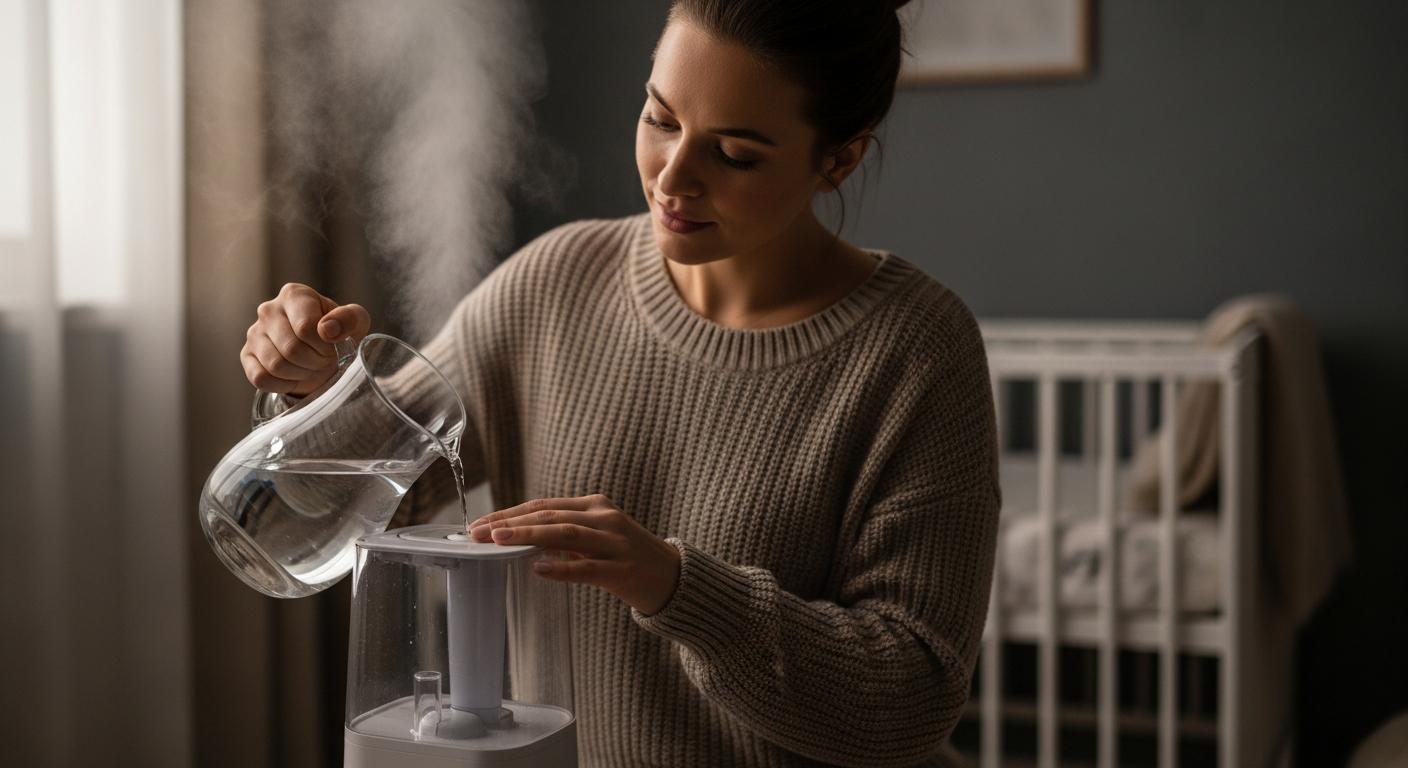
Dry air can irritate. Some families find a few minutes of cool fresh air helpful. If you use a humidifier, clean it regularly to prevent mould.
Avoid burn risks: no bowls of hot water, and be cautious with steam. If using a warm steamy bathroom, keep it brief and supervise closely.
Clear a blocked nose
Saline drops/spray can help, especially before feeds and sleep. Gentle suction can be useful if needed.
What to avoid
Avoid sedatives, over-the-counter cough suppressants, and decongestants in young children. Avoid smoke and strong fumes.
When to seek medical care
Contact a clinician the same day
If there is stridor at rest, increasing work of breathing, poor drinking, vomiting, dehydration concerns, or quick worsening, seek medical advice.
Go urgently
If stridor at rest persists, retractions increase, your child cannot drink, looks exhausted, or turns pale/blue around the lips—go urgently.
Medical treatment in clinic or hospital
Treatment goals
Reduce upper-airway swelling, support breathing, and maintain hydration while the infection settles.
Corticosteroids (dexamethasone)
A single dose of dexamethasone is standard care for croup. It reduces inflammation and often improves symptoms within hours.
Nebulised epinephrine
Used for moderate-to-severe croup to rapidly reduce swelling. Because the effect can wear off, observation is needed after a dose.
Supportive care
Oxygen, fluids, and medicines for fever may be used. Antibiotics are not used for typical viral croup.
Hospital care and airway support for severe croup
Hospitalisation may be advised if there is persistent stridor at rest with significant retractions, low oxygen saturation, exhaustion, changes in alertness, or inability to stay hydrated. Monitoring and repeated treatments may be needed until swelling settles.
Recovery, recurrence, and prevention
Reassuring signs include stridor disappearing at rest, easier breathing, better drinking, and energy returning.
Everyday prevention focuses on basics:
- Handwashing and cleaning shared surfaces
- Regular ventilation
- Avoiding smoke exposure
- Keeping indoor air comfortable—not overheated and not overly dry
Routine vaccination helps reduce severe infections that can mimic upper-airway disease (Hib vaccine has greatly reduced epiglottitis).
Key takeaways
- Croup commonly affects children 6 months to 3 years and often flares at night.
- Barking cough, hoarseness, and inspiratory stridor are typical, most cases improve within 48 hours.
- Seek urgent care for stridor at rest, increasing retractions, poor drinking, dehydration, or worsening symptoms.
- Emergency care is needed for cyanosis, severe distress, extreme drowsiness, very quiet breathing after loud stridor, or drooling with swallowing difficulty.
- Supportive care (calm, upright position, fluids, nasal saline, avoiding smoke) helps mild croup.
- If you want tailored guidance and free child health questionnaires, you can download the Heloa app.

Further reading :