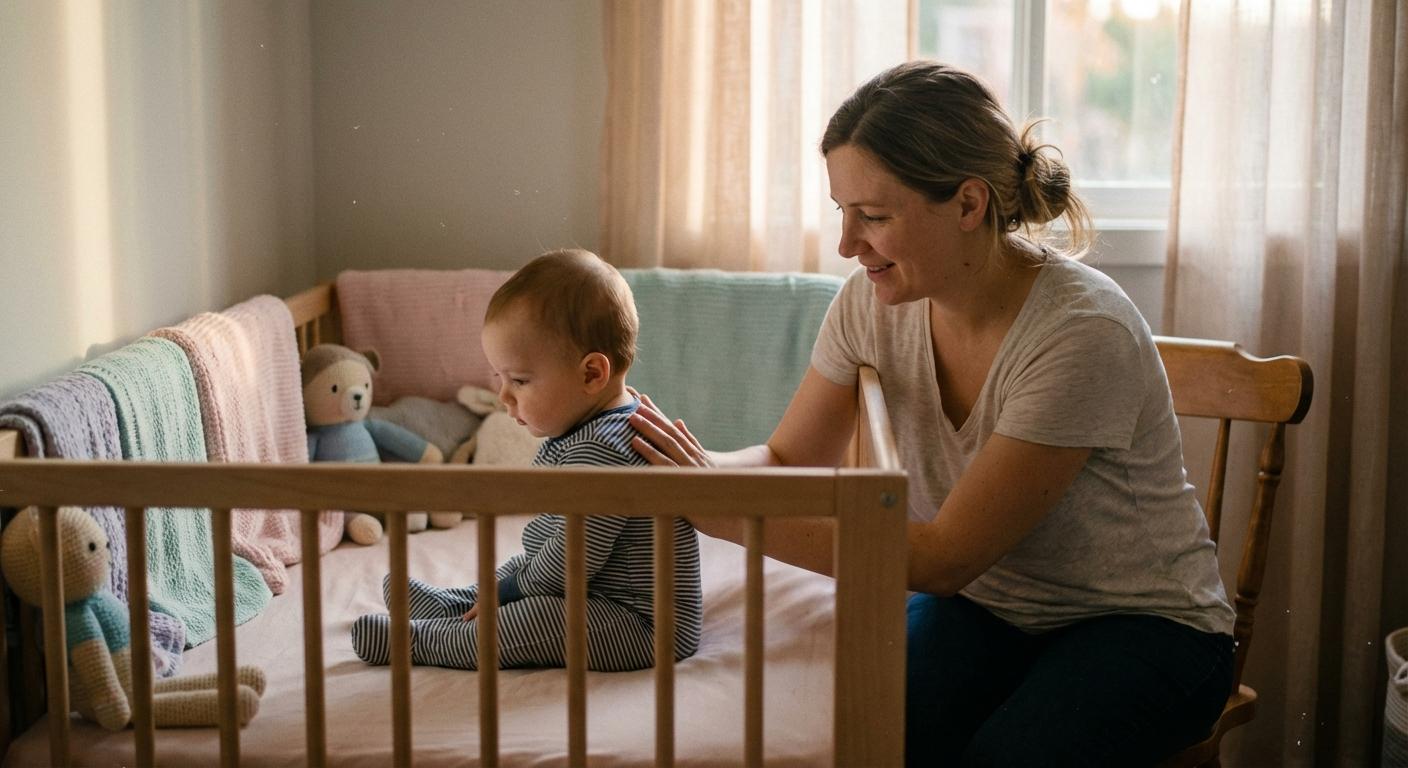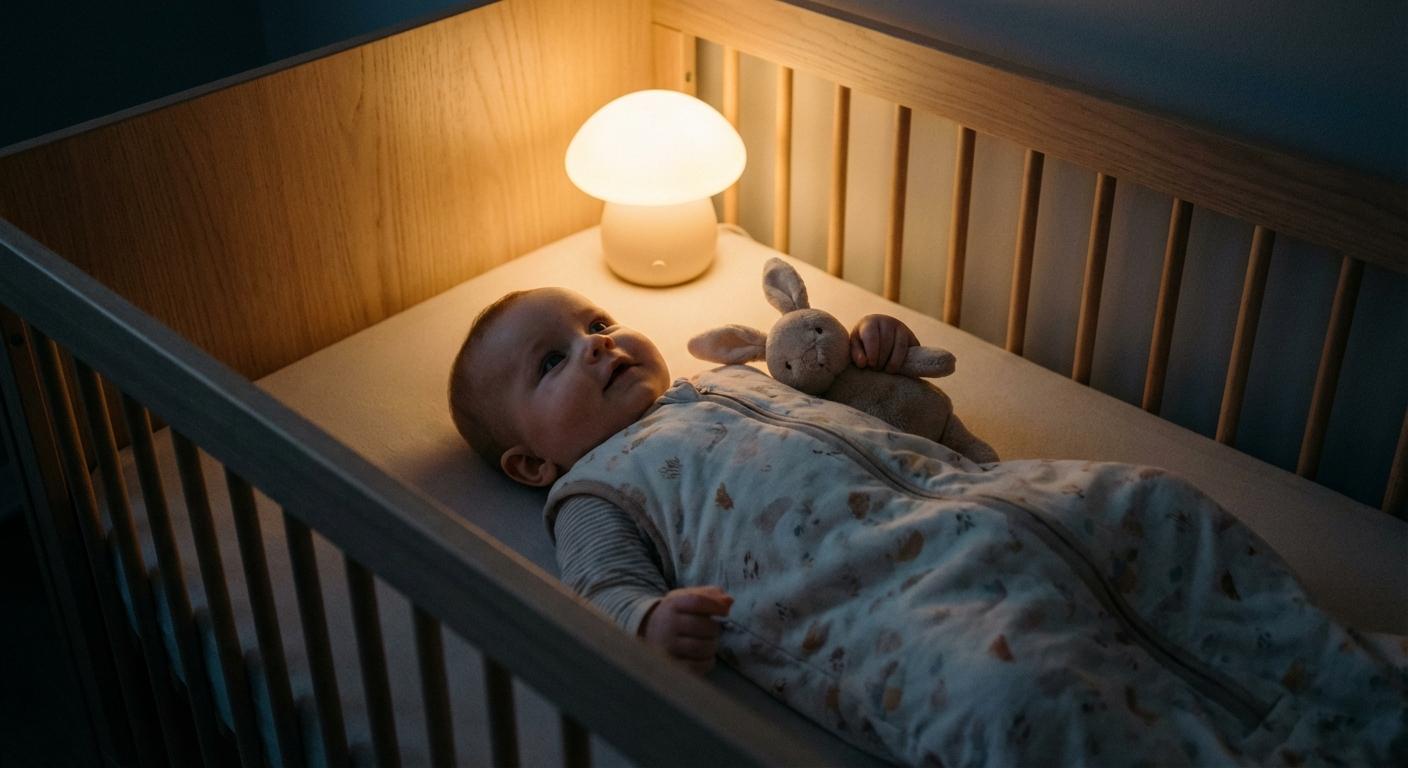
Sleep can shatter into tiny pieces. And when it does, parents often circle back to the same charged question: cry it out: helpful, harmful, or simply not the right moment?
Some babies protest because they are hungry. Others because their nose is blocked, their skin itches, or their nervous system is still revving after a busy day. Sometimes it’s just the jolt of separation at bedtime. Add parental exhaustion, conflicting advice, and the fear of “making a mistake,” and decisions feel heavy.
What helps is a clear map: what cry it out really means, when it may fit, when to wait, how to keep things safe, and which alternatives can work just as well.
What “cry it out” actually means (and what it doesn’t)
Parents often imagine cry it out as one single, harsh practice. In reality, it’s an umbrella term for behavioral sleep interventions (strategies that change what happens at bedtime so sleep becomes less dependent on rocking, feeding, or being held).


The simple definition
With cry it out, you place your baby in the crib awake after needs are met (feed, burp if needed, clean diaper, comfortable clothes), then you allow time for your baby to fall asleep without the usual “sleep props.” Crying can occur because the baby is learning a new pathway into sleep.
A spectrum: from “wait a moment” to full extinction
“Let them cry” covers a wide range:
- Graduated extinction (timed check-ins, often linked to Ferber-style intervals)
- Full extinction (no planned check-ins after goodnight, unless health/safety concerns)
- Parental presence / gradual withdrawal (you stay nearby, then reduce your presence over days)
Why does the nuance matter? Because crying at bedtime can mean very different things:
- a request for proximity (closeness)
- a sign of discomfort (reflux-like pain, eczema itching, teething pressure)
- overtiredness (the “second wind” effect)
- an emotional discharge after stimulation
So before choosing cry it out, it helps to define your exact method. Otherwise, nights slip into all-or-nothing thinking.
Before any sleep training: rule out the “why am I crying?” list
A baby’s cry is a biologic alarm, not manipulation. The brain networks that support self-regulation are still under construction.
You may want to pause and ask two quick questions:
1) Have the basic needs been checked (feed, diaper, temperature, position)?
2) Could something hurt or itch enough that waiting would be unfair or ineffective?
Common clues parents can look for
- Hunger: rooting, frantic hand-to-mouth, agitation that escalates quickly
- Fatigue: yawning, gaze aversion, eyebrow rubbing, “wired” irritability
- Pain: unusual tone (high-pitched), grimacing, back-arching, inconsolable distress
More than one can coexist. A baby can be both hungry and overtired, which makes settling much harder.
Sleep physiology, simply explained
Night waking is normal. Adults do it too. The difference is that many babies can’t yet link sleep cycles without recreating the same conditions they had at sleep onset.
If your baby falls asleep while feeding or rocking, then wakes briefly between cycles and finds those conditions missing, crying is a predictable outcome, not a test, just context-dependent sleep.
The age question: when cry it out may fit, and when it usually doesn’t
Age is not the only factor (temperament, growth, feeding, and health matter), but it’s a useful starting point.
0–3 months: regulation first
In the newborn period, sleep is fragmented by design. Frequent feeding is biologically normal, and circadian rhythms are immature.
For many babies under 3 months, cry it out for long stretches clashes with physiology. The focus is usually:
- safe sleep (firm, flat surface, on the back)
- feeding support and growth monitoring
- calm routines (dim light, low stimulation)
If feeding is difficult (reflux-like discomfort, latch issues, suspected intolerance, colic-like evenings), sleep rarely follows a neat pattern. That’s not a failure, it’s biology plus discomfort.
4–6 months: structure starts to help
This window is often mentioned because sleep becomes more rhythmic and many healthy, full-term babies can begin to manage longer stretches.
Sometimes, you don’t even need cry it out right away. Small shifts can change everything:
- keep a consistent morning wake time
- aim for age-appropriate wake windows
- move the last feed earlier in the routine (if it suits your feeding style)
- put baby down drowsy-but-awake (or fully awake, depending on your plan)
6–12 months: behavioral options are commonly tried
If growth and health are reassuring, families may choose cry it out (full or graduated) or a more gradual method.
One principle matters more than heroics: consistency over several nights. Babies learn through repetition.
9–12 months: separation anxiety can spike
Around this phase, separation protest often intensifies. Motor development can also stir nights (pulling up, rocking on hands and knees, then getting stuck).
For some babies, abrupt cry it out feels harder here, and brief, predictable check-ins, or a gradual withdrawal approach, may be better tolerated.
When to wait and talk with a clinician
Pause sleep training and seek medical input if:
- prematurity or concerns about weight gain
- night feeds are still medically necessary
- suspected reflux pain, ear infection, eczema flare, breathing issues, persistent congestion
- fever, dehydration signs, poor feeding, or markedly fewer wet diapers
How cry it out works: the learning mechanism
At bedtime, your baby learns a new association: “I fall asleep in my crib, without extra steps.” That’s it.
But there’s a catch. Intermittent responses can prolong crying.
If sometimes crying leads to being picked up and sometimes it doesn’t, many babies intensify their protest because the pattern feels unpredictable. Behavioral science calls this intermittent reinforcement.
Cry it out in practice: safety first, then a plan you can follow
What “safe” looks like
During cry it out, safety is non-negotiable:
- back sleeping on a firm, flat mattress with a fitted sheet only
- no loose blankets, pillows, bumpers, or stuffed animals for infants
- comfortable room temperature (often ~20–22°C / 68–72°F)
- smoke-free environment
And a clear stop rule: if you see signs of illness, breathing difficulty, repeated vomiting, lethargy, or pain, you pause.
Full extinction vs graduated checks
Full extinction: after goodnight, no planned check-ins (unless a health/safety concern). It can be emotionally tough, but for some families it’s faster and less confusing.
Graduated extinction: brief check-ins at increasing intervals. Many parents find this more manageable. Some babies, however, become more stimulated by the repeated “hello/goodbye” cycle.
You might wonder: “Which is kinder?” It depends on your baby’s temperament and on what keeps you steady.
Preparation that makes a bigger difference than any method
Timing: wake windows and sleep pressure
Independent sleep is easier when sleep pressure is strong enough.
Typical wake windows (adjust to cues):
- 4–6 months: ~1.5–2.5 hours
- 6–9 months: ~2–3 hours
- 9–12 months: ~2.5–3.5 hours
Overtired babies often cry longer. Undertired babies resist bedtime. Small shifts (10–15 minutes) can be surprisingly powerful.
A practical move: if evenings unravel, try bedtime 15–30 minutes earlier for a few nights.
A short, predictable bedtime routine
Aim for 15–30 minutes. Keep it boring, calm, repeatable:
- dim lights
- diaper, pajamas
- feed earlier in the sequence when possible
- short story or quiet song
- into the crib awake
A bath is optional. Calming for some babies, energizing for others.
Caregiver alignment
The fastest way to stall cry it out is adults responding in different ways.
Write down:
- bedtime and morning wake time
- which version of cry it out you’re using
- what a check-in is (and isn’t)
- how you’ll handle night feeds, if they still exist
At 3 a.m., a written plan is a relief.
A step-by-step cry it out plan (clear, realistic, adjustable)
1) Choose your method and your trial length
Pick full extinction or graduated checks. Give it a fair trial (often 7–14 nights), unless red flags appear.
2) Bedtime sequence
- Feed and burp if needed.
- Clean diaper, comfortable sleepwear.
- Routine in the same order.
- Place baby in the crib awake.
- Brief goodnight, then leave.
3) If you do graduated checks, decide intervals ahead of time
One common pattern:
- first check at 3–5 minutes
- then 5–10 minutes
- then 10–15 minutes
Check-ins should be short and low-stimulation: low voice, minimal touch, no lights, no long cuddles, no feeding.
If check-ins clearly worsen crying, fewer checks, or full extinction, may lead to less total distress.
4) Night wakings and feeds
Apply the same approach used at bedtime.
If night calories are still needed, keep feeds predictable (set times can be easier than feeding at every cry). After the feed, place baby back down awake.
5) If crying leads to vomiting
Some babies gag or vomit when upset. If it happens, pause, clean up, comfort, and reassess your baby’s overall condition. Health comes first.
What research says (and what it can’t perfectly measure)
Behavioral sleep interventions, including cry it out, often reduce bedtime settling time and night waking for many families when applied consistently.
Still, two topics deserve careful language.
Stress, crying, cortisol
Crying triggers acute stress responses (including cortisol release). Studies are hard to compare: different babies, different methods, different family contexts.
Current summaries do not show strong evidence of lasting harm to stress regulation when cry it out is used appropriately in a warm, responsive relationship overall. But it is not emotionally neutral. Your tolerance matters.
Attachment
Secure attachment is built across thousands of daytime interactions: feeding, play, comfort after bumps, shared smiles, reliable caregiving.
Available data do not show major negative effects on attachment when sleep training is done safely and the child’s needs are met consistently during the day.
If cry it out fills evenings with dread, choosing a different strategy can be a protective decision for the whole household.
What to expect: the first week can be loud, then it often shifts
Many families see a pattern:
- Nights 1–3: the biggest protest
- Nights 4–7: faster settling for many babies
- Weeks 2–4: more stable sleep, with normal setbacks (illness, travel, teething)
The “extinction burst”
After improvement, crying may briefly spike again. That’s a classic extinction burst: a last push for the old pattern. It’s not automatically a sign of failure, but it is a moment where consistency and schedule basics matter.
Troubleshooting when cry it out stalls
You may be doing everything “right,” and still hit a wall. Common reasons:
- bedtime is drifting day to day (body clock can’t stabilize)
- overtired vs undertired timing mismatch
- too much stimulation in check-ins
- environment issues (light leaks, overheating, noise)
Small, strategic changes beat big overhauls. Adjust by 10–15 minutes, then watch trends for 3–5 nights.
Reassess if crying is not improving over 7–14 nights, daytime mood worsens markedly, total sleep drops, or parental anger and overwhelm climb.
Alternatives if cry it out doesn’t suit your family
Not everyone wants cry it out. And not every baby responds well.
Options with a gentler feel:
- Bedtime fading: start bedtime closer to natural sleep onset, then move earlier gradually
- Pick up/put down: brief comfort in arms until calm, then back down awake, repeat
- Gradual withdrawal (chair method): stay nearby with minimal interaction, then increase distance over days
Even without a strict method, a few steady rules (earlier bedtime, reduced stimulation, one brief response style) can lead to meaningful change.
Key takeaways
- Cry it out is a behavioral sleep strategy aimed at helping a baby fall asleep independently, it includes several versions (full extinction, graduated checks, gradual withdrawal).
- Before starting cry it out, check hunger, discomfort, and illness, a blocked nose, reflux-like pain, or eczema can change everything.
- The “best” timing depends on age, feeding needs, growth, temperament, and family capacity, long crying approaches tend to fit poorly before 3 months.
- Safety basics stay constant: back sleeping, firm flat surface, no loose items, comfortable temperature, and clear stop rules.
- Research suggests behavioral methods can improve sleep for many families, long-term attachment issues have not been clearly demonstrated when caregiving is warm and consistent overall.
- If cry it out feels wrong at nightfall, alternatives like bedtime fading or gradual withdrawal can still build better sleep.
- For support, consider talking with a pediatric clinician, and you can download the Heloa app for personalized guidance and free child health questionnaires.
Questions Parents Ask
How long should I let my baby cry during cry it out?
There isn’t one “right” number of minutes. Many families notice the longest crying in the first 1–3 nights, then a gradual drop over the next week. If crying is consistently intense and very long with no improvement after about 7–14 nights, it can be a sign the timing (overtired/undertired), method, or a comfort/health issue needs adjusting. Trust your instincts: if something feels off, it’s okay to pause and reassess.
Does cry it out increase stress or harm attachment long term?
It’s completely normal to worry about this. Crying is a real stress signal, but research on behavioral sleep methods in healthy babies has not shown clear long-term damage to attachment or development when baby’s needs are met and caregiving is warm and responsive during the day. If the approach makes you feel distressed night after night, choosing a gentler method can be a supportive choice for everyone.
What if my baby vomits while crying?
Some babies gag or vomit when upset. If it happens, you can clean up, offer calm reassurance, and consider stopping for the night. Repeated vomiting, poor weight gain, or signs of reflux pain are good reasons to check in with a pediatric clinician before continuing. Safety and comfort come first—sleep skills can wait.