If baby not napping has become the headline of your day, it can feel never-ending. You try rocking. You try feeding. Someone suggests a jhula, someone else says “keep baby awake longer”, and suddenly it is evening and your baby is still doing 20-minute catnaps.
In many Indian homes, daytime sleep has extra hurdles: doorbells, pressure cooker whistles, school runs, a bright living room, relatives visiting, and a baby who wakes at the slightest change. The reassuring part is this: most of the time, baby not napping is linked to normal sleep biology plus one or two fixable factors, like wake windows, overstimulation, or discomfort.
Baby not napping: what it can look like (and why naps matter)
What parents commonly notice
The phrase baby not napping can mean very different things:
- Nap refusal: crying or fighting every nap even with a routine
- Short naps: 20 to 40 minutes again and again
- Contact naps: sleeping only in arms, babywearing, or skin-to-skin
- Motion naps: sleeping only in car, pram, or rocking
- Inconsistent days: one day fine, next day scattered dozes
A useful reframe: sometimes baby not napping is actually “sleeping in tiny pieces”. A few minutes while feeding, a doze during a car ride, another in the carrier. It is not neat, but it still counts towards daytime sleep.

Why naps matter (even when nights are “okay”)
Naps support brain maturation and memory consolidation. In simple terms, sleep helps your baby’s brain file away new learning, from smiling to rolling to babbling.
Naps also affect feeding. When a baby is overtired, feeding can become fussy and snacky (short feeds, frequent feeds), which can trigger earlier waking. A better-rested baby often coordinates suck-swallow-breathe more smoothly.
Naps and night sleep also connect through sleep pressure (homeostatic drive). Too much awake time can raise stress hormones like cortisol and adrenaline, making sleep lighter. Too little awake time can mean low sleep pressure, so your baby lies awake or naps very briefly.
What can be normal by age
Newborn sleep is fragmented. Short naps and unpredictable timing are expected.
As months pass, sleep cycles mature and the circadian rhythm strengthens. Around 3 to 6 months, many families notice more predictability, but nap length can still vary as babies learn to link sleep cycles. Later infancy often settles into two naps, yet phases of baby not napping can still happen with milestones, teething, illness, travel, daycare changes, or nap transitions.
Baby not napping: when to worry (and when it is usually normal)
When do naps become a genuine problem?
Over several days, take note if you see:
- very long time to fall asleep for naps
- waking after 10 to 20 minutes and repeatedly struggling to resettle
- a baby who looks exhausted but keeps fighting sleep
Before 3 to 4 months, variability is common, because daytime sleep contains more light sleep and more micro-awakenings.
The classic trap is a spiral: baby not napping leads to longer wake time, overtiredness builds, crying increases, and naps become even shorter.
Is your baby truly not sleeping, or sleeping in bursts?
Look at the whole day, not only “proper” naps.
Clues that daytime sleep may be enough (even if messy):
- baby has calm periods
- feeding is effective
- growth is on track
- there are stretches of alert but settled behaviour
Clues that daytime sleep is likely too short or too late:
- baby looks hyper-alert in the evening
- frequent meltdowns late afternoon onwards
- falling asleep from exhaustion rather than settling smoothly
Day and night rhythm helps naps too
The internal clock is immature at birth. Over time, brain development plus morning daylight and repeated routines help separate day and night.
Practical steps that suit many Indian households:
- keep daytime bright and normal (curtains open, normal sounds)
- keep evenings calmer (dimmer light, quieter play, slower pace)
This can make baby not napping less frequent because sleep timing becomes more organised.
What “normal” naps can look like by age
These are typical ranges, not strict targets. Use them to interpret baby not napping with more clarity.
- 0 to 2 months: many naps (often 4 to 6+), often 20 to 45 minutes, wake periods usually 45 to 90 minutes
- 3 to 4 months: 3 to 5 naps, naps often 30 to 90 minutes, wake periods around 75 to 120 minutes
- 4 to 6 months: usually 3 naps (sometimes 4), wake periods around 90 to 150 minutes
- 6 to 9 months: 2 to 3 naps, trending to 2, wake periods around 2 to 3 hours
- 9 to 12 months: typically 2 naps, wake periods around 2.5 to 3.5 hours
- 12+ months: transition towards 1 nap is common between 12 and 18 months, but timing varies
Common reasons baby not napping happens
Overtired vs undertired
Overtiredness is more than sleepiness. When awake time stretches too long, cortisol and adrenaline can rise. Your baby may look wired, cry at nap start, fall asleep and wake quickly, or have restless sleep.
Undertiredness is the opposite. Sleep pressure is low. Your baby may be calm and alert, take a brief doze, then wake ready to play.
Both can create short naps. The difference is behaviour before and after sleep.
Wake windows that do not fit
Wake windows are a powerful lever for baby not napping.
Signs wake windows are too long:
- fussiness escalating quickly
- crying that intensifies with soothing
- repeated 20 to 40 minute naps
- “hard to settle” pattern
Signs wake windows are too short:
- long settling time
- bright-eyed at nap time
- short nap ending with a happy baby
Small changes matter. Try shifting by 10 to 15 minutes and hold it for 3 to 5 days.
Overstimulation
Busy homes can keep the nervous system in “alert mode”. Babies often need a short landing strip:
- softer light
- quieter voice
- fewer toys
- 2 calm minutes in arms before putting down
Developmental leaps and milestones
Rolling, crawling, pulling to stand, babbling: babies practise skills at sleep time. Growth spurts can increase hunger and night waking. A temporary dip where baby not napping is more common for 1 to 2 weeks can be normal.
Separation anxiety and closeness needs
Daytime sleep is lighter. Many babies need closeness to fall asleep, especially later in infancy when separation anxiety rises. Crying when you leave the room or standing in the crib can be part of development.
Discomfort: teething, illness, reflux-type discomfort, constipation
If discomfort drives baby not napping, timing tweaks alone usually do not solve it.
Common examples:
- teething discomfort (drooling, gum soreness)
- illness (fever, blocked nose, cough)
- reflux-type discomfort (upset after feeds, discomfort lying flat, frequent regurgitation)
- constipation (hard stools, straining, tummy discomfort)
- ear pain or significant nasal blockage (often worse when lying down)
Sleep associations
A sleep association is anything your baby needs to fall asleep (and often needs again between sleep cycles): feeding to sleep, rocking, pacifier replacement, motion, contact naps.
These supports can be absolutely fine. The problem starts when your baby wakes at the end of a 30 to 45 minute sleep cycle and cannot recreate the same conditions, so naps stay short and baby not napping becomes the daily theme.
Environment and lifestyle factors
Daytime sleep is sensitive to:
- too much light
- inconsistent sound
- room too warm
- high stimulation before nap
- screens close to nap time
You do not need silence. You need stable cues.
Quick troubleshooting system (so you do not try everything at once)
A fast triage checklist
Before changing everything, check:
- Timing: does the wake window fit age and cues?
- Environment: dark enough, calm enough, comfortably cool?
- Routine: short and predictable (2 to 5 minutes)?
- Feeding: hunger or overly full belly?
- Health: fever, congestion, pain, constipation, reflux-type discomfort?
If one factor stands out, start there.
Track baby not napping with a simple sleep diary
Track for 3 to 7 days:
- wake time, nap start/end, time to fall asleep
- wake window before each nap
- feeding times
- symptoms (teething, blocked nose, constipation)
- mood before and after sleep
Patterns often appear quickly and reduce the guesswork behind baby not napping.
Change one variable and test
Pick one change and hold for 3 to 5 days:
- shift nap earlier by 15 minutes, or
- darken the room, or
- add steady white noise, or
- move feeding slightly earlier
Stacking changes makes it hard to know what helped.
Wake windows: timing naps so they land easier
Wake windows are the awake time between sleep periods. They work because sleep pressure builds with time awake.
Typical starting ranges:
- 0 to 2 months: 45 to 60 minutes
- 2 to 4 months: 60 to 90 minutes
- 4 to 6 months: 1.5 to 2.5 hours
- 6 to 9 months: 2 to 3 hours
- 9 to 12 months: 3 to 4 hours
- 12 to 18 months: 3.5 to 5 hours
Shorten wake time if your baby gets wired and upset. Lengthen it if your baby takes long to fall asleep and wakes happy after a short nap.
Nap-friendly sleep environment
Light, sound, and temperature
- Darken the room as much as possible. Blackout curtains can help naps extend beyond one cycle.
- Use white noise if helpful: steady, gentle, placed away from the crib.
- Aim for a comfortably cool room. Many babies nap better around 18 to 20°C. In hot weather, keep the room comfortable and avoid overdressing.
Safe sleep for naps
For naps and nights, the safest setup is:
- baby on the back
- firm, flat mattress
- fitted sheet only
- no pillows, loose blankets, soft toys
Short naps (20 to 40 minutes): why they happen and what helps
Many babies have daytime sleep cycles around 30 to 45 minutes. A partial awakening at the end is normal. If the room is bright, noisy, or your baby depends on a strong sleep association, that partial awakening becomes a full wake.
High-impact fixes for baby not napping in short cycles:
- adjust the wake window before the nap by 10 to 15 minutes
- keep the wind-down consistent
- dark room plus steady white noise
- pause briefly before intervening to allow resettling
A short rescue nap (10 to 20 minutes) can protect late afternoon and prevent overtiredness. On very short-nap days, an earlier bedtime often helps more than stretching awake time.
When to check in with a doctor
Seek medical advice urgently if you notice:
- fever in a baby under 3 months
- breathing difficulty, noisy breathing, pauses in breathing, colour changes
- refusal to feed
- dehydration signs (much fewer wet diapers, very dark urine, dry mouth, no tears, sunken soft spot)
- unusual sleepiness or difficulty waking
- poor weight gain or weight loss
- obvious pain or inconsolable crying
If baby not napping comes with ongoing reflux-type pain, repeated ear infections, or significant nasal blockage, a clinical review can help identify treatable causes.
À retenir
- Baby not napping can mean refusal, short naps, contact naps, or inconsistent days, and normal patterns change with age.
- Before 3 to 4 months, fragmented naps are common because sleep is lighter and still organising.
- Wake windows are often the biggest lever, adjust by small steps and test for a few days.
- Overtiredness can raise stress hormones and make sleep more fragile.
- A short wind-down plus a dark, calm, comfortably cool room supports longer naps.
- Red flags (especially fever in young infants, breathing difficulty, dehydration, feeding refusal, poor growth) need medical advice.
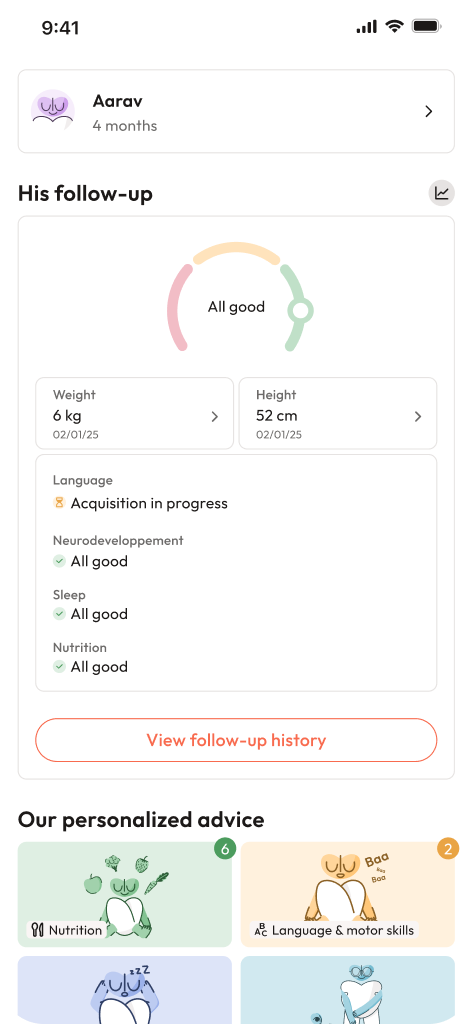
- Support exists, and you can download the Heloa app for personalised tips and free child health questionnaires.

Further reading :