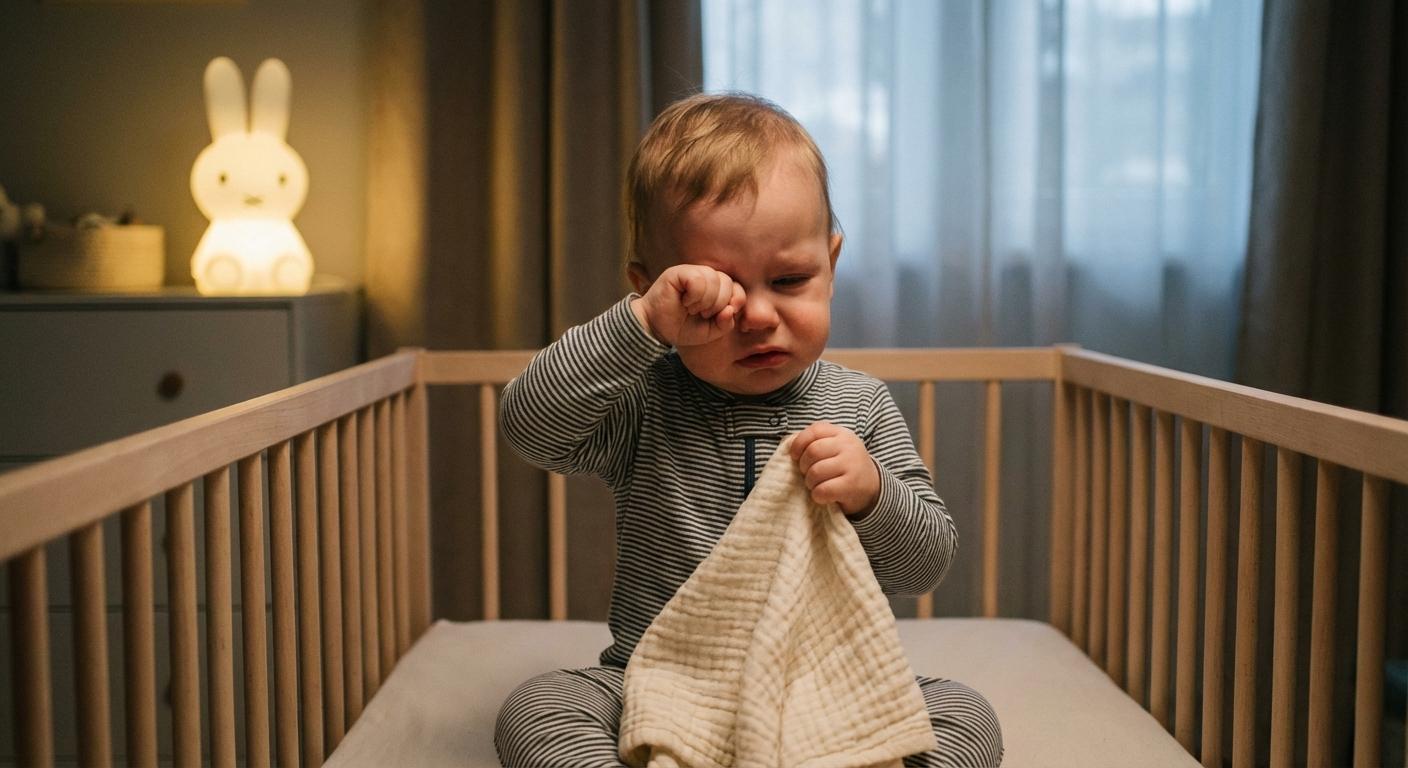
When you’re watching the clock and your baby crying from fatigue but won’t sleep despite feeding, rocking, a lullaby, and your best patience, it can feel like the night has turned into a long test. Why would a baby who is clearly exhausted suddenly become more alert, more cranky, more wired? Often, it’s pure physiology: an immature nervous system flips into high arousal when wake time stretches, discomfort kicks in, or the evening fussiness peak arrives. Add hunger, gas, or separation worries, and settling becomes a tug-of-war.
What helps most is a calm sequence: reduce stimulation fast, check the common physical triggers, then repeat 2-3 soothing steps long enough to let your baby’s body soften into sleep.
Baby crying from fatigue but won’t sleep: what to do right now
If your baby crying from fatigue but won’t sleep, think “reset”, not “perform”. Less noise. Less light. Less change.
Quick reset checklist (calm, comfort, then sleep)
- Pause and breathe. Crying is a stress signal, not evidence you’ve failed.
- Cut stimulation quickly: dim lights, keep voices low, switch off screens, move to a quieter room.
- 30-second comfort scan: hunger cues, diaper, temperature, tight clothing, hair tourniquet (a strand wrapped around toe/finger), and burp if you suspect trapped air.
- Switch to sleep cues: a dark room, steady white noise (low volume, away from the crib), slow movements.
- Pick one calming method and stick with it for a few minutes before switching.
- If nothing shifts after a reasonable attempt, use a safe rescue (micro-nap, contact nap, earlier bedtime) to break the overtired cycle.
Time-limited soothing: how long to try one method
Overtired babies often get more upset if the plan changes every minute. Try one step long enough to see a trend.


- Hold/contain + shush in a dark room: 2-5 minutes
- Add rhythmic patting or slow rocking: 5-8 minutes
- Pacifier or brief comfort feed (as appropriate for age): 5-10 minutes
A good overall settling window before changing strategy: about 20-30 minutes.
If your baby ramps up (stiff body, back arching, frantic limbs), that often signals the need for more co-regulation: closer contact and fewer sensory inputs.
Rescue options to break the overtired cycle
When baby crying from fatigue but won’t sleep keeps repeating, a small reset can save the rest of the day.
- Micro-nap: 8-15 minutes (often in arms or a carrier).
- Contact nap: a short supervised nap on you. Stay awake and keep baby’s airway open (chin off chest).
- Earlier bedtime: after a skipped nap or a long late-afternoon wake window, shift bedtime earlier by 20-45 minutes.
Understanding overtired but won’t sleep
What “baby crying from fatigue but won’t sleep” really means
This pattern is usually not a refusal. It’s a mismatch: your baby needs sleep, but their body is too activated to glide into it. After a stretched wake window, the brain can move into a more alert state. Heavy eyelids, yawns, then sudden screaming the moment you start settling.
Fatigue cry vs evening release cry vs discomfort cry
When baby crying from fatigue but won’t sleep, it can help to notice the overall pattern.
- Fatigue crying: follows a wake period that ran long. Signs: yawning, eye rubbing, irritability, clinginess.
- Evening release crying: often late afternoon/evening and can sound intense, especially in younger babies.
- Discomfort crying: linked to a trigger: hunger, wet diaper, temperature, gas, pain.
Very often it’s a mix: overtired plus gas plus evening fussiness.
Sleep pressure vs circadian rhythm (body clock)
Two systems shape sleep:
- Sleep pressure (homeostatic drive) builds the longer your baby stays awake.
- Circadian rhythm (body clock) is influenced by light exposure, routine, and timing.
If bedtime shifts later or wake windows stretch, sleep pressure is high, but arousal can rise too. Stress hormones (cortisol/adrenaline) support wakefulness, creating the wired and tired feel.
Normal infant crying curve and evening fussiness
Many babies cry more in the evening. For some, it peaks in the early weeks and gradually eases as the nervous system matures. It’s not a sign of poor parenting. It’s a sign your baby needs help shifting down into rest.
Overtired vs undertired: both can look like won’t sleep
- Overtired: escalating cry, frantic body, harder to soothe, and once asleep the sleep may be lighter and more broken.
- Undertired: more alert or playful, protesting but not distressed, takes long to fall asleep, may wake up cheerful.
If the emotion is intense distress and your baby cannot settle, treat it as overtired first and shorten the next wake window.
Catch fatigue earlier: sleepy signs that matter
Early tired signs: start wind-down immediately
Early cues: yawning, glazed stare, slower movements, reduced interest in play, mild fussiness, wanting to be held.
Once these appear, begin a short wind-down in the same place with the same steps.
Late tired signs: the second wind stage
Crying, stiffening/arching, rubbing eyes hard, frantic kicking, pulling off the breast/bottle then rooting again, resisting being held, wide-eyed alertness. At this stage, aim for fewer inputs: darker room, steady containment, repetitive sound.
Why a baby is tired but won’t sleep
Wake windows too long (or too short)
Wake windows are often the fastest lever.
- Newborns: around 30-90 minutes (often 45-60 minutes early on)
- 3-4 months: around 1.5-2.5 hours
- 6-12 months: around 2.5-3.5 hours
- Toddlers: often around 3-4 hours between sleeps
These are broad ranges. Temperament, weather, travel, daycare, and family functions can shorten tolerance. If baby crying from fatigue but won’t sleep happens after outings, try bringing sleep earlier the next day.
The overtired loop: missed window, stress hormones, harder settling
A common cycle: bedtime battle, short nap/night fragmenting, more fatigue, stronger crying the next evening.
Try a 3-5 day experiment: move the next nap or bedtime earlier by 15-30 minutes at the first tired cues.
Day-night rhythm still maturing
Support the rhythm:
- Daytime: natural light, normal household sounds, play
- Evening: dim light, calmer voice, slower pace
- Night: boring care (feed/change if needed, back to sleep)
Hunger and digestive discomfort
Hunger and fatigue overlap. If hunger cues are there, feeding can be the right first step.
A tired baby is less tolerant of discomfort. Reflux-like discomfort can look like distress after feeds, crying when lying flat, frequent spit-ups, cough, back-arching, needing upright time. If symptoms are persistent, especially with feeding refusal or poor weight gain, seek medical advice.
Sleep environment and safety
Make the room feel like sleep
- Dim light (you can barely see your hand)
- Steady white noise at low volume, away from the crib
- Breathable layers, avoid overheating
Safe sleep setup basics
- Back to sleep
- Firm, flat surface in a crib/bassinet/play yard
- Empty sleep space (no pillows, loose blankets, soft toys, bumpers)
- Sleep sack for warmth
Swaddle safety and when to stop
Stop swaddling when baby shows attempts to roll or can roll (often 2-4 months). Shift to a sleep sack.
Gentle ways to help baby fall asleep
A short, repetitive routine
Routine can be simple: diaper, sleep sack, white noise, brief song/story, cuddle, then bed.
Calming with presence
Helpful tools:
- Gentle containment (a calm hand on the chest)
- Shushing
- Slow rocking or swaying
- Skin-to-skin
- Calm babywearing
Pick 1-2 techniques and stay with them for a few minutes.
Drowsy but awake: when it works
Often fails when baby crying from fatigue but won’t sleep is already in the late-tired stage. Prioritise sleep first, then habits.
When it may not be tiredness: when to seek help
Red flags: call your paediatrician
Seek medical advice promptly if you notice:
- Fever >=38°C in a baby under 3 months
- Breathing difficulty (retractions, grunting, flaring nostrils, bluish lips/face)
- Dehydration signs (much fewer wet diapers, very dry mouth, sunken fontanelle)
- Extreme lethargy, floppy tone, or baby hard to wake
- Persistent inconsolable crying with a clearly unusual cry or pain signs
- Green (bilious) vomiting or blood
Key points to remember
- When baby crying from fatigue but won’t sleep, overtired arousal is often the driver.
- Catch early sleepy cues and shift bedtime earlier by 15-30 minutes for a few days.
- Quick checks for feeding, diaper, temperature, and digestive discomfort reduce battles.
- Keep sleep cues steady: dim light, white noise, predictable steps.
- If red flags appear or the crying feels different, a clinician can assess and reassure.
- For personalised tips and free child health questionnaires, you can download the Heloa app.