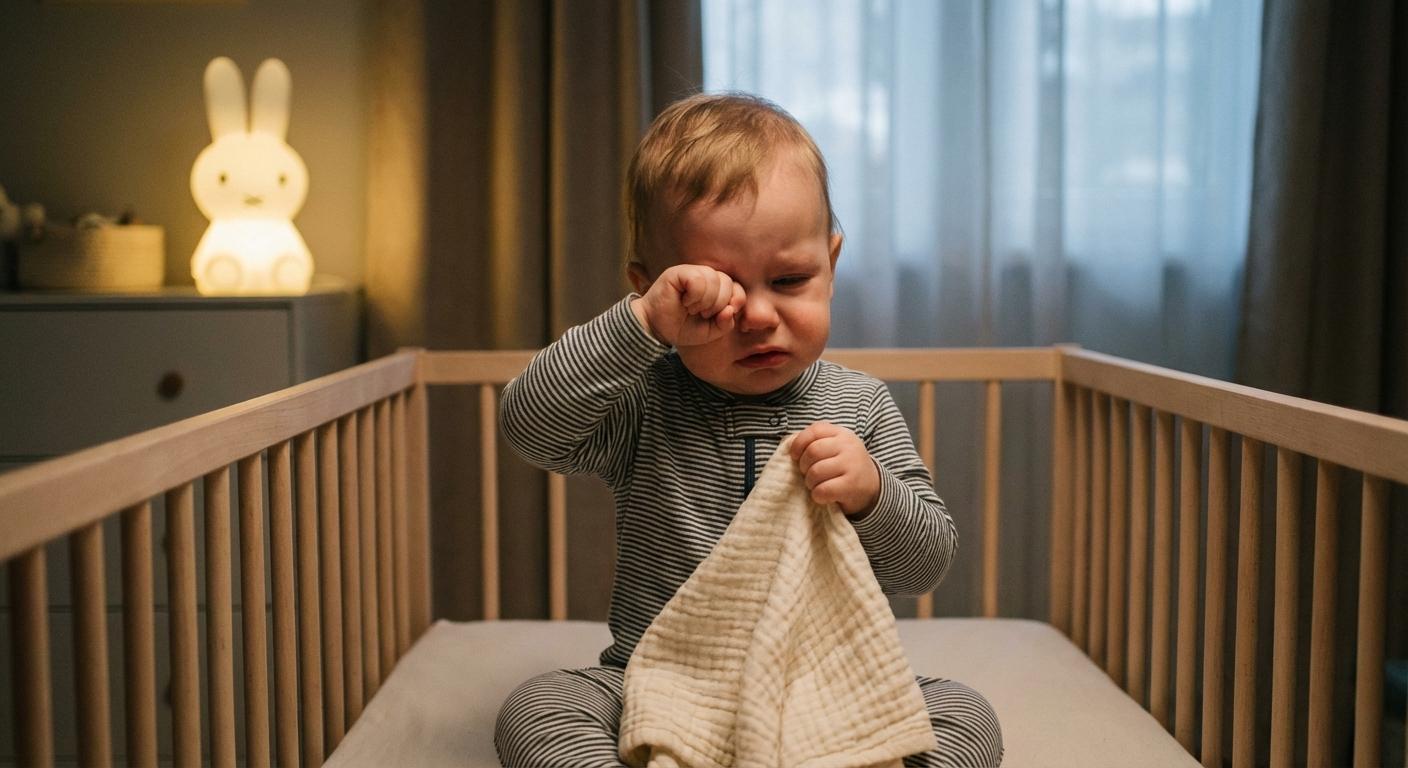
Hearing your baby crying from fatigue but won’t sleep can feel like a paradox: the eyelids are heavy, yawns keep coming… and yet the moment you try to settle, the crying intensifies. You may wonder what you are missing. Often, nothing is “wrong”. Many babies struggle to shift from alertness to sleep when their nervous system is overloaded, their wake window ran long, or discomfort (gas, reflux-like symptoms, teething) adds fuel to the fire.
A calmer plan usually has three parts: (1) reduce stimulation, (2) check for the most common physical triggers, (3) use a few steady, repeatable soothing steps long enough to work.
Baby crying from fatigue but won’t sleep: what to do in the moment
When baby crying from fatigue but won’t sleep is happening, aim for fewer inputs, not more. Quick. Simple. Predictable.
A 3-minute reset (calm, comfort, then sleep)
- Stop “trying everything” at once. Pause, exhale.
- Dim the room, lower your voice, put the phone away.
- Comfort scan (30 seconds): hunger cues, wet/dirty diaper, too hot/too cold, tight seams/tags, hair wrapped around a toe/finger (hair tourniquet), need to burp.
- Switch on sleep cues: dark or very dim light and white noise (low volume, away from the crib).
How long to try one soothing method before changing
Overtired babies can become more upset when the strategy changes every 20 seconds. A practical rhythm:


- Containment in arms + “shhh” in a dark room: 2-5 minutes
- Add slow rocking or rhythmic patting: 5-8 minutes
- Pacifier or short comfort feed (if it fits your feeding plan): 5-10 minutes
If crying escalates (stiff body, back arching, frantic limbs), that often means your baby needs more co-regulation (closer contact, steadier cues), not extra stimulation.
Rescue options that break the overtired loop
If baby crying from fatigue but won’t sleep has been going on and everyone is spiraling, choose a safe rescue:
- Micro-nap: 8-15 minutes in arms or a carrier can lower arousal and make the next sleep easier.
- Contact nap: short supervised sleep on you, stay awake and keep the airway open (chin off chest).
- Earlier bedtime: move bedtime 20-45 minutes earlier after a missed nap or a long late-afternoon wake window.
Why a tired baby can fight sleep: the physiology in plain words
The phrase baby crying from fatigue but won’t sleep usually points to a mismatch: sleep need is high, but the body is “revved up”.
Sleep pressure vs circadian rhythm
Two systems work together:
- Sleep pressure (homeostatic drive): builds the longer your baby stays awake.
- Circadian rhythm (biological clock): influenced by light, routines, and timing.
When a wake window stretches too far, sleep pressure increases, but arousal can rise too. Stress hormones (often described as cortisol and adrenaline) promote vigilance. Result: the classic “wired and tired” picture.
Overtiredness: when stress hormones block settling
An overtired baby may look exhausted and still resist sleep: crying, arching, wriggling, startled movements, repeated “almost asleep” then screaming. In that state, distractions and bright activity often backfire.
Evening fussiness and the normal crying curve
Many infants fuss more late afternoon and evening. Why then? Immature nervous system, accumulating sensory input, and a body clock still taking shape. Sometimes it sounds intense and still falls within typical infant behavior. You are not imagining it.
Is it fatigue crying, discomfort, or evening release?
With baby crying from fatigue but won’t sleep, parents often ask: “Is my baby in pain?” Sometimes yes. Sometimes no. Often, it is mixed.
- Fatigue crying: follows a wake window that ran long, yawning, rubbing eyes, glazed stare, irritability, desire for closeness.
- Evening release crying: often clustered in the evening, baby may cry hard in arms but is not “asking” for play, just steady presence.
- Discomfort crying: hunger, gas, reflux-like discomfort, a trapped burp, teething, illness, squirming, grimacing, crying that worsens when lying flat.
If you notice a sudden change in the cry (different pitch, pain-like), or your baby seems unwell, a medical check is sensible.
Catch tiredness earlier: cues that matter
When baby crying from fatigue but won’t sleep becomes frequent, the biggest win is often earlier timing.
Early signs (start wind-down now)
Yawns, staring, slowing down, less interest in toys, mild fussing, wanting to be held. If you wait for crying, you are often already late.
Subtle signs (easy to miss)
Disengagement, looking away, brief bursts of energy followed by crankiness, difficulty staying with a toy. Starting your routine 15-30 minutes earlier can change the whole evening.
Late signs (the “second wind”)
Crying, back arching, frantic kicking, pulling off the breast/bottle then rooting again, hyper-alert eyes. At this point: darker room, fewer words, steady touch, repetitive sound.
Common reasons baby crying from fatigue but won’t sleep happens
Wake windows: too long… or sometimes too short
Wake windows are the fastest lever.
Broad starting ranges (babies vary):
- Newborns: ~30-90 minutes
- 3-4 months: ~1.5-2.5 hours
- 6-12 months: ~2.5-3.5 hours
- Toddlers: ~3-4 hours between sleep periods
If baby crying from fatigue but won’t sleep shows up most at bedtime, try shortening the last wake window for 3-5 days.
Nap problems that snowball into bedtime chaos
A skipped nap, very short naps, or a nap that ends too late can all disrupt night settling. If naps were poor, protect the next sleep opportunity rather than pushing through.
Day-night rhythm still maturing
Support the clock with clear cues:
- Day: daylight, interaction, normal noise.
- Evening: dimmer light, slower pace.
- Night: calm, boring care (feed, change if needed, back to sleep cues).
Separation anxiety and need for closeness (often after 6 months)
Some babies protest the moment they are placed down. That does not mean you created a “bad habit”, it can be developmental. A gentle approach is consistent reassurance, then gradually reducing help once settling is easier.
Overstimulation (outings, visitors, screens)
Busy days often lead to baby crying from fatigue but won’t sleep at night. Bright light and fast transitions keep the brain in alert mode. After a stimulating day, simplify bedtime and consider an earlier night.
Hunger, growth spurts, feeding timing
Fatigue and hunger overlap. If hunger cues are present, feeding can be the right step. If feeding-to-sleep is the only way sleep happens and it is no longer working for your family, you can shift the feed earlier in the routine (feed, burp, diaper, then settle).
Digestive discomfort, reflux-like symptoms, teething, illness
A tired baby tolerates discomfort poorly.
Reflux-like symptoms may include distress after feeds, frequent regurgitation, coughing, crying when lying flat, or back arching. Upright holding 5-15 minutes after feeds can help some babies. If there is feeding refusal, poor weight gain, blood in vomit/stool, or persistent distress, seek medical advice.
Sleep environment and safety: keep it simple and safe
When baby crying from fatigue but won’t sleep, it is tempting to improvise. Safety stays non-negotiable.
Sleep cues that support downshifting
- Very dim light for naps/bedtime
- White noise at low volume, away from the crib
- Cooler room temperature with appropriate layers (hands/feet can feel cool, check chest/neck)
Safe sleep basics
- Back to sleep
- Firm, flat mattress in a crib/bassinet/play yard
- Empty sleep space (no loose blankets, pillows, bumpers, stuffed toys)
- Sleep sack for warmth
Swaddling: when to stop
Swaddling can help newborns settle, but stop as soon as your baby shows signs of rolling (often 2-4 months). Keep hips free to move and the head uncovered.
Motion sleep as a temporary reset
Carrier/stroller motion can reduce crying and allow a micro-nap. Keep the airway open (chin not tucked). Car seats are for travel, not routine unsupervised sleep, transfer to a safe flat surface when possible.
Gentle, steady settling tools (without adding fuel)
If baby crying from fatigue but won’t sleep is a nightly pattern, consistency beats novelty.
A short routine that your baby can predict
Diaper, sleep sack, white noise, a brief song/story, cuddle, then bed. Not long. Just repeatable.
A responsive soothing ladder
Start small, then add support if needed:
1) Hand on chest + shushing
2) Gentle patting
3) Pick up to calm, then put down
4) Slow rocking/sway
5) Short comfort feed if hunger is likely
Once calmer, fade your help gradually rather than stopping abruptly.
When to get medical help: red flags
Call your pediatrician or seek urgent care if you notice:
- Fever >= 38°C (100.4°F) in a baby under 3 months
- Breathing difficulty (retractions, grunting, flaring nostrils, bluish lips/face)
- Signs of dehydration (far fewer wet diapers, very dry mouth, sunken fontanelle)
- Extreme lethargy, floppy tone, or a baby hard to wake
- Persistent inconsolable crying with a very unusual cry or clear pain signs
- Green (bilious) vomiting or blood
Key takeaways
- baby crying from fatigue but won’t sleep often reflects overtired arousal: sleep need is high, but the nervous system is on alert.
- Earlier wind-down (catching early cues) and shorter wake windows can rapidly reduce bedtime crying.
- Quick comfort checks (hunger, diaper, temperature, burp/gas, reflux-like discomfort) prevent long settling battles.
- Keep sleep cues steady: dim light, white noise, predictable routine.
- Safe sleep remains the priority: back to sleep, firm flat surface, empty crib.
- If something feels off or red flags appear, a health professional can assess and reassure.
- For additional support, you can download the Heloa app for personalized guidance and free child health questionnaires.
Questions Parents Ask
Should I let my overtired baby “cry it out” if they’re exhausted but won’t sleep?
Rassure yourself: a baby can be very tired and still need help to downshift. If crying is escalating or your baby seems more “wired,” staying close and using steady calming cues (darkness, white noise, gentle rocking) often works better than leaving them to figure it out alone. If you choose any waiting approach, keeping it short and checking in calmly can feel more supportive—especially during overtired phases.
Can an overtired baby skip sleep completely?
Usually, no. Most babies will eventually sleep, but overtiredness can lead to short, restless dozing and frequent “startle-wake” cycles. A small reset can help: a brief contact nap, a stroller/carrier snooze, or simply bringing the next sleep earlier. Even 10–15 minutes of sleep can lower stress hormones and make the next attempt smoother.
When is crying from fatigue a sign of something else (like silent reflux or a cow’s milk allergy)?
It can be hard to tell, and you’re not overthinking it. Consider extra support from a clinician if crying is consistently linked to feeds, your baby seems in pain when lying flat, vomits forcefully, has blood/mucus in stools, poor weight gain, or persistent feeding refusal. The good news: if something medical is contributing, there are gentle, effective options to improve comfort and sleep.