Baby food can look simple—until your baby turns away after two spoons, gags on a new texture, or a relative suggests honey in warm water. You may be thinking: When to start? What is safe? How do Indian family meals fit into all this?
Baby food is not a race. Milk feeds stay central in the first year, while solids build chewing, swallowing, and self-feeding skills. Keep the focus on readiness signs, texture progression, iron, healthy fats, and safety.
Baby food basics for getting started
What “baby food” means (beyond jars and pouches)
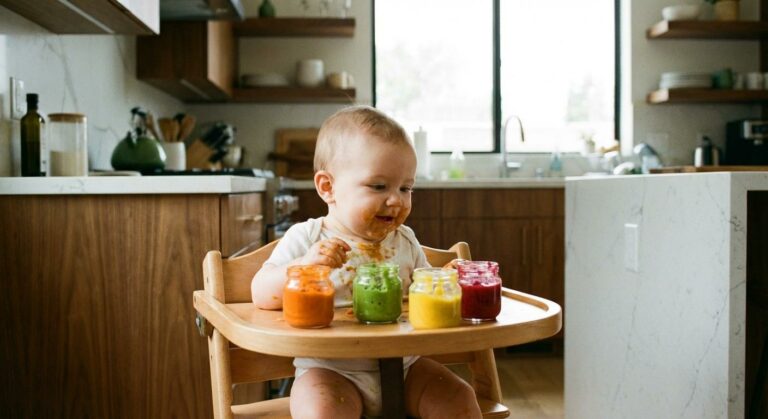
Baby food is any food prepared so a baby can manage it safely: smooth purées, mashed foods, thicker blends with soft lumps, and soft finger foods. In many Indian homes, baby food may be dal purée, mashed khichdi, curd rice (well mashed), idli softened in curd, or steamed and mashed vegetables—plus store-bought options for travel or backup.
Two things matter most: texture and ingredients.

- Keep baby food nutrient-dense.
- Avoid added salt and added sugar.
- Adjust consistency so swallowing stays comfortable.
When to start solids and signs of readiness
Many babies start baby food between 4 and 6 months, depending on readiness signs (not only age). Look for several signs together:
- Holds head and neck steady
- Sits with minimal support and stays stable
- Shows interest in food (reaches, opens mouth)
- Tongue-thrust reflex is fading
For babies born prematurely, timing is often based on corrected age. If your baby has reflux, poor weight gain, or medical concerns, your paediatrician can tailor the plan.
How breast milk or formula fits in with baby food
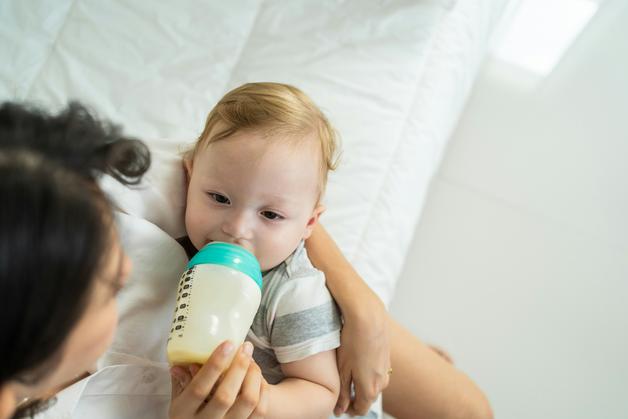
Breast milk or infant formula remains the main source of energy and hydration through the first year. Baby food complements milk: it adds nutrients, expands tastes, and builds feeding skills—without replacing milk suddenly.
In the beginning, tiny amounts are normal. Over months, many babies move toward 2–3 small meals daily while keeping milk feeds on demand.
Baby nutrition essentials: what matters most
The “big three” to prioritise
Feeding can feel like a long list. Three priorities cover most early needs:
- Iron (brain development, prevention of iron deficiency anaemia)
- Fats (growth and neurological development)
- Food safety (textures, choking prevention, hygiene)
Iron, vitamin D, and iodine: key points
Iron. Iron stores fall around mid–first year, so iron-rich baby food matters early.
Good options:
- Well-cooked meat, fish, egg (puréed, mashed, finely minced)
- Very well-cooked legumes (moong/masoor dal, chana, rajma) mashed smooth
- Iron-fortified infant cereals (if you use them)
Pair plant-based iron with vitamin C in the same meal (dal + tomato, chickpea + a little lemon once tolerated).
Vitamin D. Supplementation is commonly prescribed in India depending on local guidance and feeding method. Confirm the dose with your clinician.
Iodine. Supports thyroid hormones and brain development. Fish, eggs, and dairy contribute. (Iodised salt is a family source, but baby food itself should not have added salt.)
If your baby was born prematurely or has low iron, get personalised medical advice before adding supplements.
Hunger and fullness cues
A baby’s appetite changes with teething, illness, and growth spurts.
Hunger cues: leaning forward, opening the mouth for the spoon, bringing hands to mouth, clear interest in baby food.
Fullness cues: slowing down, turning away, closing lips, pushing spoon away.
Feeding in the first months: milk first
Small, painless spit-ups are common because the lower oesophageal sphincter is still maturing. Seek medical advice if you notice repeated large vomits, blood, breathing difficulty, strong pain, feeding refusal, very few wet nappies, or poor weight gain.
Before 6 months, milk generally covers hydration, juices and sweet drinks do not help.
Baby food stages by age and texture
Stage 1 baby food (often 4–6 months when ready)
Smooth purées, thin and spoonable.
Examples:
- Sweet potato, carrot, pumpkin, peas
- Apple/pear purée
- Steamed and puréed lauki or pumpkin
Safety: no honey before 12 months, no added salt or sugar.
Stage 2 baby food (around 6–8/9 months)
Thicker purées, mashed foods with soft lumps, plus early finger foods.
Examples:
- Mashed avocado
- Well-cooked dal mashed smooth at first
- Mashed khichdi with a little ghee
- Full-fat plain curd/yoghurt
- Fully cooked scrambled egg
Stage 3 baby food and beyond (around 8–10 months+)
Mashed textures and soft pieces, then gradual move to chopped family foods.
Examples:
- Soft vegetable pieces
- Soft fruit pieces
- Idli pieces softened in curd
- Boneless, well-cooked fish flakes
Avoid high-risk choking foods like whole grapes, popcorn, whole nuts, hard candy, and hard raw rounds.
Baby food textures: progressing without stress
A practical progression:
- Smooth
- Thicker with gentle lumps
- Mashed and soft “melting” pieces
Going too fast can cause frequent gagging, staying on only smooth purées too long can make later transitions harder.
To thin baby food: add a little breast milk, formula, water, or unsalted cooking liquid.
To thicken: mash more, blend less, or add tiny soft bits of well-cooked food.
Spoon-feeding, baby-led weaning, or mixed feeding
Baby-led weaning (BLW) uses safe finger foods so babies self-feed. Many families prefer mixed feeding: spoon-fed baby food for steady intake plus finger foods for skills.
Non-negotiables:
- Upright posture in a stable high chair
- Calm, close supervision (no distracted eating)
- Soft foods easy to mash
Gagging is often noisy, choking is silent or ineffective sound. If choking happens, call emergency services and use infant first aid if trained.
Baby food nutrition: building balanced meals
Iron-rich baby food deserves regular space on the plate. Add healthy fats to boost energy density and support brain development.
Indian-friendly fat options (as tolerated):
- A small spoon of ghee in khichdi
- A little groundnut oil or rice bran oil mixed into purées
- Full-fat curd/yoghurt
Introducing allergens with baby food
Common allergens: milk protein (curd/paneer), egg, peanut, tree nuts, soy, wheat, sesame, fish, shellfish.
Introduce one at a time, in small amounts, and observe over the next 2–3 days. Use safe forms (smooth nut butter thinned, never whole nuts).
Seek urgent care for breathing difficulty, widespread swelling, or collapse.
Baby food safety and hygiene at home
Choking prevention relies on posture, food shape, and supervision:
- Baby sits upright
- Food is soft and cut appropriately
- No eating in the car or while playing
Hygiene basics: wash hands, use clean utensils, separate raw and cooked foods, cook animal foods thoroughly. Reheat once, stir well, and discard leftovers after feeding.
Foods to avoid/limit:
- No honey before 12 months
- Avoid added salt and added sugar
- Cow’s milk is not the main drink before 12 months (small amounts in cooking are usually fine after about 6 months)
Homemade vs store-bought baby food
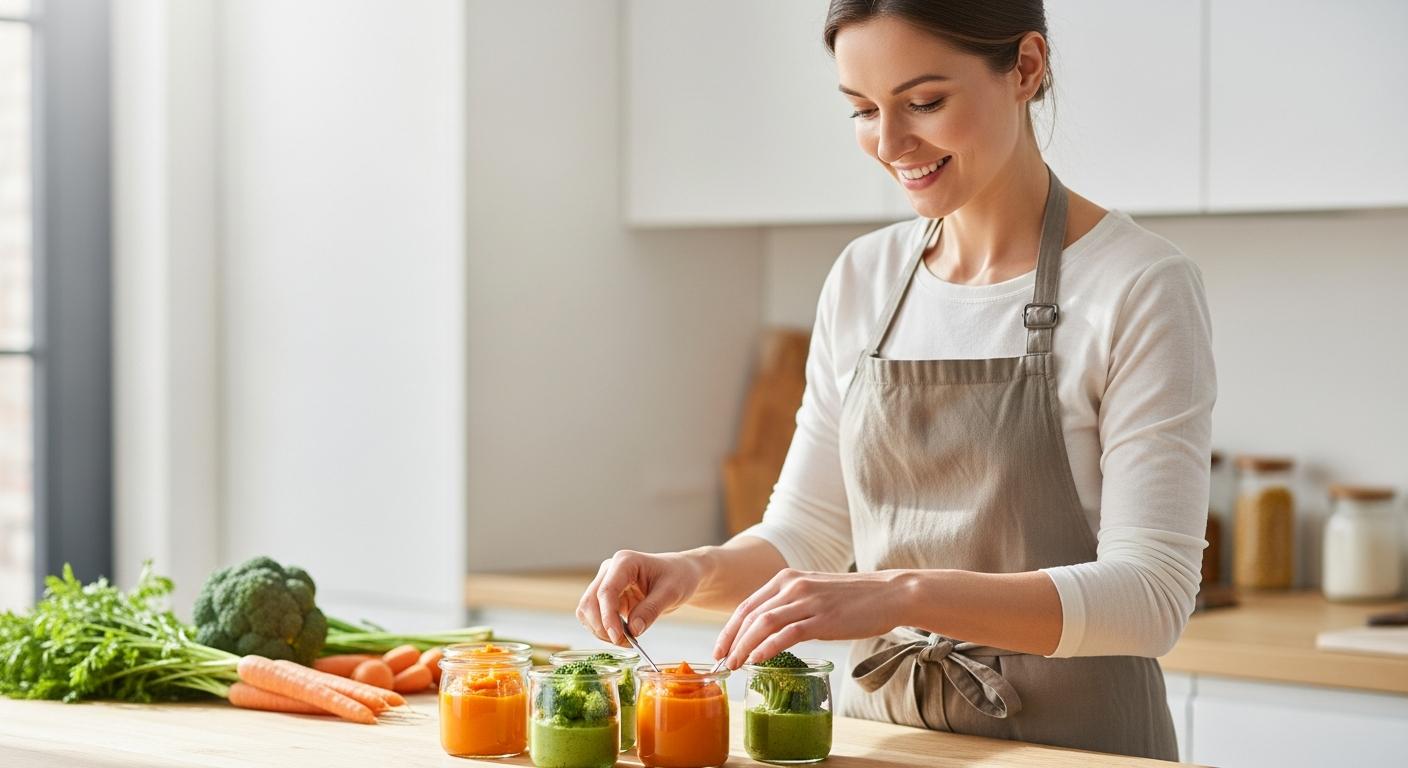
Homemade baby food: fresh, familiar flavours, easy texture changes—needs time and careful storage.
Store-bought baby food: convenient and travel-friendly—choose simple ingredient lists, and do not rely only on pouches for long.
Label check: avoid honey (under 12 months), added sugars (including fruit juice concentrate), and high sodium.
Storing baby food safely
- Fridge at 4°C or below
- Homemade purées/mashed foods: about 24 hours in a clean container
- Opened jars/pouches: follow label (often 24–48 hours)
- Freeze small portions, label dates, use within about 2 months for quality
- Thaw in the fridge overnight, avoid room-temperature thawing
Baby food meal ideas (quick and practical)
- Moong dal + pumpkin mash
- Khichdi mashed with ghee
- Curd + banana (well mashed)
- Egg (fully cooked) + vegetable purée
- Soft idli strips with curd
Responsive feeding: portions without pressure
Portions vary widely.
- 6–8 months: start with 1–2 tablespoons per meal
- 9–11 months: often 2–4 tablespoons plus finger foods
- 12+ months: around 1/4 to 1/2 cup per meal, depending on appetite
You decide what and when, your baby decides whether and how much. If intake drops for many days, wet nappies reduce, or growth seems slow, speak with your paediatrician.
Key takeaways
- Baby food can start when readiness signs appear, often between 4 and 6 months.
- Milk remains the foundation through the first year, baby food complements it.
- Progress textures gradually: smooth → thicker with soft lumps → mashed and soft pieces.
- Prioritise iron-rich baby food and include healthy fats.
- Introduce allergens one at a time in safe forms.
- Keep safety front and centre: upright posture, close supervision, hygiene, and no honey before 12 months.
Support exists if feeding feels confusing, and you can download the Heloa app for personalised tips and free child health questionnaires.
Further reading :