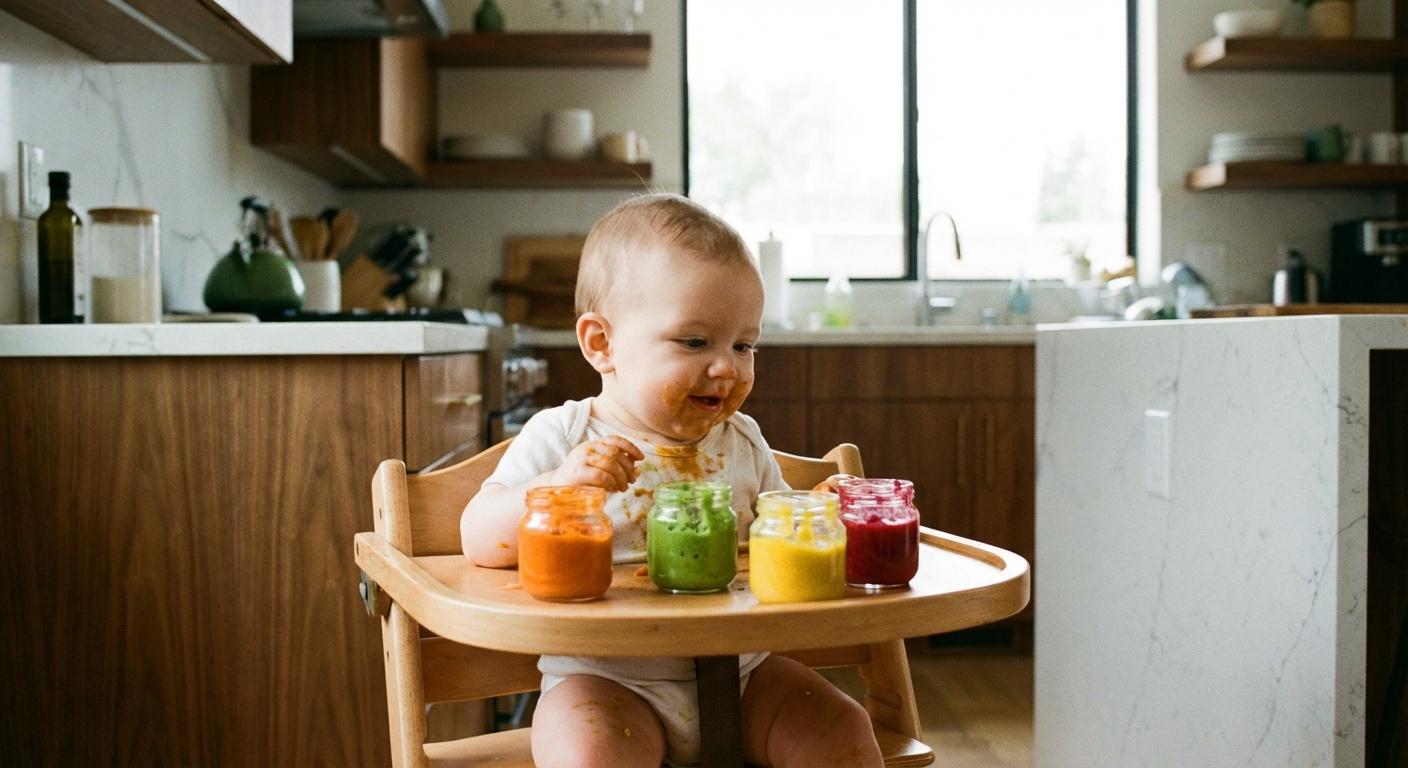
Homemade baby food can bring two feelings at the same time: the urge to do everything “properly”, and the worry that you will run out of time (or do something unsafe). Many Indian parents also juggle joint-family advice, daycare schedules, and a kitchen that is already busy. The nice part? Homemade baby food does not need a lab-like routine. A few solid anchors (clean handling, correct cooking, texture progression, and storage) are enough to keep things safe while your baby learns to eat, step by step.
Why parents in India choose homemade baby food
Homemade baby food is not only about cost. It gives you control over what goes into the bowl: the grain you prefer, the dal your family trusts, the vegetable that is in season, the spice level you can keep gentle.
It also makes it easier to:
- prioritise iron-rich foods (meat, egg, lentils, rajma, chana, iron-fortified cereals)
- add calorie support with healthy fats (ghee in tiny amounts, avocado, peanut paste diluted, curd)
- avoid added salt and added sugar in the first year
And yes, variety matters. Rotating fruits, vegetables, cereals/millets, and proteins builds familiarity. Babies often need multiple exposures before they accept a taste, especially bitter flavours like spinach or methi.

Homemade baby food vs store-bought: benefits, limits, and a sensible mix
Packaged baby food can be helpful: travel-friendly, portioned, regulated, and convenient during growth spurts or hectic weeks. Homemade baby food offers flexibility with texture (silky puree today, thicker mash tomorrow), and you can match it to what your family eats (minus salt and chilli).
For many households, a mix is practical. Homemade baby food when you can. Store-bought when you need. The goal is steady, safe feeding.
When can babies start solids?
Readiness signs (often around 6 months)
Many babies are ready near 6 months, but readiness signs matter more than age:
- good head and neck control
- sits with minimal support
- interest in food (watching, reaching)
- opens mouth for spoon
- can move food back and swallow (less tongue-thrust)
Breastmilk or formula remains the main nutrition source early on. Solids are for learning: tastes, textures, coordination.
Homemade baby food textures by age and stage
Texture is not just preference: your baby’s oral motor system is training. Tongue movement, jaw stability, and safe swallowing develop with practice.
Around 6–8 months: very smooth purees
Aim for lump-free textures. Single-ingredient homemade baby food (apple, pear, carrot, pumpkin) can help you observe tolerance.
To thin, you can add:
- breastmilk or formula
- boiled and cooled water
Around 8–9+ months: thicker purees, mashed foods, soft finger foods
Shift from blender to fork. Small, soft lumps are “practice chewing”. Offer soft finger foods when your baby sits well and brings food to the mouth.
Indian-friendly ideas (soft-cooked, no added salt):
- well-mashed moong dal khichdi
- soft idli fingers dipped in thin dal
- steamed sweet potato sticks
Around 9–12 months: mixed textures and more variety
Many babies manage mashed foods with small soft pieces. This is a good window to widen proteins: egg, boneless fish flakes, chicken puree, well-cooked rajma mashed very smooth.
12 months and older: moving towards family foods
After 12 months, homemade baby food often becomes “family food, adjusted”: softer, cut small, with minimal salt. Some toddlers still prefer smoother textures when teething or tired.
Signs your baby is ready for more texture
You might notice steadier head control, curiosity about what others are eating, and more confident mouth movements. If gagging is frequent, coughing happens with lumps, or your baby looks distressed, slow down and return to an easier texture for a while.
Safety basics: kitchen hygiene and choking prevention
Hygiene and cross-contamination prevention
Food safety begins with habits you can repeat even on busy mornings:
- wash hands with soap
- clean counters and utensils
- rinse fruits and vegetables
- keep raw meat and fish separate from ready-to-eat foods
- wash cutting boards well between tasks (a separate board for meat/fish can help)
- store homemade baby food in clean, dry containers with tight lids
A small but real issue: loose lids or worn seals increase spoilage risk.
Choking vs gagging (very different)
Gagging is common while learning textures. It can look intense, but the baby usually coughs and keeps breathing.
Choking is an emergency: silence or very little sound, trouble breathing, colour change. If you suspect choking, seek emergency help.
Avoid high-risk choking foods in the first year: whole nuts and peanuts, popcorn, hard sweets, and hard round foods. Always supervise, and keep your baby upright.
Cooking, cooling, and reheating temperatures
Cook animal foods fully. A thermometer helps:
- poultry: 165°F / 74°C
- minced/ground meat: 160°F / 71°C
- fish: 145°F / 63°C (opaque, flakes easily, bone-free)
- eggs: cook until white and yolk are firm
Cool cooked food quickly. Avoid leaving homemade baby food at room temperature beyond 1–2 hours (less in hot weather). Refrigerate promptly.
When reheating: heat till steaming, stir well, cool, then test on your wrist. Reheat only once. Discard leftovers that touched your baby’s spoon or mouth.
Foods to avoid and limit in the first year
No honey before 12 months
Honey can carry spores that cause infant botulism. Avoid honey and honey-based mixes until after 12 months.
No cow’s milk as a drink before 12 months
Cow’s milk as the main drink is not advised before 12 months. Breastmilk or formula fits infant needs better. Curd and paneer may be introduced earlier depending on tolerance and your clinician’s guidance.
Keep added salt and added sugar out
Babies do not need added salt or added sugar. Lower sodium supports kidney workload and early taste shaping. Use fruit for sweetness rather than jaggery/sugar, and flavour with mild spices (jeera, cinnamon) instead of salt.
Avoid very salty processed foods
Packaged soups, chips, pickles, papad, sauces, and cured meats are best avoided for babies due to excess salt and additives.
Allergens and homemade baby food: how to introduce safely
Current recommendations generally support early introduction once solids begin and your baby is developmentally ready. If your baby has severe eczema or a strong allergy history, speak with your paediatrician or an allergist first.
With homemade baby food, keep it systematic:
- introduce one new food at a time
- wait 2–3 days before adding another
- watch for reactions over 24–72 hours
Practical ways to offer key allergens:
- Peanut: thin smooth peanut butter/peanut paste with warm water, breastmilk, or formula, mix into a familiar puree (no chunks).
- Egg: fully cooked scrambled egg, or boiled egg mashed into potato/khichdi.
- Dairy: plain curd (dahi) in small amounts, paneer mashed into a veg mash.
- Wheat: soft wheat porridge (dalia) cooked well and blended smooth.
- Fish: low-mercury fish, cooked through, bones removed, finely flaked.
Allergy signs to watch for: hives, swelling of lips/face, repeated vomiting, wheezing, persistent cough, breathing difficulty, unusual diarrhoea. Breathing trouble or widespread hives with swelling needs urgent medical care.
Building balanced meals: nutrients to prioritise
As solids increase, babies depend more on complementary foods for iron and zinc. Omega-3s (DHA/EPA) support brain and vision development. Vitamin D supplementation is often needed for breastfed babies (commonly 400 IU/day, follow your clinician). Vitamin B12 needs attention if animal foods are limited, iodine supports thyroid hormones, choline supports brain development.
A simple meal formula:
- iron source: egg, chicken, mutton, fish, lentils, chana, rajma, tofu, fortified cereal
- vitamin C partner: mango, orange, guava, tomato (in safe texture)
- fat: ghee (tiny amount), olive oil, curd, avocado
Vitamin C improves absorption of plant iron, which is useful for vegetarian families.
Ingredients for everyday variety (Indian kitchen friendly)
Rotate fruits and vegetables: sweet potato, carrot, pumpkin, lauki, beans, peas, spinach, apple, pear, banana, papaya, mango.
Rotate grains beyond rice: oats, ragi, barley, millets, quinoa.
Offer proteins often: egg, well-cooked dals, mashed legumes, tofu, chicken/fish in safe textures.
How to make homemade baby food (simple steps)
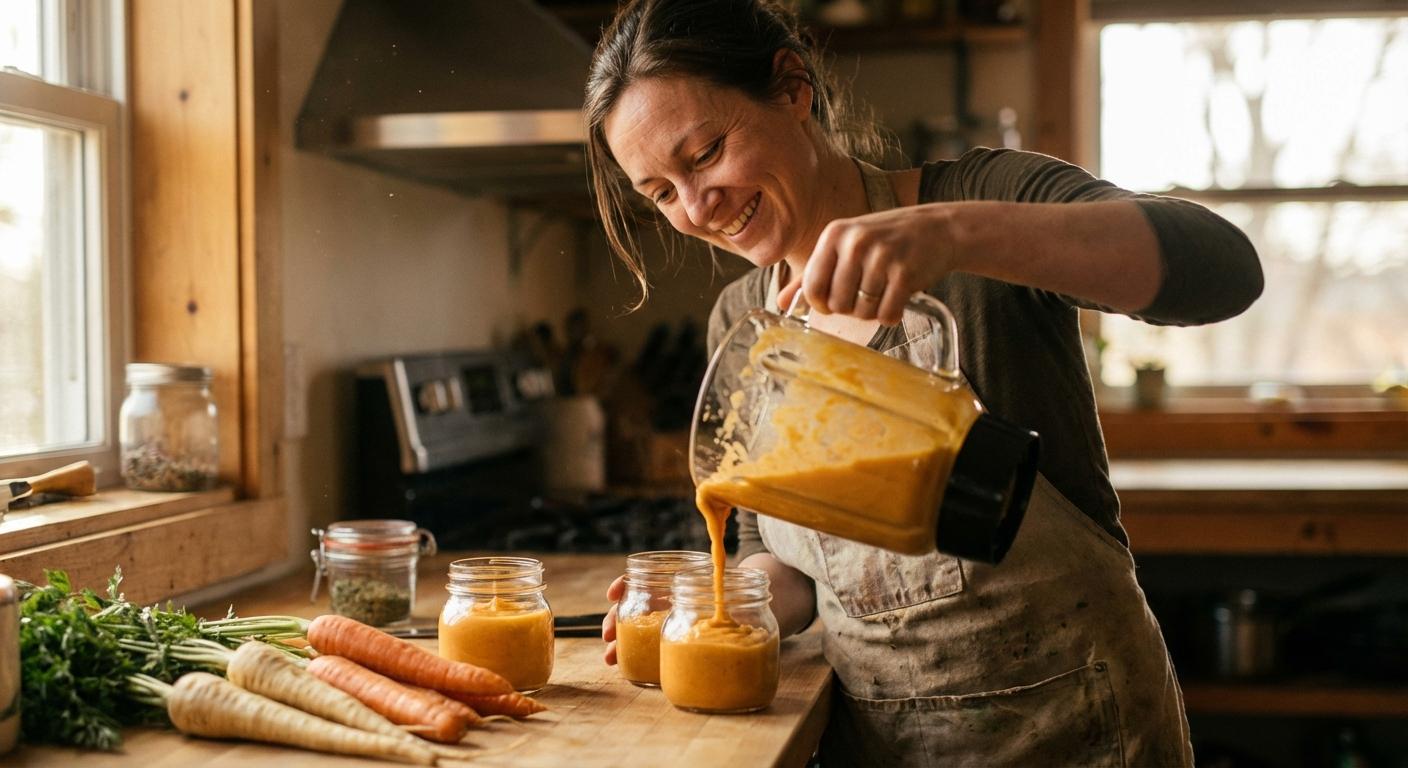
1) Choose, wash, peel, cut (seasonal produce is great, organic is optional).
2) Cook till very soft (steam or boil, keep cooking water to thin if needed).
3) Blend smooth at first, then mash thicker as skills improve.
4) Portion, cool quickly, refrigerate or freeze.
Storage, freezing, thawing, reheating
Refrigerate homemade baby food at 40°F / 4°C.
- fruit/veg purees: 2–3 days
- meals with meat, fish, egg: preferably within 24 hours
Freeze in small portions. Thaw in the refrigerator. Avoid thawing on the counter in hot weather. Do not refreeze thawed food.
Discard if smell is odd, appearance has changed, lid is swollen, or there is leakage.
Common mistakes (and gentle course-correction)
Texture issues: too thin, fibrous, lumpy
- too thin: use less water, or thicken with a small amount of fortified cereal or finely ground oats
- fibrous: cook longer, blend more
- lumps too big: blend again, or step back and move forward gradually
Busy weeks
Batch-cook two bases (like pumpkin puree and moong dal), freeze portions, and combine with quick add-ins (ghee/olive oil, curd, fruit puree). Keep a couple of dependable store-bought options too.
À retenir
- Homemade baby food can be safe and realistic: clean handling, thorough cooking, and correct storage matter more than fancy recipes.
- Readiness signs guide when to start solids, milk feeds remain the foundation early on.
- Texture progression supports oral skills: smooth → thicker → mashed → soft pieces/finger foods.
- Avoid honey before 12 months, avoid cow’s milk as a drink before 12 months, skip added salt and added sugar.
- Allergens can be introduced once your baby is ready for solids, with medical input for higher-risk babies.
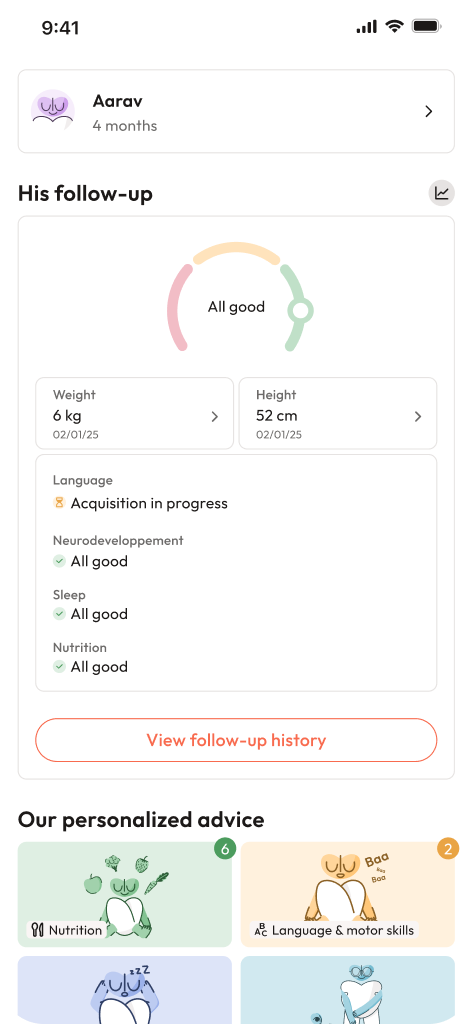
- For extra support, paediatricians and dietitians can help, and you can download the Heloa app for personalised guidance and free child health questionnaires.
Further reading: