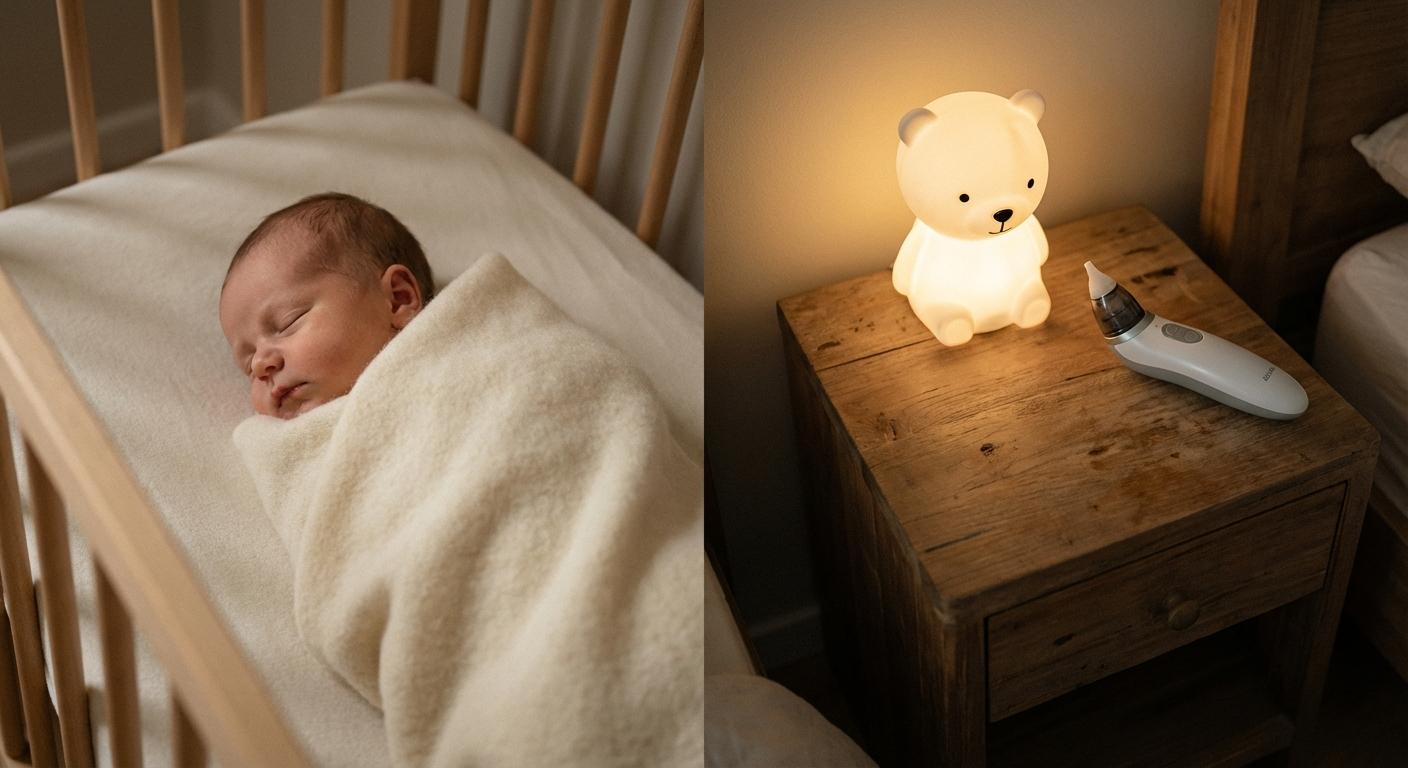

A blocked little nose can turn a normal day into a long one—feeds break off every few minutes, sleep becomes light and restless, and the breathing noise can make any parent pause. A Nasal aspirator can bring quick relief, but only when the aim is comfort, not getting everything out. Saline first, gentle suction after, and a strong focus on hygiene: that’s the combination that tends to work best.
What a Nasal aspirator does (and what it does not)
A Nasal aspirator is a baby nasal suction device that helps remove mucus sitting near the front of the nostrils, especially before children can blow their nose.
It can help with:
- Clearing mucus that is physically blocking airflow at the nostril opening.
It will not:

- Cure a viral cold.
- Treat inflammation of the nasal mucosa on its own.
- Stop the body from producing more mucus.
If congestion keeps coming back, it often means the nasal lining is still swollen (oedema), the air is dry, or the child is still in the middle of an infection or allergy episode.
Why a blocked nose disrupts feeding and sleep so quickly
In early infancy, babies are largely nasal breathers. Even a small plug can create big ripple effects:
- Breathing: noisy breathing, irritability, quick tiring.
- Feeding: the suck–swallow–breathe pattern gets disturbed, babies may unlatch, gulp air, and feed less.
- Sleep: frequent waking, more effort to settle, shorter naps.
Most of the time it is not dangerous, but it is uncomfortable. The practical goal is simple: keep breathing easy and keep feeding adequate.
Saline first: where the Nasal aspirator fits
Before suction, saline is the real game-changer. Sterile saline drops or spray:
- Moisturise the nasal mucosa.
- Thin thick secretions.
- Reduce friction so mucus moves without scraping delicate tissue.
A rhythm many Indian families find manageable (especially during monsoon colds or winter dry air):
1) saline
2) wait 30–60 seconds
3) brief suction with a Nasal aspirator only if the nose still sounds blocked
How suction works (simple physiology, parent-friendly)
Effective suction depends on three things:
- A gentle seal at the nostril entrance.
- Controlled negative pressure (a steady pull, not a harsh tug).
- Mucus that is soft enough to move.
Tip size matters. Newborn tips are usually wider and depth-limiting so they sit at the entrance. Narrower tips can suit older babies or thicker mucus, but they still should not go deep.
Over-suctioning—too strong, too long, too often—can irritate the lining and worsen swelling, making the nose feel even more blocked. Sounds unfair, but it is common.
When a Nasal aspirator helps (and when to pause)
Useful situations
A Nasal aspirator can temporarily reduce obstruction during:
- Common cold / upper respiratory infection: especially useful before feeds and sleep.
- Allergic rhinitis: when mucus and swelling create noisy breathing.
- Dry indoor air: heaters, AC, or fans can dry secretions.
- Bronchiolitis supportive care: suction does not treat the lower airways, but a clearer nose may help the baby drink with less fatigue.
Helpful timing:
- Before feeds.
- Before naps/bedtime.
- After a warm bath (steam can loosen secretions).
When to limit or skip
Pause suction if you see:
- Active nosebleed.
- Very dry, cracked nostrils.
- Increasing redness, swelling, or worsening distress.
If your child recently had a nasal injury or procedure, follow the clinician’s plan.
And if your baby is crying hard, gagging, or fighting strongly? Stop. A forced session usually becomes longer, rougher, and more irritating.
Types of Nasal aspirator: which one suits which routine?
Bulb syringe (manual)
You squeeze the bulb, place the tip at the nostril entrance, then release slowly.
Pros
- Small, travel-friendly, no batteries.
Cons
- Suction can feel uneven.
- Some bulbs are hard to clean and dry inside (trapped moisture can allow mould).
Mouth-suction devices (manual)
Tip + tube + reservoir, often with a filter.
Pros
- Excellent control.
- Often very effective after saline.
Things to consider
- Some parents do not like the idea, even with a filter.
- Cleaning the reservoir/tube and using filters correctly matters.
Electric nasal aspirator
An electric Nasal aspirator can be quicker and more consistent—useful with a wiggly baby.
Prioritise:
- Multiple suction levels (start low).
- Soft silicone tips for different ages.
- Easy disassembly and reliable drying.
- Parts labelled dishwasher-safe only if the manufacturer allows (often top rack).
Watch-outs:
- Noise can stress some babies.
- Strong suction used for too long irritates the mucosa.
Choosing a Nasal aspirator: what truly matters
Age and nostril fragility
Newborn nostrils are tiny, and the inner lining bleeds easily. For models suitable from birth, look for soft, depth-limiting tips.
Comfort and seal
A good tip seals gently at the entrance. If it needs force, it is the wrong size or design.
Suction style: brief and controlled
What helps most:
- Saline first.
- Short bursts.
- Stopping early if your child is upset.
If you notice blood streaks, intense crying, or persistent coughing, pause and return to saline and humidified air.
Noise tolerance
Some babies accept the tip but get startled by the motor. A quieter model and a predictable routine can change everything.
Hygiene design
Mucus carries viruses and bacteria. Anti-backflow and filters reduce mess. Do not share tips between siblings.
Cleaning and drying
This is the feature you will use most. Choose a Nasal aspirator you can truly wash and dry after every use.
Budget and consumables
Some models need replacement filters or tips. Check availability in your city, and how often they need changing during a season.
How to use a Nasal aspirator safely: step by step
Before suction
- Wash hands.
- Check parts: no cracks, no sharp edges.
- Use a clean filter if your device requires it.
Use saline when mucus is thick or crusted:
- 1–2 drops per nostril (or 1–2 gentle sprays if tolerated)
- wait 30–60 seconds
- let loosened mucus drain out naturally first
Position: baby well-supported, head slightly elevated, good light. One nostril at a time.
Using an electric Nasal aspirator
- Fit the correct tip.
- Start at the lowest suction.
- Place at the nostril opening only.
- Use 1–2 second bursts, then pause.
Stop if: bleeding, new swelling, increasing distress, repeated gagging, or no movement after a couple of gentle attempts.
Using a manual Nasal aspirator
- Keep the tip at the entrance.
- Apply gentle suction, not long pulls.
For bulb syringes: squeeze first, place, then release slowly.
After suction
Mild pinkness can happen. Marked redness, swelling, or bleeding means stop and space sessions out.
Wipe gently. If the skin under the nose becomes sore, a small amount of fragrance-free moisturiser can be applied on the outside skin only.
Then: comfort your baby, continue your routine, and clean the Nasal aspirator straight away.
Frequency: what is safe and realistic?
Use suction only when it improves breathing. Many babies do well with a maximum of about 4 times in 24 hours, with short sessions.
Most useful moments:
- Before feeds.
- Before sleep.
Signs you are overdoing it: raw-looking nostril entrance, swelling, recurrent nosebleeds, or a baby who becomes more distressed each time.
Safety notes parents often miss
What irritates the nose
The nasal lining has many tiny blood vessels, especially in newborns. Irritation is more likely with:
- Inserting the tip inward.
- Prolonged suction.
- Repeated attempts without breaks.
If there is bleeding, soften the approach, focus on saline and humidified air, and seek medical advice if bleeding repeats.
Pressure and ear infections
Very strong suction can create pressure changes and push secretions backwards towards the area near the Eustachian tube opening. Gentle, brief suction reduces unnecessary pressure.
When to contact a paediatrician
Reach out if congestion persists, worsens, or affects feeding and sleep despite saline and gentle suction.
Seek urgent care if you notice:
- Breathing difficulty (very fast breathing, chest retractions, grunting, pauses, bluish lips).
- Dehydration (much fewer wet nappies, very dry mouth, no tears, sunken fontanelle).
- Fever: any fever ≥38°C in a baby under 3 months, or fever lasting more than 3 days in older children.
- Unusual sleepiness, difficulty waking, repeated vomiting, or rapid worsening (especially in bronchiolitis season).
Cleaning and maintenance for true hygiene
Cleaning an electric Nasal aspirator
- Disassemble tip and collection chamber.
- Rinse mucus with warm water.
- Wash in warm soapy water, rinse thoroughly.
- Use dishwasher only if parts are confirmed compatible.
- Dry completely before reassembly.
Keep the motor unit dry and wipe only as instructed.
Cleaning a manual Nasal aspirator
- Disassemble all parts.
- Wash in warm soapy water, rinse well.
- Air-dry fully.
For bulb syringes: pull soapy water in and out repeatedly, rinse, then dry thoroughly.
Sterilising: when it may be advised
Some manufacturers advise sterilising (boiling/steam) for certain parts. Follow instructions closely, especially for newborns or recurrent infections.
Replacement and storage
- Replace tips if cloudy, sticky, cracked, or damaged.
- Replace filters as directed.
- Store fully dry in a clean pouch/container, keep away from children (small parts can be choking hazards).
Best routine by age
Newborn
Smallest soft tip, very low suction, very short sessions. Often, saline and waiting a minute reduces the need for repeated suction.
Infant
Saline, then low suction before feeds and sleep. If your baby spits up easily, keep them slightly upright and take pauses.
Toddler
Brief sessions. Offer small choices (“left or right first?”), distract, and stop if it becomes a struggle.
Benefits and downsides (without panic)
Benefits
A Nasal aspirator can make feeds smoother and sleep more settled when congestion is the main problem. It also fits supportive care when cough-and-cold medicines are not suitable for young children.
Downsides
- Irritation and soreness if suction is too frequent or too strong.
- Cross-contamination if cleaning/drying is incomplete.
If you see mild blood-streaked mucus, it often reflects dryness or minor irritation—pause suction, use saline, and improve humidity. Active or repeating bleeding needs medical advice.
Common mistakes and troubleshooting
- Weak suction: check seal, tip size, clogged tip, saturated filter, kinked tubing, low battery.
- Nothing comes out: mucus may be thick or further back—use more saline, wait, then try briefly.
- Leaks/backflow: reassemble carefully, check seals, do not overfill the chamber, replace filters.
- Baby resists: shorter bursts, better support, calmer moment, check if tip is uncomfortable.
- Still blocked: it may be swelling of the lining, not a mucus plug—humidify air and consult if feeding/breathing is affected.
Key takeaways
- A Nasal aspirator works best for quick comfort, especially before feeds and sleep.
- Saline first improves results and protects delicate nasal tissue.
- Suction should be brief, gentle, and never forced.
- Clean and dry the Nasal aspirator after every use, do not share tips between children.
- If breathing, hydration, or fever patterns worry you, a paediatrician can guide you.
- For personalised tips and free child health questionnaires, you can also download the Heloa app.