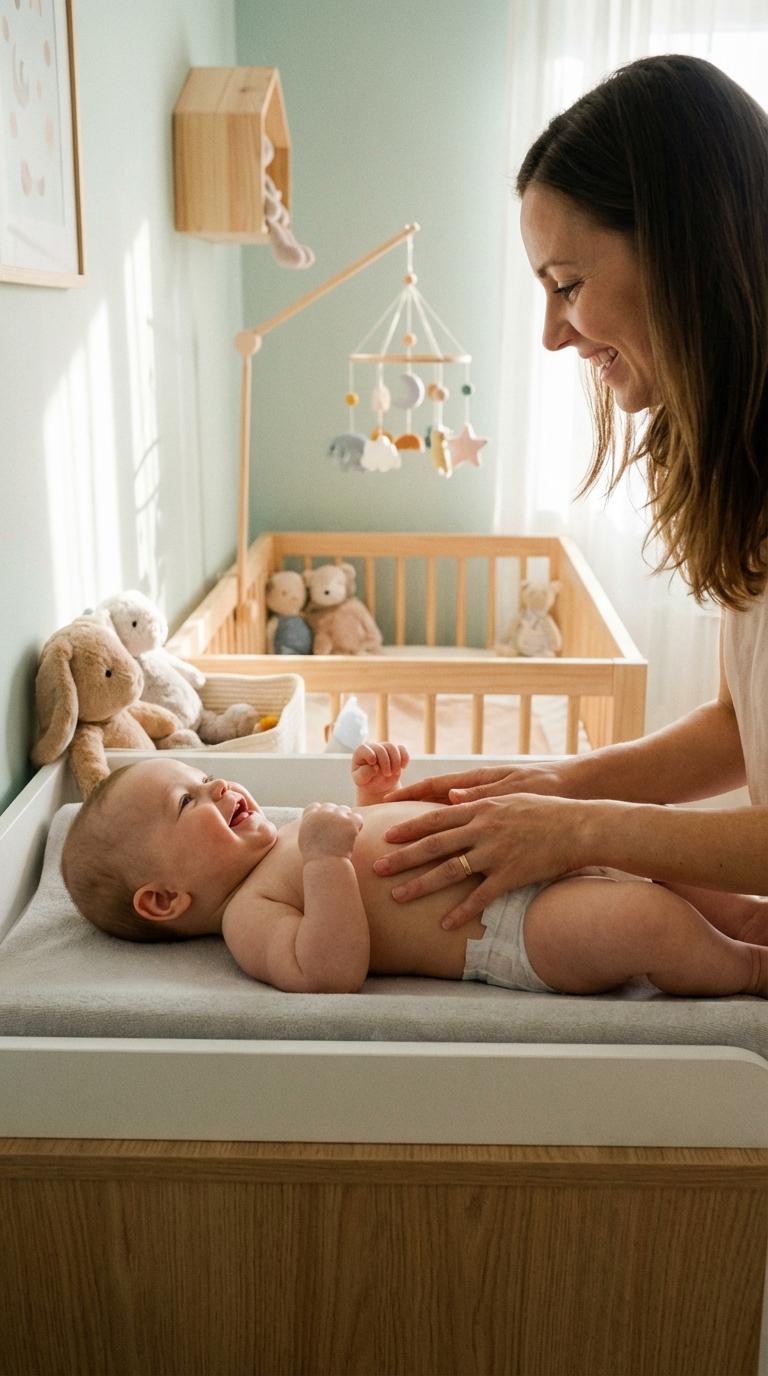
A diaper change may look like a small, repetitive job, but it directly affects comfort, feeding, and sleep. In many parts of India, heat and humidity (and sometimes long hours in AC) make the diaper area warm and sweaty. That trapped moisture plus rubbing can irritate baby skin quickly. With a safe setup and a gentle routine, most families see fewer rashes, fewer leaks, and a calmer baby.
Diaper change basics that make everyday life easier
What a diaper change is and why it supports comfort and sleep
A diaper change means taking off a wet or soiled diaper, cleaning the skin, drying properly, and putting on a clean diaper with a comfortable fit.
Under the diaper, the skin sits in an occlusive microclimate (warm, low airflow). Moisture collects in folds: groin creases, buttocks, and around the genitals. Baby skin is thinner and its skin barrier is still maturing, so it reacts faster to friction and to irritants in urine and stool.
When the area stays clean and dry, babies often feed with less fuss, settle faster, and sleep more peacefully. The routine itself can also feel reassuring: same steps, same calm voice, gentle handling.


Common issues timely changes can help prevent (rashes, leaks, odour, infections)
Regular diaper change reduces prolonged contact with urine and stool and helps prevent diaper rash (irritant dermatitis), redness from rubbing, and skin breakdown.
Timely changes also reduce leaks and blowouts, which happen when the diaper is overfull or not sealing well at the legs and back. Strong odour usually means moisture and bacteria have had time to build up.
Good hygiene can reduce irritation around the urethra and genitals. For babies with vulvas, wiping front-to-back reduces bacterial transfer towards the urinary opening. A diaper change cannot remove all infection risks, but consistent, gentle technique supports healthier skin.
Diaper rash: why redness can appear so quickly
Diaper rash is inflammation in the diaper area. A common chain reaction:
1) moisture stays trapped,
2) the diaper rubs,
3) urine and especially stool irritate.
Stool contains digestive enzymes (proteases, lipases) that can irritate fragile skin fast, particularly when the skin is over-hydrated (macerated). What helps most is not scrubbing, but cleaning softly, drying completely, and using a barrier when redness starts.
Pee vs poop: do they require the same urgency?
Not exactly.
- Poop: try to do a diaper change as soon as you can. Stool irritates faster.
- Pee only: you can sometimes wait a bit if your baby is sleeping, the diaper is not heavy, and the skin looks healthy.
Look at the skin and the diaper: early redness, strong smell, leaks, or a very swollen diaper usually means it is time.
Diaper change frequency: how often by age and situation
Typical frequency by age (without being rigid)
- Newborn (0 to 3 months): often 6 to 10 diaper changes in 24 hours (sometimes more), and after each poop.
- 3 to 12 months: pee remains frequent, poop may reduce after solids.
- After 12 months: more predictable timing (morning, before nap, bedtime), and always after poop.
If blowouts keep happening or redness returns repeatedly, consider whether the diaper change gaps are too long, or the diaper size/absorbency is not matching.
Helpful timing that often prevents irritation
Many families find changes easiest:
- after waking,
- before naps and night sleep,
- after feeds if your baby often poops after meals.
If your baby gets cranky when handled on a full tummy, try a diaper change before feeding.
Overnight diaper change timing
- If it is pee only, baby is asleep, and there are no leaks, you usually do not need to wake your baby.
- If there is poop, changing sooner helps protect the skin.
If a rash is already present, long stretches in moisture can keep inflammation going. A quick, low-light diaper change may help.
Adjusting during diarrhoea, illness, or antibiotics
Diarrhoea needs more frequent changes and stronger barrier protection. Antibiotics may sometimes cause loose stools, handle it the same way. During illness, check diapers more often so skin is not sitting in moisture.
Diaper change supplies checklist (set up before you start)
Essentials to keep within reach
Keep everything in one-hand reach.
- clean diaper (right size)
- wipes or warm water + soft cloth/cotton
- changing mat/pad (non-slip is helpful)
- soft towel or cloth for pat-dry
- barrier cream: petrolatum (petroleum jelly) or zinc oxide
Extras for mess and outings
- spare clothes
- wet bag or zip bag
- small disposal bags
Hygiene for adults and surfaces
- soap and water for handwashing
- hand sanitiser when outside
- surface cleaner for the changing area, especially after poop
Product choices for sensitive skin
If your baby reacts easily, choose fragrance-free, alcohol-free wipes or use warm water and cloth for some days. Too many scented products can irritate.
Diaper change setup: a safe changing station at home
Changing table vs floor changes
A table saves your back but increases fall risk once baby starts rolling. Floor diaper change on a clean mat is often the safest option for wiggly babies.
Organisation that keeps your routine fast
Do you ever start a diaper change and realise the wipes are finished? It happens. A simple storage style helps: keep diapers, wipes, cream, and disposal bags in one basket. Maintain a small backup (one extra wipes pack and a few diapers) so you notice before you run out. When everything is in one place, you stay calmer, and baby stays safer.
Safety habits that reduce falls
- Never leave baby unattended on a raised surface.
- Keep one hand on baby.
- Use the strap if present, but do not rely on it alone.
- Keep supplies within reach.
Ergonomics: protect your back
Keep the surface at a comfortable height. Bring baby close. To slide a fresh diaper under, roll baby gently to the side instead of pulling hard by the ankles.
How to change a diaper step by step
Start calm and prepared
Wash hands if possible. Lay your baby on a stable surface. Keep supplies near. A calm, predictable phrase before each diaper change can reduce kicking.
Open and clean gently (pee vs poop, front-to-back)
Open the diaper.
- If there is poop, use the front of the dirty diaper to remove the bulk, then fold inward.
- For babies with vulvas, wipe front-to-back.
- For pee only, one gentle wipe or warm water is usually enough if skin looks healthy.
For babies with penises, covering with a clean wipe for a few seconds can reduce surprise sprays.
Clean folds and creases
Clean groin folds, between thighs and genitals, and the buttock crease. Lift legs by holding ankles or calves, or roll baby slightly to one side.
Dry fully and protect when needed
Pat dry, especially in folds. If skin is pink, short air time can help.
Barrier products work best on clean, dry skin:
- petrolatum or zinc oxide reduces friction and blocks moisture.
Use a thin layer. If using thick zinc paste, avoid scrubbing it completely off at the next diaper change.
Put on the clean diaper with a comfortable fit
Back of diaper at the waist, tabs even.
- snug, not tight (two-finger check)
- pull leg cuffs out
- for boys, point the penis downward
Finish and reset
Roll the dirty diaper inward, tape shut, and dispose (seal in a bag when out). Wash hands. Wipe the surface if soiled.
Newborn diaper change: special considerations in the first weeks
Frequency and meconium
Newborns may need a diaper change every 2 to 3 hours, sometimes 10 to 12 times a day. Meconium is thick, dark, sticky stool in the first 1 to 2 days.
Cleaning meconium gently
Wipe off what you can, then use lukewarm water and soft cloth/cotton. Pat dry. A thin barrier can reduce sticking.
Umbilical cord stump care
Fold the diaper down so the stump stays dry and is not rubbed. Seek medical advice if there is spreading redness, foul odour, or discharge.
Boys vs girls and foreskin care
Clean gently around the genitals. Do not forcibly retract the foreskin in uncircumcised babies, wash the outside only.
After circumcision
Follow your clinician’s aftercare. Seek care if bleeding is more than spotting, swelling increases, discharge appears, or fever occurs.
Diaper change and diaper rash: prevention and early management
Everyday prevention
Frequent diaper change, gentle cleaning, full drying, and less friction prevent many rashes. Use a barrier early during diarrhoea or frequent stools.
Barrier cream vs treatment
Barrier creams:
- petrolatum forms a water-repellent layer
- zinc oxide offers stronger protection
If rash looks shiny, bright red, spreads into folds, or has small satellite spots, Candida (yeast) may be involved and may need an antifungal advised by a clinician.
A quick home plan when redness starts
If you notice mild redness during a diaper change, try this for 24 to 48 hours:
- increase change frequency (especially after poop)
- clean with warm water and cotton/soft cloth to reduce friction
- pat dry and give short air time when possible
- apply a barrier at every change
If things improve, continue a few more days. If not, it is time to speak to your child’s doctor.
Small details that prevent repeat rashes
If rashes keep returning, it is often one of these:
- the diaper is slightly small and rubbing at the thighs
- wipes are used many times per change (too much friction)
- skin is not fully dry before re-diapering
- baby has frequent stools (during tummy upset or after starting new foods)
A practical trick during hot months: after cleaning, use a fan in the room (not directly on baby) for 10 to 15 seconds while you pat-dry. It helps evaporate moisture without chilling your baby.
When to seek medical advice
Seek help if rash lasts more than a few days despite good care, if there are open sores, blisters, oozing, severe pain, spreading redness, fever, or your baby seems unwell.
Leaks and blowouts: quick fixes
Preventing blowouts
- check sizing if back leaks are common
- pull leg cuffs out
- keep back waistband high and centred
Preventing pee leaks
- tabs even
- waistband snug
- leg ruffles out
- for boys, penis pointed downward
Diaper change hygiene: hands, surfaces, and laundry
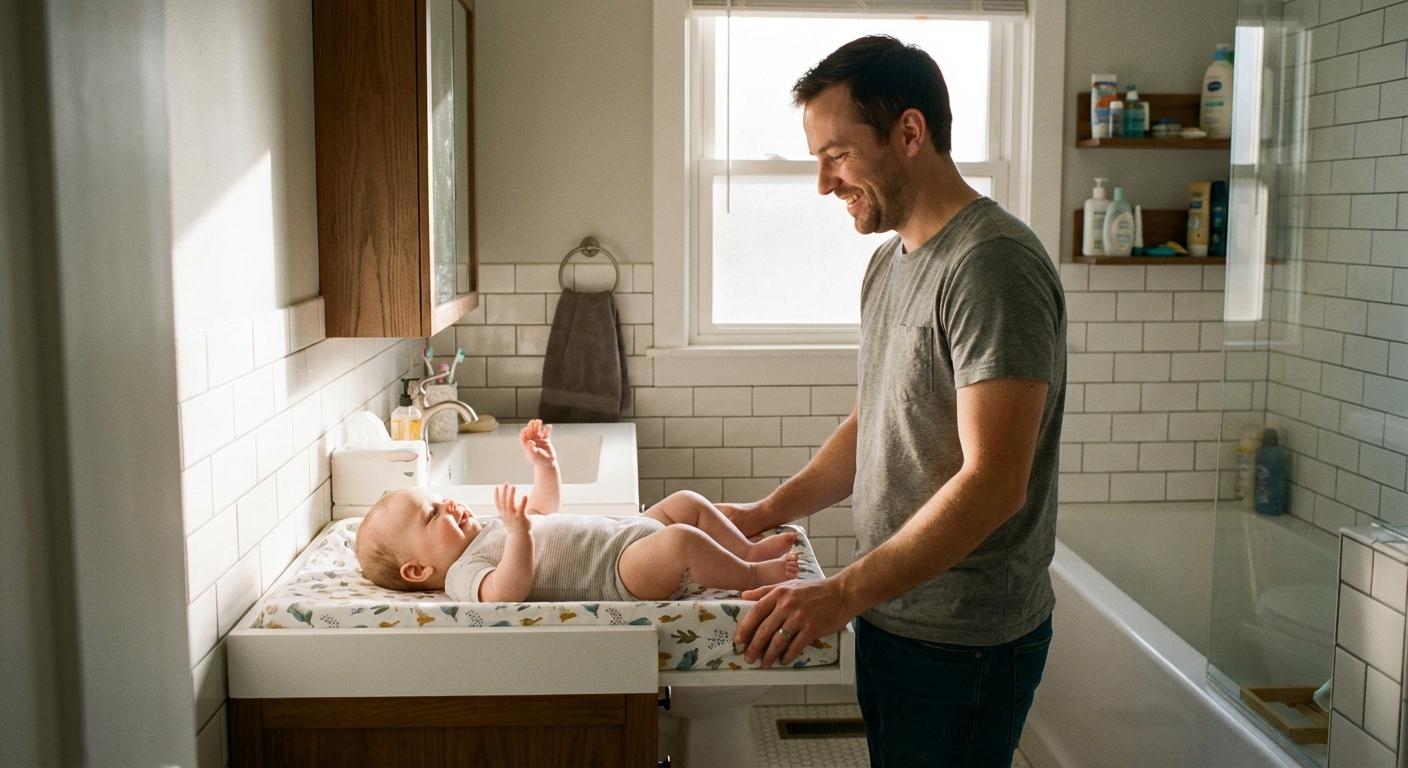
Wash hands after each diaper change when possible. Clean the changing surface after poop accidents.
For soiled clothes, seal in a wet bag/zip bag. Rinse stains with cold water when possible, then wash with a gentle detergent. In humid weather, drying fully matters, damp clothes left in a bucket can smell quickly.
Key takeaways
- A diaper change protects baby skin by reducing moisture and friction.
- Poop needs a prompt diaper change, pee alone can sometimes wait if sleep is good and skin is healthy.
- Keep supplies in one-hand reach and never leave baby unattended on a raised surface.
- Clean gently, dry fully, and use petrolatum or zinc oxide early if redness starts.
- If rash persists, involves folds, or comes with fever or sores, contact a clinician.
- Support exists, and you can download the “Heloa app” (https://app.adjust.com/1g586ft8) for personalised tips and free child health questionnaires.
Further reading :