When you are changing the baby’s diaper, the routine can feel never-ending, especially in the first months, when feeds, naps, and nappies blur into one long day. Still, a few steady habits keep things smooth: prevent falls, keep skin dry, reduce friction, and use a barrier only when it actually helps. You will also see how timing (including nights), fit, and product choice can reduce leaks and nappy rash.
Changing the baby’s diaper: what it includes and why it matters
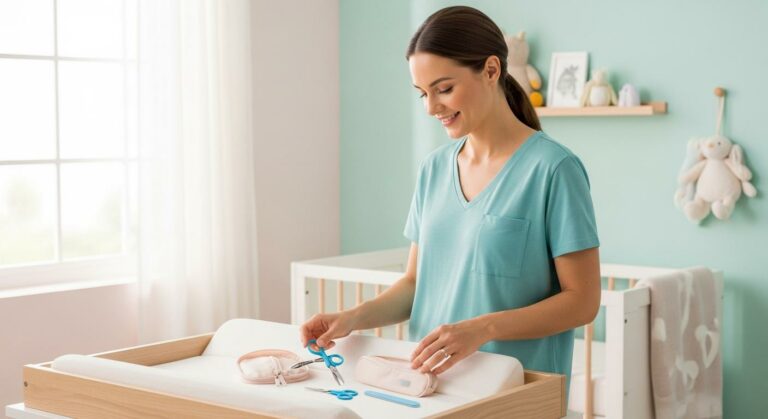
A full routine for changing the baby’s diaper includes: choosing a safe surface, keeping supplies within arm’s reach, removing the soiled nappy, cleaning gently (no harsh rubbing), drying well, protecting the skin barrier if needed, putting on a fresh diaper with proper fit, then disposing waste and washing hands.
This matters because the diaper area is naturally vulnerable. It stays warm and moist, it is covered (so less airflow), and it is exposed to irritants.
- Urine can raise skin pH (skin becomes less acidic), weakening barrier function.
- Stool contains digestive enzymes (proteases and lipases) that irritate quickly.
- Friction from tight elastic, repeated wiping, or rough cloth adds mechanical inflammation.
That combination can lead to diaper rash (irritant contact dermatitis), sometimes very uncomfortable.

A full change vs a quick check
A quick check is exactly that: you look for wetness (often shown by a wetness indicator line), smell, bulging, leaks, or redness.
If you find urine, stool, discomfort, leaking, a very “full” diaper, or skin irritation, it becomes a proper round of changing the baby’s diaper.
Hygiene, comfort, and skin health
Long contact with urine and stool increases moisture and friction, two big triggers for rashes. Frequent changes, gentle cleaning, careful drying, and a brief air-dry can reduce irritation. When the skin looks red, a barrier layer helps by making a physical shield between skin and moisture or irritants.
Sleep, mood, and bonding
A wet or soiled diaper can keep babies unsettled, including during sleep stretches. A clean, well-fitted diaper often means fewer wake-ups.
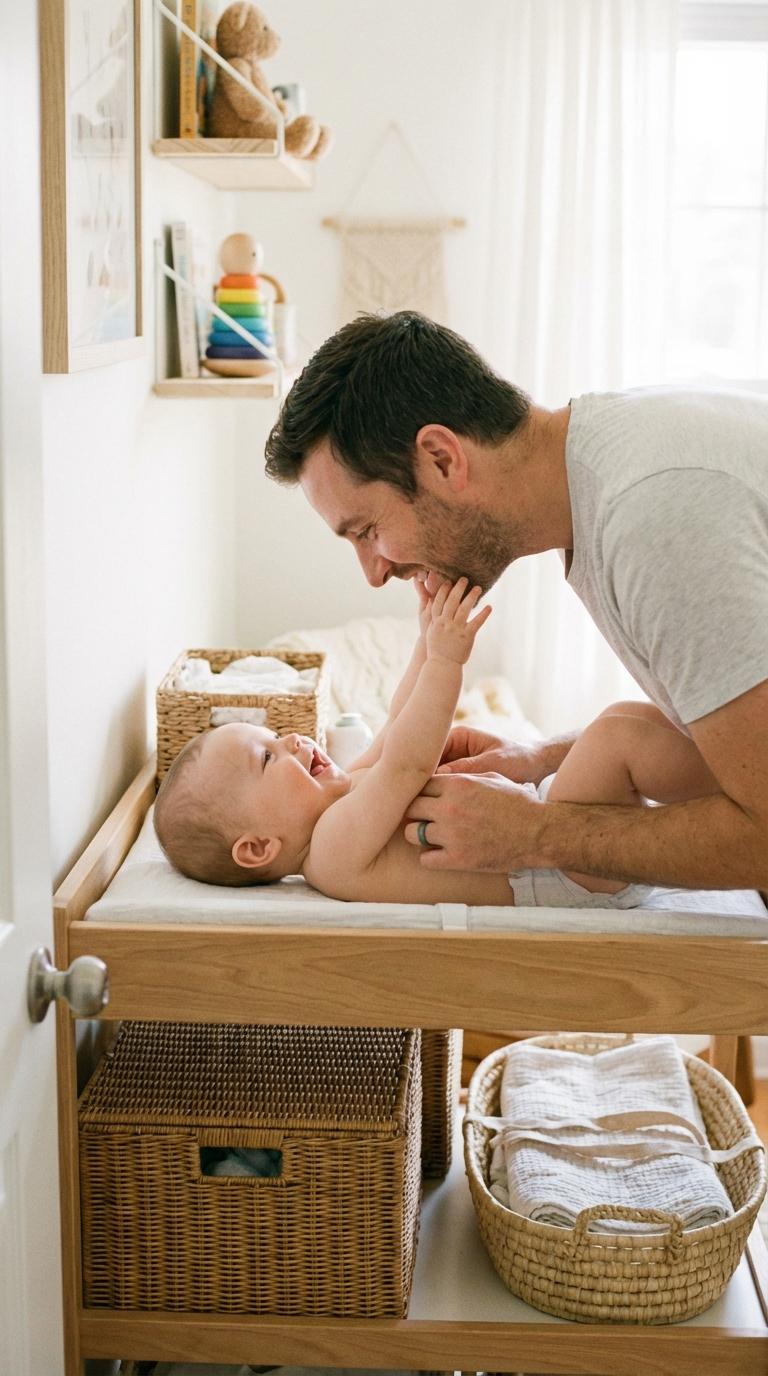
And yes, changing the baby’s diaper can be a tiny bonding pause. Calm voice, eye contact, and a simple running commentary (“Now I’m wiping, now I’m drying”) helps many babies feel safe, especially when they start wriggling more.
How often to change diapers (realistic timing that helps)
There is no perfect number. Think in ranges and then adjust based on your baby’s skin, stools, and diaper absorbency.
Typical frequency by age
- Newborn (0–3 months): often 6–10+ changes a day. A common rhythm is every 2–3 hours, plus promptly after poop.
- Baby (3–12 months): urine remains frequent, stools may become less frequent. If the diaper looks swollen, leaks, or the skin starts turning pink, shorten the interval.
- Toddlers: usually fewer changes, but still promptly after stool and when clearly wet.
Before or after feeding?
Two common patterns:
- If your baby spits up easily, changing the baby’s diaper before a feed can avoid handling a full tummy.
- If your baby tends to poop right after feeds, changing after may fit better.
Night changes: when to do it
- Poop: change sooner, even at night.
- Only wet + baby sleeping peacefully: a change may not be necessary every time (overnight diapers are more absorbent).
To protect sleep: keep lights dim, movements slow, and voice low.
When to act immediately vs when it can wait
Change promptly if there is:
- stool (even a small amount)
- a leak or a saturated diaper
- strong odour
- redness, discomfort, or sudden fussiness
It may sometimes wait if:
- the diaper is only slightly wet
- skin looks healthy
- your baby is relaxed or asleep
If your baby has very reactive skin, waiting rarely pays off, and more frequent changing the baby’s diaper is often the simplest lever.
Diaper changing supplies to keep ready (India-friendly setup)
A ready station reduces stress and keeps the routine safe.
Core essentials
- Clean diapers in the right size
- Fragrance-free, alcohol-free wipes or warm water plus soft cotton or cloth (many families keep cotton pads and a small mug or bottle)
- A changing mat (wipeable), towel for drying
- Barrier product for redness (commonly zinc oxide paste or petrolatum)
- Hand soap nearby, sanitiser when out
Cleaning options: water, cloth/cotton, wipes
- Urine only: warm water with cotton or cloth is often enough, then dry.
- Stool: clean folds properly (groin creases, buttock folds). If needed, use a very mild, fragrance-free cleanser, then remove residue and dry.
Wipes are practical when travelling. If you notice stinging or increasing redness, simplifying to water plus cotton for a few days can calm the skin.
Barrier protection: what to use and how
- Petrolatum-based ointment: reduces friction, helpful for prevention and sticky stools.
- Zinc oxide barrier cream: thicker shield, useful when skin is already red.
- Thicker pastes: often used during diarrhoea or frequent stools.
A practical rule: healthy skin usually needs less product. Red skin needs a visible “shield” layer, so don’t rub it in like lotion.
Disposal and cleanup
- Lidded bin (or diaper pail) with liner
- Small disposal bags for outings
- Spare clothes plus wet bag or polythene bag for soiled outfits
- Surface cleaner or disinfectant safe for household surfaces
Helpful add-ons
A small caddy avoids last-second reaching. One safe distraction object can help once babies start rolling.
Wipe warmers are optional, if used, they need regular cleaning because warmth plus moisture can support bacterial growth.
Safety basics for every change
During changing the baby’s diaper, the biggest risk is falls, not skin irritation. Rolling can begin suddenly.
Choose a stable surface
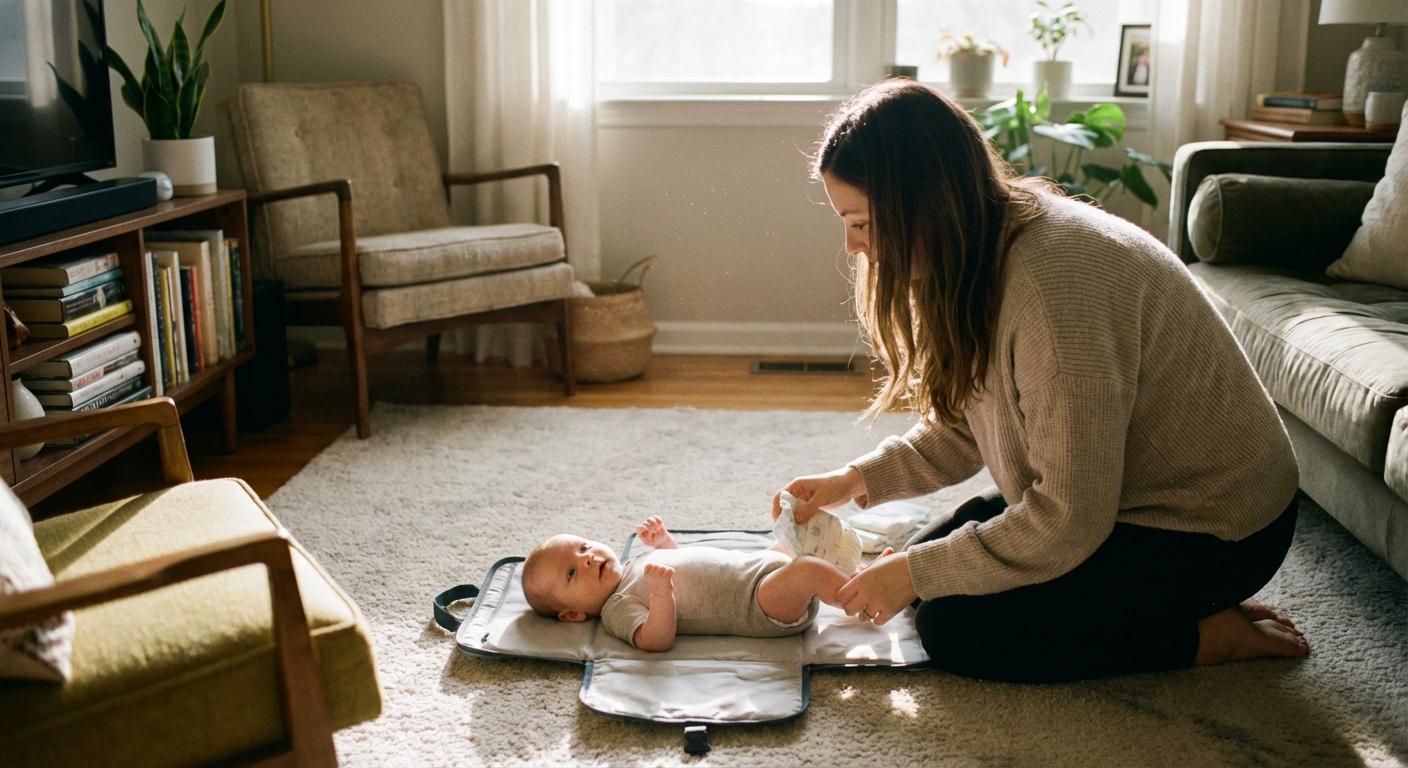
A changing table is fine if you are attentive, but once rolling starts, the floor on a mat is often the safest.
One-hand-on-baby habit
Keep one hand on the baby from start to finish on raised surfaces. Straps can help, but they don’t replace supervision.
Supplies within reach
Set up first. If you forgot something, take the baby with you and don’t turn away.
Changing the baby’s diaper step by step (disposable diapers)
1) Prepare and settle
Wash your hands. Lay the baby on a secure surface. Speak calmly.
2) Open and contain the mess
Open tabs. If there is stool, use the front of the dirty diaper to lift away the bulk, then fold it under the bottom.
For lifting the hips, gently rolling baby to the side can be more comfortable than pulling by the ankles.
3) Clean gently: urine vs stool
- Urine: wipe or warm water plus cotton or cloth, then dry.
- Stool: clean more thoroughly, including folds.
4) Direction matters: girls vs boys
- Girls: wipe front to back to reduce bacteria reaching the urethra (helps reduce UTI risk).
- Boys: clean around penis and scrotum, clean folds.
If uncircumcised, do not force the foreskin back. Clean outside only.
5) Dry well, then protect if needed
Pat dry and avoid scrubbing. A short air-dry (10–20 seconds) helps reduce moisture.
- Healthy skin: often no product needed.
- Red skin: apply barrier in a visible layer.
Avoid talc powders and aerosol sprays because particles can be inhaled.
6) Put on the clean diaper (fit checks)
Slide a clean diaper under baby, bring the front up, fasten evenly.
Fit checks:
- Two fingers at the waist
- Leg cuffs pulled out
- Back pulled up enough to catch stool
7) After the change
Dress baby. Roll and seal the dirty diaper, dispose. Clean the surface if soiled. Wash hands.
Poopy diaper changes: calmer cleanup
Stool can hide in thigh creases and around the genital area.
- Use gentle strokes, not scrubbing.
- Keep the dirty diaper under baby as long as possible to contain mess.
- If skin looks sore or “hot”, switch to water plus cotton and focus on patting dry.
If poop gets on clothes, remove carefully, wipe excess, then rinse or pre-treat before laundering.
Baby boy diaper changes: sprays and leaks
Many boys pee when cool air hits.
- Cover the penis with a wipe or clean diaper as you open the old one.
- Point the penis down before fastening to reduce leaks.
Circumcised vs uncircumcised care
If circumcised, follow aftercare advice given by your clinician, mild redness early on can be expected.
If uncircumcised, do not retract the foreskin. Forcing it can cause tears and infection.
Baby girl diaper changes: gentle front-to-back cleaning
Always wipe front to back. Clean the outer folds gently and pat dry.
A small amount of milky discharge can be normal in newborn girls due to maternal hormones. Strong odour, green discharge, persistent bleeding, or pain should be checked.
Newborn diaper changes: meconium and umbilical stump
Meconium tips
Meconium is dark and sticky. A thin layer of petrolatum can reduce sticking and friction during changing the baby’s diaper in the first days.
Umbilical cord stump
Keep it clean and dry. Fold the diaper down so it does not rub and the stump can dry out.
Seek medical advice if you notice redness spreading around the base, swelling, foul smell, pus-like discharge, or fever.
Toddler diaper changes: cooperation, not a wrestling match
Toddlers resist when they feel rushed.
Try:
- Offer simple choices (which diaper, which song)
- Keep the routine short and consistent
- Use standing changes for quick wet changes, but lie down for thorough cleaning or cream
Diaper sizing and fit: when to size up
Signs it is too small
Deep marks, tabs barely reaching, or repeated leaks suggest sizing up.
Quick fit checklist
- Two fingers at the waist
- Leg cuffs out
- Back high enough to contain stool
Fixing leaks and blowouts
- Run a finger around each leg after fastening to pull cuffs out.
- If tabs are uneven or the back sits low, re-centre and re-tape.
- If the diaper fits well but soaks through quickly, you may need higher absorbency (especially overnight). Absorbency won’t fix gaps, though.
Diaper rash: prevention and when to seek help
Common causes
Moisture, friction, irritants (urine and stool), diarrhoea, and scented products can all contribute.
Most effective lever: frequency
Early redness often improves when you increase changing the baby’s diaper, especially after stool.
Gentle care when there is a rash
- Use water plus cotton if wipes sting
- Pat dry and add more air time
- Apply a thicker barrier layer as a shield
Yeast rash clues
A yeast (Candida) rash may look bright red with sharp borders, often in folds, with tiny “satellite” bumps nearby. It may persist despite usual barrier care and can need an antifungal cream prescribed or advised by a clinician.
Seek medical advice if
- redness lasts more than 2–3 days despite good care
- oozing, bleeding, crusting, or significant pain
- bright red plaques in folds with satellite bumps
- fever, baby seems unwell, or rash spreads quickly
Cloth vs disposable: what changes
Disposable diapers are quick. Cloth systems need attention to fit and absorbency (inserts, covers). Some heavy ointments may reduce cloth absorbency, use thin layers, consider a liner, and pick cloth-compatible products when possible.
Changing the baby’s diaper outside the home (travel, outings)
A practical kit:
- 4–6 diapers
- one spare outfit
- wipes or cotton plus small water bottle
- changing mat
- disposal bags
- small barrier cream
- small towel
Use your mat as a barrier on public changing tables. In cars, change on a flat area while parked. In flights, keep supplies ready before entering the toilet.
Handwashing and surface hygiene
Handwashing with soap and water for at least 20 seconds after changing the baby’s diaper reduces spread of germs to bottles, pacifiers, and toys.
If the surface is soiled: clean with soap and water first, then disinfect following label contact time.
Common mistakes to avoid
- Turning away “for one second” on a raised surface
- Scrubbing the skin or wiping too hard
- Using too many products on irritated skin
- Skipping handwashing and surface cleaning
Key takeaways
- changing the baby’s diaper is safest and easiest with a repeatable routine: safe setup, gentle cleaning, thorough drying, barrier protection only when needed, good fit, then hygiene.
- Stool diapers need faster changes (day or night) because enzymes irritate quickly.
- Fit prevents leaks: even tabs, two-finger waist gap, leg cuffs out, back pulled up.
- If rash persists beyond 2–3 days, becomes painful, oozes, spreads, or comes with fever, seek medical advice.
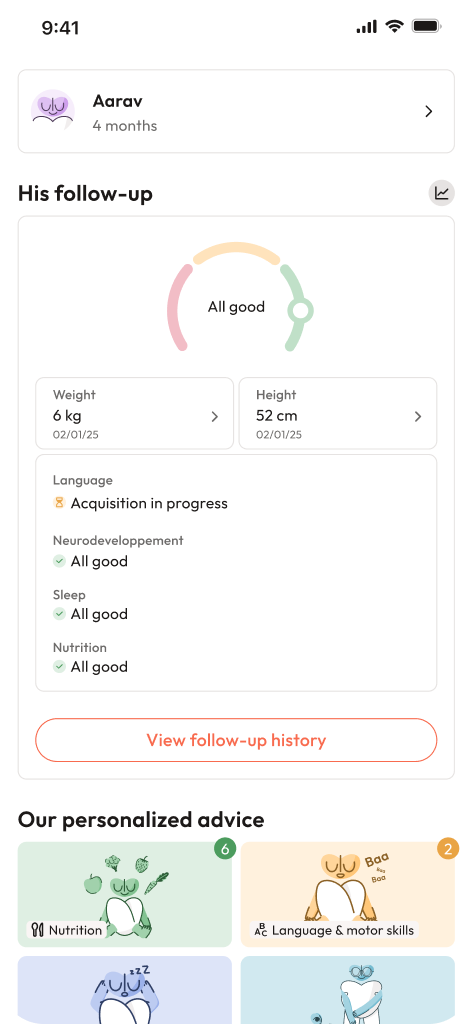
- Support is available from your paediatrician, nurse, or pharmacist. You can also download the Heloa app for personalised tips and free child health questionnaires.
Further reading: