When you are changing the baby’s diaper, the goal is simple: keep your baby comfortable, protect delicate skin, and do it safely, even at 3 a.m., even with a wriggly little body. The diaper area stays warm and moist, and it meets urine, stool, friction, and sometimes scented products, that mix can irritate skin quickly. A steady routine helps: safe setup, gentle cleaning, thorough drying, good fit, then hand hygiene.
Changing the baby’s diaper: what it includes and why it matters
A complete routine for changing the baby’s diaper is more than swapping a nappy. It is a short clinical sequence: prepare a stable surface, keep supplies within reach, remove the soiled diaper, clean the skin without over-rubbing, dry carefully, add a barrier layer when needed (to protect the skin barrier), fasten a clean diaper with correct fit, then dispose and wash hands.
Why so much structure for something so everyday? Because the diaper area is a perfect storm for irritation:
- Occlusion (skin covered, less airflow) increases moisture.
- Urine can raise skin pH, weakening the barrier.
- Stool contains digestive enzymes (lipases, proteases) that can “digest” and irritate.
- Friction from wipes or a tight diaper adds mechanical inflammation.
Quick check or full change?
A quick check is a fast assessment: weight of the diaper, smell, wetness indicator line, leaks, or pink skin.


A full change is needed if you find urine, stool, a “ballooned” diaper, leaking, discomfort, or redness.
Comfort, sleep, and mood
A wet diaper can feel cold and scratchy, a poopy diaper can irritate fast. Many babies settle immediately after changing the baby’s diaper, less restlessness, smoother feeds, longer sleep stretches.
And yes, it can be a bonding pause. Eye contact, a calm voice, and simple narration (“wipe, dry, fresh diaper”) help babies anticipate the sequence.
How often: practical rhythms that protect skin
There is not a perfect number. Think ranges, then adjust to your baby’s stools, skin reactivity, and diaper absorbency.
Typical frequency by age
- Newborn (0-3 months): often 6-10+ changes per day. Many need a change every 2-3 hours, plus promptly after stool.
- Baby (3-12 months): still frequent urination, stools may space out. Change sooner if the diaper is swollen, leaks, or skin looks pink.
- Toddler: fewer changes, but still quickly after stool and when clearly wet.
Before or after feeding?
You might notice patterns:
- Reflux or easy spit-up? Many parents prefer changing the baby’s diaper before feeding.
- Poop right after feeds? Changing after can reduce double work.
Nighttime: change, or let sleep win?
- Poop: change sooner, even at night. Stool irritates quickly.
- Wet only + sleeping comfortably: it can sometimes wait, especially with an overnight diaper.
Keep the lights dim, movements slow, and supplies ready before you open the diaper.
When to act immediately
Change promptly for:
- Stool (even small amounts)
- Leaks or a saturated diaper
- Strong odor
- Red skin, apparent discomfort, sudden fussiness
It may sometimes wait for a slightly wet diaper with healthy skin and a sleeping baby.
Supplies for changing the baby’s diaper (keep it simple, keep it ready)
A ready setup prevents unsafe reaching and rushed wiping.
Core essentials
- Clean diapers (correct size)
- Fragrance-free, alcohol-free wipes or warm water + soft cloth/cotton
- A towel or dry cloth for patting dry
- A changing pad on a stable surface
- Barrier product (zinc oxide paste or petrolatum ointment)
- Soap and water access, sanitizer for outings
Cleaning choices: what is gentlest?
- Urine only: warm water and cotton/cloth is often enough.
- Stool: clean folds thoroughly, if needed, use a mild, fragrance-free cleanser, then remove residue and dry.
If wipes sting or redness increases, simplifying to water + cloth for a few days can calm skin.
Barrier products: how they work
Barrier products create a physical shield between skin and moisture/irritants.
- Petrolatum (ointment): reduces friction, helpful for prevention and sticky stools.
- Zinc oxide paste: thicker shield, useful when skin is red.
- Thicker pastes: often used during diarrhea or more intense irritation.
Healthy skin usually needs less product. Red skin often needs a visible, protective layer (a “shield,” not a rub-in).
Disposal and cleanup
- Diaper pail or lined bin with a lid
- Small disposal bags (especially outside)
- Spare outfit + bag for soiled clothing
- Surface-safe cleaner/disinfectant for changing areas
Helpful add-ons that can make the routine smoother
Do you change in the same spot most of the time? A small caddy can keep everything in one place. A single distraction object (a soft toy, a teether that is easy to wash) can buy a few calm seconds once rolling starts.
Wipe warmers are optional. If you use one, clean it regularly, warmth plus moisture can encourage bacterial growth if it is not maintained.
Safety basics: the fall risk is real
During changing the baby’s diaper, the biggest hazard is a fall. Rolling can start suddenly.
Stable surface choices
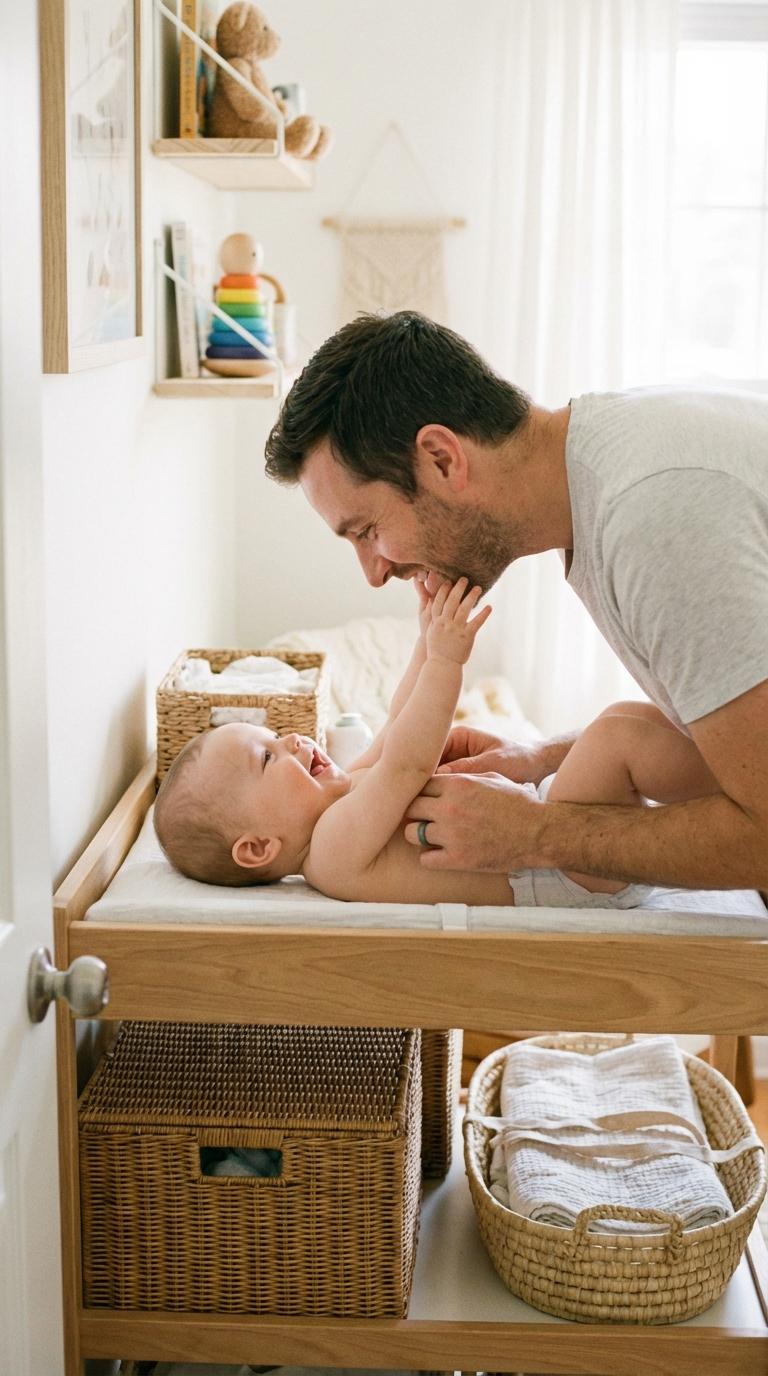
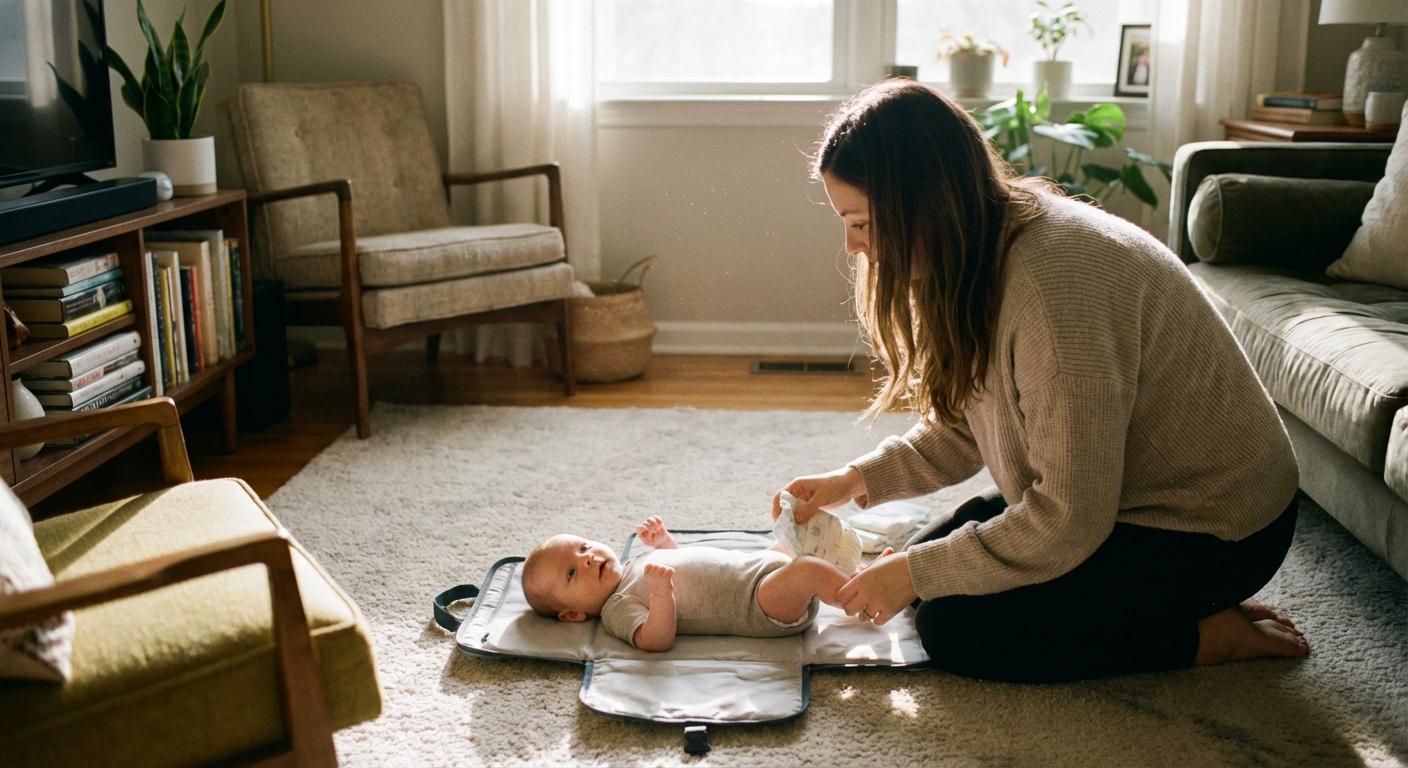
A changing table can work, but once rolling begins, the floor on a mat is often the safest. Away from home, choose a flat, secure surface and keep a hand on your baby.
One hand on baby
Keep one hand on your baby from start to finish on raised surfaces. Straps help, but they do not replace supervision.
Supplies within reach
Set up first. If something is missing, bring your baby with you rather than turning away.
Step-by-step: changing the baby’s diaper (disposable)
1) Prepare and position
Wash hands. Gather supplies. Lay baby on the back. If the room is cool, keep a light blanket over the chest.
2) Open and contain the mess
Open tabs. If there is stool, use the front of the dirty diaper to lift away the bulk, then fold it under the bottom.
To lift the hips, rolling baby gently to the side is often more comfortable than pulling ankles upward.
3) Clean: urine versus stool
- Urine: wipe or water + cloth, then dry.
- Stool: clean thoroughly, including thigh creases and buttock folds.
4) Wipe direction and folds
- Girls: front-to-back to reduce bacteria reaching the urethra.
- Boys: clean around penis/scrotum and folds gently.
Uncircumcised penis: clean the outside only, do not force foreskin retraction.
5) Dry, then protect
Pat dry (do not scrub). Give a few seconds of air-dry if possible.
If skin is red, apply barrier cream in a visible layer.
Avoid powders and aerosol sprays, fine particles can be inhaled.
6) Fresh diaper and fit checks
Slide a clean diaper under baby, bring the front up and fasten evenly.
Fit checks:
- Two fingers at the waist
- Leg cuffs flipped outward
- Back waistband high enough to catch stool
7) After-care
Dress baby. Roll and seal the dirty diaper, dispose, clean the surface if soiled, and wash hands.
Poop-heavy changes: keeping cleanup gentle
Stool can get into folds fast, and repeated wiping can inflame skin.
Try this rhythm during changing the baby’s diaper when there is poop:
- Use the dirty diaper to lift off the bulk first.
- Switch to fresh wipe surfaces often (one pass per wipe side).
- If the area looks sore, rinse with warm water (a squeeze bottle can help) and pat dry.
If stool gets on clothing, remove the outfit carefully, wipe off the excess, then rinse or pre-treat before laundering.
Baby boy diaper changes: sprays and leaks
Cool air can trigger peeing. During changing the baby’s diaper, briefly cover the penis with a wipe or the clean diaper.
Point the penis downward before fastening to reduce leaks. Check that tabs are even and that the leg elastics sit in the thigh crease.
Circumcised care vs uncircumcised care
If your baby is circumcised, follow the aftercare you were given. Mild redness can be normal early on, and an ointment is often used to prevent the wound from sticking to the diaper.
If your baby is not circumcised, do not retract the foreskin. In infants, the foreskin is commonly still attached to the glans, forcing it can cause tears and infection.
Baby girl diaper changes: hygiene without irritation
Always wipe front-to-back. Gently clean the outer folds, pat dry well.
A small amount of milky or clear discharge can be normal in newborn girls, and a little swelling can happen in the first days due to maternal hormones. Strong odor, green discharge, bleeding that persists, or apparent pain deserves a medical check.
Newborn specifics: meconium and umbilical stump
Early stools (meconium)
Meconium is dark and sticky. A thin layer of petrolatum can make cleanup easier and reduce friction, especially during the first days of changing the baby’s diaper.
Umbilical cord stump
Keep it clean and dry, fold the diaper down or use a notch so it does not rub. A small spot of dried blood can be normal, but spreading redness around the base, swelling, foul odor, pus-like discharge, or fever should be assessed.
Toddlers: cooperation without wrestling
Toddlers push back. Offer small choices (which diaper, which song), keep the routine short, and consider standing changes for quick wet diapers.
Standing changes work best for urine only. For stool, lying down usually allows better cleaning and reduces missed areas.
Fit, leaks, and blowouts
If leaks happen during changing the baby’s diaper routines, fit is usually the first thing to check.
Signs it is time to size up
- Deep marks on waist/thighs
- Tabs barely reach
- Repeated leaks or blowouts
Position and absorbency: two different issues
- If leaks happen around the legs, cuffs may be tucked in or the diaper may be too loose.
- If the diaper feels heavy and soaks through quickly, absorbency may be the limiting factor (common overnight, during growth spurts, or during long car rides where compression pushes urine outward).
Quick fit checklist
- Two fingers at the waist
- Cuffs out
- Back high
Diaper rash: prevention, care, and when to call
Most diaper rash is irritant dermatitis: moisture + friction + urine/stool contact. Some rashes are different, though. Do you see bright red patches in the folds, with tiny spots nearby? That pattern can point to yeast.
The strongest lever: frequency
When redness starts, more frequent changes, especially after stool, often helps more than switching brands.
Gentle care when skin is inflamed
- Use water + cloth if wipes sting
- Pat dry, add air time
- Apply a thicker barrier layer, remove only what comes off easily at the next change
Yeast (Candida) clues
Candida thrives in warm, moist areas. A yeast rash may look very red with sharp borders, often in skin folds, and it can have small “satellite” bumps around the main rash. This typically needs medical advice and an antifungal cream.
Seek medical advice if
- Rash lasts more than 2-3 days despite good care
- Oozing, bleeding, crusting, significant pain
- Fever, child seems unwell, rash spreading quickly
Cloth vs disposable: what changes
Disposable diapers are straightforward: remove, clean, fasten, dispose.
Cloth systems vary (prefolds, fitted, pocket, all-in-one). Leaks often come from fit or not enough absorbency. Some heavy ointments can reduce absorbency over time, so use thin layers, consider a liner, and choose cloth-compatible products when possible.
On the go: changing the baby’s diaper outside the home
Pack: diapers, wipes or water + cotton, a pad, disposal bags, spare clothes, sanitizer, a small towel, and a small barrier cream.
Use your pad as a barrier on public tables. Prep supplies before entering tight spaces (planes, small restrooms). If there is no changing table, a flat stroller seat or the trunk of a car (parked, stable, supplies within reach) can work.
Hand hygiene and surface cleaning
Handwashing with soap and water for about 20 seconds after changing the baby’s diaper reduces germ spread to bottles, pacifiers, and toys.
If the surface is soiled: remove solids, wash, then disinfect following label contact time.
Key takeaways
- changing the baby’s diaper is a repeatable clinical routine: safe setup, gentle cleaning, thorough drying, barrier protection when needed, correct fit, and hygiene after.
- Stool diapers deserve fast changes (day or night) because enzymes irritate skin quickly.
- Safety comes first: supplies ready, one hand on baby, no turning away.
- Redness often improves with more frequent changes, simpler products, and a visible barrier layer.
- Persistent, painful, spreading, or fold-focused rashes need a clinician’s input. Support exists: your pediatrician, pharmacist, and you can also download the Heloa app for personalized guidance and free child health questionnaires.
Questions Parents Ask
How do you change a diaper when the umbilical cord stump is still attached?
It’s completely normal to feel a bit nervous at first. Try folding the diaper’s front edge down (or using newborn “umbilical cut-out” diapers) so it doesn’t rub. Keep the stump clean and dry, and aim for gentle, brief cleaning around it only if it gets soiled. If you notice spreading redness around the base, a bad smell, pus-like discharge, or your baby seems unwell, you can reach out to a healthcare professional for reassurance.
What should you do if baby pees mid-change?
No worries—this happens a lot, especially when cool air hits the skin. You can loosely place a wipe or the clean diaper over the penis as soon as you open the diaper, then continue cleaning. If things get messy, a quick reset helps: swap the changing pad cover, clean baby’s skin gently, pat dry, and finish as usual. Keeping a spare cloth nearby can make you feel more prepared.
Are diaper wipes safe for newborns, or is water better?
Both can work. Many parents find fragrance-free, alcohol-free wipes convenient, while warm water and soft cotton can feel extra gentle on very new or reactive skin. If you notice stinging, more redness, or dryness, simplifying to water + cloth for a few days is often calming. If skin stays irritated or a rash spreads, it’s a good idea to ask for medical advice.
Further reading: