Have you ever watched your baby gaze into a mirror, wonder in their eyes, laughter bubbling forth, as if meeting a tiny stranger or greeting a new friend? The journey into self-recognition—known as the mirror stage baby phenomenon—is both mesmerizing and mystifying for many parents. Sometimes, little ones stare so intently at their reflections, babbling and bouncing with excitement; other times, they ignore the mirror altogether, seemingly uninterested. What is happening in your child’s mind at this crucial juncture? Why do some babies wave or giggle at their mirror image, while others are more reserved or perplexed? Parents often find themselves pondering when to expect these milestones, what subtle signs to notice, and how to encourage healthy emotional and cognitive growth. The science hiding behind everyday mirror play is richer than you might imagine: interwoven with concepts of ego, imitation, body awareness, “Ideal-I,” emotional regulation, social cognition, and even the elaborate dance of mirror neurons. From practical activities to sensitive guidance, and from the earliest gestures to the deep theories of identity construction, the mirror stage baby experience opens a window into the astonishing world of your child’s inner development.
What is the mirror stage baby? Scientific roots and everyday realities
The mirror stage baby concept, drawn from psychoanalytic and developmental research, describes a time when your child starts identifying their reflection as “me.” Imagine the leap—from a sense of fragmented, uncoordinated body parts to a thrilling discovery of a unified self-image! Between 6 and 18 months, most infants experience this turning point, which psychoanalyst Jacques Lacan referred to as the “Ideal-I” moment. Your baby first sees themselves as whole—unlike the disconnected flurry of hands, feet, or bouncing heads they may have previously felt. In this simple act of gazing, smiling, or reaching, an entire foundation for self-esteem, subjectivity, and independence is being laid.
But it’s not merely about visual recognition. Right from the first weeks of life, infants engage in complex social exchanges, imitating parental facial expressions, emotional tones, and subtle cues. This “mirror effect” begins with the intricate workings of mirror neurons, brain cells that let babies “copy” and learn from what they see—whether it’s a cheerful smile or a gentle touch. This phenomenon is the springboard for imitation, empathy, and social learning. Isn’t it astonishing how a playful peek in the mirror can channel deep mechanisms of psychological development?
Lacan’s psychoanalytic theory adds yet another layer: the mirror doesn’t just provide identification, but also a tiny spark of tension. The reflected image is more coordinated, more “perfect” than your baby feels inside—offering an ideal self to strive toward, but always a bit out of reach. This gap shapes much of how we grow and perceive ourselves: from tiny triumphs to lifelong self-reflection.


Milestones of the mirror stage baby: When and how does it appear?
Age landmarks and surprising variations
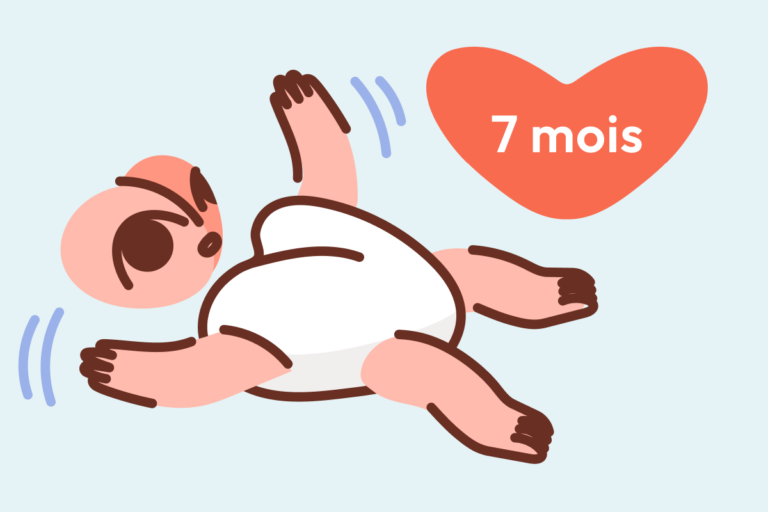
Curiosity about self-recognition typically begins around 6 months—some babies giggle or smile at their reflection, their eyes lighting up at the sight of their own movement. As months pass, this curiosity transforms. By 15 to 18 months, many children will touch, point to, or try to wipe away a mark on their own face, proof of true self-awareness. You might notice them waving, making faces, or playing elaborate games with their “mirror friend.”
And yet, the mirror stage baby is not a uniform process. Some infants are instantly enchanted, while others barely give the mirror a second glance. Early milestones may include:
- Extended gazes or smiles at their reflection.
- Babbling, laughing, or squealing with excitement.
- Touching or patting the mirror.
- Looking back at you for reassurance or shared amusement.
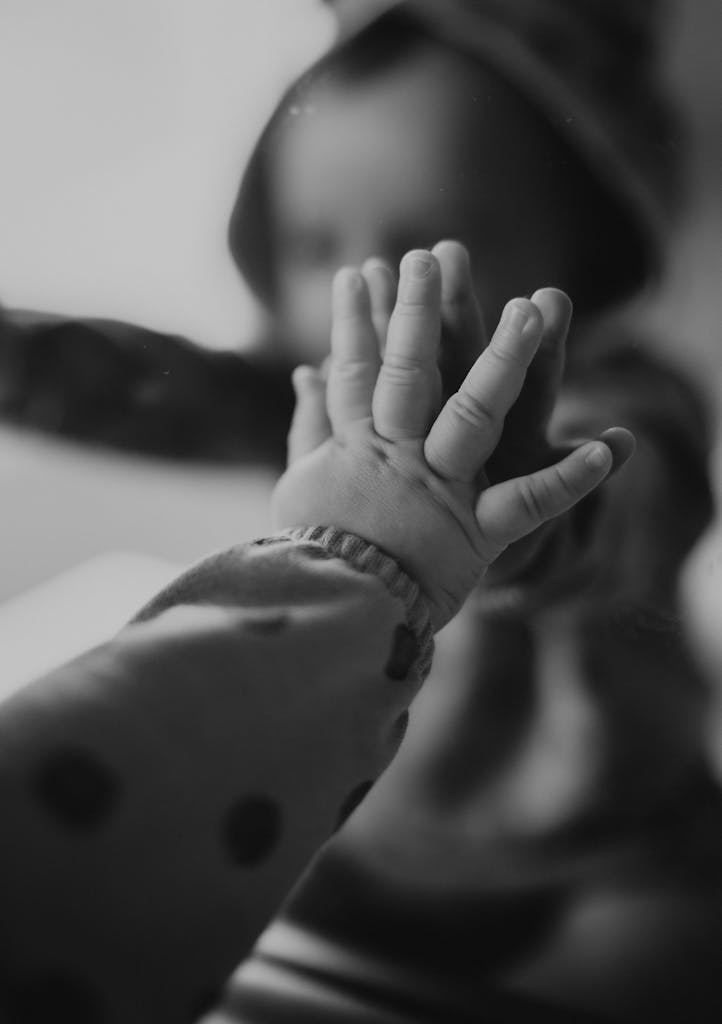
Outside the literal mirror, you will also see the “mirror effect” in how babies mimic clapping, waving, or copying facial expressions, especially during nurturing routines or playful moments.
Steps in self-recognition and the dance of imitation
Curiously, the journey through the mirror stage baby unfolds in layers:
- Initial fascination: Just looking, sometimes uncertain or hesitant.
- Emotional response: Smiling, laughing, even touching the mirror or playing peek-a-boo.
- Experimentation: Waving, making noises, or testing what happens when they move while looking at the reflection.
- Recognition leap: Realizing “that’s me!”—particularly when they try to touch, rub, or remove a spot only visible in the reflection.
Meanwhile, the broader “mirror effect” plays out in every interaction: imitating a gentle pat on the back, matching the rhythm of a song, or copying a calming breath during distress.
Social imitation and the blossoming sense of self
Is your child simply copying what they see, or truly recognizing themselves? Self-recognition and social imitation are related, yet distinct. The former helps a child anchor their own identity (“I am me”); the latter kickstarts their understanding of others (“You are you”). Both threads are essential—one fosters independence, the other empathy and relationships.
The science behind the mirror stage baby: Cognition, emotion, and more
Mirror play spurring growth in all directions
Peek-a-boo is not just for laughs. Mirror stage baby routines stimulate:
- Cognitive development: Linking action and reaction, noticing how movement, sound, and reflection match.
- Emotional regulation: Babies observe and practice their own emotional responses—learning to smile, to explore, to comfort themselves or ask for reassurance.
- Social engagement: Interactive games with parents provide fertile ground for communication, trust, and emotional safety.
Medical science highlights the role of mirror neurons in this process: specialized brain cells attuned to both action and emotion, providing the neural substrate for imitation and emotional synchrony. Babies who engage in regular, responsive mirror play (or whose parents offer attentive feedback even without a mirror) tend to develop stronger emotional resilience.
Language, empathy, and social skills: The ripple effect
Notice the way your baby babbles, gestures, or beams at their reflection? These tiny acts do more than amuse—they seed the early growth of:
- Empathy: Understanding their own emotions helps children see, one day, that others have feelings too.
- Social cognition: The ability to read cues, share joy, and respond to others’ signals.
- Word learning: Naming body parts, narrating feelings, singing, or exchanging sounds in the mirror—all these spark early language acquisition.
Warm, expressive caregiving supercharges this process. When parents label emotions (“happy face!”), mimic gestures, or mirror sounds, the infant’s neural circuits for language, attachment, and emotional understanding light up.
Decoding the “mirror test” in early childhood
Want a simple test validated by developmental psychology? The mirror test involves placing a small mark (a tiny dot or sticker) on your baby’s face. Do they try to remove it after seeing themselves in the mirror? That gesture is seen as a sign of emerging self-recognition. Earlier milestones—smiling, reaching, or babbling—signal the early phases, where curiosity about the mirror is alive and well, even before awareness dawns.
Ego and identity: The mirror stage baby in depth
From fragmented sensations to a coherent self
Before the mirror stage, infants often experience their bodies as disconnected—clumsy hands, squirming legs, fleeting glimpses of coordination. Seeing a unified image in the mirror offers an “aha!” moment. The mirror stage baby suddenly realizes their movements, sensations, and feelings can be connected to a visible, complete whole. This underpins later confidence, body awareness, and even emotional balance.
The Ideal-I, Imaginary, and Symbolic: Layers of psychological construction
In Lacan’s theory, the mirror stage baby establishes three powerful frameworks:
- The Imaginary order (where identification with the image happens).
- The Symbolic order (where language, rules, and social roles come alive).
- And the Real (raw sensations, uncategorized experience).
Each step paves the way for emotional security, relational intelligence, and—over time—mature identity. That tension between the real self and the ideal image, observed so early, invites lifelong self-exploration and personal growth.
Why family, culture, and rituals matter
Family rituals, cultural practices, and parental responses shape how and when the mirror stage baby emerges. In some households, mirrors are everywhere—playful faces, song, mimicry, and laughter abound. Elsewhere, emphasis is placed on spoken feedback, touch, or eye-to-eye interaction. Every affectionate exchange—whether face-to-face, in song, or through daily routines—nurtures your child’s capacity for self-awareness, emotional regulation, and trust.
How to nurture your mirror stage baby: Practical tips and activities
Engaging games for every age
- Tummy time with a mirror: Place a safe, shatterproof mirror where your baby can see their own face. Narrate what’s happening (“Who’s that looking back?”), mimic their expressions, and practice naming features.
- Peek-a-boo and follow-the-leader: Pop in and out of view, encourage your child to copy silly faces, or prompt them to point to their own nose, cheeks, or chin.
- Songs, imitation, and bath-time play: Sing, clap, and mirror your child’s sounds or gestures—inside or outside the presence of an actual mirror, the effect on bonding and emotional growth remains profound.
Try alternating between prompting (“Can you show your happy face?”) and following your child’s lead—these playful rituals spark joy and reinforce early emotional security.
Building vocabulary and emotional intelligence
Relate what’s happening in the mirror to everyday life. When your baby feels upset—say, a little coughing or fussiness—show calmness, comfort, and patience. Your emotional state acts as a “living mirror,” gently teaching emotional regulation. Involve older toddlers in naming emotions, pointing out facial expressions (“Look! You look surprised! Can you show your sad face?”), and acting out feelings while reading simple books together.
Noticing and supporting self-aware behaviors
Celebrate every moment: a smile to their reflection, a squeal of surprise, a thoughtful touch to their own face. Notice joint attention—when your baby looks at you and the mirror for shared enjoyment. These subtle cues are the building blocks of empathy, communication, and trust.
Encouraging connection and shared learning
Use your child’s name, label what you both see, and respond with enthusiasm when they react—these habits build joint attention, language skills, and emotional attunement. Repeat simple games, let your child take the lead, and enjoy shared discovery.
Recognising milestones—and understanding variations
What to expect, from delight to indifference
Some babies cannot get enough of mirrors; others are indifferent. Early responses include smiling or looking with concentration. As months pass, you might see:
- Reaching out, touching, or patting the mirror.
- Laughing or babbling at their reflection.
- Checking in with you before reacting.
- Pointing to or attempting to “clean” marks from their own face as understanding grows.
Equally important, you may observe imitation outside the mirror: your little one clapping after you, copying calming gestures, or “mirroring” your mood.
The importance of respecting each child’s unique rhythm
Every mirror stage baby is different. Some are enthralled by their reflection, while others find more joy in other sensory experiences. Quiet observation, limited interest, or delayed response can all be variations of healthy development—especially if your child is engaging socially in other ways.
When should you seek professional input?
Occasional disinterest is rarely a cause for concern. However, if a consistently absent response to mirrors is paired with minimal social interaction, or if key milestones are missing even after gentle encouragement, reach out to a healthcare provider. Delays in self-recognition, emotional regulation, or lack of imitation may signal broader developmental needs—and early guidance is always beneficial.
Special circumstances: Preterm babies, neurodiversity, and alternative experiences
When sensory or neurodevelopmental differences are present
Premature infants or children with unique sensory profiles (for example, reduced vision) may experience the mirror stage baby through touch, sound, or interactive routines rather than visual feedback. The key lies in engaging emotions, connection, and responsive caregiving—“mirrors” are everywhere in attentive social exchanges.
The metaphorical mirror: Feedback, language, and emotional connection
For all children, the “mirror” isn’t just glass. Parental words, soothing tones, and affectionate looks provide constant reflective input—teaching every baby, regardless of ability, the foundations of identity and emotional stability.
When behaviors are delayed or regress
Noticeable absence of self-recognition after 18 months, or the sudden loss of previously acquired milestones, should prompt a professional assessment. Gentle intervention, tailored to your child’s needs, supports well-being and maximizes developmental potential—no stage is ever missed; trajectories are simply unique.
Mirror stage baby: Broader perspectives, cross-cultural, and cross-species
The scholarly history: Wallon, Freud, Lacan, and research milestones
The journey to understanding the mirror stage baby crosses disciplines. Henri Wallon first noted self-recognition in infants and primates; Freud spotlighted ego development; Lacan explored the psychological underpinnings. Developmentalists today employ empirically validated tools—the mirror test, longitudinal observation—to track how identity blooms in response to both mirror play and social connection.
How traditions and culture influence self-recognition
Family customs shape every mirror stage baby experience. In some environments, playful mirror games are routine; in others, stories, song, or rituals provide the “reflective” feedback. Still, the path to selfhood and empathy is universal—cultural nuance simply colors the journey.
Mirror self-awareness in animals, and what makes children unique
Other species, such as dolphins and certain primates, pass the mirror test, showing glimpses of self-recognition. Yet only human infants–thanks in part to sophisticated feedback, language, and long caregiving relationships–transform this moment into a journey through empathy, symbolism, and profound social understanding.
The lifelong impact of the mirror stage baby
Why self-recognition matters for social, emotional, and cognitive success
Mastering the mirror stage baby milestone is more than a fleeting delight. It builds the groundwork for emotional intelligence, empathy, cooperation, and language. The child who knows “I am me” will, over time, understand “You are you”—unlocking a world of shared perspectives, compassion, and collaboration.
From childhood into adulthood: A pattern that persists
The core themes of identity, ambition, self-reflection, and self-esteem—all seeded in the mirror stage baby period—continue to shape relationships, adaptability, and resilience well into adulthood. Recognizing yourself, inside and out, is a lifelong resource.
Strengthening self-worth and emotional literacy
Those early minutes in front of the mirror, buttressed by responsive parenting and playful rituals, blossom into stable self-esteem and robust interpersonal skills. Investing in the mirror stage baby phase is—quite simply—a gift that lasts a lifetime.
Key Takeaways
- The mirror stage baby marks a transformative period between 6 and 18 months, when babies begin to recognize their own reflection, launching the development of self-awareness, ego, and identity.
- Early mirror effect phenomena—imitation, emotional attunement, and social mirroring—often emerge well before the child connects the reflection to themselves.
- Interactive mirror play fosters not just cognitive and language skills, but also emotional regulation, empathy, and trust.
- Every child’s pace is different: some engage instantly, others move more slowly, and individual variations are normal.
- Gentle, positive, and attentive caregiving—both with and without mirrors—nurtures the best conditions for healthy growth.
- Consult a pediatrician if concerns about consistent lack or regression of self-recognition, emotional responses, or imitation persist—early reassurance and support always help.
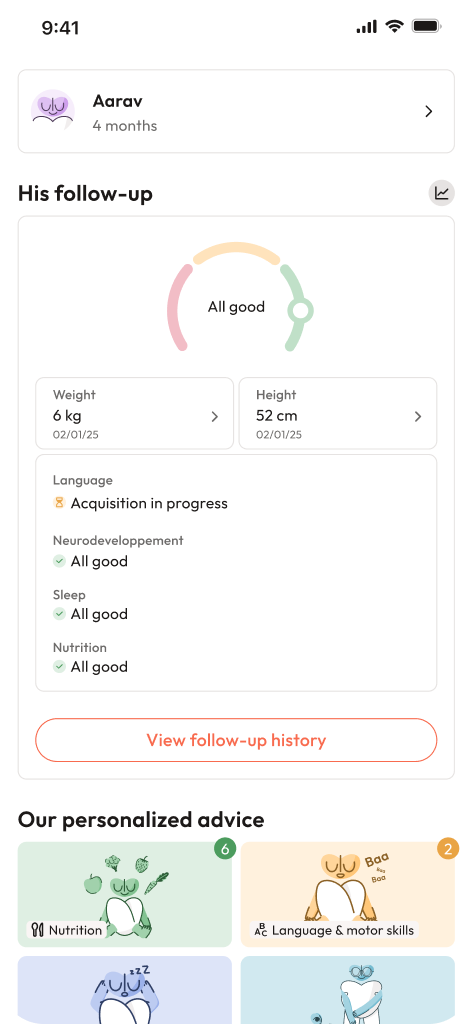
- Download the application Heloa for expert advice, tailored health questionnaires, and more resources to guide your parenting journey.
Questions Parents Ask
What if my baby shows no interest in the mirror?
Many parents find themselves puzzled if their baby doesn’t react to mirrors. It’s absolutely common—some children are more captivated by voices, touch, or toys than their own reflection. Instead of worrying, gently invite exploration: try making playful faces, talking about what you both see, or sharing smiles together. If social interactions and communication milestones also seem limited, a mention to your pediatrician brings extra peace of mind.
Can mirror play help if my baby is shy or reserved?
Certainly. Mirror play offers a gentle, non-threatening way to encourage participation. Babies who may be cautious or quiet often respond positively to observing their own expressions and movements, especially with a caring adult beside them. Simple imitation—smiling back, copying gestures—allows confidence and curiosity to flourish over time. Let the experience stay light and enjoyable; every shared moment nurtures trust.
Is the mirror stage baby important for my child’s language development?
Absolutely. Talking, naming body parts, singing, or narrating actions during mirror activities help your child connect words to what they see and feel. These playful exchanges offer the building blocks for understanding sounds, gestures, and language patterns. Encourage regular, daily moments of talk and laughter in front of the mirror—such rituals quietly shape comfort with words and expression.
My baby was born prematurely or has different developmental needs—does the mirror stage baby still apply?
Of course. Babies born early or with alternative developmental paths may approach self-recognition at a different pace, or via senses other than sight (for example, through touch or hearing). The essential factor is nurturing responsiveness: offer verbal, physical, and emotional feedback tailored to your baby’s style of interaction. Attentive caregiving remains the guiding light for self-awareness, regardless of timing or milestones.
When should I worry if my baby is not recognizing themselves or showing emotion in the mirror?
Mild delays and variations are usually part of normal growth. If your child has not shown signs of self-recognition by 18 months—such as trying to wipe a mark seen in the mirror, or expressing interest in their own reflection—it is smart to seek professional input. Especially if other skills (communication, emotional response, imitation) are also lagging or have regressed. Pediatricians bring reassurance and specialist advice tailored to your child’s individual profile.