A diaper change can feel like a tiny task that repeats forever, until the day a rash flares, a leak soaks the pajamas, or your baby screams the second a cold wipe touches skin. Comfort, sleep, and skin health are tied to this routine more than many parents expect. The good news? With a few smart habits (gentle cleaning, careful drying, a fit check, and a safe setup) most problems become rarer and easier to manage.
Diaper change essentials: what’s really happening on baby’s skin
Why a diaper change supports comfort (and sometimes better sleep)
A diaper change is more than “remove and replace.” Under the diaper, warmth plus humidity create an occlusive microclimate (air doesn’t circulate well). Baby skin is thinner than adult skin and its skin barrier (the stratum corneum) is still maturing, so it:
- loses water faster (gets dry and reactive),
- tolerates friction poorly,
- becomes inflamed sooner when exposed to urine and stool.
When that area stays clean and dry, many babies settle faster after feeds and wake less from discomfort. And yes, the emotional piece matters too: the same words, the same sequence, the same gentle hands. Predictability can be soothing.
Problems timely changes can reduce: rash, leaks, odor, irritation
A well-timed diaper change limits contact with irritants.


- Irritant diaper dermatitis (the classic diaper rash) often starts with mild redness, then roughness, then sore patches if the cycle continues.
- Leaks and “blowouts” happen more when the diaper is saturated, poorly fitted at the legs, or too small for a suddenly-growing baby.
- Odor usually signals moisture plus bacteria had time to interact.
Good hygiene also helps keep the genital area calmer. For babies with vulvas, wiping stool away from the urinary opening (front-to-back) lowers bacterial transfer.
Why diaper rash can appear so fast
A typical chain reaction is simple and frustrating:
1) moisture stays trapped,
2) diaper friction increases,
3) urine and especially stool irritate.
Stool contains digestive enzymes (proteases, lipases). On fragile skin, those enzymes irritate quickly, especially when the skin is already over-hydrated (macerated). The fix is rarely “wipe harder.” It’s usually: clean gently, dry completely, protect early.
Pee vs poop: same urgency?
Not quite.
- Poop: change as soon as you reasonably can. It’s more irritating.
- Pee only: if your baby is sleeping well, the diaper isn’t heavy, and the skin looks healthy, you can sometimes wait a bit.
Your best signal is the skin: redness, a swollen sagging diaper, stronger smell, or recurrent leaks mean your diaper change rhythm needs tightening.
Diaper change frequency: realistic ranges by age (no rigid rules)
Typical daily counts
Babies vary, but ranges help you sanity-check.
- Newborn (0–3 months): often 6–10 diaper change moments per 24 hours (sometimes 10–12 early on), plus after each poop.
- 3–12 months: pee stays frequent, poop may space out, especially after solids.
- After 12 months: patterns become more predictable (morning, before nap, bedtime), and always after poop.
If blowouts are frequent or redness keeps returning, think “fit, absorbency, or frequency.” Often more than one.
Timing that often prevents irritation
Many families find diaper change windows that “work”:
- after waking,
- before naps and bedtime,
- after feeds if your baby tends to poop right after eating.
If your baby dislikes pressure on a full belly, try a diaper change before feeding.
Overnight diaper change: protect sleep without ignoring poop
Sleep is a health need, not a luxury.
- Pee only + sleeping soundly + no leaks: usually no need to wake.
- Poop: change sooner to protect skin.
If a rash is brewing, a long stretch in moisture can keep inflammation going. In that case, a quick, low-light diaper change may be worth the brief disturbance.
Diarrhea, illness, antibiotics: when the rhythm must change
Loose stools are more irritating and often more frequent. During diarrhea (or antibiotic-associated stools), aim for:
- more frequent diaper change checks,
- gentler cleaning (less friction),
- thicker barrier protection.
If teething coincides with looser stools, follow the diaper, not the calendar.
Diaper change supplies: set yourself up before you start
Essentials in one-hand reach
One hand stays on baby. The other does the work.
- clean diaper (right size)
- wipes or warm water + soft cloth (often gentler for newborns)
- changing mat/pad (stable, easy to wipe)
- soft towel for pat-dry
- barrier ointment: petrolatum or zinc oxide
Helpful extras for messes and outings
- spare outfit (top and bottom)
- wet bag or sealable bag
- small disposable bags for used diapers/wipes
- spare pad liner
Adult hygiene and surface care
- soap and water for hands when possible
- hand sanitizer for emergencies (then wash when you can)
- baby-safe disinfectant for the changing surface after poop incidents
Sensitive skin product choices
If the skin reacts easily, reduce “extras.” Choose fragrance-free and alcohol-free wipes, or switch to warm water for a while. If you use cleanser, keep it mild, use it sparingly, and rinse residue.
Diaper change station: safety first, then convenience
Changing table or floor?
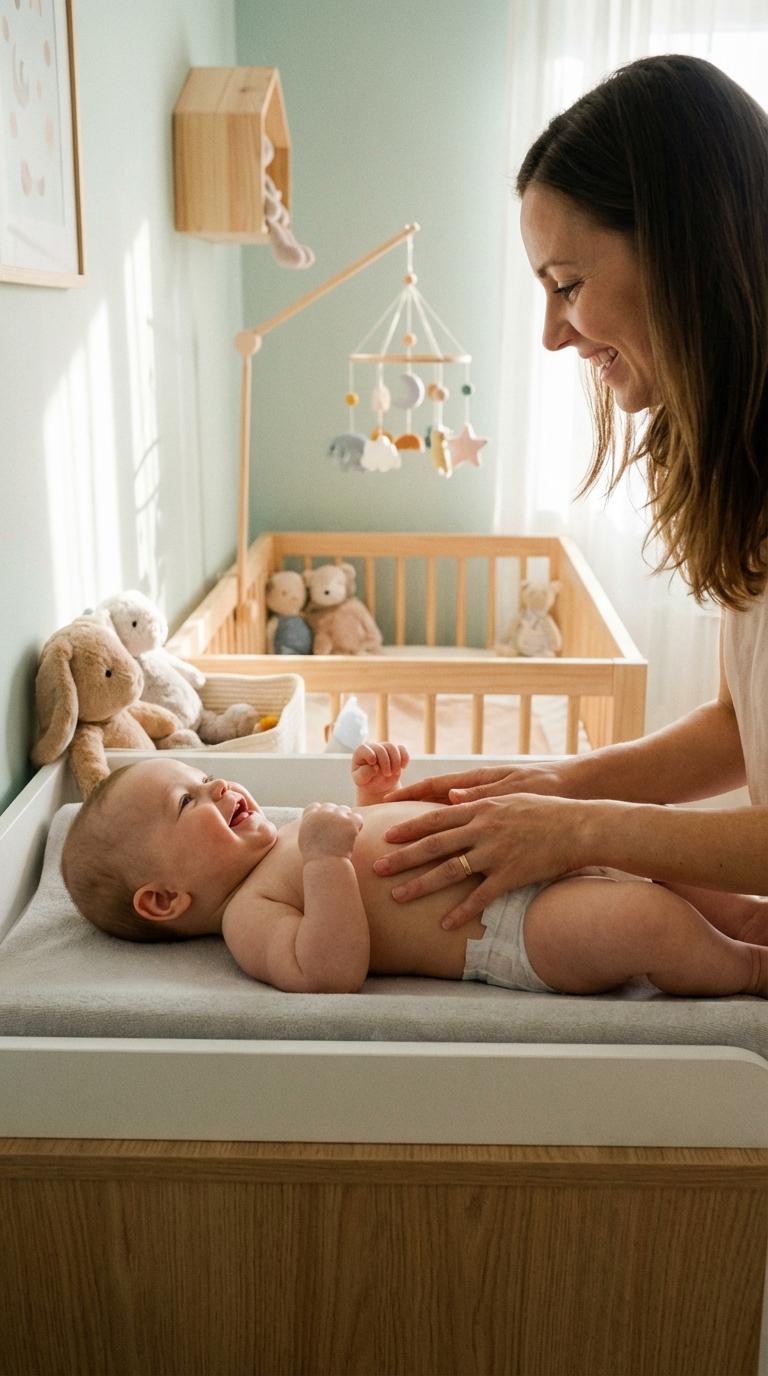
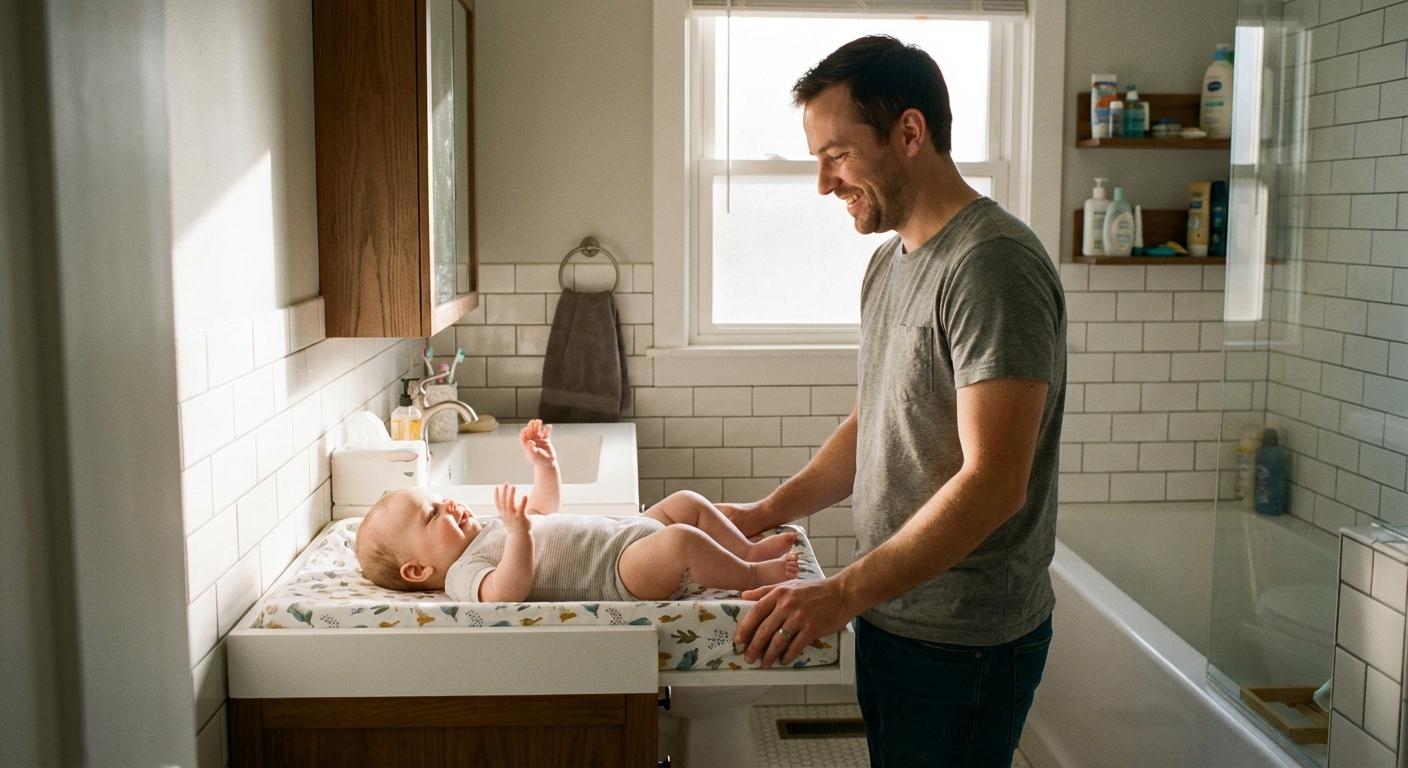
A changing table protects your back, yet fall risk rises as babies learn to roll (often earlier than expected). Floor diaper change sessions on a clean mat are frequently the safest once your baby becomes wiggly. Many parents mix both: table when calm, floor when active.
Organization that keeps you steady
A small caddy works: diapers, wipes, cream, bags. Predictability helps you move faster. Speed reduces tears.
Safety habits that prevent falls
- Never leave a baby unattended on a raised surface.
- Keep one hand on your baby.
- If there’s a strap, use it, but don’t rely on it.
- Keep the pad centered and dry.
Ergonomics: spare your back
Choose a comfortable height. Bring baby close. Roll baby gently to the side to slide a clean diaper under.
Diaper change steps: fast, calm, and skin-friendly
1) Start prepared
Wash hands if you can. Supplies ready. A short script helps: “Diaper change time.”
2) Open, contain, clean (pee vs poop)
Open the diaper. If there’s poop, use the front of the dirty diaper to lift away the bulk, then fold inward to contain.
- For babies with vulvas: wipe front-to-back.
- For pee only: one gentle wipe or warm water may be enough, over-wiping irritates.
For babies with penises, a brief cover with a wipe can prevent surprise sprays.
3) Clean the folds
Moisture hides in creases: groin folds, between thighs and genitals, buttock crease. Lift legs by holding ankles or calves, or roll baby slightly to one side with a secure hand.
4) Dry fully, then protect early
Pat dry.
- If skin is pink or sensitive, a short air-dry moment helps.
- Apply a thin barrier layer (petrolatum or zinc oxide).
If using a thick paste, don’t scrub it all off at the next diaper change. Remove stool, remove loose paste, leave the rest to keep protection.
5) Put on the clean diaper: fit check
Back up at the waist, front up, tabs even.
- Snug, not tight (two-finger waistband check).
- Pull leg cuffs out.
- For boys: point the penis downward to reduce leaks.
6) Reset
Roll the dirty diaper inward, tape shut, dispose (bag if out). Wash hands. Wipe the surface if there was contamination.
Newborn diaper change: first weeks, special details
Frequency and the meconium days
Early on, diaper change needs can be intense: every 2–3 hours is common. Meconium (black-green, sticky stool) typically appears in the first 24–48 hours before stools transition.
Cleaning meconium without scraping skin
Meconium clings. Wipe off what you can, then use lukewarm water + soft cloth. Pat dry. A thin barrier can reduce sticking at the next diaper change.
Umbilical cord stump: reduce rubbing and moisture
Fold the diaper down or use an umbilical notch. Keep the stump clean and dry.
Seek medical advice if you see spreading redness, foul odor, pus-like discharge, or your baby seems unwell.
Boys vs girls: cleaning differences
- Vulva: front-to-back, clean gently between folds.
- Penis/scrotum: clean around gently.
- Uncircumcised: do not forcibly retract the foreskin, wash the outside only.
After circumcision
Follow your clinician’s plan exactly. In general: keep clean, change promptly, apply only the recommended ointment. Seek care if bleeding is more than a few spots, swelling worsens, there’s discharge, or fever.
Diaper change and diaper rash: prevention and early action
Daily habits that prevent most rashes
Frequent diaper change moments, gentle cleaning, full drying, and less friction. Add barrier cream during diarrhea or at the first hint of pinkness.
Barrier vs treatment: what parents should know
Barrier ointments (petrolatum, zinc oxide) protect against moisture and rubbing. Treatment depends on the cause.
You may wonder, “Is this still simple irritation, or something else?” Two clues are common:
- Irritant rash often sits on the most exposed skin (buttocks, lower belly) and improves quickly with dryness and barrier.
- If rash is shiny, bright red, extends into folds, or has “satellite” spots, yeast (Candida) may be involved, an antifungal may be needed.
Triggers to consider
- prolonged moisture
- tight fit and rubbing
- scented wipes/soaps, multiple lotions
- diarrhea, frequent stools
- yeast overgrowth, sometimes after antibiotics
When to seek medical advice
If a rash lasts more than a few days despite good care, or you see open sores, blisters, oozing, significant pain, spreading redness, fever, or a generally unwell baby, contact a clinician.
Blowouts, pee leaks, and other diaper change troubleshooting
Poop blowouts: why they happen
Usually it’s mechanics, not bad luck.
- A diaper that’s too small can’t contain stool volume.
- Leg cuffs tucked in leave a gap.
- Back waistband sitting low invites a leak route.
During cleanup, contain first, then undress smart: roll soiled clothing down the body when possible and bag it quickly.
Pee leaks after a diaper change
A quick checklist:
- tabs even and centered,
- leg cuffs pulled out,
- diaper not drooping under weight,
- for boys, penis pointing downward.
“Too small” vs “too big” fit cues
- Too small: frequent leaks, deep marks, diaper hard to close.
- Too big: gaps at thighs or waist, sagging, leaks despite frequent changes.
Nighttime and public diaper change: keep it simple
Night diaper change without fully waking baby
Dim light, low voice, warm hands. If wipes feel cold, warming them in your palms can help. If leaks repeat, reassess fit first, then consider an overnight diaper or booster insert.
Public diaper change basics
Use your portable pad as a barrier, keep one hand on baby, sanitize afterward. If the table is unstable or visibly dirty, a floor change in a stall on your own mat can be safer.
Cloth vs disposable diaper change: what changes (and what doesn’t)
Skin steps stay the same, the diaper system differs.
- Cloth prefolds/flats: fold + fasten + waterproof cover.
- Pocket diapers: insert prepared in advance, then fasten like disposable.
Store used cloth in a wet bag/pail. For solid stool, remove into the toilet first. Some oily creams can reduce absorbency in certain cloth fabrics, cloth-compatible options or liners can help.
Key takeaways
- A diaper change protects baby skin by reducing moisture, friction, and exposure to irritants trapped in folds.
- Poop needs a prompt diaper change, pee alone can sometimes wait if sleep is good and skin is calm.
- Prepare a one-hand-reach setup so baby stays secure during every diaper change.
- Clean gently, dry fully, then use a barrier early if redness starts.
- Fit matters: even tabs, back waistband high, leg cuffs out.
- Newborn diaper change routines include extra care for meconium, the cord stump, and circumcision aftercare.
- If rash persists, involves folds, or comes with fever or sores, get medical advice.
- Support exists: your midwife, pediatrician, and child health nurse can guide you, and you can download the Heloa app for personalized tips and free child health questionnaires.
Questions Parents Ask
How do I change a diaper on a wiggly baby without losing safety?
It’s completely normal when babies suddenly turn diaper changes into a mini workout. A simple option is to move to the floor on a clean mat, so there’s no fall risk. Keeping supplies within one-hand reach helps a lot. Some parents find it calming to give a “job” (a clean wipe to hold, a small toy), sing a short routine, or use a quick distraction like a picture on the wall. If your baby is rolling, a gentle “side-lying” change can also feel easier than holding both ankles up.
Are diaper wipes safe for newborns, or is water better?
Both can work, and you can choose what feels best for your baby’s skin. For many newborns, warm water and a soft cloth (or cotton pad) is the gentlest, especially during redness or after frequent poops. If using wipes, fragrance-free and alcohol-free options tend to be better tolerated. If you notice stinging, increased redness, or dryness after wiping, switching to water for a few days often gives the skin a chance to settle.
Should I use baby powder during diaper changes?
Many families prefer skipping powders. They can clump in moist folds and may irritate sensitive skin, airborne particles can also be breathed in. A thin layer of barrier ointment (like petrolatum or zinc oxide) is usually a simpler, more protective choice—especially during diarrhea, teething stools, or early pinkness.
Further reading :